


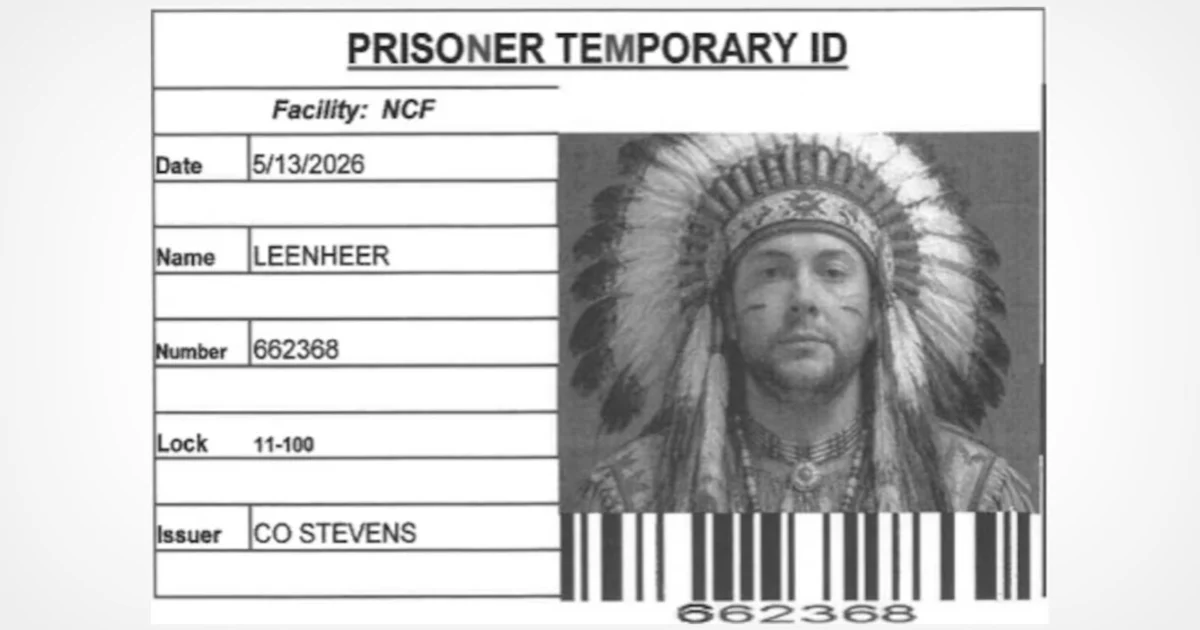
A disturbing civil rights lawsuit has surfaced in Michigan, centering on allegations that correctional staff at the Newberry Correctional Facility engaged in the targeted racial harassment of a Native American inmate. Dylan Leenheer, a member of the Gun Lake Tribe and a former resident of the facility, has filed a formal complaint against the Michigan Department of Corrections (MDOC) and three specific employees, alleging they digitally manipulated his official identification photograph to depict him wearing stereotypical Native American attire, including a feathered headdress and tribal face paint.
The lawsuit, filed by the Detroit-based firm Flood Law, highlights a case that has sparked a broader investigation into the conduct of prison staff and the potential existence of a discriminatory culture within the facility. As Leenheer seeks damages for emotional distress and the violation of his constitutional rights, the legal proceedings are shedding light on the precarious nature of prisoner rights and the power dynamics inherent in the correctional system.
Chronology of the Incident
The events leading to the litigation began on May 13, when Leenheer, who was then incarcerated at the Newberry Correctional Facility in Luce County, requested a replacement temporary identification card. According to the court filing, the interaction involved correctional officers Jay Stevens and Robert Marsh.
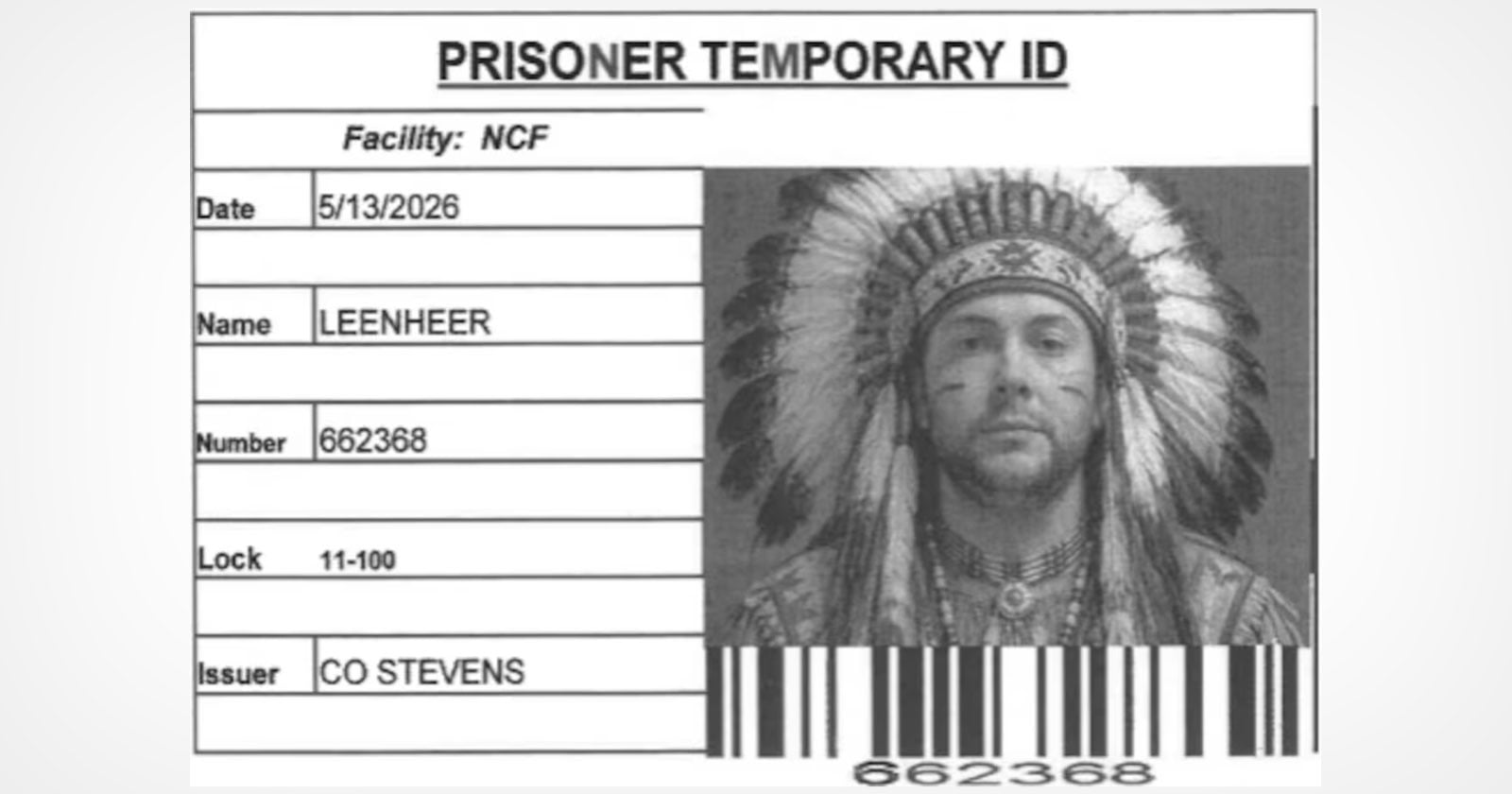
Leenheer alleges that instead of performing a routine administrative task, Officer Stevens utilized photo-editing software to alter the official portrait on the identification card. The resulting image, which has been submitted as evidence in the lawsuit, replaced Leenheer’s actual appearance with a caricature intended to mock his heritage. The complaint further alleges that following the manipulation, Stevens placed the altered ID in a high-traffic location—the Unit 11 window—where it was visible to both staff and fellow inmates, effectively turning a sensitive administrative document into a tool for public harassment.
The situation escalated when Leenheer attempted to document the abuse. He sought to obtain copies of the altered ID from the facility’s law library to substantiate a grievance he intended to file against the officers involved. He alleges that library technician JoLynn Cebula refused his request for photocopies, declined to sign the necessary denial forms, and withheld the original card. According to the lawsuit, when Leenheer questioned the refusal, Cebula reportedly dismissed his concerns, stating that she found the altered image to be “funny.”
Allegations of a Broader Pattern
The significance of Leenheer’s case has expanded beyond a single incident of misconduct. Attorney Maura Battersby of Flood Law revealed that her firm has been contacted by at least two other individuals who were formerly incarcerated at the same facility and who allege they were subjected to similar treatment. These reports suggest that the digital alteration of inmate photos may not be an isolated occurrence but rather a symptom of systemic abuse.
According to reports from Interlochen Public Radio and other outlets, the other two individuals who came forward include one Black man and one man of Indian descent. The inclusion of these additional accounts has prompted legal representatives to call for a comprehensive audit of facility records, including body-camera footage and internal digital logs, to determine the full scope of the practice. The legal team argues that the deliberate alteration of identity documents targeting race and ethnicity constitutes a severe breach of professional conduct and a violation of the Eighth and Fourteenth Amendments to the U.S. Constitution.
Contextualizing Prisoner Rights and Dignity
The legal challenge brought by Leenheer touches upon the fundamental tension between the state’s authority to incarcerate and the retained rights of the incarcerated. While prison sentences inherently involve the restriction of freedom, the U.S. Supreme Court has long held that inmates do not forfeit all constitutional protections upon entry into a correctional facility.
The Eighth Amendment, which prohibits cruel and unusual punishment, and the Fourteenth Amendment’s Equal Protection Clause serve as the bedrock for the argument that prisoners must be protected from arbitrary, malicious, or discriminatory conduct by those in positions of power. Legal experts note that when correctional staff—who are tasked with the care and custody of individuals—engage in the dehumanization of inmates, it undermines the integrity of the entire correctional system.
“There is a tendency in society to believe that because you are serving a prison sentence, you deserve whatever treatment you receive,” Battersby stated. “However, our legal system dictates that prison is not a free-for-all. Being incarcerated does not strip a person of their basic human dignity or their right to be free from racial harassment.”
Analysis of Institutional Implications
The Michigan Department of Corrections faces a significant challenge in responding to these allegations. For a facility to function, it requires a high degree of internal discipline and professional adherence to policy. If, as alleged, employees were utilizing state-issued technology to generate racist content, the implications for the department’s oversight mechanisms are profound.
The case raises several critical questions for the MDOC:
- Digital Oversight: How did staff gain access to photo-editing software on government computers, and why were there no safeguards to prevent the alteration of official identity documents?
- Supervisory Accountability: To what extent were supervisors aware of the behavior of officers Stevens, Marsh, and library technician Cebula?
- Culture of Impunity: If other inmates were targeted based on their race, what does this indicate about the culture within Unit 11 and the broader Newberry Correctional Facility?
Historically, civil rights litigation involving correctional facilities often leads to federal oversight, the implementation of stricter reporting requirements, and, in some cases, a complete overhaul of internal training protocols. Should the allegations be proven in court, the state of Michigan may be required to pay significant damages and implement mandatory anti-bias training and stricter digital usage policies for all facility staff.
Official Responses and Future Legal Proceedings
As of mid-September 2026, the Michigan Department of Corrections has faced mounting pressure to address these allegations publicly. While the MDOC generally does not comment on active litigation, the gravity of the accusations—specifically the use of racial stereotyping by public employees—has drawn condemnation from civil rights advocates.
The legal strategy employed by Flood Law is focused on the preservation of evidence. By requesting the immediate safeguarding of body-camera footage and server logs, the firm aims to build a timeline that proves the administrative intent behind the image alteration. The lawsuit seeks both compensatory damages for the emotional distress and mental anguish suffered by Leenheer, as well as exemplary damages, which are intended to punish the defendants for their malicious conduct and to deter similar future actions.
The case of Dylan Leenheer serves as a stark reminder of the vulnerability of the incarcerated population. As the litigation progresses, the judicial system will be tasked with determining whether the actions of these staff members were merely a lapse in professional judgment or a calculated, racially motivated campaign of harassment. For the plaintiff, the lawsuit is a bid for accountability in an environment where he felt powerless to challenge the individuals responsible for his day-to-day existence.
The broader public impact of this case will likely influence future discussions regarding the transparency of correctional institutions. As the investigation continues, the focus will remain on whether these actions were the result of a few rogue actors or part of a more deeply embedded issue within the Michigan correctional system that requires systemic intervention.

