


What began as a routine daily commute through an Ithaca, New York, cemetery has blossomed into a landmark entomological discovery. In the spring of 2022, Rachel Fordyce, a lab technician at Cornell University’s entomology department, sought to economize her daily transit to work. By parking her vehicle at East Hill Plaza and cutting through the historic East Lawn Cemetery, she placed herself squarely in the middle of a natural phenomenon that had gone unnoticed by science for more than a century. Walking through the pastoral grounds, Fordyce observed an overwhelming density of bees blanketing the landscape. Recognizing the potential significance of her surroundings, she captured several specimens in a glass jar and brought them directly to her supervisor, Bryan Danforth, a professor of entomology within Cornell’s College of Agriculture and Life Sciences.
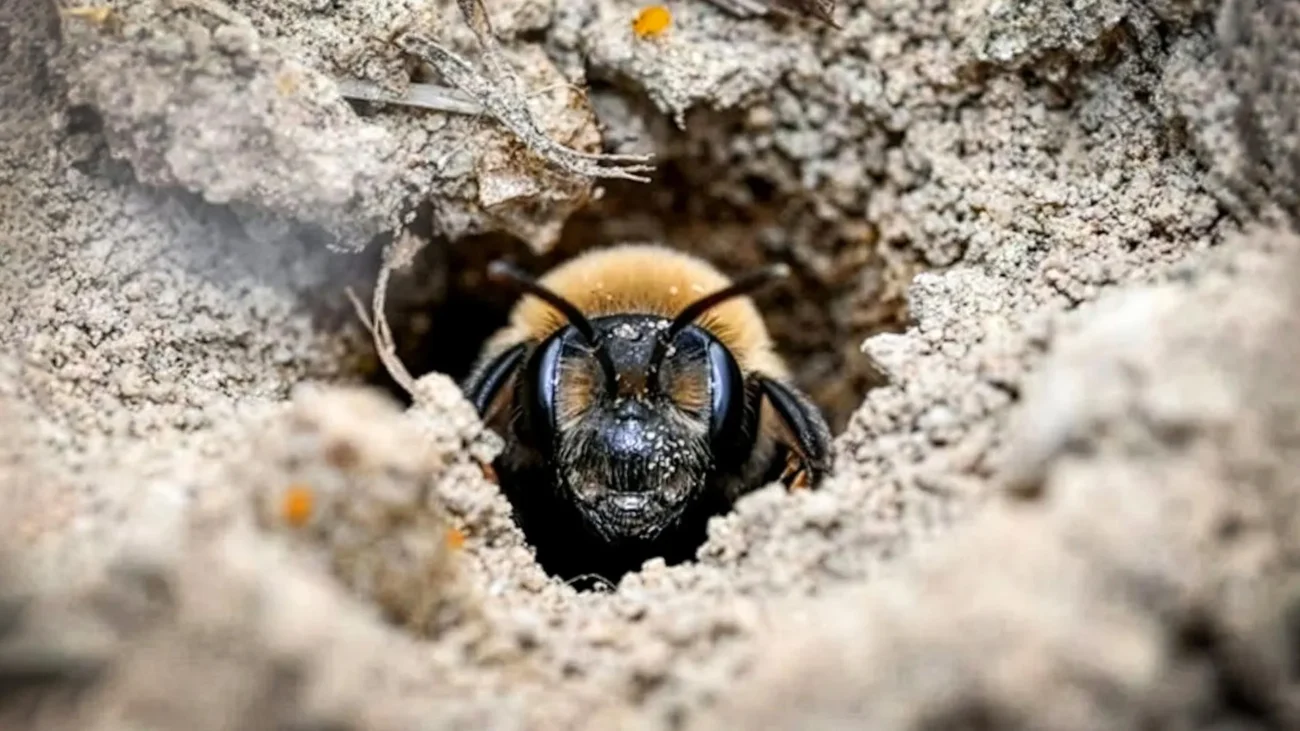
Upon microscopic examination, the insects were definitively identified as Andrena regularis, commonly known as the "regular mining bee." This solitary, wild bee species spends the vast majority of its life cycle beneath the surface of the earth, emerging seasonally to forage, mate, and play a critical role in the pollination of both wild flora and valuable agricultural crops. What started as an observant walk transformed into a rigorous scientific investigation. Led by undergraduate researcher Steve Hoge ’24, a team from Cornell’s entomology labs launched a comprehensive study of the site. Their findings, published on April 13 in the peer-reviewed journal Apidologie, revealed that the 1.5-acre cemetery grounds harbor one of the largest and oldest known aggregations of ground-nesting bees ever documented in scientific literature.
Scientists estimate that the site supports approximately 5.5 million individual bees. To contextualize this staggering figure, researchers note that this localized population is roughly equivalent to the biophysical output of more than 200 commercial honeybee hives, and it exceeds the total human population of Manhattan by more than threefold. While researchers acknowledge that other massive subterranean bee aggregations likely exist globally, this documentation stands out as a premier benchmark in modern ecological literature.
A Century-Old Sanctuary: History and Habitat of East Lawn Cemetery
The discovery sheds light on an unexpected ecological partnership between modern human infrastructure and native insect conservation. Established in 1878, East Lawn Cemetery has served the Ithaca community for nearly 150 years as a place of quiet remembrance. However, historical records analyzed by the Cornell research team indicate that Andrena regularis has maintained a presence on these grounds since at least the early 1900s.
Urban ecologists have long recognized that older cemeteries can function as crucial, undisturbed refuges for biodiversity. Free from the heavy machinery, intensive construction, and chemical treatments associated with modern agricultural expansion or urban sprawl, these green spaces offer stable microenvironments. Keven Morse, superintendent of East Lawn Cemetery and a representative of the family that has helped manage the nonprofit grounds for 46 years, notes that the land supports a diverse array of wildlife, including white-tailed deer, Canada geese, red-tailed hawks, foxes, and coyotes. Yet, it is the subterranean insect population that remains the cemetery’s most prolific secret.
Morse recalls navigating his maintenance schedules around the concentrated zones of bee activity. "I just felt bad having to mow in certain areas," Morse observed, noting that there are distinct sections across the property where the insects migrate and nest in massive numbers. Despite operating heavy equipment amidst millions of active stinging insects, Morse reported a peaceful coexistence, noting that the bees have never once stung him during his decades on the grounds.
Researchers attribute this harmonious coexistence to the specific land-management practices employed at cemeteries. The soil remains undisturbed by plows or heavy construction, and the application of chemical pesticides is kept to a minimum. Furthermore, the cemetery features significant deposits of sandy soil, a geological preference for Andrena regularis, which utilizes the well-drained earth to construct its subterranean brood chambers. Additionally, the proximity of Cornell Orchards—located a mere third of a mile away—provides an abundant, reliable source of early-season blossoms, supplying the energetic resources necessary to sustain millions of emerging adults.
Understanding the Subterranean Majority: Biology of Andrena regularis
Public perception of bees is overwhelmingly dominated by the European honeybee (Apis mellifera), a social species that lives in large hives and produces commercial honey. However, honeybees represent only a tiny fraction of the world’s bee diversity. Approximately 75% of all bee species are solitary, ground-nesting insects akin to Andrena regularis.
"It’s the most common lifestyle for bees," Professor Danforth emphasized, highlighting a vast ecological group that historically received relatively little attention from researchers and conservationists. When Steve Hoge initiated his literature review on Andrena regularis, he discovered a surprising paucity of modern scientific data; one of the most comprehensive reference points available dated all the way back to 1978. This knowledge gap presented the research team with an exceptional opportunity to document the species’ biology in unprecedented detail.
The life cycle of Andrena regularis is tightly synchronized with the arrival of spring in the northeastern United States. Unlike many insect species that overwinter in a larval or pupal state, A. regularis overwinters primarily as fully developed adults beneath the soil. This rare physiological trait allows them to emerge exceptionally early in the season, precisely timed to coincide with the bloom of regional agricultural commodities such as apples—one of New York State’s signature agricultural products. As daytime temperatures consistently reach approximately 70 degrees Fahrenheit, typically beginning in April, the bees break their subterranean dormancy.
Female bees construct intricate underground nests, digging vertical shafts and lateral tunnels equipped with individual brood cells. Each cell is meticulously provisioned with a nutrient-rich mixture of pollen and nectar before the female deposits an egg. The larvae develop entirely beneath the surface, consuming the provisioned stores before maturing.
To document these emergence patterns and accurately quantify the population, the research team deployed an innovative monitoring methodology utilizing emergence traps. Between March 30 and May 16, 2023, scientists placed 10 small mesh tents—each covering less than a square meter of ground—across the cemetery property. These traps systematically funneled emerging insects into attached glass jars. Through this approach, researchers captured a diverse cross-section of the subterranean community.
The sampling yielded 3,251 individual insects representing 16 distinct species of bees, beetles, and flies, with Andrena regularis overwhelmingly dominating the collection. By extrapolating the capture rates across the cemetery’s approximately 6,000 square meters of suitable habitat, the research team calculated a total population range of 3 million to 8 million individuals, settling on a conservative average estimate of 5.5 million bees.
The traps also illuminated fascinating behavioral nuances regarding sexual dimorphism in emergence timing. Male bees emerged first during warm spells in early April, positioning themselves near the nesting sites to await the arrival of females. "The males come out first and wait for the females, so that they have the best opportunities to mate and pass on their genes," Hoge explained. Females followed several days later, immediately beginning the arduous process of foraging and nest provisioning.
Ecological Pressures and Brood Parasitism
The dense concentration of Andrena regularis at East Lawn Cemetery does not exist in a vacuum; it supports an entire localized food web, including specialized parasites. The Cornell study documented significant instances of brood parasitism by nomad, or "cuckoo," bees belonging to the species Nomada imbricata.
These parasitic insects engage in a specialized reproductive strategy. Rather than constructing their own nests and laboriously gathering pollen and nectar, female cuckoo bees patiently monitor the nesting sites of Andrena regularis. Once a mining bee has completed and provisioned an underground brood cell, the nomad bee slips into the nest and deposits her own egg inside. When the parasitic larva hatches, it uses specialized mouthparts to destroy the host bee larva, subsequently consuming the stored pollen and nectar provisions intended for the rightful heir. This natural check-and-balance mechanism highlights the complex ecological interactions taking place beneath the manicured turf of the cemetery.
Implications for Agricultural Pollination and Global Conservation
The discovery of millions of native ground-nesting bees in an urban-adjacent cemetery carries profound implications for both local agriculture and broad conservation strategies. Modern agriculture relies heavily on insect pollination to secure high yields of fruits, vegetables, and nuts. While managed honeybees have traditionally borne the brunt of this responsibility, honeybee populations face severe pressures from colony collapse disorder, diseases, and chemical exposures. Wild pollinators, such as Andrena regularis, provide a vital, resilient buffer, naturally servicing regional crops like apples without the need for human transport or hive management.
The research elevates the scientific and economic value of solitary ground-nesting bees, demonstrating that these populations can achieve staggering densities when provided with undisturbed habitat. "The research elevates the value of solitary ground-nesting bees and shows just how abundant these bees are, how important they are as crop pollinators, and that we need to be aware of these nest sites and preserve them," Danforth noted.
Recognizing the vulnerability of such concentrated urban wildlife, Professor Danforth and his colleagues have expanded their scope beyond Ithaca. The team has launched a global citizen science initiative designed to encourage members of the public to identify, document, and report large ground-nesting bee aggregations in their own local communities. By mapping these subterranean hotspots, scientists hope to advocate for targeted municipal conservation zonings.
The urgency of these conservation efforts cannot be overstated. Because ground-nesting bees rely on specific soil compositions and undisturbed tracts of land, they remain acutely vulnerable to anthropogenic landscape changes. "These populations are huge, and they need protection," Danforth warned. "If we don’t preserve nest sites, and someone paves over them, we could lose in an instant 5.5 million bees that are important pollinators."
The published study was a collaborative effort involving postdoctoral researchers Jordan Kueneman and Katherine Odanaka, undergraduate students Steve Hoge ’24 and Cassidy Dobler ’26, and lab technician Rachel Fordyce, whose casual shortcut across a cemetery path ultimately unlocked a hidden subterranean metropolis. Financial backing for the research was provided by the Cornell Atkinson Center for Sustainability, the National Science Foundation, and the Federal Capacity Funds program, ensuring that the work will continue to inform native pollinator conservation for years to come.

