


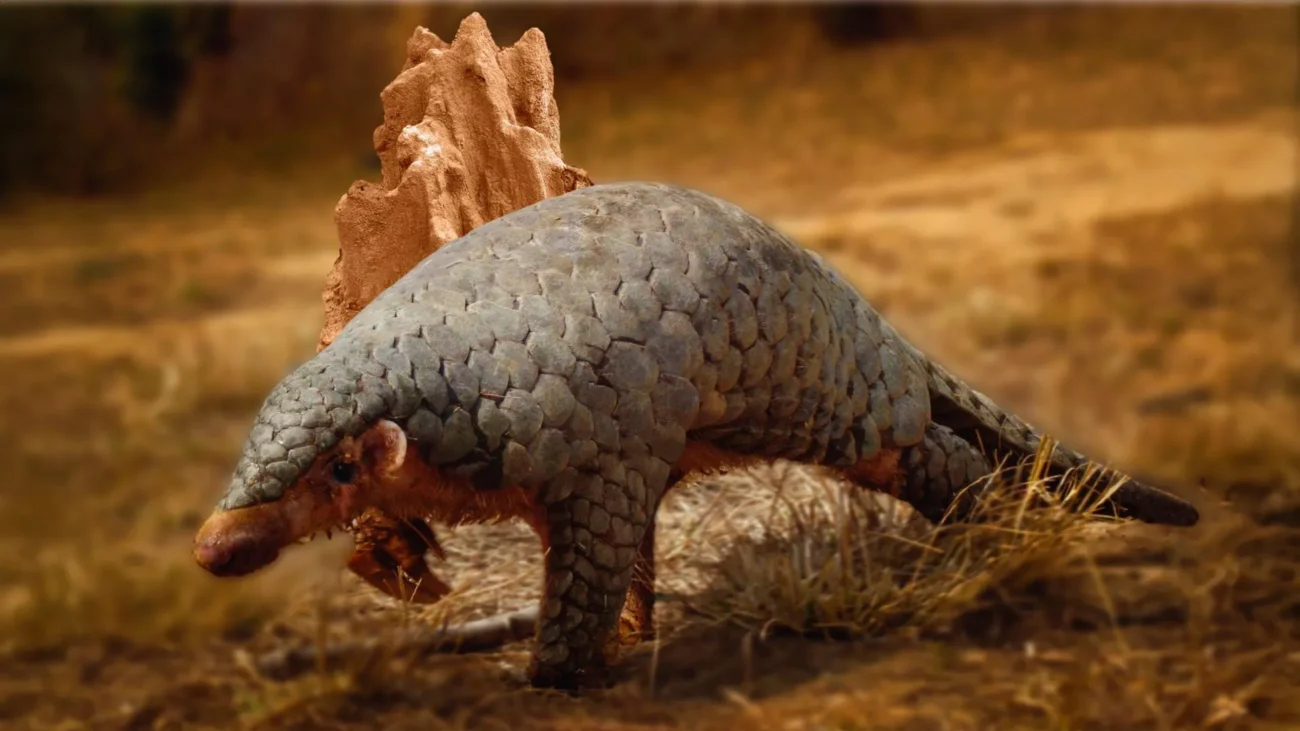
With armor resembling pinecones and a slow, deliberate gait across the forest floor, pangolins look as though they stepped straight out of a prehistoric era. These elusive, medium-sized mammals are native exclusively to the tropical and subtropical forests of Africa and Asia. They possess long, powerful tails used for balance and climbing, large curved claws designed for tearing open subterranean termite mounds, and overlapping keratin scales that serve as their primary defense against predators. Tragically, those very same distinctive scales have rendered them the most heavily trafficked mammals on Earth. Driven by a relentless black-market demand rooted primarily in traditional medicine and luxury meat markets, poachers slaughter hundreds of thousands of pangolins annually, pushing multiple species to the absolute brink of extinction.
Now, an international team of conservation biologists, geneticists, and museum curators has added a vital piece to the puzzle of global biodiversity. In a groundbreaking study published in the prestigious journal Communications Biology, researchers have officially confirmed that a previously unrecognized Asian pangolin species, scientifically designated as Manis aurita, is native to the rugged terrain of Nepal and Northern India. This taxonomic clarification not only resolves a nearly two-century-old historical debate regarding the evolutionary lineage of Himalayan pangolins, but it also provides a powerful new forensic tool for law enforcement agencies racing to dismantle international wildlife trafficking networks.
A Decadelong Scientific Quest
The formal recognition of Manis aurita is the culmination of more than five years of intensive, multi-institutional fieldwork and genetic analysis, though it builds upon a broader decade-long investigation into pangolin evolution led by a global coalition of scientists. The journey began in Nepal, where local researchers first documented anomalous physical and genetic evidence suggesting that the pangolins inhabiting the Himalayan foothills did not neatly fit the classification of the standard Chinese pangolin (Manis pentadactyla).
For generations, conservationists operated under the assumption that a single, widespread species of Asian pangolin roamed the forests from eastern China down through Southeast Asia and westward into the Himalayas. However, accumulating genetic discrepancies signaled that nature had hidden a separate evolutionary lineage in plain sight.
The breakthrough accelerated in 2025, when a separate research team determined that animals previously categorized broadly as Chinese pangolins actually represented two distinct species. While one lineage inhabited China proper, the other occupied the high-altitude Himalayan foothills across parts of Nepal, India, Bhutan, and Myanmar. That mountain-dwelling population was initially provisionally named Manis indoburmanica, or the Indo-Burmese pangolin.
Yet, taxonomic science is governed by strict rules of priority. When the global scientific community evaluates a newly split or rediscovered species, the earliest validly published scientific name must take precedence over any modern designations. This historical mandate triggered a complex taxonomic detective story.
The 1836 Historical Specimen That Solved the Riddle
As Anderson Feijó, the Negaunee Assistant Curator of Mammals at the Field Museum and a co-corresponding author of the study, and his colleagues combed through historical literature during their decade-long evolution project, they encountered archival records of Manis aurita. First formally described and named in 1836, M. aurita had long ago been dismissed by subsequent taxonomists and relegated to the status of a mere subspecies of the Chinese pangolin.
This left the research consortium with a profound taxonomic riddle: What was the exact evolutionary relationship between the newly proposed indoburmanica and the historical aurita? Were they the same biological species, or distinct entities separated by evolutionary time?
The definitive answer came from an unexpected source: the dusty, climate-controlled archives of the Natural History Museum in London. Utilizing state-of-the-art paleogenomic techniques, researchers at the museum successfully extracted and sequenced DNA directly from the original historical type specimen of the Nepalese subspecies (aurita). Because that specimen dated back to its collection in 1836, the genetic material was nearly 190 years old.
When the modern genetic samples gathered from wild Himalayan pangolins were compared against the ancient DNA extracted from the London museum specimen, the match was absolute. The genetic data proved indisputably that the animals recently dubbed M. indoburmanica were, in fact, identical to the species that had been cataloged in 1836 as Manis aurita. Under the strict laws of biological nomenclature, M. aurita reclaimed its status as the valid, senior scientific name.
Morphological and Geographical Distinctions
With the species formally revalidated, researchers detailed the physical and ecological traits that separate the Himalayan pangolin (Manis aurita) from its relative, the true Chinese pangolin (Manis pentadactyla). While the differences are subtle to the untrained eye, they are distinct enough to be reliably measured by wildlife biologists and customs officials.
Compared to the Chinese pangolin, Manis aurita boasts a noticeably larger overall body mass, a longer tail adapted for arboreal balance in steep terrain, and significantly smaller external ears. In fact, the specific Latin epithet aurita directly translates to "eared," a historical nod by 19th-century naturalists to the animal’s distinct auricular morphology. Furthermore, the two species are geographically isolated; extensive field surveys indicate that their natural geographic ranges do not overlap, occupying distinct ecological niches separated by topography and climate.
This precise mapping of geographic boundaries is far more than an academic exercise. For critically endangered taxa facing relentless anthropogenic pressures, knowing exactly which species lives where is a mandatory prerequisite for effective conservation management.
A New Forensic Weapon Against Global Wildlife Trafficking
The illegal wildlife trade operates as a multi-billion-dollar global enterprise driven largely by demand in traditional Asian medicine markets. Traditional beliefs hold that pangolin scales—composed of keratin, the same protein found in human fingernails and rhinoceros horns—possess medicinal properties capable of curing ailments ranging from skin conditions to arthritis, as well as acting as a potent aphrodisiac. Despite zero scientific evidence supporting these claims, the market remains voracious.
Law enforcement agencies battling this illicit trade face a persistent operational hurdle: poachers rarely transport live, intact animals across international borders. Instead, pangolins are typically butchered at or near the poaching site, and their scales are stripped, dried, and packed into dense, anonymous cargo shipments.
"In the marketplaces, you basically only find pangolin scales, not the whole animals, which makes it hard to know which species are being hunted and where they are coming from," explains Feijó.
By establishing clear genetic markers and baseline genomic data for Manis aurita, the newly published study bridges this critical forensic gap. Conservation scientists and wildlife forensics laboratories can now extract DNA from confiscated shipments of scales, rapidly identify whether the material originated from M. aurita or other threatened pangolin species, and accurately trace the contraband back to its specific geographic point of origin.
This capability allows international law enforcement and conservation organizations to work backward from seized contraband, identifying localized poaching hotspots and deploying targeted enforcement resources where they are most urgently needed. Furthermore, accurate species identification is vital for captive breeding and reintroduction initiatives. Historically, well-meaning conservationists risked releasing the wrong species into vulnerable local habitats due to taxonomic confusion. With M. aurita clearly defined, future rewilding projects can ensure that only native lineages are returned to the Himalayan foothills.
The Irreplaceable Value of Natural History Museums
The successful resurrection and validation of Manis aurita underscores an increasingly vital theme in modern conservation biology: the irreplaceable scientific value of natural history museum collections.
As wild populations of rare and secretive animals plummet due to habitat destruction and poaching, securing fresh biological samples from remote, inaccessible regions becomes exponentially difficult. Museum archives serve as biological time capsules, preserving specimens collected over the past two centuries. These repositories provide modern researchers with a window into historical genetic diversity that would otherwise be entirely lost to science.
"Using museum collections allows us to have access to more individuals across the species’ range," notes Feijó. "If you only rely on fresh material, since the animals are so rare to find in the wild, this greatly limits the information that you can gather. We used collections to have a more complete sampling of the species. It’s a big advantage to have this resource available as a repository of material that we can look back and keep learning from."
The study was truly a global endeavor, drawing upon the combined expertise of researchers from Guangzhou University, Nepal Engineering College, Pokhara University, the Chinese Academy of Sciences, the University of Washington, the Smithsonian National Museum of Natural History, the University of Sevilla, the Guangdong Academy of Forestry, Tribhuvan University, Aspect Ecology Oxfordshire, the Chinese Wildlife Forensic Science Service, the Chengdu University of Traditional Chinese Medicine, and the Field Museum.
As the international community confronts an escalating biodiversity crisis, the formal rediscovery of Manis aurita serves as a poignant reminder of both the fragility of life on Earth and the power of modern science to illuminate the dark corners of the natural world. As Narayan Koju of Nepal Engineering College aptly summarized, "We can’t protect what we do not know. This confirmation provides a strong scientific basis for conservation planning, wildlife forensics, and efforts to protect one of the world’s most trafficked mammals from extinction."

