


Along the wide, sandy expanse of a riverbank, a delicate drama unfolds. Small, black-and-white birds, their plumage a stark contrast against the muted tones of the earth, press themselves gently into the ground. Here, exposed to the vastness of the open sky, they lay their eggs, their survival a testament to the power of camouflage and instinct. Yet, their vulnerability is palpable. Not far away, free-ranging dogs roam the shore, their keen senses attuned to the possibility of an easy meal. Unseen by these predators, and often overlooked by those passing by, is a force of equal, if not greater, significance: a community keeping watch. This is the frontline of conservation for the Endangered Indian Skimmer, a species teetering on the brink, whose story of decline is slowly, but surely, being rewritten by the dedication of individuals like Parveen Shaikh and the empowered local communities she works with.
Parveen Shaikh’s unwavering commitment to the Indian Skimmer, a unique bird reliant on the ephemeral sandbanks of India’s river systems, has earned her a prestigious 2026 Whitley Award. This recognition is not merely for her individual efforts, but for a paradigm shift in conservation strategy – one that places local communities at the heart of protecting critically endangered wildlife. Her work, in collaboration with the venerable Bombay Natural History Society (BNHS), illustrates a profound understanding that effective conservation transcends the boundaries of traditional protected areas, embedding itself within the fabric of human activity and local stewardship.
The plight of the Indian Skimmer ( Rynchops albicollis) is a stark indicator of the health of India’s riverine ecosystems. Once found in significant numbers across the subcontinent, their populations have dwindled alarmingly due to habitat degradation and disturbance. Parveen’s journey with the species began along the Chambal River, a significant tributary of the Yamuna, known for its dramatic ravines and rich biodiversity. Here, she observed firsthand how seemingly subtle, yet systemic, changes could unravel an entire ecosystem. The river’s water, though outwardly appearing clear, was subject to altered flow regimes driven by upstream dam construction. These human-engineered shifts led to unpredictable and often drastic seasonal drops in water levels. The natural barriers that once isolated and protected the skimmers’ nesting sites – shallow sandbanks and islands – were progressively eroded or submerged. What had been safe, secluded havens for breeding birds gradually became accessible to a multitude of threats: predators like dogs and jackals, free-ranging livestock that could trample nests, and human encroachment. The vulnerability of entire colonies of breeding skimmers to disturbance, from fishing activities to tourism, escalated dramatically.
This environmental transformation presented a grave challenge to the survival of the Indian Skimmer. The species requires specific conditions for successful breeding: extensive, undisturbed sandy or gravelly areas adjacent to water bodies, free from regular human or animal disturbance. The alteration of river flows directly impacts the formation and stability of these crucial nesting grounds. Reduced water levels can lead to the inundation of nests if sudden floods occur, while increased accessibility by terrestrial predators and livestock poses a direct threat to eggs and chicks. The ecological ripple effect is significant, impacting not only the skimmer but also other ground-nesting birds and the intricate food webs they are part of.
In the face of these escalating threats, Parveen Shaikh, drawing on her deep understanding of the local context and the needs of the skimmers, conceived and implemented a groundbreaking initiative: the "Nest Guardian Programme." This program, elegantly simple in its concept, has proven to be profoundly transformative in its practical application. During the critical breeding season, which typically spans from March to June, trained members of the local communities take on the vital role of nest guardians. These individuals, drawn from villages situated along the riverbanks, are equipped with knowledge about the skimmers’ behaviour, nesting requirements, and the specific threats they face. They undertake regular patrols of known nesting areas, acting as a visible deterrent to potential disturbances. Their responsibilities extend to monitoring water levels, observing predator activity, and reporting any unusual events to conservation authorities. This constant, vigilant presence forms a quiet yet formidable line of defense, a human shield protecting the fragile lives of the skimmers.
The impact of this community-led approach has been nothing short of remarkable. Since the inception of the Nest Guardian Programme in 2017 along the Chambal River, the Indian Skimmer population has witnessed a significant rebound. The numbers have climbed from an estimated 400 individuals to nearly 1,000 – a doubling of the local population. This achievement represents a crucial milestone for a species whose global population remains precarious, underscoring the power of localized, empowered conservation efforts to create tangible, positive change. The Whitley Award acknowledges this success and provides essential funding to expand this proven model to other critical Indian Skimmer habitats, including Prayagraj on the Ganga River, a region where the species also faces similar threats.
Beneath the Surface: Conservation Beyond Protected Areas
Thousands of kilometers away, amidst the stark volcanic landscapes of the Galapagos Archipelago, another conservation narrative is unfolding, this time not along a riverbank, but beneath the very soil. On Santa Cruz Island, within the mosaic of farmlands and scattered human settlements, lies a hidden world where the Galapagos Petrel (Pterodroma phaeopygia) returns each year to nest in quiet solitude. These remarkable seabirds spend the majority of their lives at sea, navigating vast oceanic expanses, only to return to the islands to carve out fragile burrows in the sandy soil, a place to breed and raise their young.
Paola Sangolquío, a marine conservation coordinator at Fundación Jocotoco, has dedicated her career to safeguarding these hidden nesting grounds. Her work embodies a progressive approach to conservation that deliberately shifts the focus beyond the established boundaries of protected areas. Instead, it engages directly with the people who live and work on the land: farmers, landowners, and local communities. This strategy is founded on a fundamental understanding: conservation is not an activity confined to designated parks and reserves; it is an ongoing process that must seamlessly integrate with the landscapes where human lives and livelihoods are intertwined with nature.
The challenges faced by the Galapagos Petrel are distinct from those of the Indian Skimmer, yet equally critical. Invasive species, particularly introduced rodents like black rats and feral cats, pose a significant threat to the petrels’ eggs and chicks. These predators, adept at locating the burrows, can decimate nesting colonies. Furthermore, agricultural expansion and land-use changes have altered the natural terrain, diminishing the availability of safe, undisturbed areas for petrels to breed. For years, many of these vital nesting sites remained undocumented, hidden in plain sight amidst private farmlands.
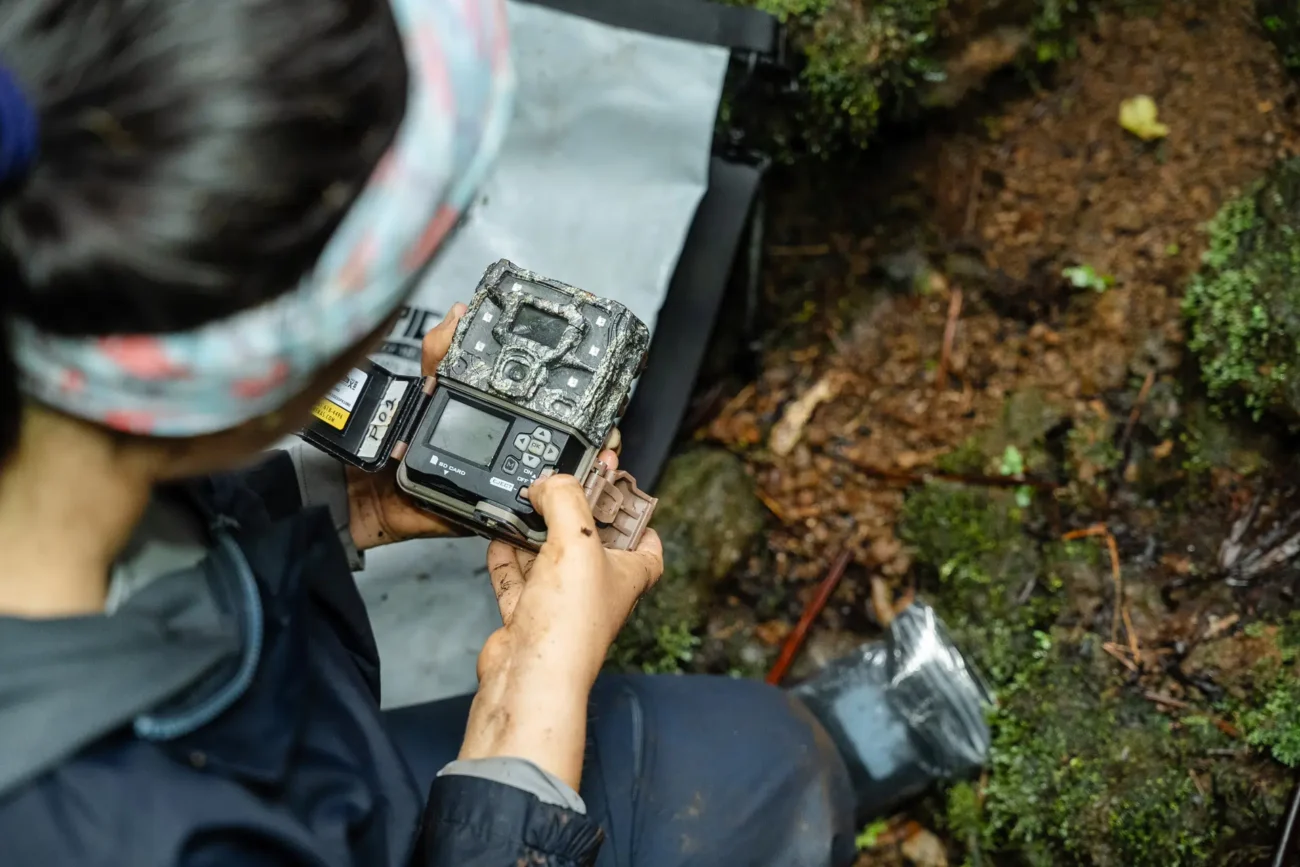
The breakthrough in protecting the Galapagos Petrel came through meticulous, on-the-ground fieldwork. This effort, undertaken in close coordination with the Galapagos National Park Directorate, systematically identified and documented these previously unknown nesting sites. Once located, the conservation work unfolds with a patient, steady rhythm. It involves the crucial task of protecting individual burrows, often by creating protective barriers to deter predators. Continuous monitoring of nesting activity is essential to track breeding success and identify any emerging threats. Crucially, a significant component of Paola’s work involves building trust and fostering collaboration with the landowners who share their territory with these elusive birds.
As awareness of the petrels’ presence and their ecological significance grows, so too does a profound sense of connection and shared responsibility. Landowners, who may have initially viewed the petrels as distant or even insignificant creatures, begin to perceive them as integral components of their own environment. The understanding dawns that the future of this unique species is inextricably linked to the health of the land they manage and the stewardship they provide. In this evolving relationship, conservation transforms from an external intervention into a collective endeavor, a shared commitment to protecting a natural heritage. Paola notes, "As awareness has grown, local communities and landowners hosting nests have begun to see the petrel as a symbol of shared responsibility… every time, I see a chick successfully fledge, I am reminded why we do this work, it is about giving a species a real chance to tell its story." This sentiment highlights the deeply human element of conservation, where success is measured not just in population numbers, but in the cultivation of empathy and a sense of belonging.
A Shared Horizon: The Power of Local Stewardship
Though separated by vast geographical distances, distinct species, and contrasting landscapes, the conservation stories of the Indian Skimmer and the Galapagos Petrel are bound by a powerful, unifying thread: conservation that originates from within the very territories inhabited by people. Whether it is along the dynamic, shifting edges of a river or nestled beneath the seemingly mundane soil of an island, these vital conservation efforts are sustained by individuals and communities who make a conscious choice to stay, to observe, and to care.
This decision – quiet, constant, and undeniably collective – is where the true possibility of recovery lies. It is a testament to the enduring power of local knowledge, the strength of community bonds, and the inherent human capacity to act as stewards of the natural world. In a time when environmental challenges often feel overwhelming, these stories offer a potent reminder that meaningful change can and does emerge from the ground up, driven by the dedication of those closest to the land and its inhabitants.
The recognition of Parveen Shaikh with the Whitley Award, alongside the ongoing efforts of Paola Sangolquío and their respective teams, underscores a critical insight: effective and sustainable conservation hinges on empowering local voices and fostering a sense of ownership. The implications of this approach are far-reaching, suggesting a scalable model for biodiversity protection that can be adapted to diverse ecological and social contexts worldwide. By investing in community-led initiatives, conservation organizations and governments can amplify their impact, fostering a more resilient and equitable future for both wildlife and the people who share their planet.
The BirdLife Partnership extends its heartfelt congratulations to Parveen and Paola, celebrating their unwavering dedication and the profound impact of their community-centered conservation work. Their successes are not merely victories for the Indian Skimmer and the Galapagos Petrel, but beacons of hope for endangered species and fragile ecosystems across the globe.

