


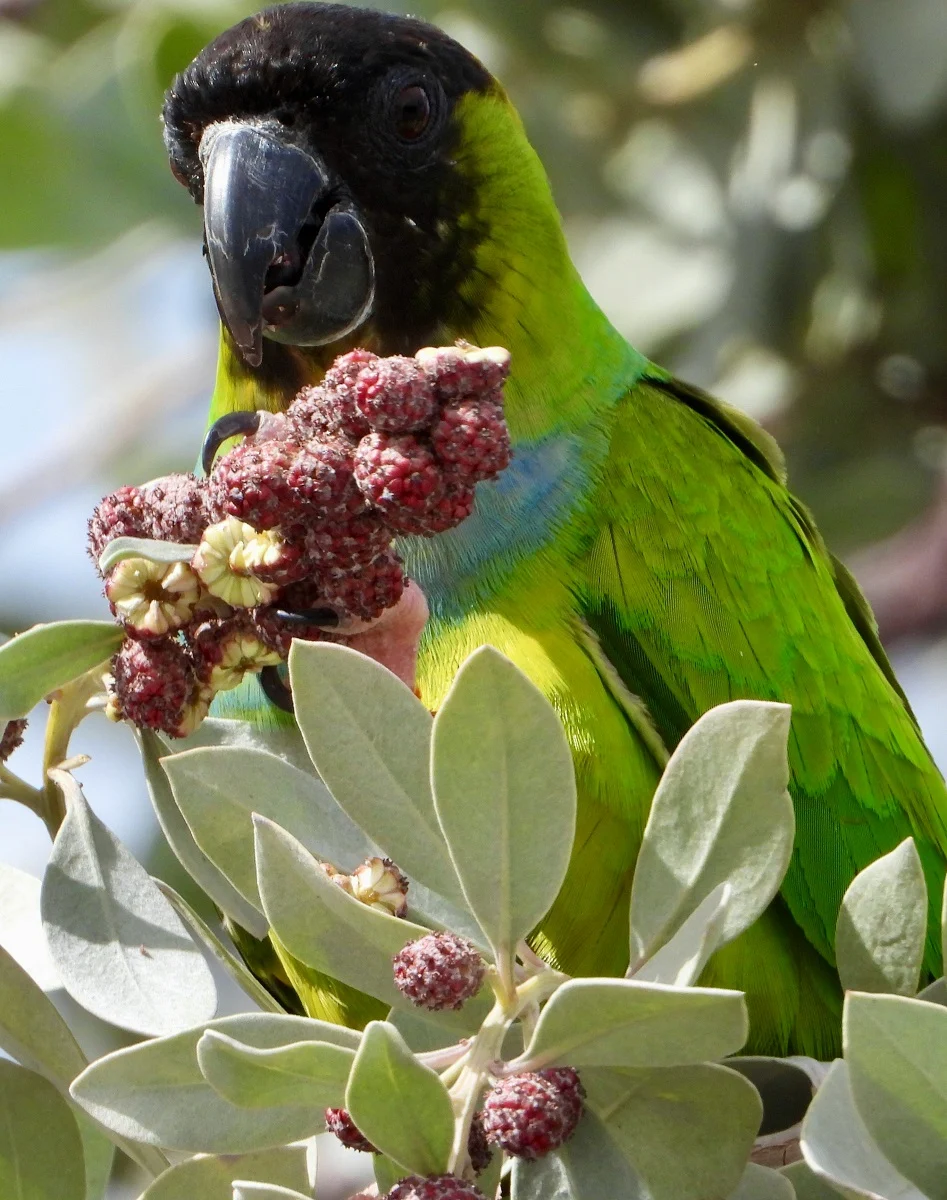
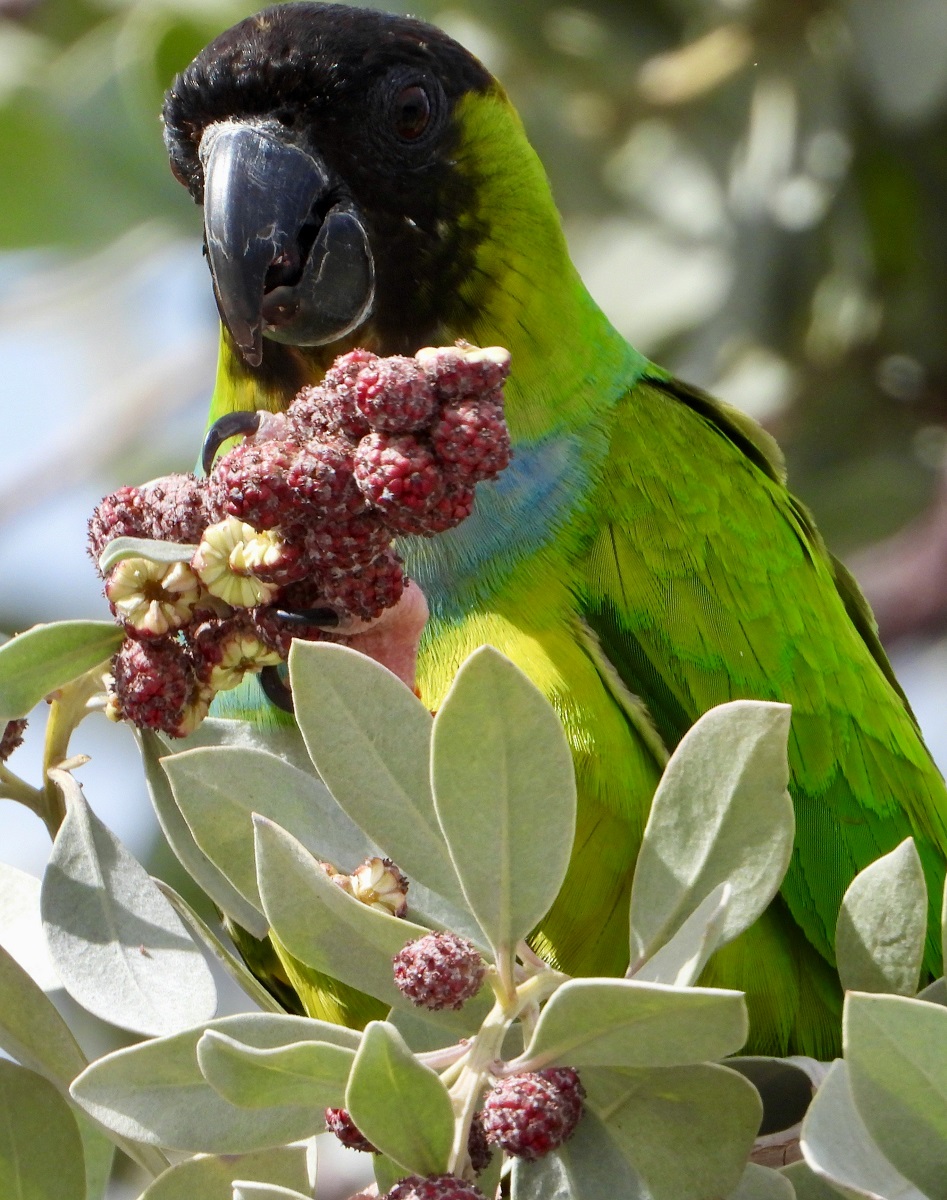
The nanday conure (Aratinga nenday), historically classified under the monotypic genus Nandayus before taxonomic revisions integrated it into the Aratinga genus, stands out as one of the most vibrant and vocal companion parrots available to avian enthusiasts. Recognized commonly by its striking appearance—highlighted by a stark black hood contrasting against a predominantly bright green body—this South American native has captured the interest of pet owners and ornithologists alike. However, prospective owners must balance the bird’s playful demeanor and striking aesthetics against significant husbandry challenges, most notably an exceptionally high noise level that requires careful consideration before bringing the species into a domestic environment.
Taxonomic Evolution and Natural History
The scientific understanding of the nanday conure has evolved through careful genetic and morphological study. For decades, the species occupied its own distinct genus, Nandayus. However, a landmark molecular study published in 2004 provided definitive phylogenetic evidence that the black-hooded parakeet shares a close evolutionary lineage with other members of the Aratinga genus, such as the sun conure and the jenday conure. This research prompted scientific consensus to reclassify the species as Aratinga nenday.
Endemic to central South America, the natural distribution of the nanday conure forms a distinct geographic corridor stretching through central Paraguay, southern Brazil, eastern Bolivia, and northern Argentina. Within this range, the species predominantly inhabits open lowlands, elevations generally remaining under 2,600 feet (800 meters). These habitats feature a mosaic of swampy terrains, dry woodlands, and pasturelands interspersed with palm trees, which provide critical nesting and roosting sites.
Field studies underscore the ecological role of the nanday conure within its native environment. Beyond consuming wild fruits, seeds, berries, and flower buds, these parrots act as vital pollinators. Research from 2002 documented the species feeding on and pollinating the nectar-rich flowers of the Erythrina dominguezii tree, transferring pollen as they forage. Additionally, like many neotropical parrots, nanday conures frequently visit mineral-rich clay licks to ingest soil, a behavior scientists believe assists in neutralizing dietary toxins and supplementing essential micronutrients.
Conservation Status and the Phenomenon of Naturalization
Global conservation evaluations present a stable outlook for the wild populations of Aratinga nenday. The International Union for Conservation of Nature (IUCN) Red List classifies the species as Least Concern. Interestingly, unlike many avian species facing population declines due to deforestation, the nanday conure has demonstrated resilience and even population growth. Anthropogenic land-use changes—specifically the conversion of dense forests into open cattle pastures—have inadvertently expanded the bird’s preferred foraging and nesting habitats.
Conversely, the adaptability of the nanday conure has manifested in complex ecological challenges outside its native range. Through the escape or intentional release of captive pets, the species has successfully established self-sustaining, feral populations in various global regions. Naturalized flocks now thrive in parts of Europe, such as Spain, and across multiple regions in the United States, including California and Florida. Ornithological surveys rank the nanday conure among the top three most successful naturalized parrot species in the United States. While these urban and suburban flocks demonstrate the remarkable hardiness of the species, wildlife management agencies note that introduced populations can compete with native fauna for resources and occasionally pose agricultural concerns.
Physical Characteristics and Lifespan
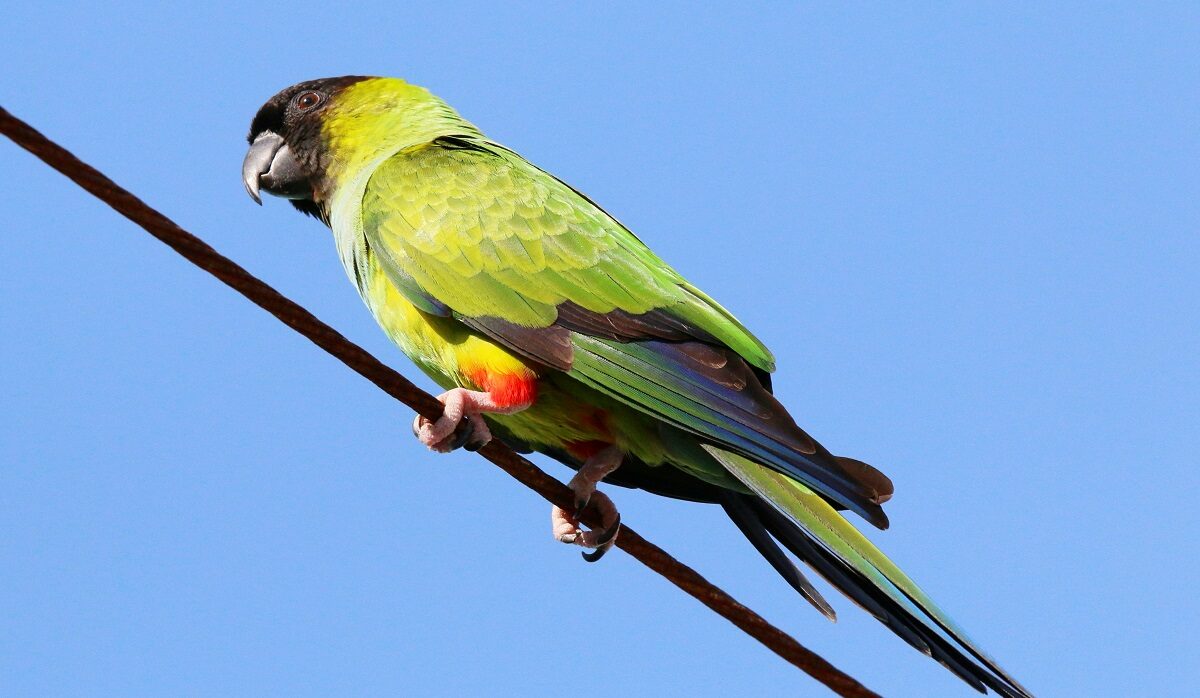
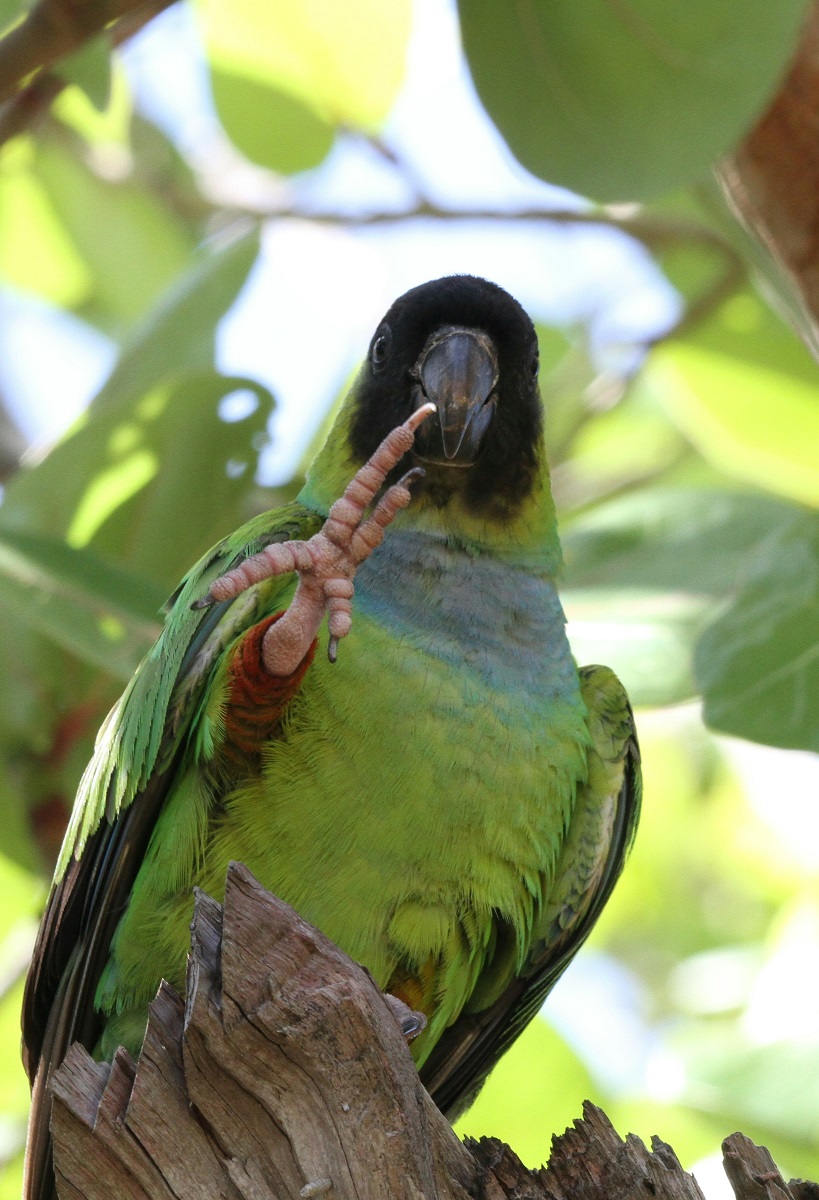
Classified as a small-to-medium-sized parrot, the adult nanday conure typically reaches lengths of up to 12 inches (30 centimeters) and maintains a healthy body weight of approximately 140 grams. The most defining physical trait is its dark, charcoal-black facial hood, framed by subtle brownish feathers on the upper chest. This dark mask contrasts sharply with a black beak, bare white eye-rings, vibrant blue-green chest plumage, and striking bright red feathers on the thighs and lower abdomen.
When provided with optimal captive management, veterinary care, and a balanced diet, nanday conures exhibit a notable longevity. Individuals regularly achieve a lifespan of up to 30 years in captivity, representing a long-term commitment for any household considering ownership.
Nutritional Requirements in Captivity
Transitioning from the diverse foraging habits of the wild to a captive environment requires a structured and nutritionally complete diet. Historically, avian husbandry heavily relied on all-seed mixtures. However, contemporary avian veterinary medicine—supported by leading specialists—strongly discourages seed-dominant diets, as they frequently lead to severe nutritional deficiencies, hepatic lipidosis (fatty liver disease), and obesity.
Avian veterinarians recommend high-quality formulated pellet food as the primary nutritional foundation for captive nanday conures. This baseline should be systematically supplemented with a wide variety of parrot-safe fresh fruits and vegetables, such as leafy greens, apples, peppers, broccoli, and grapes. Additional nutritional enrichment can include sprouted seeds, cooked whole grains like brown rice and pasta, and occasional protein sources such as small portions of boiled egg. Maintaining a strict dietary regimen is critical to mitigating chronic health issues and ensuring the long-term vitality of the bird.
Housing Specifications and Environmental Safety
Replicating an optimal captive environment requires meticulous attention to both spatial dimensions and safety hazards. For owners unable to provide a full-scale outdoor aviary—ideally measuring 10 feet (3 meters) in length—an indoor enclosure must be carefully selected. Avian experts emphasize that horizontal flight space is significantly more important than vertical height for conures. A spacious cage measuring at least 30 by 24 by 24 inches (75 by 60 by 60 centimeters), or preferably larger, allows the bird to fully extend and flap its wings.
The interior of the enclosure must feature natural wood perches of varying diameters to promote foot health, alongside a rotation of interactive toys designed to prevent cognitive stagnation. Furthermore, environmental safety within the home is paramount. Birds possess highly sensitive respiratory systems, rendering them exceptionally vulnerable to airborne toxins and chemical fumes. Responsible owners must strictly prohibit smoking, the use of aerosol sprays, scented candle burning, and the utilization of polytetrafluoroethylene (PTFE)-coated nonstick cookware in the vicinity of the bird.
Behavioral Enrichment and Social Dynamics
Cognitive stimulation remains one of the most critical responsibilities for parrot caretakers. Highly intelligent and inquisitive, nanday conures deprived of mental engagement and social interaction quickly develop behavioral pathologies, including excessive screaming, cage aggression, clinical depression, and self-mutilation behaviors such as feather-picking.
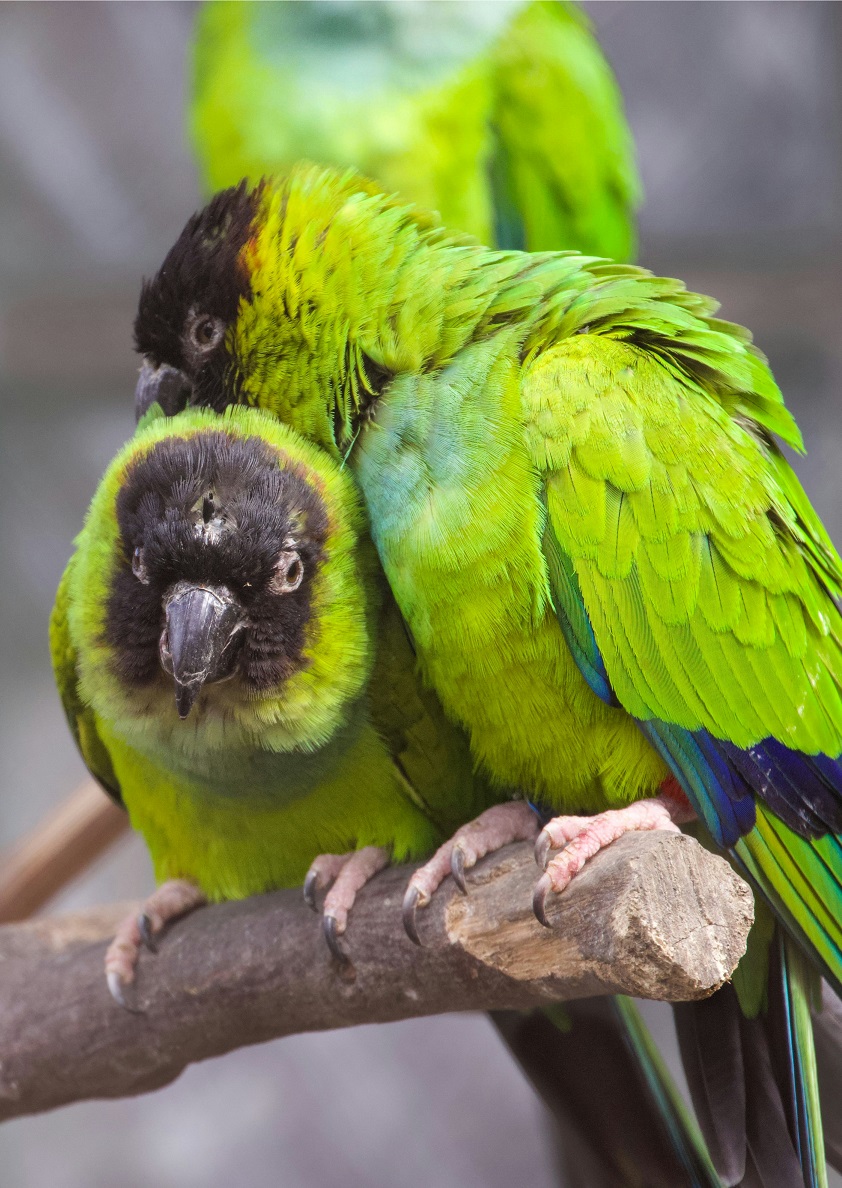
Socially, nanday conures are exceptionally gregarious. In the wild, they operate within complex flock structures, and this inherent drive translates directly into captive dynamics. Avian specialists frequently recommend housing conures in pairs or ensuring that human household members can dedicate substantial, uninterrupted time to daily interaction. This consideration is particularly vital for owners maintaining standard full-time employment schedules, as leaving a nanday conure isolated for prolonged periods can induce severe psychological stress. Comprehensive daily enrichment strategies—ranging from foraging puzzles to supervised out-of-cage exploration—are essential for maintaining psychological well-being.
Temperament and Interpersonal Relations
Within the broader Aratinga genus, nanday conures are widely celebrated among bird enthusiasts for their affectionate and outgoing dispositions. Unlike certain smaller parrot species, such as green-cheeked conures belonging to the genus Pyrrhura, a well-socialized nanday rarely resorts to habitual nipping. Generally tolerant of new human acquaintances, these birds often integrate smoothly into multi-member households.
However, this high sociability carries potential drawbacks. Nandays can become intensely bonded to their primary caretakers, occasionally exhibiting resource-guarding behaviors or jealousy toward other family members or perceived competitors for attention. A balanced day for a nanday conure typically involves interactive play with durable toys, vocalization and speech training, physical affection such as head scratches, and periods of rest in close proximity to their human companions.
Acoustic Profile: The Central Challenge of Ownership
The single most critical factor prospective owners must evaluate before acquiring a nanday conure is its vocalization capacity. Aratinga conures are widely recognized as some of the loudest parrots relative to their body size, and the nanday is no exception.
Acoustic data cited in avian literature underscores the intensity of these vocalizations. While large macaws can reach sound pressure levels of approximately 105 decibels, and Moluccan cockatoos can peak around 135 decibels, recordings of the nanday conure have registered peaks as high as 155 decibels. Ornithological and veterinary sources warn that vocalizations of this magnitude possess the potential to cause auditory fatigue or eardrum injury under close exposure.
Consequently, nanday conures are generally unsuited for multi-family dwellings, apartment complexes, or suburban environments with strict noise ordinances. Their natural behavioral rhythm prompts peak vocal activity around dawn and dusk, as well as during periods of excitement or environmental disruption. Alongside piercing flock calls, individuals can learn to mimic household sounds, whistles, and limited human speech patterns, offering a complex blend of companionship and acoustic intensity that demands careful lifestyle preparation by any prospective owner.

