


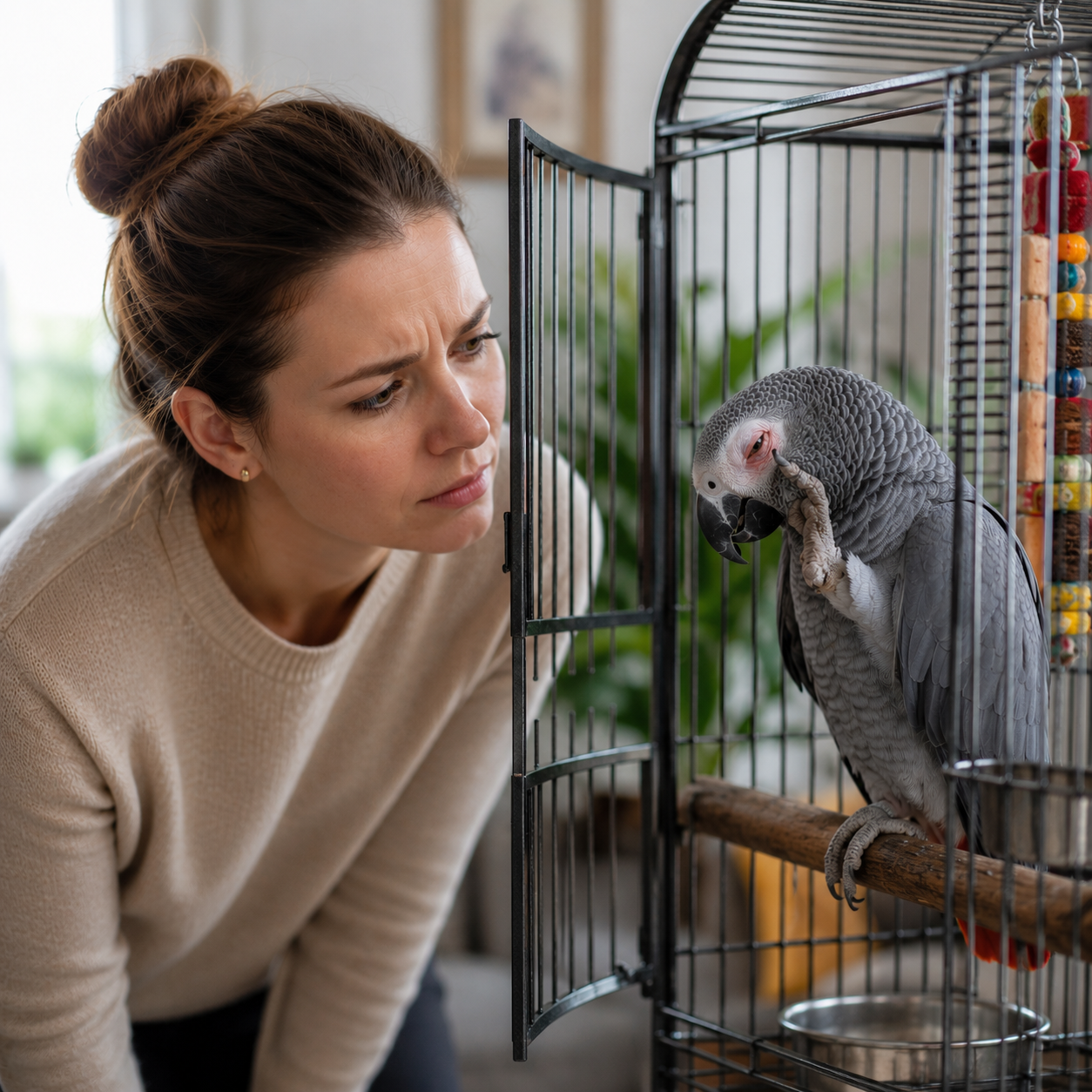
Observing your parrot rubbing its eye against a perch, toy, or its own foot is a behavior that often triggers immediate concern among avian caregivers. While the occasional, fleeting swipe at the ocular area can be dismissed as a minor grooming quirk, persistent or repetitive rubbing serves as a critical diagnostic indicator. In the field of avian medicine, the distinction between healthy preening and pathological eye irritation is paramount. Veterinary professionals note that because birds are evolutionarily predisposed to mask signs of illness to avoid predation, behavioral changes—such as localized scratching—are frequently the only early warning signs of underlying infection, trauma, or environmental distress.
The Physiology of Avian Ocular Health
To understand why a bird might rub its eye, one must first understand how a healthy parrot maintains its vision. Unlike mammals, birds possess a unique anatomical feature known as the nictitating membrane, or the "third eyelid." This thin, translucent structure acts as a biological windshield wiper, moving horizontally across the cornea to clear debris and distribute moisture. Furthermore, the skin surrounding the eye is covered in specialized feathers that require routine, gentle preening.
However, the ocular surface of a bird is highly sensitive. The avian eye is larger in proportion to the skull than that of most mammals, leaving it more exposed to environmental hazards. When a bird begins to exhibit repetitive, focused rubbing, it is rarely a grooming choice; rather, it is a response to the stimulation of nociceptors—nerve endings that signal pain or discomfort. If this behavior continues, it suggests that the natural defense mechanisms—the third eyelid and tear production—are insufficient to resolve the irritant.
Establishing a Timeline for Intervention
The urgency of a medical response is largely dictated by the duration and frequency of the behavior. Owners are encouraged to maintain a log of their bird’s behavior to assist in the diagnostic process.
- Initial Observation: If a bird rubs its eye once or twice, the caregiver should monitor the situation from a distance without interference. At this stage, the bird may have encountered a minor speck of dust or a loose feather fiber.
- The 24-Hour Threshold: If the rubbing persists beyond a 24-hour window, or if the behavior occurs intermittently throughout the day, the likelihood of a foreign body or initial stage of infection increases significantly.
- Acute Symptomatology: If the rubbing is accompanied by visible physical changes, such as unilateral squinting, periorbital swelling, or discharge, the situation must be classified as an urgent veterinary matter. Delaying treatment during this phase can lead to secondary corneal ulcers, which are notoriously difficult to treat in avian patients.
Diagnostic Factors and Environmental Triggers
Veterinary clinicians often categorize the causes of eye rubbing into four distinct quadrants: mechanical, infectious, environmental, and nutritional.
Mechanical irritation is perhaps the most common, resulting from physical objects such as seed husks, cage substrate dust, or accidental trauma during flight. A bird may also inadvertently scratch its cornea with a sharp claw, leading to immediate inflammation.
Infectious causes, however, present a more complex scenario. Respiratory infections in birds are often systemic; because the avian respiratory system is intricately connected to the sinuses, a sinus infection frequently manifests as ocular discomfort. If a bird is rubbing only one eye, clinicians investigate the possibility of a localized bacterial or fungal infection, whereas bilateral rubbing often points toward airborne irritants.
Environmental data suggests that household pollutants are a leading, yet often overlooked, cause of chronic eye issues in pet birds. Volatile organic compounds (VOCs) released by scented candles, aerosol cleaning products, air fresheners, and non-stick cookware (which releases toxic polytetrafluoroethylene fumes) can cause severe chemical conjunctivitis. In these cases, the bird is not just grooming; it is reacting to an atmospheric toxin.
The Role of Nutritional Deficiencies
Beyond immediate irritants, the bird’s long-term health status plays a foundational role in ocular integrity. Vitamin A deficiency (hypovitaminosis A) is a prevalent concern in companion parrots fed a restricted, seed-only diet. Vitamin A is essential for the maintenance of epithelial tissues, including the conjunctiva and the lining of the sinuses. When a bird is deficient, these tissues become prone to keratinization, making them highly susceptible to secondary bacterial infections. While a nutritional adjustment will not cure an acute eye injury, it is a vital component of the recovery protocol and a necessary preventative measure for long-term health.
Clinical Perspectives and Veterinary Protocol
When an avian veterinarian conducts an examination, they move beyond the surface level. The clinical standard involves a thorough inspection of the eye, which may include the use of fluorescein staining to detect corneal abrasions or ulcers. Veterinarians also perform a physical evaluation of the nares and oral cavity to ensure that the eye issue is not a secondary symptom of a broader upper respiratory tract infection.
Statements from avian health experts emphasize that "home remedies" are strongly discouraged. The application of over-the-counter eye drops, which may contain preservatives or medications not formulated for avian physiology, can cause catastrophic damage to the sensitive ocular surface of a bird. The primary objective for the owner is to minimize stress and prevent the bird from further traumatizing the eye through continued rubbing.

Practical Implications for Owners
For the bird owner, the most effective strategy is a combination of vigilant monitoring and proactive environmental control. If a bird begins to exhibit the "rubbing" behavior, owners should perform a "safety sweep" of the immediate environment. Are there new cleaning supplies? Is there an unusual amount of dust in the room? Has the bird recently had access to a new toy that might contain sharp or irritating materials?
Data suggests that birds kept in environments with proper air filtration and high-quality, varied diets show a marked reduction in ocular-related complaints. However, should these measures fail to halt the behavior, the prognosis for recovery is significantly higher when professional veterinary intervention is sought within the first 48 hours of symptom onset.
Broader Impact on Avian Welfare
The act of eye rubbing serves as a microcosm of the challenges involved in exotic animal care. Because birds are prey animals, they do not exhibit pain in the same manner as dogs or cats. A bird that is rubbing its eye is a bird that is telling its owner, through the only language it has, that its comfort and quality of life are being compromised.
As we continue to advance our understanding of avian medicine, the importance of recognizing subtle behavioral shifts becomes clearer. By shifting the perspective from "is this normal?" to "is this a symptom of an underlying condition?", owners become active participants in their pet’s health management. The integration of proper nutrition, a clean living environment, and the establishment of a relationship with an avian-certified veterinarian ensures that even minor irritations do not escalate into life-altering medical emergencies.
Conclusion and Recommendations
In summary, while occasional preening is a hallmark of a healthy bird, the repetitive, localized rubbing of the eye is a red flag that necessitates observation and, frequently, medical consultation. Owners should remain observant of the frequency of the behavior, the presence of unilateral or bilateral symptoms, and the environmental factors that might be contributing to the discomfort.
For those navigating these symptoms, the consensus among veterinary professionals is clear: remove potential irritants, avoid self-medicating, and seek the expertise of a specialist. By addressing these issues with a methodical, data-driven approach, owners can ensure their companions maintain the visual acuity and comfort necessary for a long, healthy life. Proper vigilance today prevents the complications of tomorrow, ensuring that our parrots remain active, curious, and clear-eyed members of our families.

