


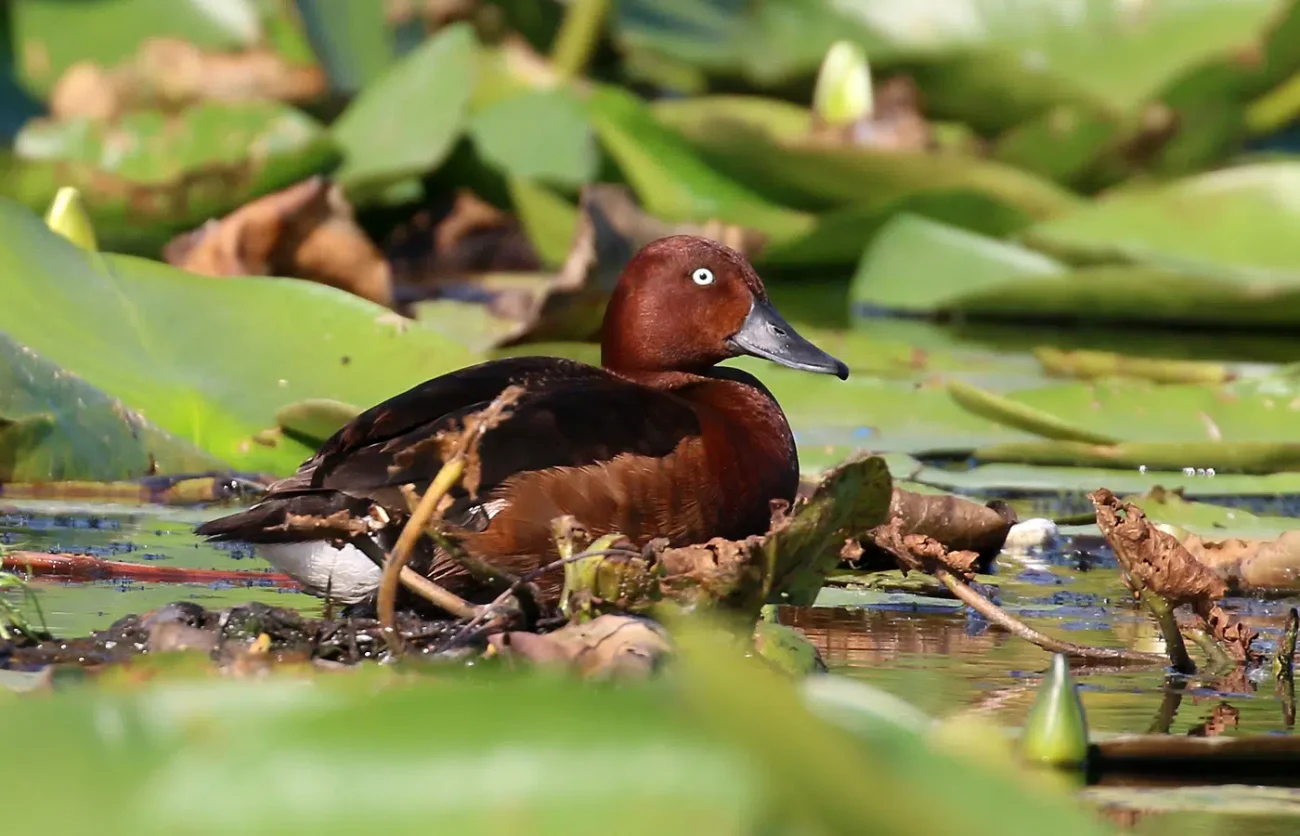
The African-Eurasian Flyway stands as one of nature’s most ambitious and intricate logistical networks. Stretching from the frozen reaches of the Arctic tundra to the sun-drenched southern tip of Africa, this migratory superhighway facilitates the seasonal movement of more than two billion birds representing 465 distinct species. Among these winged travelers, the Ferruginous Duck (Aythya nyroca) has emerged as a poignant indicator of ecological health. Currently classified as Near Threatened by the International Union for Conservation of Nature (IUCN), this diving duck serves as a biological bridge between diverse cultures and landscapes, its survival inextricably linked to the integrity of wetlands separated by thousands of miles.
A Comprehensive Overview of the Flyway Ecosystem
The African-Eurasian Flyway is not merely a geographic corridor but a complex, interconnected system of essential stopover sites and breeding grounds. The system encompasses a vast array of habitats, including estuaries, river deltas, inland lakes, and man-made wetlands. For species like the Ferruginous Duck, these sites are the difference between life and death. During its migration, the duck relies on a network of Key Biodiversity Areas (KBAs)—sites of global importance for the persistence of biodiversity. Two of the most critical nodes in this network are the Pokuplje Basin in Croatia and Lake Nasser in Egypt.

Historical Context and Current Threats
The decline of migratory bird populations along this corridor has been a matter of increasing concern for ornithologists and conservationists for several decades. According to data from BirdLife International, approximately 8% of the 465 bird species utilizing the flyway are now globally threatened with extinction, while a staggering 44% are experiencing population declines.
The factors driving this trend are multifaceted. The intensification of global agricultural practices has led to the widespread drainage of wetlands, effectively removing "refueling stations" for migrating birds. Furthermore, the expansion of aquaculture—while providing economic benefits—often comes at the expense of natural marshlands that species like the Ferruginous Duck require for foraging and nesting. Additional threats include the illegal killing of birds, the loss of stopover habitats due to urban development, and the vulnerability of waterbird populations to outbreaks of avian influenza and the West Nile virus.
The Pokuplje Basin: A European Stronghold
Situated in the heart of Croatia, the Pokuplje Basin represents a quintessential European stopover and breeding ground. Spanning approximately 350 square kilometers, this wet lowland landscape is characterized by a mosaic of oak forests and open meadows. The basin is particularly notable for its network of traditional carp fishponds, such as Crna Mlaka and Draganic, which mimic natural wetland conditions.

During the peak of the migratory season, the Pokuplje Basin provides refuge for over 20,000 waterbirds. Beyond the Ferruginous Duck, the area serves as a vital nesting site for the White-tailed Sea-eagle and the Collared Flycatcher. The importance of this site lies in its ability to offer a stable environment where birds can accumulate the necessary lipid reserves required for the next leg of their journey. However, balancing the economic demands of the local aquaculture industry with the conservation requirements of these migratory species remains a persistent challenge for Croatian environmental authorities.
Lake Nasser: An African Sanctuary
As the Ferruginous Duck traverses the continent, it arrives at the massive, man-made expanse of Lake Nasser in Egypt. As one of the largest reservoirs in the world, the lake acts as a critical wintering ground for birds migrating from the Northern Hemisphere. During the winter months, the reservoir supports a staggering population of over 200,000 waterbirds, serving as a primary habitat for the Ferruginous Duck, the Black-necked Grebe, and the Great White Pelican.
The ecological significance of Lake Nasser extends beyond its avian residents. The lake sustains the remaining populations of Nile Crocodiles in Egypt, alongside the African Softshell Turtle and the Dorcas Gazelle. From a human perspective, the lake is a cornerstone of the Egyptian economy, providing hydroelectric power through the Aswan High Dam, irrigation for extensive agricultural projects, and a vital source of protein through its fisheries. The interplay between these human activities and the preservation of the lake’s biodiversity is a model for how large-scale infrastructure can, with proper management, coexist with high-value natural heritage.

Strategic Intervention: The Ecological Restoration Fund
In response to the deteriorating status of the flyway, the conservation sector has shifted toward a landscape-level approach. In June 2026, BirdLife International secured a £7.5 million grant from the Ecological Restoration Fund (ERF). This three-year initiative is designed to create an "ecologically coherent network" of protected sites.
The program’s objectives are threefold:
- Restoration: Rehabilitating degraded wetlands to improve water quality and food availability for migratory species.
- Protection: Implementing stricter enforcement against illegal hunting and habitat encroachment.
- Integration: Aligning conservation outcomes with the economic needs of local communities to ensure long-term sustainability.
Official Response and Local Advocacy
At the local level, organizations such as Nature Conservation Egypt (NCE) have been instrumental in transforming the prospects of Lake Nasser. By conducting multi-year waterbird surveys, NCE has provided the empirical evidence required to lobby for policy changes. A significant victory in these advocacy efforts was the successful implementation of a total hunting ban at the site.

The results of these interventions have been tangible. Ornithologists have reported the return of the Long-tailed Cormorant to the region after years of absence, suggesting that when human pressure is mitigated, the ecosystem possesses a significant capacity for recovery. Statements from conservation leaders emphasize that protecting these sites is not merely an exercise in wildlife management but a vital contribution to climate resilience and the preservation of global cultural heritage.
Analysis: The Path Forward
The challenge of the African-Eurasian Flyway is ultimately one of coordination. Because these birds cross international borders, the efficacy of conservation efforts in one country is often dependent on the actions taken in another. If the Pokuplje Basin is protected but the wintering grounds in Egypt are degraded, the migratory cycle is broken.
The integration of Key Biodiversity Areas into national planning policies is the most effective way to ensure the long-term survival of the Ferruginous Duck and its counterparts. By utilizing the £7.5 million ERF grant to harmonize conservation strategies across the flyway, organizations hope to move beyond reactive site-based management to a proactive, transnational governance model.

The Ferruginous Duck serves as a living thermometer for the health of our planet’s interconnected ecosystems. Its journey from the Arctic to Africa is a testament to the resilience of nature, yet it is a journey that is becoming increasingly precarious. The current commitment to protecting the network of sites that span this flyway is an acknowledgment that the preservation of migratory species is an essential component of global environmental security. As efforts to restore habitats in Croatia and secure wildlife refuges in Egypt continue, the goal remains clear: to ensure that the African-Eurasian Flyway remains a functioning, vibrant highway for the millions of birds that rely on it for their continued existence. The next three years of the ERF initiative will likely prove decisive in determining whether these populations continue to decline or begin a period of sustained recovery.

