


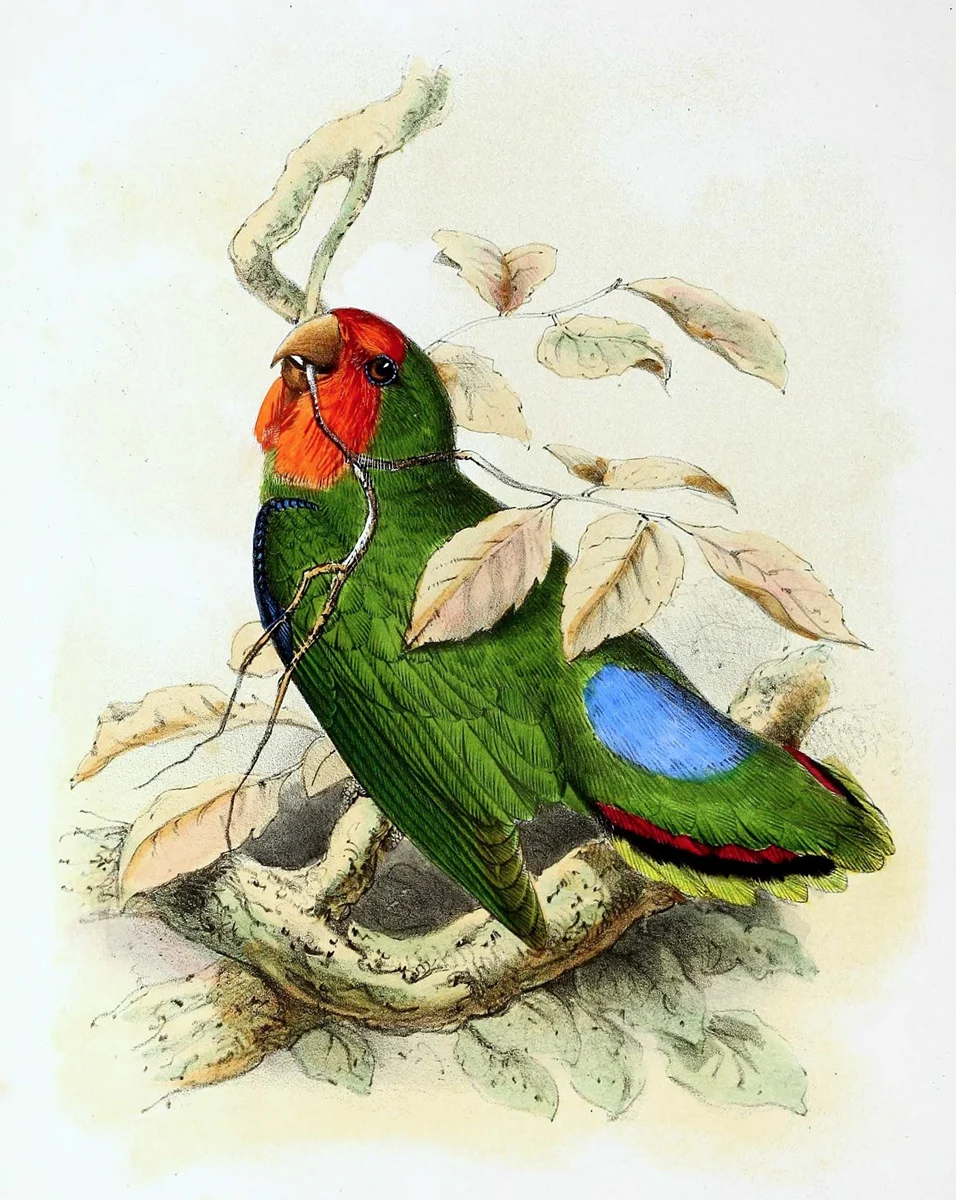
Agapornis pullarius, commonly known as the Red-headed Lovebird or Red-faced Lovebird, stands as a distinctive and somewhat enigmatic species within the vibrant genus of lovebirds. Unlike its more widely recognized cousins, such as the Peach-faced Lovebird (Agapornis roseicollis) or Fischer’s Lovebird (Agapornis fischeri), which have achieved immense popularity in aviculture globally, the Red-headed Lovebird remains a rarity in human care. This relative obscurity is largely attributed to its inherently stress-prone nature, making it a challenging species to maintain outside its natural West and Central African tropical savannah habitats. Its delicate disposition underscores the profound differences in temperament and adaptability even among closely related avian species, highlighting the complex considerations involved in wildlife conservation and responsible pet ownership.
Geographic Footprint and Habitat Preferences
The Red-headed Lovebird’s natural range spans a significant, albeit patchy, band across sub-Saharan Africa. This distribution stretches from western nations like Guinea eastward through Central Africa, reaching as far as Ethiopia. Within this vast territory, Agapornis pullarius is largely sedentary, exhibiting minimal nomadic behavior. Its preferred environment is the tropical lowland savannah, an ecosystem characterized by a mix of grasslands and scattered trees. While the species appreciates the presence of trees for shelter and nesting, it actively avoids dense primary forests, suggesting a preference for open canopy environments where flight and foraging are less impeded. This habitat choice is crucial for understanding its ecological niche, as the savannah offers specific resources and challenges that have shaped its evolutionary trajectory.
Typically observed traveling in pairs or small flocks comprising up to a few dozen birds, these lovebirds are social but not extensively gregarious like some other parrot species. They can be found at altitudes reaching up to 2,000 meters (approximately 6,550 feet), though they are more commonly sighted at lower elevations. Their reliance on specific savannah characteristics, such as the availability of certain grass seeds and nesting sites, dictates their localized abundance across their broad range. The presence of water sources and the seasonal cycles of vegetation also play critical roles in their localized movements and breeding patterns.
A Striking Appearance with Subtle Distinctions
The Red-headed Lovebird is a visually captivating parrot, characterized by a vibrant palette. Its body is predominantly a bright emerald green, providing excellent camouflage amidst the foliage of its natural habitat. This verdant plumage is strikingly contrasted by a vivid scarlet red face and beak, which gives the species its common name. Further enhancing its beauty, a subtle dash of blue adorns its lower back, and a small band of red can be found on its tail feathers. These distinct markings contribute to its unique aesthetic.
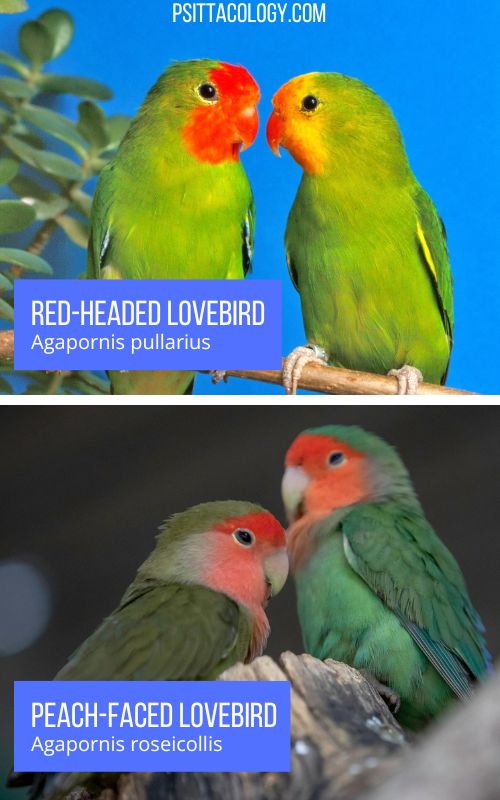
Often, the Red-headed Lovebird is compared to the more common Peach-faced Lovebird (Agapornis roseicollis) due to superficial similarities in their overall green body and colored faces. However, a key distinguishing feature lies in their beaks: Agapornis pullarius possesses a bright red beak, while A. roseicollis has a pale, horn-colored beak. This simple detail is often the easiest way for observers to differentiate between the two species.
Sexual dimorphism is also present in Agapornis pullarius, though it is subtle. Males typically exhibit a brighter, more intense scarlet coloration on their face and beak. In contrast, females display a slightly duller facial mask, leaning more towards an orange hue, and their beaks are also less intensely colored. This visual difference allows for sex determination without invasive methods, a useful trait for both field researchers and dedicated aviculturists.
The species comprises two recognized subspecies:

- Agapornis pullarius pullarius: This is the nominate subspecies, widespread across the western and central parts of the species’ range, and the one most commonly depicted in illustrations and photographs.
- Agapornis pullarius ugandae: Known as the Ugandan Red-headed Lovebird, this subspecies is found further east, particularly in regions like Uganda. It is generally described as being slightly smaller and often appears greener overall, with less extensive or less intense red on the face compared to the nominate subspecies. These geographical variations reflect adaptations to slightly different local environments and resource availability across their extensive African distribution.
Dietary Habits and Ecological Role
Like many other parrot species, the Red-headed Lovebird’s diet is primarily granivorous, meaning it consists mainly of seeds. Its preferred food source is grass seeds, which are abundant in its savannah habitat. This dietary preference extends to agricultural crops such as millet, a staple grain cultivated in many parts of Africa. Consequently, the Red-headed Lovebird is sometimes perceived as a crop pest by local farmers, leading to human-wildlife conflict where birds may be culled to protect harvests. This dynamic highlights the challenges of coexistence between wildlife and agricultural expansion in shared landscapes.
Beyond grass seeds, these lovebirds supplement their diet with various wild fruits, including figs and guava, whenever these resources are available. The inclusion of fruits provides essential vitamins, minerals, and moisture, particularly during dry seasons when seeds may be less abundant. Their feeding habits play a vital ecological role in seed dispersal, contributing to the regeneration and diversity of plant species within their ecosystem. By consuming fruits and seeds and then dispersing them through their droppings, they act as important agents in the natural propagation of vegetation.
Conservation Status and Mounting Challenges
The International Union for Conservation of Nature (IUCN) Red List currently classifies Agapornis pullarius as a species of "Least Concern." This designation typically implies a relatively stable and widespread population that is not immediately threatened with extinction. However, this broad classification can be misleading for the Red-headed Lovebird, as the IUCN itself notes that the species is "locally uncommon" throughout much of its vast natural range. This paradox underscores a critical issue in conservation: a species can be widespread geographically yet experience significant, localized declines that, when aggregated, point to a concerning overall trend.
Indeed, the population size of Agapornis pullarius is regrettably considered to be decreasing. This decline is attributed to a confluence of anthropogenic pressures, primarily habitat destruction, the killing of birds by farmers, and capture for the international pet trade.
- Habitat Destruction: Across West and Central Africa, vast tracts of tropical savannah are being converted for agricultural expansion, logging, and infrastructure development. Deforestation fragments the lovebirds’ habitat, isolating populations and reducing access to essential food and nesting resources. This habitat loss not only shrinks their living space but also disrupts ecological processes vital for their survival.
- Human-Wildlife Conflict: As noted, the Red-headed Lovebird’s preference for grass seeds extends to agricultural crops like millet. This leads to direct conflict with farmers who view them as pests detrimental to their livelihoods. Consequently, birds are often trapped, poisoned, or killed to protect crops, exacerbating population declines.
- The Pet Trade: The capture of wild birds for the pet trade represents a significant threat. A 2018 study highlighted a staggering statistic: almost 40,000 Red-headed Lovebirds were exported from Africa since 1975. This figure, though decades old, provides a stark indication of the historical demand and the immense pressure placed on wild populations. While international regulations like CITES (Convention on International Trade in Endangered Species of Wild Fauna and Flora) aim to control such trade, illegal trafficking persists, often with devastating impacts on species that are difficult to breed in captivity and thus heavily reliant on wild-caught specimens.
Ornithological experts Parr and Juniper, in their authoritative 2010 work "Parrots: a guide to parrots of the world," succinctly captured the species’ predicament: "Abundance also varies owing to nomadic habits, but a genuine overall decline appears to have occurred in many areas this century. Trapped for live bird trade with large numbers in captivity outside range." This statement, nearly fifteen years old, suggests that the decline has been a long-standing concern, predating more recent studies.
The Impact of the Pet Trade: A Historical Perspective
The statistic of 40,000 Red-headed Lovebirds exported since 1975 provides a critical timeline for understanding the species’ vulnerability. The period from the 1970s through the 1990s saw a boom in the exotic pet trade, particularly for parrots, driven by growing global affluence and laxer regulations in source countries. While some lovebird species adapted relatively well to captivity, the Red-headed Lovebird’s stress-prone nature meant that many wild-caught individuals likely did not survive the capture, transport, and acclimatization processes. This high mortality rate often necessitated even greater numbers being extracted from the wild to meet demand, creating a vicious cycle of exploitation.
Conservationists have repeatedly voiced concerns that even for species listed as "Least Concern," persistent, unregulated trade can deplete local populations to critical levels, leading to genetic bottlenecks and increased susceptibility to other threats. The Red-headed Lovebird serves as a poignant example of how historical trade practices, even if now more regulated, can have lasting impacts on wild populations. The implications extend beyond population numbers; removing individuals can disrupt social structures, breeding patterns, and local ecosystems.

Conservation Efforts and Recommendations
Despite the "Least Concern" status, the observed decline necessitates proactive conservation measures. Monitoring local populations more rigorously is crucial to identify specific areas of concern. Efforts to mitigate human-wildlife conflict, such as developing crop protection strategies that do not harm birds or providing compensation to farmers for crop losses, could reduce the pressure from agricultural communities. Furthermore, strengthening international and national regulations against illegal bird trade, coupled with public awareness campaigns about the ethical implications of owning wild-caught exotic birds, are essential steps to protect Agapornis pullarius and other vulnerable species from further decline. Supporting local conservation initiatives that focus on habitat preservation and restoration within their savannah range is also paramount.
The Red-headed Lovebird in Aviculture: A Specialized Pursuit
In stark contrast to the widespread popularity of many of its Agapornis relatives, the Red-headed Lovebird remains a rare sight in aviculture. It is not typically maintained as a common pet and is almost exclusively found in the care of highly dedicated parrot enthusiasts or specialized breeders who possess extensive experience with delicate species. The primary hurdle to its broader adoption in captivity is its highly nervous temperament. These birds are extraordinarily susceptible to stress, with wild-caught individuals particularly vulnerable to sudden environmental changes or disturbances. A loud noise, an unfamiliar presence, or even the proximity of boisterous cage mates can induce fatal stress in these sensitive parrots.
Consequently, those who manage to keep Agapornis pullarius do so primarily as aviary birds, focusing on observation rather than interaction. The expectation of a tame, interactive pet is unrealistic; these birds thrive on minimal human interference, preferring to maintain their wild instincts. This delicate nature underscores the ethical responsibility of aviculturists to provide an environment that minimizes stress and caters to their specific needs, often in a quiet, secluded setting.
Housing Requirements for a Nervous Species
For experienced parrot enthusiasts who have acquired captive-bred Red-headed Lovebirds, creating an appropriate housing environment is paramount. A heated aviary is generally preferred, providing ample space for flight and natural behaviors. Crucially, these birds often thrive when kept solo or in established pairs, as they can be easily intimidated or stressed by the presence of other, more assertive avian species.
If kept indoors, a spacious cage is essential, with dimensions of at least 30 inches (80 cm) wide to allow for movement. The bar spacing should be approximately 0.5 inches (1.25 cm) to prevent escapes or injuries. The cage must be furnished with a variety of natural wood perches of differing diameters to promote foot health. Placement of the cage is equally important; it should be in a quiet room, away from high-traffic areas, sudden noises, or direct drafts, mimicking the stable and secure environment they need. Providing a sense of privacy, perhaps with a partially covered side, can further reduce stress.
Nutritional Needs in Captivity
Historically, Red-headed Lovebirds in captivity have been fed predominantly dry or sprouted seeds. While seeds are a natural component of their wild diet, modern avian veterinary consensus emphasizes the superior nutritional completeness of a high-quality pelleted diet for most parrot species. Pellets are formulated to provide a balanced array of vitamins, minerals, and macronutrients, addressing potential deficiencies inherent in seed-only diets.
Therefore, dedicated keepers should aim to transition their birds to a high-quality pelleted diet as the primary food source. This should be supplemented with a diverse range of fresh foods. A premium seed mix can be offered in moderation, alongside an abundance of fresh vegetables, particularly leafy greens like kale, spinach, and romaine lettuce. Various fresh fruits, such as apples, berries, and melon, should also be included, ensuring they are parrot-safe. Additionally, cooked grains (e.g., quinoa, brown rice) and select foraged weeds (e.g., dandelion, chickweed, ensuring they are pesticide-free) can further enrich their diet. For breeding birds or those requiring additional protein, supplements like boiled egg or mealworms can be beneficial, providing crucial nutrients for egg production and chick development.
Enrichment for Mental and Physical Well-being
Like all parrots, Red-headed Lovebirds are intelligent creatures that require mental and physical stimulation to prevent boredom and associated stress behaviors. For this species, enrichment strategies must be implemented with particular sensitivity, given their stress-prone nature. New items should be introduced gradually to avoid startling them.
Essential enrichment items include:
- Chew Toys: Parrots have an innate need to chew to keep their beaks healthy and to relieve stress. A variety of natural wood toys, shreddable materials, and foraging toys that encourage problem-solving should be provided.
- Foraging Opportunities: Mimicking natural foraging behaviors is critical. Hiding food in various locations, using foraging boxes, or scattering seeds in safe substrates encourages natural exploration and problem-solving, providing mental stimulation.
- Bathing Dishes: Access to a shallow bathing dish with fresh water is important for feather hygiene and can be a source of enjoyment.
- Privacy and Hiding Spots: Due to their nervous disposition, providing secluded spots within the aviary or cage, such as dense natural branches or hideaways, allows the birds to retreat and feel secure when feeling threatened or overwhelmed.
- Natural Branches and Substrates: Offering natural branches for perching and varying substrates on the aviary floor (e.g., safe soil, sand, wood chips) provides tactile stimulation and promotes natural behaviors.
Reproduction: A Natural Enigma and Captive Challenge
In the wild, Red-headed Lovebirds time their breeding season to coincide with the rainy season, when food resources are most abundant. Their nesting habits are particularly unique and contribute significantly to the difficulty of breeding them in captivity. The species typically nests in arboreal (tree-dwelling) termite or ant nests. The female meticulously burrows into the termitarium, creating a secure chamber, which she then reinforces with plant materials such as grass leaves. This specialized nesting strategy likely offers excellent insulation and protection from predators. Occasionally, they may also utilize nests located on the ground or take up residence in tree hollows excavated by woodpeckers. Once the nest is prepared, the female lays a clutch of up to six eggs.
The requirement for burrowing into termite nests and their inherent nervousness makes Agapornis pullarius notoriously challenging to breed successfully in captivity. Standard nest boxes often fail to replicate the specific conditions these birds seek. However, dedicated aviculturists have made progress, with some successfully employing specialized nest boxes crafted from cork, which may better mimic the texture and insulation properties of natural termite mounds. These successes highlight the ingenuity and patience required to understand and cater to the highly specific needs of such a sensitive species, and such efforts are invaluable for establishing sustainable captive populations.
Vocalizations: A Relatively Subdued Call
Compared to many other parrot species, the Red-headed Lovebird is considered relatively quiet. However, like all psittacines, it possesses the capacity for vocalization and can become loud when agitated, alarmed, or seeking attention. Its calls are generally described as shrill, characterized by high-pitched notes. These vocalizations serve various purposes in the wild, including contact calls to communicate with flock members, alarm calls to warn of predators, and territorial displays. While not as overtly noisy as some larger parrots, their shrill calls can still be distinctive within their environment. Recordings of their vocalizations, such as those available on platforms like Xeno-Canto, offer an insight into their auditory repertoire.
The Red-headed Lovebird, Agapornis pullarius, stands as a testament to the intricate diversity of avian life and the specialized adaptations that allow species to thrive in particular ecological niches. Its stress-prone nature, unique nesting habits, and delicate disposition make it a captivating subject for scientific study and a profound challenge for aviculturists. While its "Least Concern" conservation status may offer a semblance of security, the ongoing threats of habitat destruction, human-wildlife conflict, and historical pressures from the pet trade underscore the importance of continued vigilance and targeted conservation efforts. Understanding and respecting the specific needs of this elusive African parrot is crucial for ensuring its continued survival in both its natural savannah home and, for a select few, in dedicated human care.

