


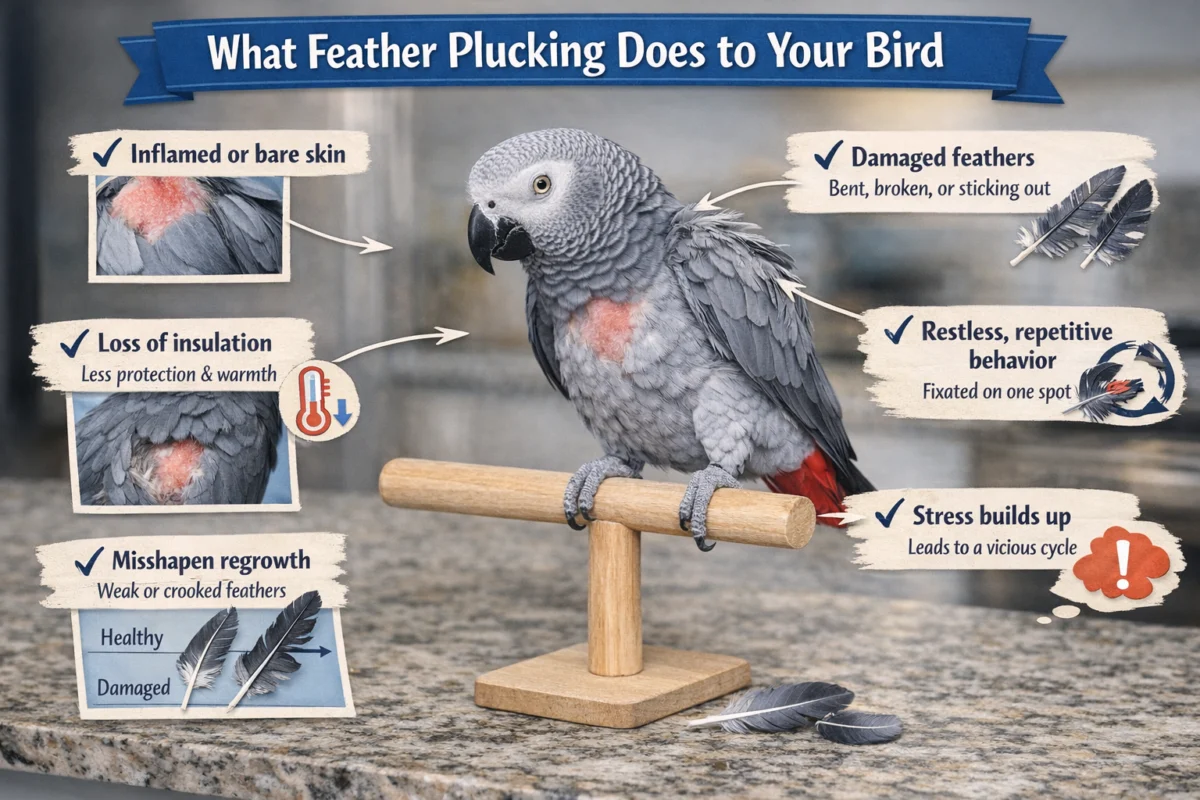
Feather destructive behavior (FDB), colloquially known as feather plucking, represents one of the most complex and distressing challenges in avian medicine and husbandry. First documented in clinical veterinary literature decades ago, this behavioral anomaly affects a wide spectrum of psittacine species, including African Greys, Cockatoos, and Macaws. As of April 20, 2026, experts continue to emphasize that FDB is not merely a behavioral nuisance but a clinical symptom signaling an underlying physiological or psychological imbalance. Distinguishing between normal molting cycles and destructive habits is the critical first step in intervention.
Distinguishing Normal Molting from Pathological Plucking
To understand the scope of the issue, one must first establish the baseline for normal avian grooming. Molting is a physiological process in which birds replace worn or damaged feathers. This is a rhythmic, predictable cycle. During a healthy molt, feathers fall out individually or in small clusters, and they are replaced by new, healthy plumage. Preening, meanwhile, is the essential maintenance behavior where a bird uses its beak and tongue to realign barbules, remove dirt, and distribute preen oil.
In contrast, feather destructive behavior is characterized by intensity and localization. A bird engaging in FDB typically fixates on a specific area of the body—most commonly the chest, thighs, or wing butts—and subjects that area to repetitive, high-energy manipulation. This includes snapping the feather shafts, chewing the vanes, or extracting the feathers entirely. If left unchecked, this behavior can escalate to self-mutilation, where the bird compromises the integrity of the skin, leading to lacerations, inflammation, and potential secondary infections.
Clinical observation reveals that while molting involves a symmetrical, gradual shedding of feathers, FDB often results in asymmetrical patches of exposed, irritated skin. When feathers do regrow in a site of chronic damage, they are frequently misaligned, frayed, or "stressed," indicating that the follicle itself may have been damaged by constant trauma.
The Etiology of Feather Destructive Behavior
The scientific consensus regarding the origins of FDB has shifted from viewing it as a strictly psychological condition to recognizing it as a multi-factorial syndrome. Research conducted by avian veterinarians suggests that the behavior is rarely the result of a single cause. Instead, it is often a symptomatic response to a systemic issue.
Physiological Drivers
Many cases of FDB are rooted in physical discomfort. Common medical triggers include:
- Dietary Imbalances: A deficiency in essential vitamins, minerals, or fatty acids can lead to dry, itchy skin or poor feather quality, prompting the bird to "work" on its plumage in an attempt to alleviate the irritation.
- Infectious Diseases: Viruses such as Psittacine Beak and Feather Disease (PBFD) or bacterial and fungal infections can cause profound discomfort in the skin and follicles.
- Environmental Factors: Low humidity levels in domestic settings are a leading cause of dry skin in tropical bird species, creating an environment where the bird feels a constant, localized itch.
- Toxin Exposure: The presence of heavy metals or airborne irritants can trigger systemic physiological distress that manifests as self-directed aggression.
Behavioral and Psychological Drivers
Birds are highly intelligent, social creatures that require significant cognitive stimulation. In captivity, a lack of environmental enrichment, social isolation, or sudden changes in routine can lead to high levels of chronic stress. This stress often manifests as displacement behavior, where the bird redirects its anxiety into grooming or feather destruction. It is important to note that once a behavior becomes a habitual response to stress, it can persist even after the initial stressor has been removed, creating a neuro-behavioral feedback loop.
Chronology of Intervention
The progression of FDB often follows a discernible timeline. Owners rarely notice the initial stage, which may involve subtle over-preening. The second stage typically involves the appearance of "barbering," where the bird cuts or chews the feathers without necessarily pulling them out. By the third stage, visible bald patches appear, and the fourth stage is characterized by skin damage or mutilation.

Veterinary intervention is most successful when initiated during the first two stages. The recommended chronology for owners observing these signs is as follows:
- Immediate Veterinary Evaluation: A comprehensive medical workup is essential to rule out underlying infections, parasites, or nutritional deficiencies. This includes blood panels, fecal analysis, and, if necessary, biopsy of the affected skin.
- Environmental Audit: Owners must assess the bird’s habitat, including light cycles, noise levels, and the frequency of social interaction.
- Nutritional Adjustment: Transitioning from a seed-heavy diet to a balanced, species-specific formulated diet is often required to address underlying deficiencies.
- Behavioral Modification: Implementing a structured enrichment program that includes foraging opportunities and cognitive challenges to replace the destructive habit with constructive activity.
Statistical Implications and Expert Analysis
Data from avian clinics indicate that birds kept in environments lacking consistent, high-quality foraging opportunities are significantly more likely to develop chronic FDB. According to recent veterinary health surveys, up to 10% of captive psittacines exhibit some form of feather-damaging behavior during their lifespan.
The economic and emotional impact on owners is substantial. Managing a bird with chronic FDB often requires long-term medication, specialized protective gear (such as Elizabethan collars or bird-safe jackets), and frequent clinical monitoring. Experts argue that the prevalence of this condition in captivity is an indictment of modern housing practices that fail to meet the complex biological needs of these species.
The Role of Environmental Enrichment
To mitigate the risk of FDB, veterinarians increasingly advocate for "foraging-based" living. In the wild, parrots spend the majority of their waking hours searching for food. In a home environment, food is often provided in a bowl, leaving the bird with an excess of "idle time." Providing puzzles, natural branches for shredding, and varied social engagement helps to satisfy the bird’s innate biological drives.
Furthermore, stabilizing the bird’s circadian rhythm is vital. Many owners inadvertently contribute to hormonal or stress-related issues by failing to provide the 10–12 hours of uninterrupted darkness required for proper endocrine function. Light cycles that are inconsistent can contribute to a state of permanent "molt-readiness" or hormonal frustration, both of which are strongly correlated with FDB.
When the Condition Becomes Urgent
There is a clear threshold between chronic grooming and an emergency medical crisis. If an owner observes blood on the feathers, open wounds, or if the bird becomes lethargic and stops eating, immediate emergency veterinary care is required. Mutilation, in particular, can lead to rapid blood loss or systemic infection (sepsis), both of which can be fatal within hours.
In these acute cases, the primary goal is stabilization. The bird may require pain management, topical wound care, and temporary physical barriers to prevent further access to the site of injury. Once the bird is stable, the long-term process of addressing the root cause can begin.
Conclusion: The Path to Recovery
Recovery from feather destructive behavior is rarely a linear process. It requires patience, a commitment to medical investigation, and a willingness to modify the bird’s environment significantly. Because the behavior is often a response to a deeper, unseen issue, the "cure" is not a single product or technique, but a holistic shift in how the bird is kept.
Owners are encouraged to maintain detailed logs of their bird’s behavior, noting the times of day the plucking occurs, the presence of environmental stressors, and any changes in diet or routine. By identifying patterns, owners can work in tandem with avian specialists to tailor a recovery plan that addresses the specific needs of the individual bird. Through early detection and a multi-faceted approach to husbandry, many birds are able to break the cycle of destruction and return to a state of health and contentment.

