



The international trade of endangered long-tailed macaques has escalated into a major environmental and public health crisis, propelled by the relentless demand of the American animal experimentation industry. Wildlife trafficking rings operating across Southeast Asia are cashing in on the lucrative market for primates, funneling wild-caught animals into global laboratory supply chains. This illicit trade not only drives the species toward extinction in the wild but also bypasses critical biosecurity measures, introducing severe disease vectors into the United States and compromising the scientific validity of biomedical research that relies on these animals.
An investigative assessment conducted by animal advocacy and wildlife monitoring groups has identified a sharp and alarming surge in monkey smuggling cases along the border between Thailand and Cambodia. This localized spike mirrors a much broader regional trafficking crisis that spans Vietnam, China, and Laos. Wildlife authorities throughout Southeast Asia have seized thousands of endangered primates in recent years, a trend that directly corresponds with the drastic decline of wild long-tailed macaque populations in their native habitats.
The mechanics of this illegal trade are brutal and clandestine. Poachers trap monkeys directly from their natural environments, capturing entire social groups, including nursing mothers and dependent infants. The animals are subsequently crammed into restrictive mesh bags or tightly sealed wooden crates for grueling, clandestine journeys across international borders. Packed tightly together with little to no room to move, the terrified primates are transported in vehicles or on boats for hours or even days. Deprived of adequate food, water, and ventilation, many sustain physical injuries or succumb to stress, dehydration, and asphyxiation before ever reaching their destinations.

Surviving primates are offloaded at clandestine breeding farms or intermediary facilities, where conditions remain filthy, barren, and overcrowded. In a systemic laundering process, these wild-caught animals are systematically issued falsified documentation. Operators deliberately label the poached primates as captive-bred, erasing their wild origins and allowing them to be seamlessly integrated into the legitimate international laboratory supply chain. Once documented as captive-born, the animals are exported to biomedical facilities, universities, and pharmaceutical laboratories, primarily in the United States, where experimenters pay top dollar to maintain high volumes of animal subjects.
The operational routes utilized by wildlife traffickers do not exist in isolation. Investigations reveal that the international monkey trade is deeply embedded within broader, organized transnational criminal enterprises. The same clandestine routes, vehicles, logistics networks, and personnel used to smuggle high-value contraband such as illegal firearms, narcotics, and counterfeit goods are frequently deployed to traffic endangered primates.
Recent law enforcement actions underscore this convergence of illicit markets. In August 2026, Thai law enforcement agencies executed a major raid near the Thai-Cambodian border, intercepting a suspected smuggling ring. Authorities seized an arsenal of military-grade weaponry, including AK-47 assault rifles, alongside more than 24,000 rounds of ammunition. Subsequent interrogations and investigations revealed that the syndicate utilized the exact same watercraft and overland routes to move long-tailed macaques as they did to traffic illicit cigarettes, unregulated laborers, and other contraband. Similar patterns have been documented in Vietnam, where criminal networks previously known for trafficking pangolin scales and elephant ivory expanded their operations to supply live monkeys to buyers in China.
This illegal pipeline operates in direct contravention of international wildlife protection treaties and national legislation. Long-tailed macaques are classified globally as an endangered species, a status accelerated by the pressures of habitat loss and commercial exploitation. The scale of the trade prompted a massive federal intervention in the United States in 2022, when federal authorities uncovered a sweeping international conspiracy involving the use of falsified permits to launder tens of thousands of wild-caught macaques from Cambodia into the U.S. biomedical testing sector. Court filings from that federal investigation detailed how wild populations were systematically decimated to fulfill purchase orders placed by American laboratories.
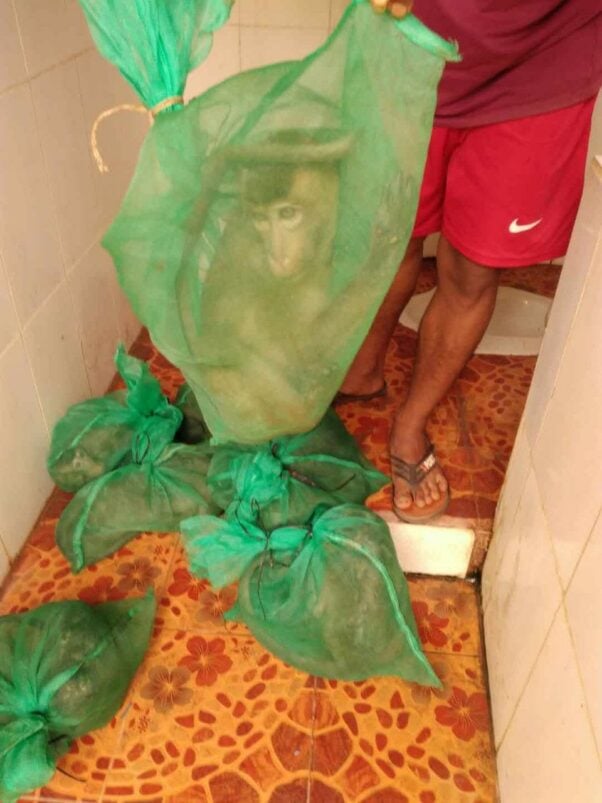
Following the 2022 federal crackdown and subsequent investigations, imports of Cambodian macaques into the United States were subjected to a nearly three-year operational halt. During this hiatus, regulatory scrutiny tightened, and supply chains faced intense oversight. However, recent data indicates that the importation of Cambodian primates has resumed, accompanied by an immediate resurgence in regional smuggling operations, border seizures, and trafficking adaptations designed to circumvent revived enforcement protocols.
The reliance on wild-caught monkeys routed through illicit supply chains also undermines the foundational integrity of biomedical research. The primate experimentation industry has long defended the use of animal models by asserting that purpose-bred, specific pathogen-free, and thoroughly characterized subjects are necessary to control experimental variables and ensure reliable, reproducible data. However, when wild-caught primates are fraudulently laundered and sold as captive-bred specimens, this scientific premise collapses entirely.
Primates snatched from the wild possess unknown genetic backgrounds, undocumented age profiles, and untraceable health histories. Furthermore, the immense physical trauma and psychological distress experienced during capture, confinement, and cross-border smuggling induce chronic physiological stress responses in the animals. These hidden variables—ranging from undisclosed prior infections to stress-induced biological shifts—fundamentally skew research outcomes, introducing uncontrolled errors into toxicological evaluations, pharmacological tests, and disease modeling studies.
Beyond the ethical dimensions and compromised scientific integrity, the unregulated importation of primates presents an immediate and substantial hazard to public health and biosecurity within the United States. Every wild-caught monkey smuggled across international borders introduces an unquantified risk of zoonotic disease transmission. Unlike animals bred in highly regulated, biosecure facilities under strict veterinary oversight, trafficked primates arrive without valid health certificates, diagnostic clearances, or transparency regarding their exposure to pathogens during transit.

Documented health evaluations of imported laboratory primates have frequently revealed high rates of dangerous infectious diseases. Tens of thousands of monkeys imported into the United States each year have been found to carry pathogens transmissible to humans, including tuberculosis, melioidosis, Shigella bacteria, and Herpes B virus. The latter is fatal to humans in the vast majority of untreated cases. When smuggled wild monkeys are integrated into domestic breeding colonies or research holding facilities without adequate quarantine and diagnostic screening, they pose a clear threat of introducing novel or drug-resistant pathogens into laboratory environments and, potentially, the broader human population.
Efforts to address this multifaceted crisis have increasingly focused on legislative and regulatory interventions within the United States. Policymakers and animal welfare organizations are advancing the Preventing Risky Importation of Monkeys to Avoid Toxic Exposures (PRIMATE) Act. This proposed federal legislation aims to enact a comprehensive ban on the importation of non-human primates for laboratory experimentation, shutting down the primary market driver that fuels international wildlife trafficking syndicates. Proponents argue that the legislation would simultaneously aid in the recovery of dwindling wild macaque populations and eliminate a critical biosecurity vulnerability that threatens American public health.
As international law enforcement agencies grapple with the adaptability of Southeast Asian trafficking rings, pressure continues to mount on regulatory bodies. Advocates and public health experts are urging the U.S. Department of Health and Human Services and related federal agencies to exercise stricter oversight over foreign primate suppliers, audit existing laboratory animal inventories, and support permanent legislative solutions to dismantle the primate-abduction pipeline once and for all.

