


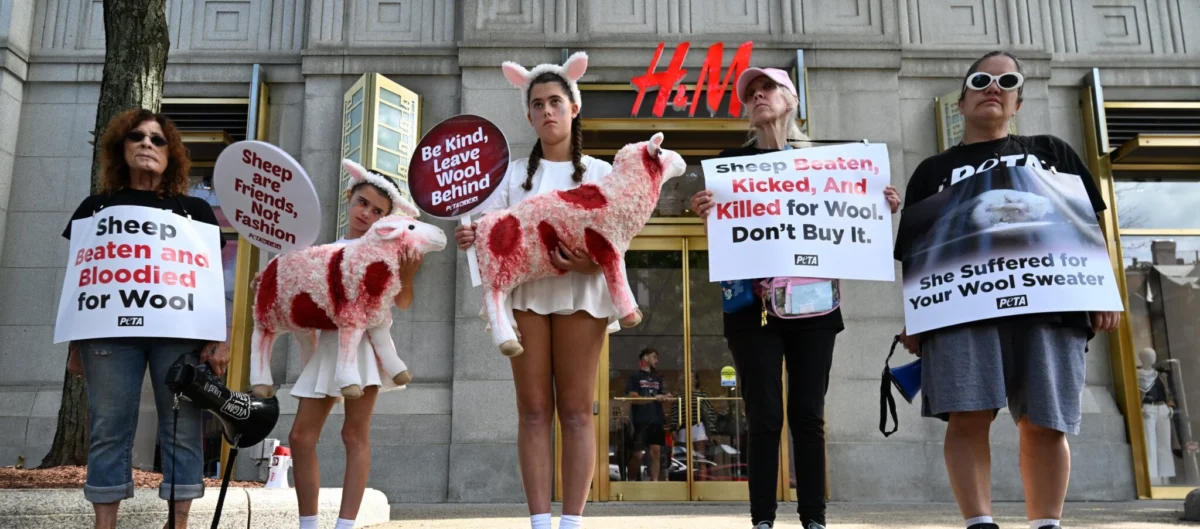
The intersection of high fashion and animal rights advocacy erupted into physical confrontation on September 13, 2026, when demonstrators from People for the Ethical Treatment of Animals (PETA) disrupted the runway show of contemporary fashion label COS during New York Fashion Week (NYFW). The protest, staged to draw public attention to systemic animal cruelty within the global wool industry, quickly escalated when event security and a fashion executive reportedly responded with physical force against the peaceful demonstrators.
The incident, which was captured on video and rapidly disseminated across major social media platforms, has reignited a contentious debate regarding ethical sourcing, corporate accountability, and the boundaries of protest within the multi-billion-dollar luxury and retail apparel sectors. While fashion weeks globally have increasingly positioned themselves as progressive cultural platforms, the confrontation at the COS showcase highlights a lingering friction between traditional commercial practices and modern ethical demands.
Chronology of the Disruption
The demonstration began midway through the COS presentation in Manhattan, a prominent fixture of the September NYFW calendar. Armed with informational signage and chanting slogans regarding the exploitation of sheep for textile production, PETA campaigners infiltrated the runway area. According to eyewitness accounts and video evidence, the activists sought to highlight the hidden realities of wool harvesting before being intercepted.
The situation deteriorated rapidly as event personnel moved to clear the runway. Video footage viewed millions of times globally shows a fashion executive pinning a female demonstrator to the floor, placing a leg over her body, and covering her mouth and nose as she continued to voice her opposition to wool products. Another activist, Mason Melito, senior campaigner for PETA and an eyewitness to the event, reported being shoved, grabbed, and physically blocked from filming the altercation.
Despite the physical intervention, the protest achieved immediate global visibility, casting a shadow over the high-profile presentation and drawing swift condemnation from animal rights advocates regarding the use of force against peaceful demonstrators. Neither COS nor its parent conglomerate, the H&M Group, immediately issued a detailed public statement addressing the physical altercation, though representatives have historically defended their supply chain transparency and adherence to industry standards.

Background and Context: The Target on COS and H&M Group
The choice of COS—a minimalist brand owned by the Swedish multinational retail-clothing company H&M Group—was deliberate. PETA’s campaign targets the structural reliance on animal-derived textiles by mass-market and contemporary labels that market themselves as sustainable or conscious.
The protest follows a broader historical trajectory of anti-fur and anti-leather activism that has steadily reshaped the fashion landscape over the past two decades. Through sustained public campaigns, shareholder pressures, and direct action, animal rights organizations have successfully persuaded numerous legacy fashion houses—including Gucci, Prada, Armani, Chanel, Burberry, Michael Kors, Coach, and major department store chains such as Macy’s, Nordstrom, and Saks Fifth Avenue—to eliminate real fur from their collections. Furthermore, the Council of Fashion Designers of America (CFDA) and organizers of New York Fashion Week previously instituted bans on real fur following extensive advocacy campaigns and petitions signed by tens of thousands of supporters.
With fur largely relegated to the margins of mainstream luxury, animal rights organizations have pivoted their focus toward the global wool and leather industries, seeking to establish wool as the next major textile category to be phased out by forward-thinking designers.
Supporting Data and Industry Investigations
PETA’s opposition to wool is grounded in a multi-year investigative record. Over the past decade, PETA and its international affiliates have conducted 17 undercover exposés across more than 150 wool-industry operations spanning eight countries and four continents. According to published findings, investigators have documented routine instances of physical violence, neglect, and systemic exploitation, even within facilities certified as "ethical" or "responsible."
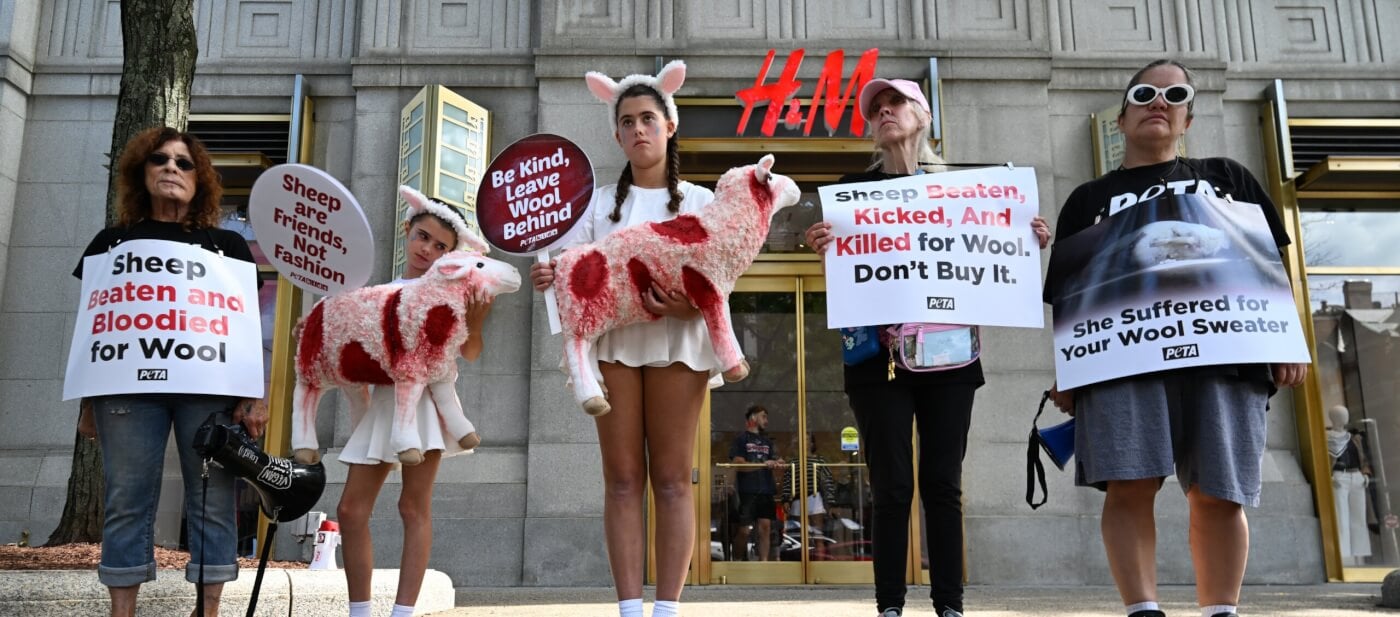
A focal point of the recent campaign is an investigation conducted by PETA Asia into a wool operation certified under the NATIVA protocol—a traceability scheme that supplies materials to major retailers, including the H&M Group. The investigation allegedly revealed workers kicking and stomping on sheep, dragging lambs by their limbs, and leaving animals with untreated, gaping shearing wounds.
The findings challenge the reliability of voluntary industry certification schemes, which PETA argues mislead consumers into believing that animal-derived textiles can be harvested humanely. Industry analysts note that standard commercial shearing practices inherently prioritize speed and volume over animal welfare, as shearers are frequently compensated based on the sheer quantity of wool extracted per hour rather than the gentle handling of individual animals.
Economic and Ethical Implications for the Retail Sector
The confrontation at the COS runway underscores the growing financial and reputational risks fashion brands face regarding supply chain transparency. As younger consumer demographics increasingly prioritize sustainability, ethical production, and animal welfare, luxury and retail brands face intense scrutiny over the provenance of their raw materials.
The implications of the NYFW protest extend beyond a single runway incident. They force a critical examination of how corporate entities respond to dissenting voices. Critics argue that physical retaliation against activists damages a brand’s public relations standing far more effectively than peaceful demonstrations alone, transforming a localized critique into a widespread public relations crisis.
Moreover, the incident places pressure on industry leadership, such as Steven Kolb, CEO and President of the CFDA, to address the ethical dimensions of materials showcased during official fashion weeks. While designers retain creative autonomy over their collections, industry associations face mounting expectations to establish comprehensive ethical guidelines that encompass all forms of animal exploitation, rather than focusing solely on fur or exotic skins.
Industry Alternatives and Future Outlook
As consumer demand shifts, the textile market has seen a rapid expansion of high-performance, cruelty-free alternatives to wool. Designers seeking warmth, texture, and structural integrity are increasingly turning to innovative plant-based and recycled materials, including organic cotton, linen, hemp, bamboo, Tencel, and advanced recycled synthetics.
PETA and allied organizations maintain that the transition away from animal fibers is not only an ethical imperative but a commercial necessity for brands aiming to remain relevant in a shifting consumer market. The message delivered on the COS runway—that no garment justifies the suffering and slaughter of sentient animals—serves as a stark reminder of the unfinished work facing the fashion industry as it navigates its ethical responsibilities in the twenty-first century.

