


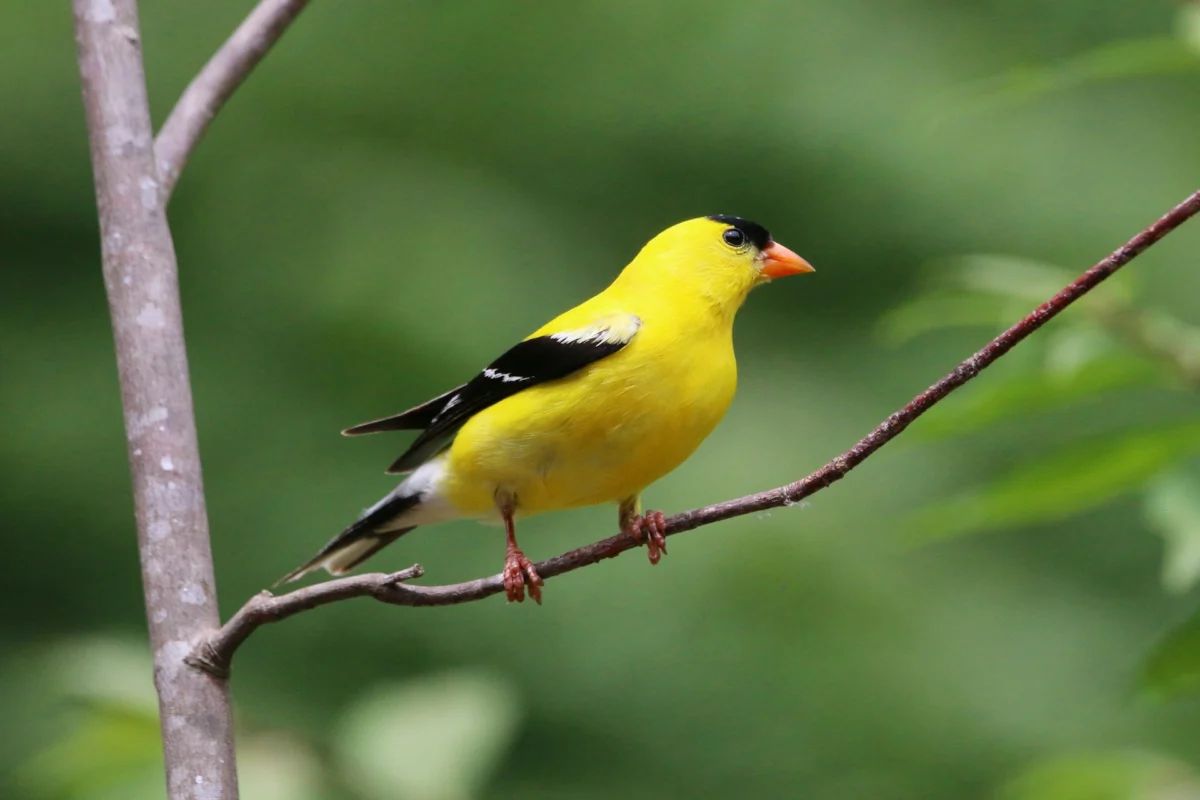
The American Goldfinch, scientifically known as Spinus tristis, is a quintessential songbird recognized for its striking plumage and distinct, undulating flight pattern. While these birds are often associated with the vibrant colors of spring and summer, their presence during the winter months remains a point of significant interest for ornithologists and amateur bird enthusiasts alike. As temperatures drop and natural food sources diminish, the survival of these birds becomes increasingly linked to supplemental feeding provided by human intervention. Understanding the ecological requirements and behavioral adaptations of the Goldfinch is essential for those looking to maintain a biodiverse environment in their own backyards throughout the colder season.
Seasonal Distribution and Migration Patterns
Contrary to common belief, the American Goldfinch is not a strictly migratory species across its entire range. In the Northeastern United States and parts of the Pacific Northwest, these birds are year-round residents. However, populations in more northern latitudes, including central and southern Canada, exhibit seasonal movement, migrating southward to the United States and Mexico to avoid the most severe winter conditions.
This migration is driven primarily by food availability rather than temperature sensitivity alone. Unlike many other songbirds that rely on insect populations, the Goldfinch is a granivore. Its winter survival is dictated by the accessibility of seed-bearing plants. When natural food sources are buried under snow or depleted by autumn foraging, these birds expand their search radius, often congregating around human-made feeding stations.
Nutritional Requirements and Feeding Dynamics
The dietary habits of the American Goldfinch are highly specialized. Their beaks are uniquely adapted for extracting seeds from the heads of composite plants, such as sunflowers, coneflowers, and thistles. During the winter, when these plants become dormant or desiccated, the birds shift their focus toward arboreal sources, including the buds and bark of birch, alder, and cedar trees.

For backyard enthusiasts, replicating these nutritional conditions is the most effective method for attracting the species. Sunflower seeds—particularly black oil sunflower seeds due to their high fat content—provide the necessary caloric density for birds to maintain their metabolic rates in freezing temperatures. Nyjer seed, commonly referred to as "thistle," is another staple. Because Nyjer is small and prone to spoilage when exposed to humidity, it is recommended that it be dispensed through specialized mesh socks or tube feeders. These devices serve a dual purpose: they keep the seeds dry, preventing fungal growth, and they restrict access to larger, more aggressive avian species, ensuring that the smaller Goldfinches can feed without constant competition.
Habitat Management and Environmental Design
Creating a "safe haven" for Goldfinches requires more than just a feeder. Environmental design plays a critical role in bird behavior. Goldfinches are inherently skittish and prone to sudden flight when threatened by predators or larger birds like Blue Jays or European Starlings. Strategic planting of native vegetation can mitigate these stressors.
Planting sunflowers, asters, and purple coneflowers provides a natural food supply that lasts well into the early winter. Furthermore, incorporating milkweed and thistle into a landscape provides more than just seeds; these plants are essential for nesting material in the spring, and their structure offers necessary cover during the winter. Land managers and homeowners are advised to avoid plants like burdock, which produce hooked burrs that can trap and injure small birds.
Data on Physiological Changes
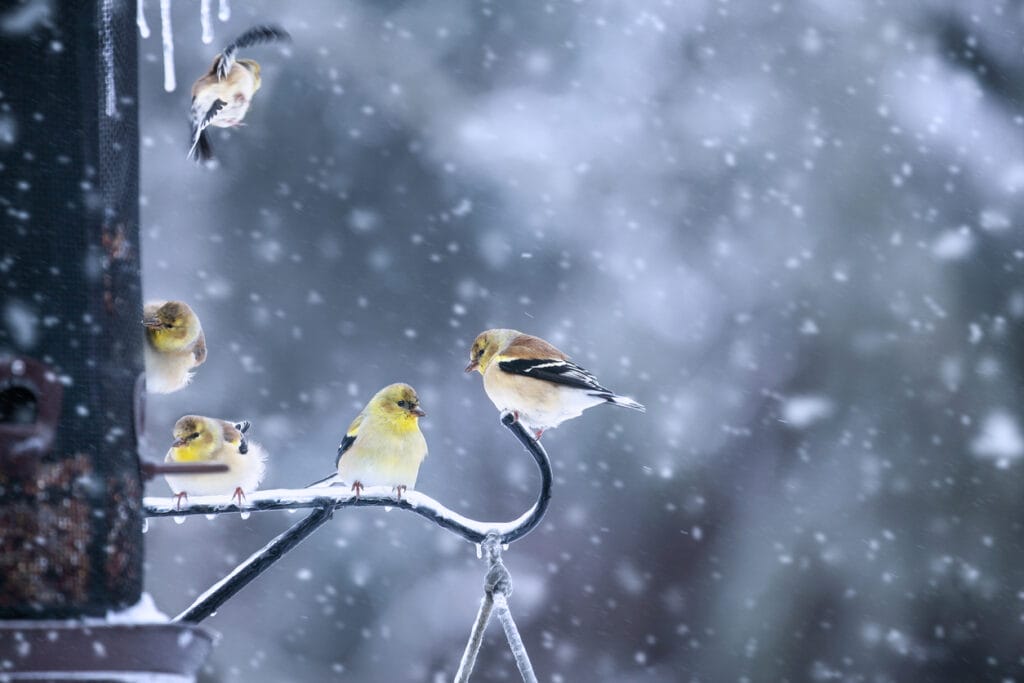
A remarkable aspect of the American Goldfinch is its dramatic physical transformation. During the summer, males display a brilliant yellow body with a contrasting black cap and wing bars. As the winter molting cycle begins in late autumn, both sexes transition to a drab, brownish-grey plumage. This serves as a vital survival mechanism, offering camouflage against the muted winter landscape.
From an ornithological perspective, this change highlights the evolutionary pressure to prioritize energy conservation over the display behaviors required during the breeding season. Research indicates that during these months, Goldfinches prioritize flocking behavior. By traveling in groups, they increase their efficiency in locating food sources and improve their vigilance against predators.

The Role of Hydration in Cold Climates
A frequently overlooked component of winter bird conservation is the provision of liquid water. In regions where temperatures remain consistently below freezing, natural water sources like ponds and streams often ice over. Access to liquid water is critical for Goldfinches not only for hydration but for the maintenance of their plumage. Clean feathers are essential for trapping heat; if a bird’s plumage becomes dirty or ice-covered, its ability to insulate itself against sub-zero temperatures is severely compromised.
The installation of a heated birdbath or the use of a submersible heater in a standard basin can significantly increase the frequency of visits to a backyard. Observers have noted that providing open water during deep-freeze events often draws in a higher diversity of birds than feeders alone, suggesting that water is a limiting factor in winter survival for many small passerines.
Analytical Perspective: Human-Wildlife Interaction
The practice of winter bird feeding has implications that extend beyond the individual backyard. According to the Cornell Lab of Ornithology, supplementary feeding can alter local distribution patterns of birds. While critics argue that human-provided food might lead to dependency, evidence suggests that for the American Goldfinch, supplemental feeding acts as a buffer against habitat fragmentation and the loss of native seed-bearing flora in urbanized environments.
However, the responsibility of the feeder is significant. Maintenance is a non-negotiable requirement. Bird feeders must be cleaned regularly to prevent the spread of avian diseases, such as salmonellosis or conjunctivitis, which can spread rapidly in crowded feeding environments. The recommendation is to sanitize feeders every three to four weeks using a diluted bleach solution and to remove any dampened or moldy seeds immediately.
Chronology of Seasonal Activity
Understanding the Goldfinch calendar helps homeowners plan their efforts effectively:
- Late Summer/Early Autumn: Goldfinches conclude their breeding season. They begin to form loose flocks and prepare for the winter molt. This is the optimal time to begin clearing invasive species and planting native seed-bearers.
- November/December: As the first frost occurs, birds transition to their winter plumage. This is when feeder traffic increases significantly.
- January/February: The peak of winter. This period requires the most consistent monitoring of water sources and seed levels.
- March/April: As the photoperiod increases, birds begin their transition back to their vibrant summer colors. Many Goldfinches begin to disperse from winter communal flocks to establish territories.
Summary of Best Practices
To successfully attract and support Goldfinches during the winter, one must adopt a holistic approach. This includes:
- Selection of Quality Seed: Prioritizing high-fat, dry seeds like black oil sunflower and Nyjer.
- Specialized Equipment: Utilizing mesh or tube feeders to keep food clean and exclude larger competitors.
- Vegetative Diversity: Cultivating native plants that offer food and shelter.
- Safety and Security: Placing feeders in areas that offer quick escape routes from aerial predators.
- Water Availability: Providing heated water sources to support thermoregulation.
By integrating these practices, observers can play a substantive role in the regional support of local wildlife. While the American Goldfinch is not currently classified as an endangered or threatened species, its presence serves as an indicator of the health of local ecosystems. A yard that attracts and sustains a healthy population of Goldfinches throughout the winter is a yard that is functioning as a successful micro-habitat, providing the necessary resources for survival in an increasingly challenging environment.

