


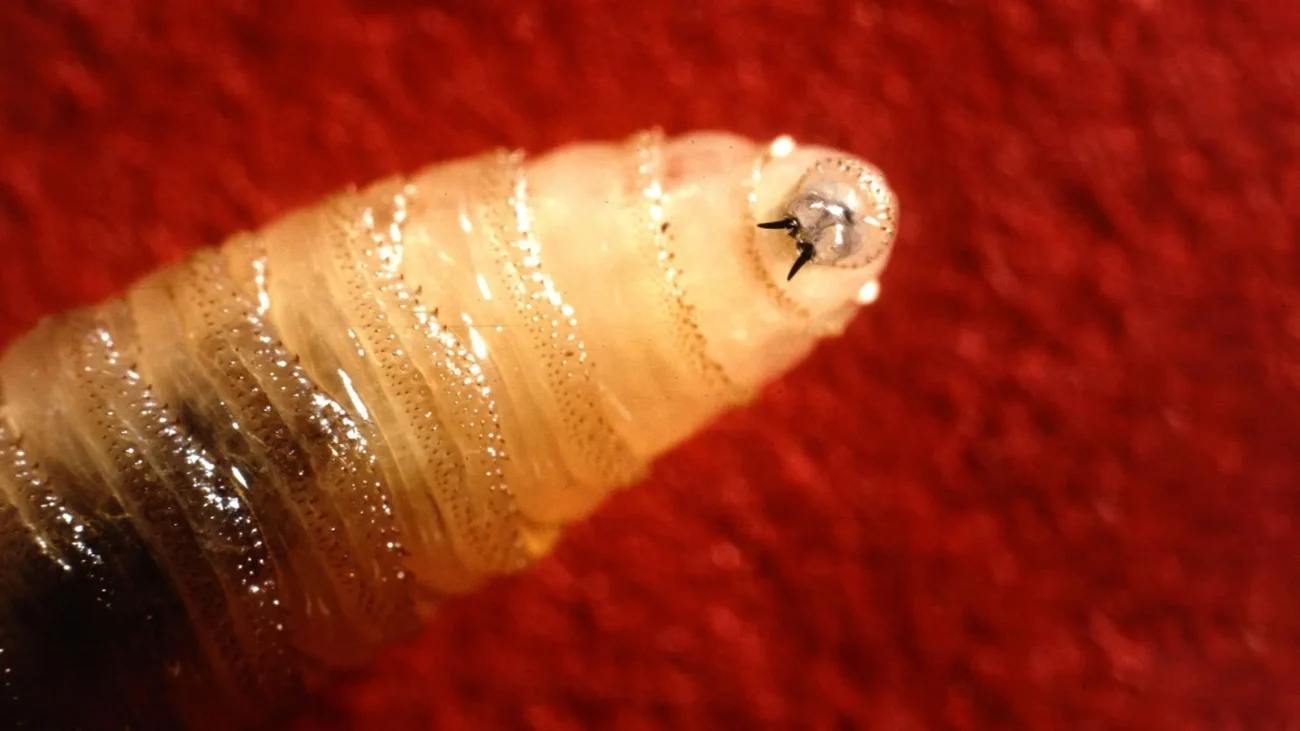
Decades after a monumental eradication campaign pushed the New World screwworm deep into Central America, the dreaded parasitic pest has crossed back into the United States. Re-emerging in Texas and New Mexico, the flesh-eating fly has reignited alarms across the agricultural, veterinary, and public health sectors. Unlike standard blowfly larvae that consume dead or decaying tissue, the offspring of Cochliomyia hominivorax actively seek out living flesh, presenting a severe hazard to livestock, wildlife, companion animals, and, in rare instances, human beings.
In response to the northward expansion of the pest, researchers at the University of California San Diego (UC San Diego) and the County of San Diego Health and Human Services Agency (HHSA) Public Health Services have engineered an advanced tracking dashboard. Designed to aggregate real-time data, environmental conditions, and early warning indicators, the digital tool represents a modern paradigm shift in how academic institutions and municipal health agencies collaborate to counter biological threats.
The Resurgence of a Historic Agricultural Menace
To understand the gravity of the current resurgence, agricultural historians point to the mid-20th century, when the New World screwworm was an economic scourge for American livestock producers. During the 1950s, the Southwest alone suffered estimated annual losses ranging from $50 million to $100 million—figures that would translate to hundreds of millions of dollars in modern currency. The fly’s life cycle begins when a mature female deposits eggs inside open wounds or natural mucous membranes of warm-blooded animals. Upon hatching, the microscopic larvae burrow deep into living tissue, enlarging wounds, causing excruciating pain, and paving the way for fatal secondary bacterial infections.
Faced with mounting economic devastation, the United States Department of Agriculture (USDA) spearheaded one of the most successful biological control operations in history. Utilizing the sterile insect technique (SIT), scientists mass-reared millions of male screwworm flies, sterilized them via radiation, and released them into infested territories. Because female screwworm flies mate only once in their lifetimes, mating with sterile males yielded zero viable offspring. This biological intervention systematically collapsed wild populations, eventually eradicating the pest from the U.S. and establishing a biological barrier maintained near the Darién Gap in Panama.
However, recent shifts in environmental conditions, international animal movement, and regional surveillance gaps have allowed the parasite to regain a foothold. While the exact vectors introducing the current wave of infections remain under active investigation, public health officials confirm that the pest has re-established presence in Texas and New Mexico. The rapid pace of the northern migration has caught many regional authorities off guard, prompting immediate mobilization across state and federal lines.
Bridging the Information Gap with Predictive Analytics
Traditional public health surveillance methods often rely on laboratory confirmation, a meticulous process that can span days or even weeks. In the context of a rapidly mobile, flesh-eating parasite, such delays can mean the difference between localized containment and widespread regional outbreaks. To close this critical window of vulnerability, the UC San Diego Design Lab, the Qualcomm Institute, and county epidemiologists partnered to develop an automated risk-mapping dashboard.
"Our County public health partners alerted us to the need for better situational awareness of New World screwworm," explained Dr. Eliah Aronoff-Spencer, professor of medicine at UC San Diego School of Medicine and an affiliate member of the Design Lab. "We built a dashboard to generate regional risk profiles. This is just one example of how we are responding to County needs with a focus on real-world issues. It’s a model that has brought us great success, like the Tijuana River Crisis Environmental Dashboard."
The newly designed platform synthesizes multiple data streams to forecast where the screwworm is likely to emerge next. Inputs include confirmed veterinary detections, meteorological data and environmental variables that favor fly reproduction, and continuous sweeps of news media reports.
According to Dr. Seema Shah, medical director of the Epidemiology and Immunization Services Branch for San Diego County’s Public Health Services Department, incorporating journalism into a diagnostic epidemiological tool is a deliberate innovation. "Traditional reporting mechanisms for public health are often delayed," Dr. Shah noted. "Lab confirmation can take days or weeks. By incorporating media reports, we can identify potential threats sooner and stay one step ahead."
By scanning news articles and regional alerts for early-stage anomalies, the system functions as an early radar warning network. Dr. Mark Beatty, assistant medical director for the county’s Epidemiology and Immunization Services Branch, emphasized the operational value of this foresight. "The tool gives you a sense of where you might expect to see cases next," Dr. Beatty said. "That’s helpful in determining how we should be preparing. Is the threat imminent, or do we have six months? We’re in a very concerning phase right now, and the tool backs that up."
Ecosystem Vulnerability and One Health Implications
Although livestock industries bear the brunt of the economic threat, the biological profile of Cochliomyia hominivorax poses risks across an expansive ecosystem. Because the fly is an equal-opportunity parasite targeting any warm-blooded host, populations of native white-tailed deer, feral swine, birds, and domestic pets are equally vulnerable to infestation.
Human infections, while historically rare, remain medically significant. Unlike viral pathogens such as influenza or SARS-CoV-2, the screwworm does not transmit person-to-person. Rather, humans contract myiasis when adult flies deposit eggs into untreated wounds or exposed mucous membranes. Manual extraction of the larvae and rigorous medical wound management are mandatory to prevent extensive tissue necrosis.
To mitigate multi-species exposure, regional veterinarians and animal health officers are coordinating surveillance efforts under a unified "One Health" framework. Dr. Emily Trumbull, a veterinarian and lead for the Epidemiology Unit’s One Health Program, stressed the importance of cross-discipline cooperation. "The flies can affect any warm-blooded animal, so working together with veterinarians serving livestock, pets and wildlife is critical for identifying suspect cases and preventing cases in people," Dr. Trumbull stated. "The dashboard takes into account environmental factors that can help us understand how the risk to our local region is changing before the fly arrives. That’s why the dashboard is valuable."
Reviving and Upgrading Eradication Protocols
As federal and state agencies prepare for a protracted defensive campaign, the blueprint for defeating the screwworm remains rooted in the historical successes of the 1950s, albeit enhanced by 21st-century biotechnology. The USDA currently leads the national response, deploying coordinated strategies that integrate sterile insect releases, targeted pesticide applications, and strict animal quarantine protocols to restrict the interstate transit of potentially infected livestock.
Concurrently, regulators are reviewing applications for advanced genetic variants, including a genetically modified all-male sterile strain designed to streamline mass-rearing efficiency and increase the biological pressure on wild populations. Conforming with these federal efforts, academic researchers at institutions like UC San Diego are developing next-generation genomic technologies to monitor genetic drift and insecticide resistance in incoming populations.
A Scalable Blueprint for Public Health Innovation
The creation of the screwworm tracking dashboard is part of a broader, federally backed initiative. The project was incubated under Resilient Shield, a specialized research center funded by the U.S. Centers for Disease Control and Prevention (CDC) and co-led by Dr. Aronoff-Spencer. Resilient Shield operates as one of 13 core facilities within Insight Net, a national network engineered to improve predictive modeling and rapid response protocols for emerging infectious and biological threats.
The operational philosophy of Insight Net upends traditional academic research pipelines. Instead of university researchers attempting to anticipate public health needs, frontline municipal and state agencies directly commission customized technological solutions.
"In public health, we always know our most urgent priorities, but too often we don’t have the immediate resources or in-house technical solutions to achieve them," Dr. Shah reflected. "The screwworm is a perfect example. It is a critical threat, but it is an issue our academic partners might never have prioritized without our direct ticket. This partnership solves our immediate problem while providing shareable, open reference designs that demonstrate exactly how public health, academia, and industry can successfully work together."
From its inception, Resilient Shield has established a modular, scalable architecture capable of addressing diverse crises. Working in partnership with major technology entities such as Google and MITRE, the center integrates expansive data repositories encompassing human health metrics, veterinary databases, meteorological forecasting, and social listening algorithms. When a new threat materializes—ranging from seasonal influenza surges to parasitic expansions—researchers can rapidly assemble secure computing environments, simulation engines, and automated alert systems.
"Our central innovation is the true convergence of partner priorities with scalable engineering," concluded Dr. Aronoff-Spencer. "We do not build in a vacuum. Our infrastructure is built directly on the priorities dictated by our partners. In addition, because our platform is built on an open, modular architecture, every solution we develop strengthens the system and makes it more adaptable for the next public health challenge."
As the New World screwworm continues to press northward, the convergence of high-tech predictive modeling, inter-agency collaboration, and historical biological control methods forms the frontline of defense for American agriculture and public safety.

