


The state of Maryland, consistently recognized as one of the most environmentally conscious regions in the United States, maintains a diverse ecological landscape that serves as a vital corridor for avian wildlife. Among the most iconic inhabitants of the state’s woodlands, wetlands, and suburban corridors are the eight distinct species of woodpeckers. These birds play a fundamental role in forest health, acting as natural pest controllers and ecosystem engineers. By excavating cavities in trees, they provide essential nesting sites for secondary cavity-nesting species, such as bluebirds, chickadees, and various owls, thereby influencing the biodiversity of the entire mid-Atlantic region.
The presence of these species is a testament to the state’s commitment to habitat preservation. Recent data from state conservation agencies suggest that while some species, such as the Red-bellied Woodpecker, have adapted successfully to human-altered landscapes, others remain highly sensitive to shifts in forest maturity and climate conditions. Understanding the biology, habitat requirements, and behavioral patterns of these eight species is essential for both birding enthusiasts and conservationists working to maintain Maryland’s ecological integrity.
The Ecological Significance of Maryland’s Woodpecker Population
Woodpeckers belong to the family Picidae, a group characterized by their specialized anatomical adaptations for climbing and foraging. Their zygodactyl feet—two toes facing forward and two facing backward—provide the stability needed to cling to vertical tree trunks. Their skulls are reinforced with spongy bone to absorb the impact of high-velocity pecking, and their long, barbed tongues are perfectly adapted for extracting larvae from deep within wood crevices.
In Maryland, the distribution of these birds ranges from the dense, mature coniferous forests of the western mountainous regions to the sprawling suburban landscapes of the Baltimore-Washington corridor. Ornithologists note that the presence of specific species serves as an indicator of habitat quality. For instance, the Pileated Woodpecker requires large tracts of mature forest with an abundance of dead or dying timber, making its presence a strong indicator of a healthy, undisturbed ecosystem.
Detailed Profiles of the Eight Maryland Species
1. The Pileated Woodpecker (Dryocopus pileatus)
Standing as the largest woodpecker in North America, the Pileated Woodpecker is roughly the size of a crow. It is easily recognized by its striking, flame-red triangular crest and distinctively loud, shrill, rising-and-falling calls. These birds are master excavators, capable of carving large, rectangular holes into decaying logs and standing snags to access carpenter ants—their primary food source. Conservationists point out that the rectangular cavities left behind by Pileated Woodpeckers are often reused by other wildlife, including wood ducks and squirrels, highlighting the bird’s status as a keystone species.
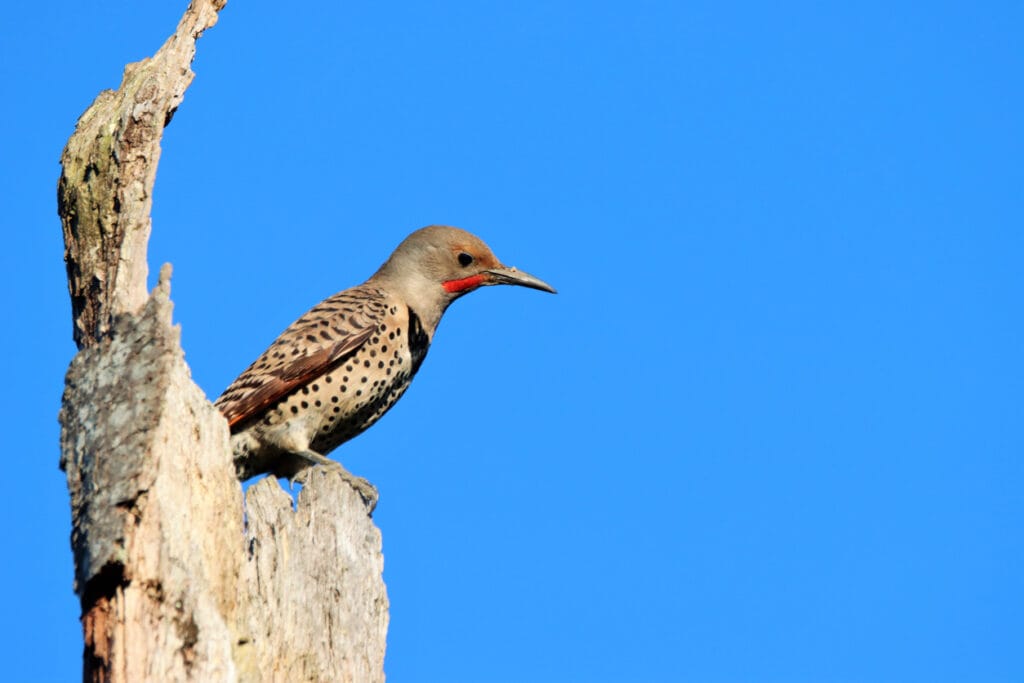
2. The Northern Flicker (Colaptes auratus)
The Northern Flicker is a biological anomaly among its peers. Unlike the traditional black-and-white plumage patterns typical of other woodpeckers, the Flicker displays a cryptic brown and gray coloration with a striking yellow or salmon-colored underside to its wings and tail. It is one of the few species in Maryland frequently spotted on the ground, where it uses its slightly curved bill to forage for ants and beetles. As a partially migratory species, their population density in Maryland fluctuates seasonally, with many individuals moving south from northern states to overwinter in the mild climate of the Chesapeake Bay region.
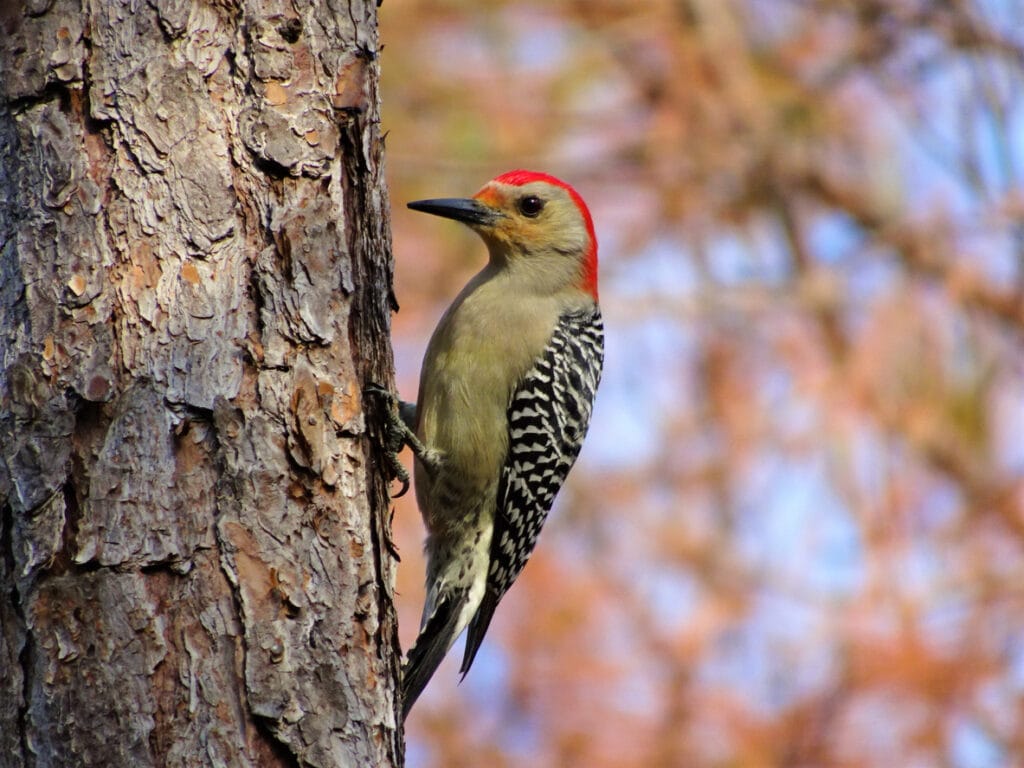
3. The Red-bellied Woodpecker (Melanerpes carolinus)
Despite its name, the red belly of this bird is often difficult to discern in the field. This species is perhaps the most ubiquitous in the state, exhibiting high levels of adaptability to urban and suburban environments. Research indicates that the Red-bellied Woodpecker has benefited from the proliferation of backyard bird feeders. During the winter months, their diet shifts significantly toward nuts, seeds, and fruits, which they often cache in tree bark for later consumption.
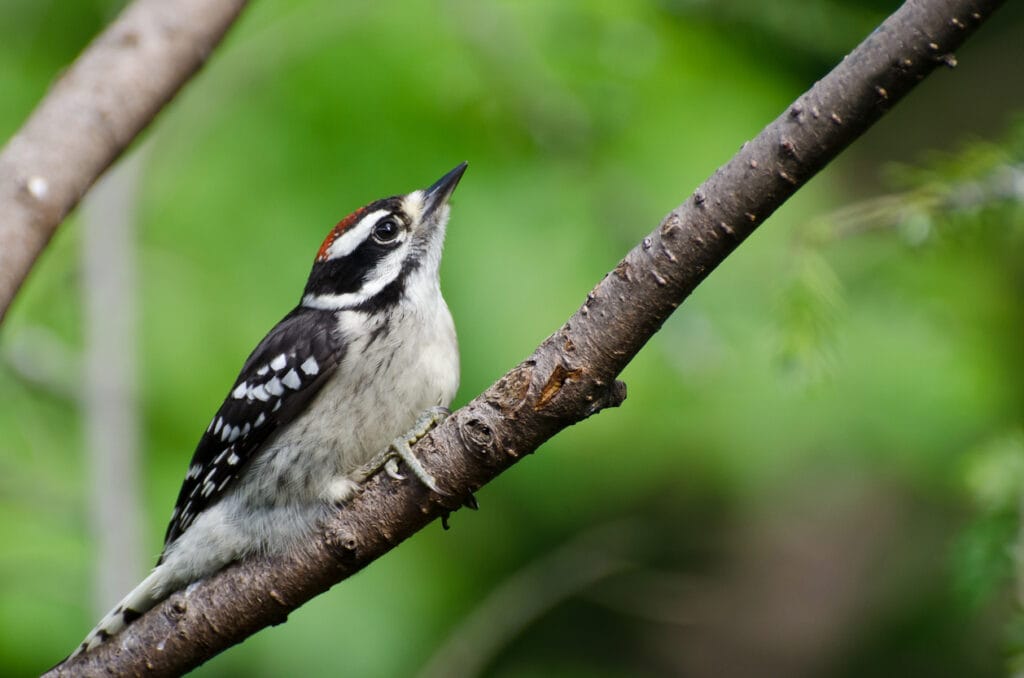
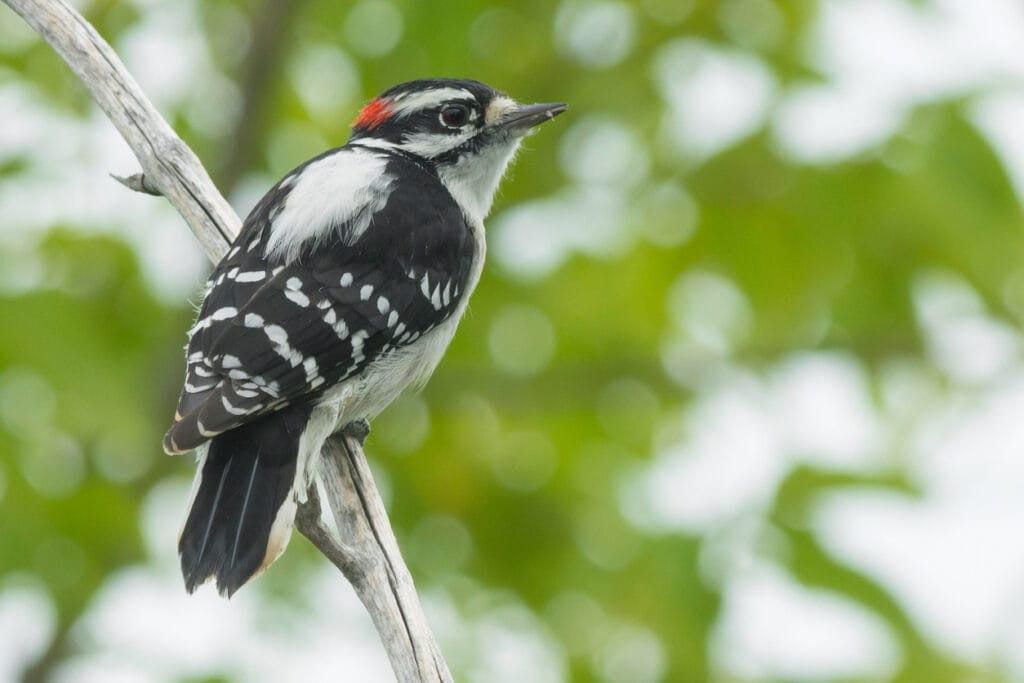
4. The Downy Woodpecker (Dryobates pubescens)
As the smallest woodpecker in North America, the Downy is often admired for its acrobatic foraging style. Because of its diminutive size, it can access the tips of thin branches that larger species cannot reach. The Downy Woodpecker is a frequent visitor to Maryland feeders, where it displays little fear of humans. Its plumage is a classic black-and-white, though it is frequently mistaken for the Hairy Woodpecker. The primary diagnostic difference is the bill-to-head ratio: the Downy has a bill much shorter than its head length, whereas the Hairy’s bill is nearly as long as its head.
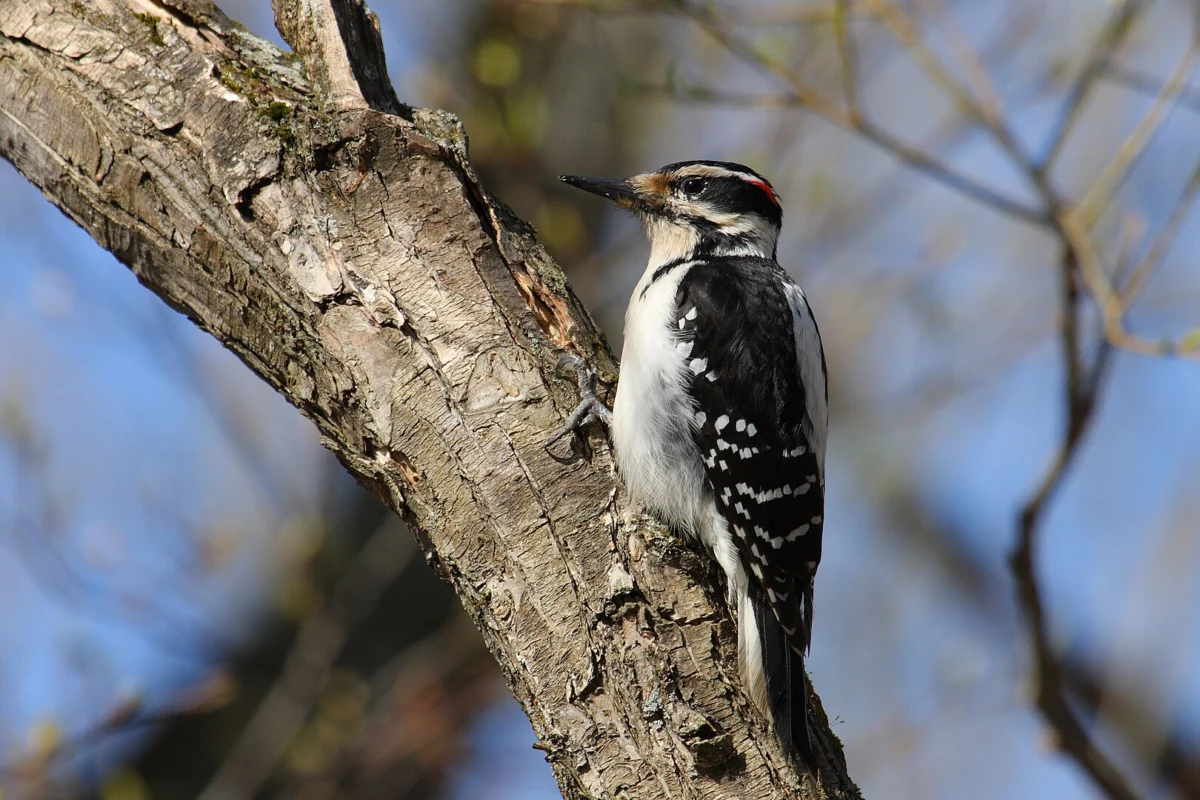
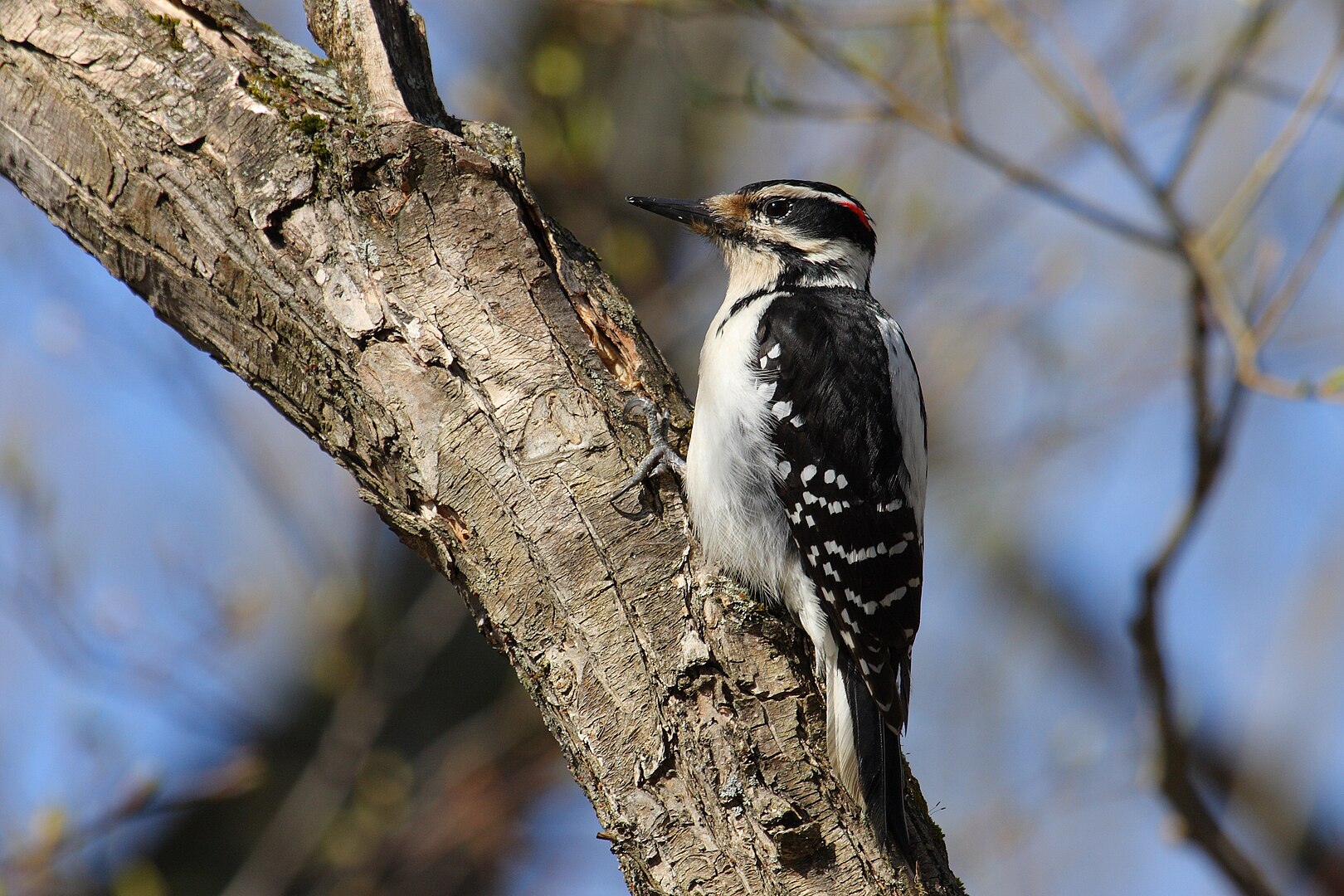
5. The Hairy Woodpecker (Leuconotopicus villosus)
The Hairy Woodpecker is larger and more aggressive than the Downy, often favoring deeper, more mature forest tracts. Their call is a sharp, explosive "peek," and their drumming is noticeably more powerful. These birds play a critical role in controlling bark beetle populations, which can otherwise devastate Maryland’s timber resources if left unchecked.

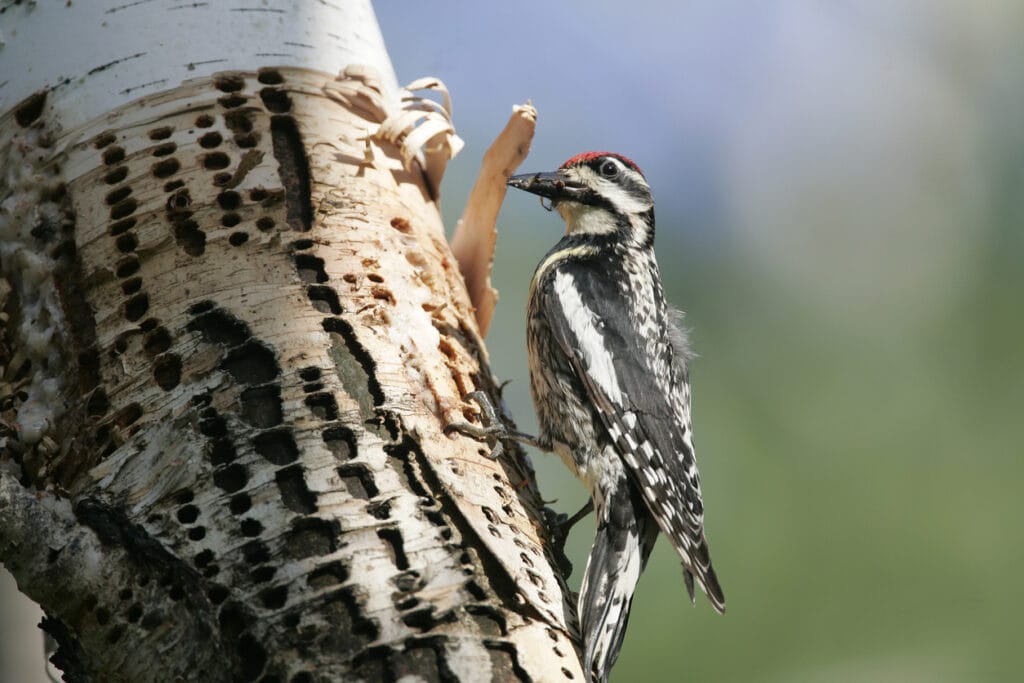
6. The Yellow-bellied Sapsucker (Sphyrapicus varius)
The Yellow-bellied Sapsucker is a specialized winter visitor to Maryland. As their name suggests, they rely on sap from living trees, which they access by drilling precise, horizontal rows of shallow holes, known as "sap wells." This behavior has complex ecological implications; the sap wells not only provide energy for the woodpeckers but also attract hummingbirds, butterflies, and other insects that feed on the exudate.
7. The Red-headed Woodpecker (Melanerpes erythrocephalus)
Distinguished by its solid red head and bold black-and-white body, the Red-headed Woodpecker is among the most visually striking birds in Maryland. However, it is also the most vulnerable. Populations have seen a staggering decline, with some estimates citing a 70% decrease in the species across its range between 1966 and 2014. Habitat loss due to the removal of dead trees—which these birds require for nesting—is the primary driver of this decline. Efforts are currently underway by various environmental groups in Maryland to promote the retention of "snags" (dead trees) in public parks and protected lands to mitigate this trend.
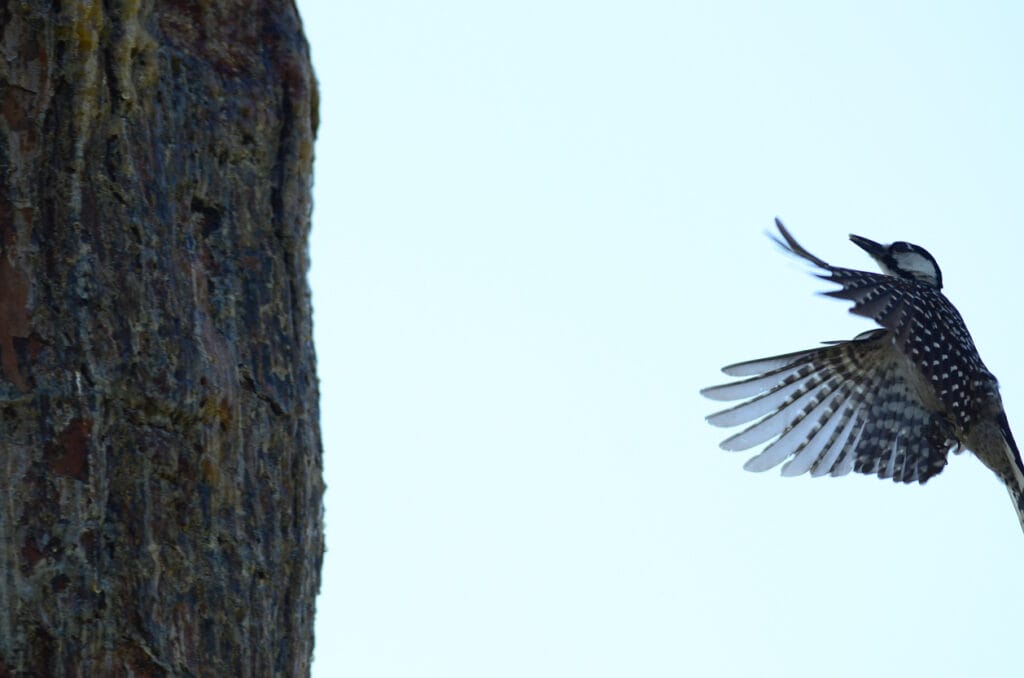
8. The Red-cockaded Woodpecker (Leuconotopicus borealis)
The Red-cockaded Woodpecker is the most specialized of the group, requiring old-growth pine forests. It is an endangered species, and while sightings in Maryland are rare, it remains part of the state’s recorded historical biodiversity. Their survival is tied to the Red Heart Fungus, which softens the interior wood of living pine trees, allowing these birds to excavate cavities—a process that can take years to complete.
Chronology of Conservation Efforts
The protection of these species has evolved alongside Maryland’s land-use policies. In the early 20th century, the widespread clearing of forests for agriculture pushed many populations into decline. The 1970s and 1980s saw a shift in policy, with the "Green States" initiative promoting the reforestation of riparian buffers and the protection of wetlands. By the early 2000s, organizations like the Audubon Society began cataloging prime birding locations, such as the Pickering Creek Audubon Center, to foster public engagement and data collection. Today, digital tools like eBird allow amateur ornithologists to contribute to a real-time database, helping researchers monitor the movement and health of these populations with unprecedented accuracy.
Analysis of Future Implications
The future of Maryland’s woodpecker population is inextricably linked to climate change and urban development. As temperatures rise, the range of some species may shift, potentially disrupting the delicate synchronization between bird breeding cycles and the emergence of insect populations. Furthermore, the "urban heat island" effect in cities like Baltimore may alter the availability of sap and insects, forcing birds to rely more heavily on human-provided resources.
The economic and ecological implications are significant. Woodpeckers provide "ecosystem services" by regulating insect populations that could otherwise lead to the destruction of valuable forestry assets. A loss in woodpecker biodiversity could lead to increased costs for forest management and a reduction in the natural beauty that drives Maryland’s outdoor tourism industry.
Conclusion and Public Engagement
For residents interested in supporting these birds, conservationists recommend maintaining dead trees on private property where it is safe to do so and participating in local bird counts. The diversity of woodpeckers in Maryland serves as a living laboratory for understanding the resilience of nature in a developing state. By respecting the habitat requirements of these eight species, Maryland continues to set a standard for balancing human expansion with the preservation of vital, avian-rich ecosystems. Whether it is the small, active Downy Woodpecker in a suburban backyard or the elusive, large-scale Pileated Woodpecker in a protected forest, each of these species contributes to the complex, vibrant tapestry of Maryland’s natural heritage.

