


For avian owners, the transition from a standard routine to a medical care regimen often presents a significant challenge. When a veterinarian prescribes liquid medication for a pet bird, the owner is suddenly tasked with a delicate medical procedure that requires both precision and a firm understanding of avian behavior. As of September 20, 2026, experts in avian care, including specialists at BirdSupplies.com, have emphasized that the efficacy of treatment is entirely dependent on the owner’s ability to ensure the full, prescribed dose is ingested without inducing undue stress or physical harm to the animal.
The necessity of oral medication typically follows a veterinary examination where clinical diagnostics—such as blood work, fecal analysis, or radiographs—have identified a specific pathology. Unlike nutritional supplements, which may allow for some flexibility in timing or delivery, prescribed pharmaceuticals are formulated based on the bird’s weight and the severity of the condition. Deviating from the schedule or failing to deliver the full dose can result in therapeutic failure, the development of antibiotic resistance in the case of infections, or a prolonged recovery timeline.
Understanding the Clinical Necessity of Precision
In veterinary medicine, the "therapeutic window" refers to the range of dosage that is effective without being toxic. For small avian patients, this window is often narrow. Research into avian metabolism indicates that birds possess high metabolic rates, meaning medications are processed more quickly than in mammals. This explains why veterinarians often prescribe multiple doses throughout the day.
Clinical data suggests that the most common reason for failed recovery in avian patients is not the inefficacy of the drug itself, but the "owner-compliance gap." This occurs when medication is spilled during administration, the bird refuses to swallow, or the owner misinterprets the dosage instructions. If a bird is perceived to be worsening, it is standard veterinary protocol for the owner to contact the clinic immediately rather than adjusting the dosage independently. New symptoms—such as lethargy, regurgitation, or changes in droppings—can be indicators of either the disease progression or an adverse drug reaction, both of which require professional evaluation.
Preparation and the Environment: The First Line of Defense
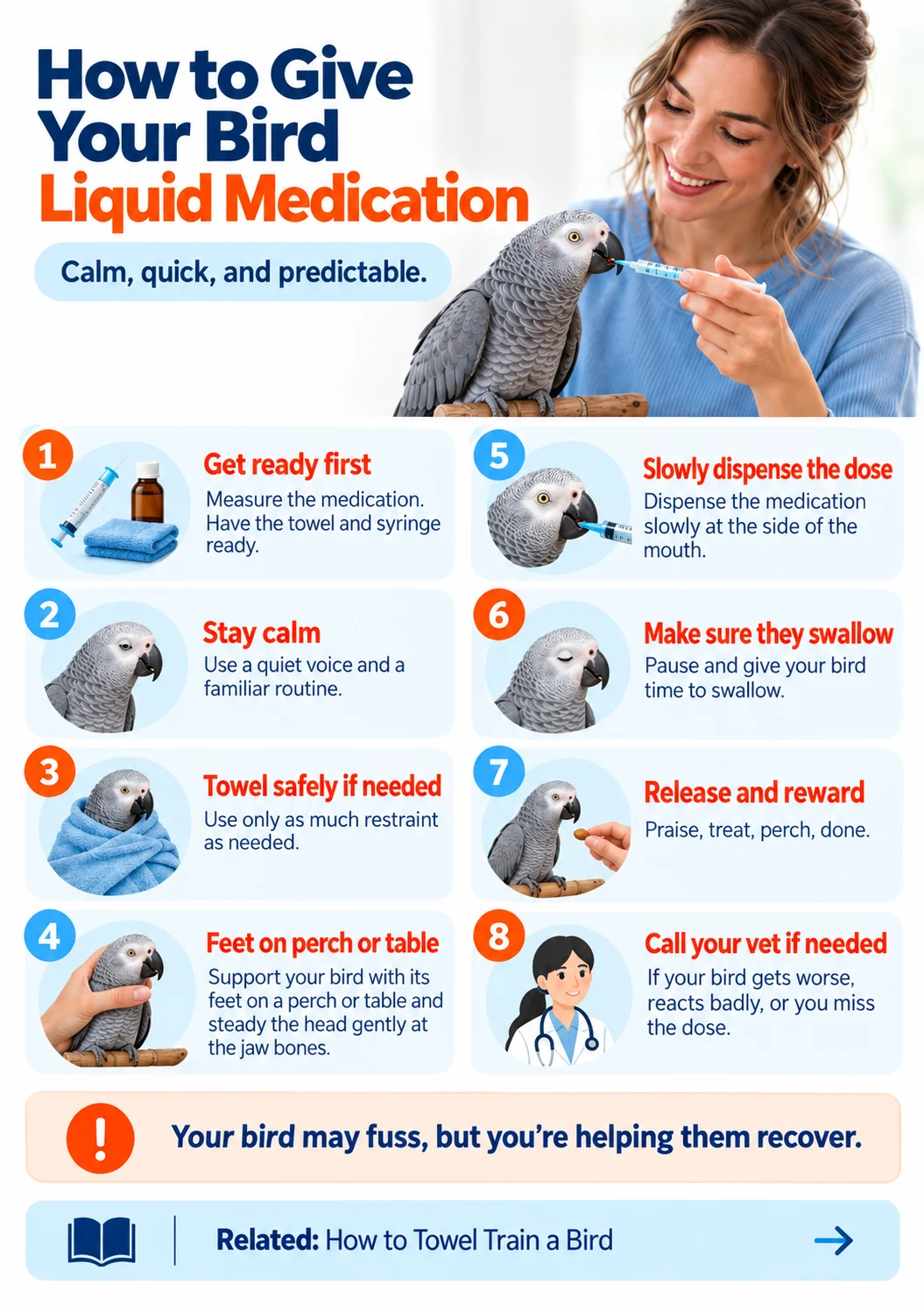
A successful medication routine begins long before the bird is restrained. Clinical behavioral specialists recommend a "staging" approach to minimize the time the bird spends in a state of distress. The preparatory phase involves verifying the "Four Rights" of medication administration: the right bird, the right medication, the right dose, and the right time.
The environment must be controlled to prevent the "chase scenario," which is a primary source of stress for companion birds. Stress in birds triggers the release of corticosterone, a hormone that can suppress immune function and potentially interfere with the recovery process. By utilizing a small, dedicated hospital cage, owners can isolate the patient, creating a predictable environment that limits physical exertion and facilitates faster, more efficient handling.
Chronology of a Safe Administration Routine
The recommended workflow for administering medication is designed to be as brief as possible to minimize the negative association with the process.
- Staging: Assemble all necessary equipment—the pre-measured syringe, a clean towel for restraint, and a high-value reward—before approaching the bird.
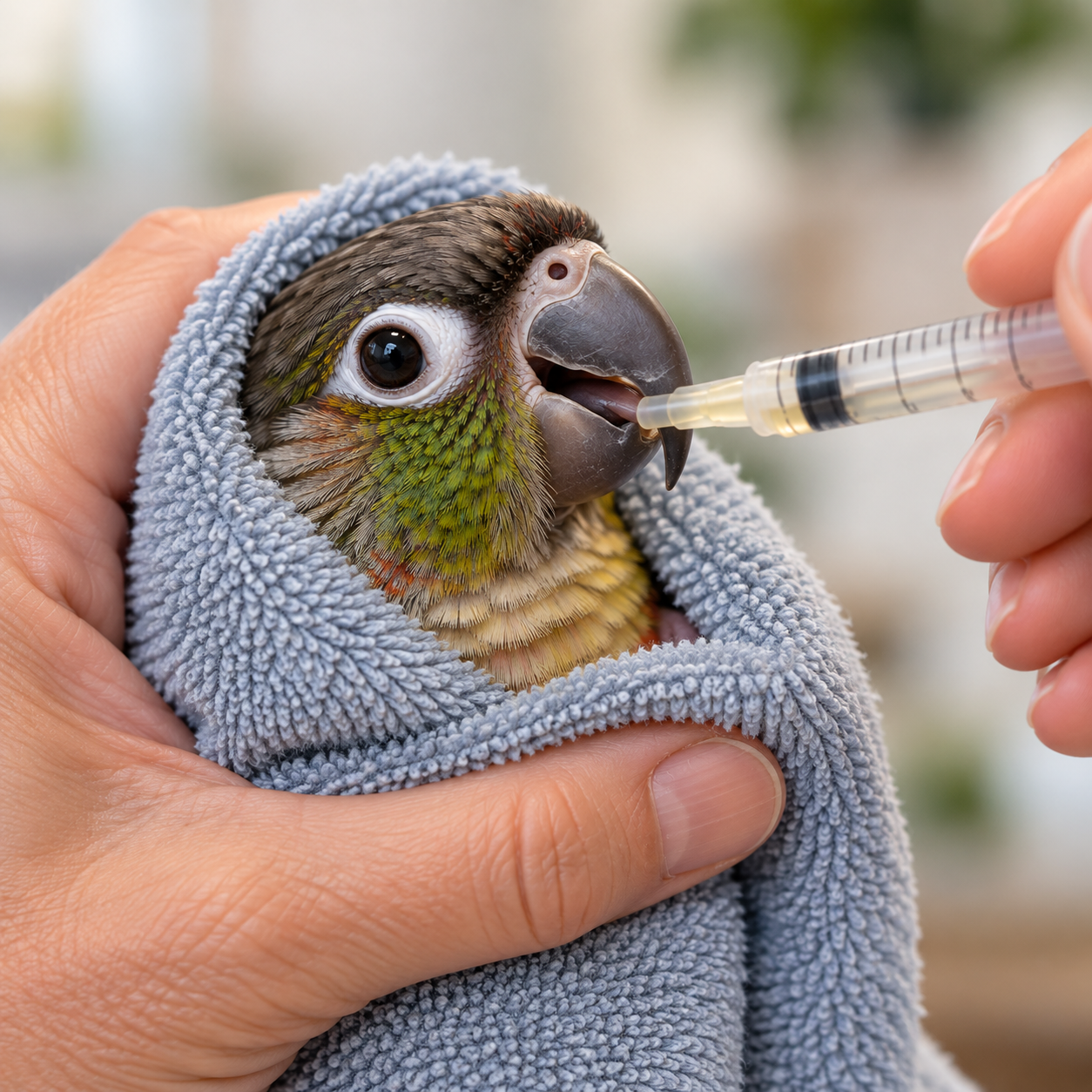
- Restraint: If the bird will not voluntarily accept the syringe, a towel is employed to secure the wings and prevent flight. The restraint must be gentle; the handler must ensure the bird’s chest remains uncompressed, as birds rely on the movement of the sternum to facilitate respiration.
- The Delivery: The syringe should be directed toward the commissure (the corner of the beak). Medication must be dispensed slowly, allowing the bird to swallow incrementally. Rapid delivery increases the risk of aspiration, where fluid enters the trachea instead of the esophagus, which can lead to aspiration pneumonia—a life-threatening complication.
- Observation and Reward: Once the medication is administered, the handler must observe for the swallow reflex. Upon completion, the restraint should be removed immediately. The bird should be offered a positive stimulus, such as a favorite treat or verbal praise, to neutralize the negative experience of being handled.
Addressing Common Complications and Misconceptions
One of the most frequently asked questions in veterinary clinics concerns the dilution of medication in drinking water. Avian health experts strongly advise against this unless specifically directed by a veterinarian. Because water consumption in birds is highly variable and often influenced by environmental temperature, activity level, and dietary moisture, it is impossible to calculate an accurate dosage via water intake. This method frequently leads to under-dosing, which can foster the growth of resistant bacterial strains.
Similarly, the practice of hiding medication in food is discouraged unless the owner can guarantee the bird will consume the entirety of the medicated portion. If a bird picks at a portion of the food and abandons the rest, the therapeutic objective remains unmet.
In instances where a bird is highly resistant to handling, the "two-person" technique is often recommended. In this model, one person focuses entirely on the safe, secure restraint of the bird, while the second person manages the administration of the syringe. This separation of tasks allows for greater precision and reduces the likelihood of spills or improper dosing.
Professional Guidance and Long-Term Implications
If an owner finds that they are unable to consistently deliver the medication, it is imperative to seek a demonstration from a veterinary technician. Handling techniques can be intimidating for novices, and improper technique can lead to physical injury, such as bruised ceres or damaged feathers.
While the short-term goal is the successful administration of a current prescription, there are long-term benefits to "training" birds for future medical needs. During periods of health, owners can engage in cooperative care training, where birds are taught to accept a syringe voluntarily. By rewarding the bird for approaching the syringe and accepting a small amount of a neutral, sugar-free fluid, the owner creates a foundation of trust. This training significantly reduces the stress of future medical interventions, as the bird views the syringe as a source of positive reinforcement rather than a threat.
Ultimately, the goal of any medication protocol is not to ensure the bird enjoys the process, but to ensure the bird receives the precise care required to return to health. By maintaining a calm, predictable, and efficient routine, owners can fulfill their caretaking responsibilities while minimizing the psychological impact on the animal. For any owner uncertain about their technique or the physical response of their bird to the medication, the guidance of a qualified avian veterinarian remains the final and most critical authority. The intersection of behavioral science and veterinary medicine continues to prove that even in difficult medical circumstances, a systematic, evidence-based approach is the most effective way to safeguard the health and well-being of companion birds.

