


Human beings rely on an intricate web of languages and dialects to navigate social interactions, yet even in our most isolated cultural pockets, certain primal gestures remain universal. A scream of terror or a frantic wave of the arm acts as a biological shorthand, bypassing linguistic barriers to convey immediate, life-critical information. Recent scientific inquiry suggests that this phenomenon is not unique to humanity. A landmark 2025 study involving researchers from Cornell University and the Doñana Biological Station in Seville, Spain, has unveiled compelling evidence that birds possess an analogous "universal language," specifically honed through millions of years of evolutionary pressure to warn of external threats.
The Evolutionary Framework of Interspecies Warning
For over a century, evolutionary biologists have grappled with Charles Darwin’s early hypotheses regarding the origins of animal communication. Darwin posited that vocalizations were not merely learned behaviors passed down through parental instruction, but were instead deeply embedded, innate biological traits. While the scientific community has long acknowledged that many songbirds acquire their complex melodies through social learning—mimicking their elders—the 2025 research suggests that these learned repertoires are constructed upon a fundamental, genetically encoded foundation of alarm signaling.
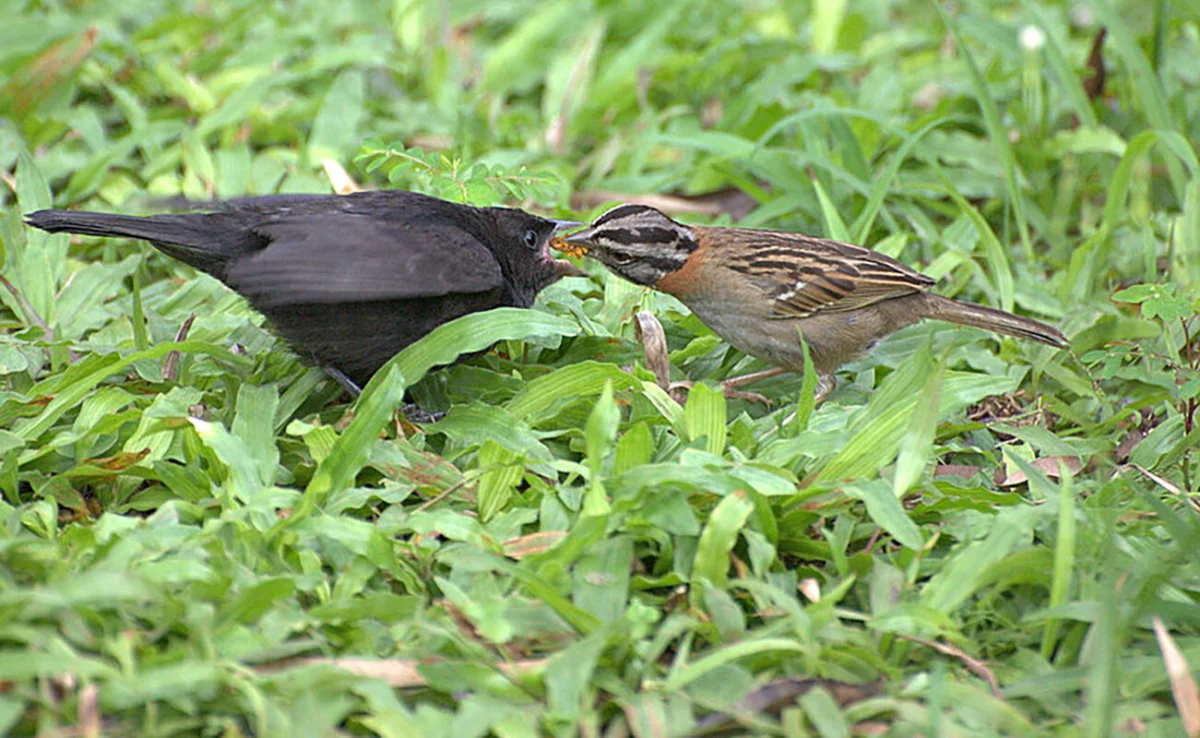
The collaborative study focused on a specific, high-stakes evolutionary arms race: the relationship between brood parasites and their hosts. Brood parasitism is a deceptive reproductive strategy where one species, such as the cowbird or cuckoo, deposits its eggs into the nest of another. The host bird, often unaware of the intrusion, expends vital energy incubating and rearing the parasite’s offspring. In many instances, the parasitic hatchlings are more aggressive or physically dominant than the host’s biological young, often pushing the host’s eggs or chicks out of the nest entirely. This imposes a significant fitness cost on the host, forcing them to evolve rapid detection and defense mechanisms.
Chronology of the 2025 Research Project
The investigation into these vocal patterns took place over several years, utilizing data gathered from avian populations across diverse geographical regions. The researchers initiated the study by cataloging the defensive responses of 21 distinct bird species. The selection criteria were rigorous: the species chosen had to reside on different continents—ranging from the high-altitude forests of the Andes to the sprawling plains of Australia and the temperate zones of North America—ensuring that there was zero possibility of interspecies cultural transmission or learned behavior.
In 2023, the team began the synthesis of field recordings, comparing the "whining alarm" vocalizations emitted by host species when they identified a brood parasite approaching their nest. By 2024, the data indicated a striking level of consistency in the acoustic properties of these warnings. The final analysis, peer-reviewed and published in 2025, confirmed that despite never having interacted with one another, these disparate species utilized nearly identical vocal frequencies to alert their peers of the encroaching threat. This discovery provided a rare, empirical look at how natural selection preserves specific communicative structures across millions of years of geographic isolation.
Supporting Data and Acoustic Analysis
The acoustic profile of these "universal" calls reveals a sophisticated level of biological engineering. According to the study, the alarms shared a narrow frequency range that is difficult for predators to pinpoint, yet highly audible to members of the same and even different species. Researchers quantified the responses by playing back recorded alarm calls to various bird populations in controlled field settings. The results were consistent: when exposed to a foreign alarm call, birds exhibited immediate defensive behaviors, such as aggressive posturing, nest defense, or rapid flight, even if the warning had been recorded from a species they had never encountered.
This data suggests that the vocalization acts as a "trigger" for an innate neural pathway. Just as a human infant displays an intuitive understanding of fearful facial expressions before they have acquired a vocabulary, these birds appear to possess a "pre-wired" neurological response to specific acoustic signatures. This capability is likely a byproduct of the extreme selective pressure exerted by brood parasites; those birds that failed to respond to the alarm signal—or failed to recognize the signal from other local species—suffered higher rates of nest failure and lower reproductive success.

Official Perspectives and Scientific Implications
The implications of these findings extend far beyond the study of ornithology. Lead researchers from the Cornell Lab of Ornithology noted that this study challenges the traditional "blank slate" model of animal communication. By identifying that these alarm calls are not learned through social contact, the scientific team has effectively shifted the focus toward the neurobiology of innate communication.
"We are looking at a hard-wired survival mechanism that predates many of the social behaviors we typically associate with intelligence," one researcher noted in a press release following the study’s publication. The reaction from the broader biological community has been one of validation. Evolutionary psychologists have noted the parallels between these bird vocalizations and the non-verbal cues utilized by mammals. The similarity is not merely coincidental; it reflects a convergent evolutionary trajectory where the need to communicate danger necessitates a standardized, reliable signal that cannot be misinterpreted by neighboring species.
The Broader Impact on Ecological Studies
Understanding this universal bird language is vital for conservation efforts. As global climate change and habitat loss force different species into closer proximity, the ability to communicate across species lines may become an increasingly important tool for survival. If bird species are hard-wired to respond to a shared alarm lexicon, they may be better equipped to adapt to new environmental pressures than previously thought.
Furthermore, the study sheds light on the cognitive development of birds. The researchers noted that the way young birds integrate these innate signals into their broader, learned repertoires shares a developmental trajectory with human toddlers learning to navigate social environments. There is a "sensitive period" in which these innate vocalizations become reinforced by environmental feedback, turning a primal instinct into a refined behavioral response.
Future Directions in Interspecies Communication
The 2025 study serves as a foundational text for future research into animal linguistics. While this project focused specifically on the defense against brood parasites, the researchers suggest that this is likely just one component of a much larger "avian dictionary." Future investigations are expected to explore whether similar innate signals exist for other environmental stressors, such as the presence of ground predators versus aerial threats.
The discovery also invites a re-evaluation of how we categorize "intelligence" in the animal kingdom. If a bird can decode a complex warning system without ever having been taught, the threshold for what constitutes cognitive complexity must be adjusted. This research reinforces the notion that the natural world is a deeply interconnected web of signals, where the survival of the individual is inextricably linked to the ability to interpret and transmit a message that transcends the boundaries of species.
In conclusion, the work of the Cornell and Doñana research teams highlights a fascinating convergence of evolutionary biology and acoustic science. The "whining alarm" is a testament to the power of natural selection to distill life-saving information into its simplest, most potent form. As we continue to decode these signals, we gain not only a better understanding of our avian counterparts but also a deeper appreciation for the ancient, silent, and shared language that sustains life across the globe. The persistence of these signals across continents confirms that while language may divide us, the instinct to protect one’s own remains a universal, evolutionary constant.

