


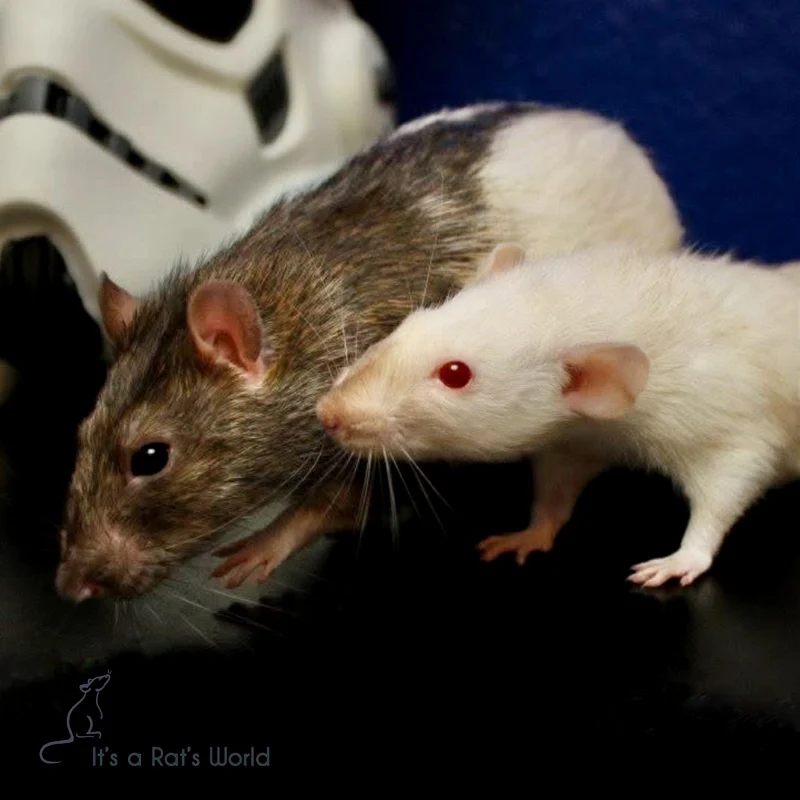
A common question among prospective rat owners is whether to choose male or female rats as pets. This decision often stems from a desire to understand potential personality differences and care requirements. While both sexes offer unique charms and make exceptional companions, a closer examination reveals distinct characteristics in physical traits, scent profiles, energy levels, and behavioral tendencies. Understanding these differences can help potential owners make an informed choice that aligns with their lifestyle and expectations for a pet rat. Brandi Saxton of "It’s A Rat’s World" shares her extensive experience, offering insights into the nuances of male and female rat companionship.
Physical Differences: Size and Scent
One of the most apparent distinctions between male and female rats lies in their physical size. On average, male rats are larger than their female counterparts. Adult males typically measure between 10 to 12 inches in length, excluding their tails, and weigh approximately 450 to 650 grams, which translates to about 1 to 1.4 pounds. In contrast, females generally range from 9 to 10 inches in length, tail excluded, and weigh between 350 to 450 grams, or roughly 12.3 ounces to 1 pound. However, these are averages, and individual variations are common. Saxton notes instances where her male rats were smaller than her females, and a particularly large female who rivaled the size of many males. Notably, some of her male rats achieved impressive weights, with Dover Cliffs reaching a full 2 pounds (907 grams) and others like Gatwick, Camdan, and Regent weighing around 850 grams (approximately 1.8 pounds).

Beyond size, a tactile difference often observed is fur texture. Adult males, particularly intact ones, tend to produce more oil on their backs. This oily secretion, known as "buck grease," is orangish-yellow and can sometimes cause their skin to become itchy, necessitating occasional baths. The presence of buck grease can also contribute to a coarser fur texture in males. Fortunately, neutering often reduces or eliminates buck grease, leading to softer fur. Females typically maintain a softer coat throughout their lives.
Another intriguing, and perhaps surprising, difference lies in their natural aroma. Intact male and female rats possess distinct scents, so much so that an experienced owner can often identify a rat’s sex by smell alone. Female rats are often described as having a pleasant, fragrant aroma reminiscent of grape soda, sometimes with floral undertones similar to fabric softener. This scent is generally appealing to owners, leading to a practice known as "huffing," where owners deeply inhale the rat’s scent. Intact males, on the other hand, emit a scent often compared to warm corn tortillas or tortilla chips. While this may sound less appealing, Saxton reassures that it is generally pleasant. A significant change occurs when males are neutered; their scent typically shifts to the grape-like fragrance characteristic of females.
The issue of "marinating" – a term for rats, predominantly males, sleeping in soiled bedding or hammocks – can also contribute to an unpleasant odor. This behavior, while sometimes observed in females, is more commonly associated with males and can necessitate cleaning and odor management.
Behavioral and Temperamental Tendencies: Energy, Socialization, and Marking
When considering pet rats, potential owners often inquire about energy levels and cuddliness. A common generalization suggests that males are more laid-back and better cuddlers, while females are more energetic, prone to climbing, and less inclined to cuddle. However, Saxton’s extensive experience challenges this notion. She observed that while males do tend to become lazier with age, particularly after neutering, young males can be quite active. Furthermore, a rat’s desire to be held or to simply rest nearby is more indicative of individual personality than sex.
Saxton’s own female rats, with the exception of Leeloo who remained exceptionally energetic until health issues intervened, generally became as "lazy potatoes" as her male companions. She notes that her experience with females might have been influenced by the fact that all her female rats were spayed prior to adoption. This meant she missed observing the behavioral changes associated with being in heat, a cycle that occurs roughly every four to five days in intact females and can manifest as restlessness, hyperactivity, and agitation.
A more pronounced behavioral difference emerges with social maturity and urine marking. Rats reach puberty between 6 to 8 weeks of age. However, social maturity, the period when their adult personalities solidify and they may exhibit territorial or hormonal behaviors, is typically considered to be between 5 to 6 months for males according to some sources like the National Institute of Health. Saxton, based on her decades of experience, posits that this period is more accurately between 6 to 9 months for males. During this time, some males may undergo a personality shift, becoming more agitated, easily irritated, and potentially aggressive towards cage mates or even their owners. While rare, this behavior can necessitate intervention, with castration often proving to be a highly effective solution, significantly mellowing hormonal males.

When introducing new rats, particularly males to other males, territoriality can become a significant factor. Even normally docile males may exhibit increased territorial behavior, requiring patience and careful introductions. This doesn’t imply inherent inability for males to coexist but highlights the need for extra effort in managing potential conflicts. Saxton found introductions generally less stressful when pairing males with females or females with females, although even some females can be resistant to new additions.
Urine marking is another behavior where sex plays a notable role. Intact male rats are considerably more prone to marking their territory, including their owners and perceived possessions, with urine. While some males may cease frequent marking once settled, others continue throughout their lives. Females, in contrast, are far less likely to engage in urine marking.
In terms of litter box training, Saxton found that females are generally easier to train. However, it is important to note that neither sex consistently uses a litter box 100% of the time.

The Impact of Spaying and Neutering: Health and Behavior Modifications
Surgical sterilization, spaying for females and neutering for males, offers significant benefits for both health and behavior.
Preventing Unplanned Litters: The most immediate and obvious benefit of spaying and neutering is the prevention of unwanted litters. Given that female rats can give birth to litters of 8 to 18 pups, responsible pet ownership necessitates sterilization if housing both sexes together or even in proximity. Female rats in heat are known to be adept escape artists and can conceive even through cage bars when intact males are present.
Minimizing Health Risks: Both male and female rats are susceptible to hormone-related health issues, including mammary and pituitary tumors. However, female rats are particularly prone to mammary tumors and also face risks of ovarian and uterine diseases. These conditions can significantly shorten their already limited lifespan. Spaying females between 3 to 4 months of age, rather than later in life, can drastically reduce their risk of developing these health problems. While some sources suggest a slightly later window (3-7 months), the consensus among trusted rat health experts leans towards the earlier age for optimal benefits. The surgical procedure for spaying is more invasive and costly than neutering but is widely considered beneficial. Saxton emphasizes her preference for adopting already-spayed females or undertaking the surgery herself, noting that her own female, Leeloo, developed mammary tumors likely due to being spayed after her first birthday.

Improving Behavior and Overall Health: For males, neutering offers substantial behavioral advantages, including a reduction in aggression, urine marking, and the production of buck grease. Beyond behavioral improvements, neutering can also prevent the formation of vesical proteinaceous plugs (penis plugs) in older or mobility-challenged males and eliminate the risk of testicular cancer, though the latter is less common. While information on whether castration reduces the risk of mammary or pituitary tumors in males is less conclusive, the overall benefits to behavior and certain health aspects are undeniable. A veterinarian’s guidance is crucial in determining the appropriate timing and necessity of these procedures for individual rats.
Mixing the Sexes: Harmonious Cohabitation
The experience of housing male and female rats together, particularly after one or both have been sterilized, can be incredibly rewarding. Saxton recounts how her initial hesitation to adopt female rats was quickly dispelled upon experiencing their companionship. She found that cohabitation of both sexes, especially when properly managed, could lead to the development of strong interspecies bonds. She shares a poignant story of a male rat named Sirius and a female named Echo, who developed an exceptionally close relationship. Even after Sirius underwent a neuter that returned him to his sweet nature, their bond remained unbreakable. Sirius remained devoted to Echo, staying by her side until her passing, a testament to the deep affection that can form between rats, regardless of sex.
Ultimately, whether one chooses male, female, or a mixed-sex group of rats, the experience is equally delightful. The key to successful and harmonious cohabitation, particularly in mixed-sex groups, lies in responsible pet ownership, which includes ensuring at least one sex is sterilized to prevent unintended litters and mitigate potential health and behavioral issues. The decision between male and female rats is a personal one, but with a thorough understanding of their individual characteristics, any choice promises a rewarding and enriching companionship.

