



The release of the Canon EOS R6 V has brought renewed attention to the Japanese manufacturer’s long-standing product segmentation strategy, particularly as it relates to the burgeoning market of hybrid and video-first mirrorless cameras. Within a short period, Canon has introduced three distinct camera bodies—the EOS C50, the EOS R6 Mark III, and the EOS R6 V—all of which utilize a newly developed 32-megapixel full-frame CMOS image sensor. Despite sharing a common imaging core, these devices feature hardware and software limitations that industry analysts suggest are designed to prevent internal product cannibalization, often at the expense of user versatility.
The Shared Technological Foundation
At the heart of Canon’s current mid-range professional lineup is a 32-megapixel full-frame sensor that represents a significant step forward in resolution and readout speed for the EOS R system. This sensor is the primary imaging component for the cinema-focused EOS C50, the hybrid EOS R6 Mark III, and the newly debuted, video-centric EOS R6 V. While Canon’s technical documentation suggests that the EOS C50 may feature specific tuning for professional video workflows, the fundamental imaging pipeline across the three units remains largely identical.

This shared architecture has led to a critical evaluation of how Canon differentiates its products. Traditionally, camera manufacturers segmented their lineups based on sensor resolution, autofocus capabilities, or build quality. However, the current EOS R strategy appears to rely more heavily on the selective inclusion of hardware components like In-Body Image Stabilization (IBIS) and Electronic Viewfinders (EVFs), as well as software-locked features such as specific menu systems and recording codecs.
Chronology of Recent Canon Releases
The current landscape of Canon’s 32-megapixel ecosystem began to take shape in late 2025. The following timeline illustrates the rapid succession of these releases and the specific market segments they were intended to address:
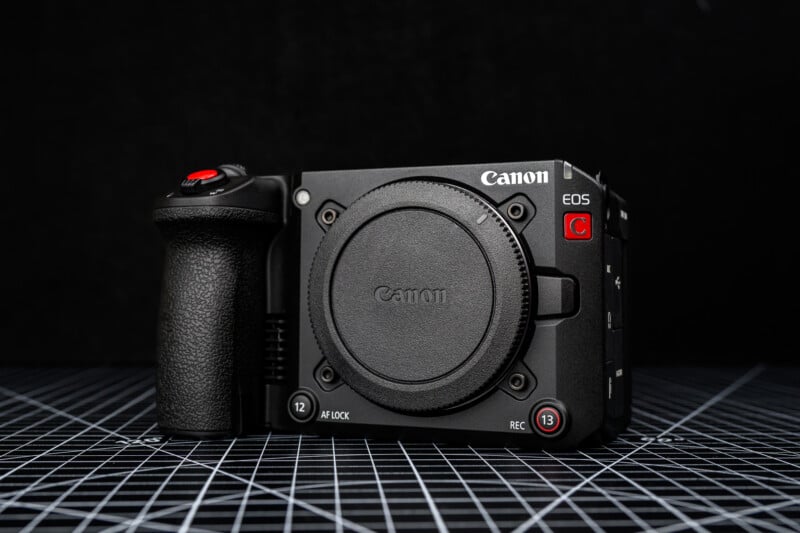
- October 2025: The EOS C50 Launch. Positioned as the entry point into the Cinema EOS line, the C50 was designed for professional filmmakers requiring a compact form factor. It introduced a robust cooling system and professional I/O ports but lacked stabilization.
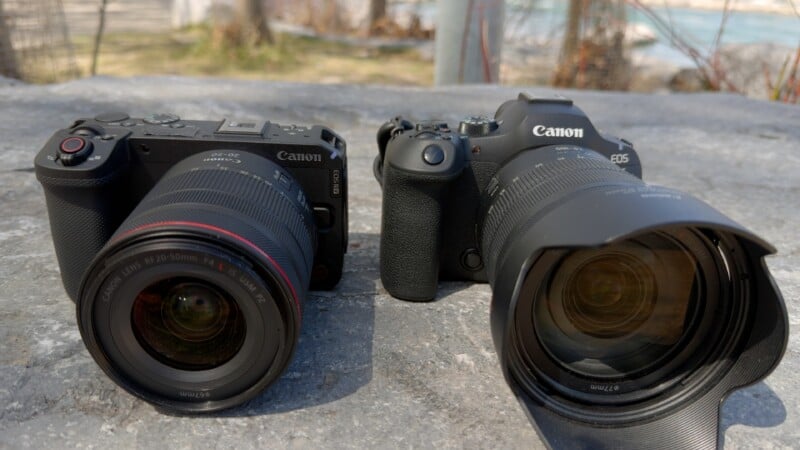
- November 2025: The EOS R6 Mark III Debut. Only weeks after the C50, Canon refreshed its popular R6 line. The Mark III targeted hybrid shooters who require high-quality stills and video, incorporating IBIS and an EVF but omitting several high-end cinema software tools.
- May 2026: The EOS R6 V Announcement. The latest addition to the lineup, the R6 V, attempts to bridge the gap between the hybrid R6 series and the professional C-series. It incorporates active cooling while removing the mechanical shutter and EVF, aiming for the "content creator" demographic.
Technical Discrepancies and Hardware Limitations
The primary point of contention among professional users is the perceived "arbitrary" nature of feature omissions. The EOS C50, despite its $3,900 price point (including an XLR handle), lacks In-Body Image Stabilization. While traditional cinema cameras often omit IBIS to avoid sensor "float" when used on high-end gimbals or vibrations on vehicle mounts, the C50’s compact size makes it a prime candidate for handheld documentary work. Industry experts have noted that the omission of IBIS in a camera of this size and price bracket represents a significant drawback for solo operators.

Conversely, the EOS R6 Mark III includes both IBIS and a high-resolution EVF, making it a superior choice for handheld work. However, it is restricted by the standard EOS R menu system, which lacks the specialized video tools found in the Cinema EOS firmware. Essential filmmaking features such as shutter angle settings and anamorphic de-squeeze are absent, despite the hardware being technically capable of supporting them.
The new EOS R6 V further complicates this hierarchy. While it addresses thermal concerns with a built-in active cooling fan—a feature it shares with the C50—it lacks the C50’s ability to record horizontal and vertical video simultaneously to separate card slots. This "dual-aspect" recording is highly sought after by social media professionals, yet Canon has reserved it for the more expensive Cinema line, even though the R6 V is marketed specifically toward that same creator demographic.
Comparative Data: A Segmented Landscape
| Feature | EOS C50 | EOS R6 Mark III | EOS R6 V |
|---|---|---|---|
| Sensor | 32MP Full-Frame | 32MP Full-Frame | 32MP Full-Frame |
| Cooling | Active (Internal Fan) | Passive | Active (Internal Fan) |
| Stabilization | Digital/Gyro Only | IBIS (High Performance) | IBIS (Standard) |
| Viewfinder | None | 5.76m-dot EVF | None |
| Menu System | Cinema EOS | Standard EOS R | Standard EOS R |
| Shutter | Electronic Only | Mechanical + Electronic | Electronic Only |
| Price (Body) | ~$3,900 (with handle) | ~$2,500 | ~$2,500 |
Official Positioning and Industry Reaction
Canon’s official marketing maintains that each camera is optimized for a specific type of user. The company suggests that the Cinema EOS C50 is a tool for "narrative and documentary professionals," the R6 Mark III is for "versatile hybrid creators," and the R6 V is for "modern content creators and vloggers."
However, user feedback and reviews from prominent industry outlets suggest that this segmentation creates "unnecessary friction." Jordan Drake, a lead technical reviewer for PetaPixel, noted that the lack of IBIS in the C50 is a "massive drawback" even for monopod use. Critics argue that by splitting features so narrowly, Canon is forcing professionals to purchase multiple bodies to achieve a complete feature set that competitors often provide in a single unit.
Professional videographers have pointed out that Sony and Panasonic—Canon’s primary rivals—have taken a more integrated approach. For instance, Sony’s FX3 and A7S III share many features, with the primary differences being the physical chassis and cooling rather than a wholesale removal of software tools or stabilization.
Broader Implications for the Mirrorless Market
Canon’s strategy reflects a broader trend in the imaging industry where software has become the primary tool for market differentiation. As hardware components like sensors and processors become standardized across product lines to save on manufacturing costs, manufacturers must find other ways to justify different price tiers.

The implications of this strategy are two-fold. On one hand, it allows Canon to protect its high-end cinema business, which commands higher margins and includes professional support services. By ensuring that a $2,500 camera does not possess the full suite of "Pro" features, Canon incentivizes high-end productions to stay within the Cinema EOS ecosystem.
On the other hand, this rigid segmentation may be pushing enthusiast and mid-tier professional users toward competitors. The "content creator" market is currently the fastest-growing segment of the imaging industry. These users often require a "do-it-all" device that can handle vertical social media content, professional client work, and high-quality stills. By failing to provide a single, cohesive 32-megapixel camera that includes IBIS, an EVF, active cooling, and cinema-grade software, Canon risks alienating a demographic that values versatility over brand loyalty.
Conclusion: The Unrealized Potential
The Canon EOS R6 V represents a missed opportunity in the eyes of many technical analysts. While it introduces active cooling to a compact body—solving one of the primary complaints of the mirrorless era—it remains tethered to a "beginner-friendly" software environment that limits its utility for professional workflows.
The existence of an "unscalable wall" between the V-series and C-series cameras suggests that Canon remains committed to its legacy tier system. While this may serve the company’s short-term financial goals by diversifying its product catalog, it creates a complex decision-making process for consumers. As the line between "content creation" and "traditional cinematography" continues to blur, the demand for a truly uncompromised hybrid camera grows. Whether Canon will eventually lower these software barriers or continue to maintain its strict segmentation will likely determine its market share in the next decade of digital imaging.

