


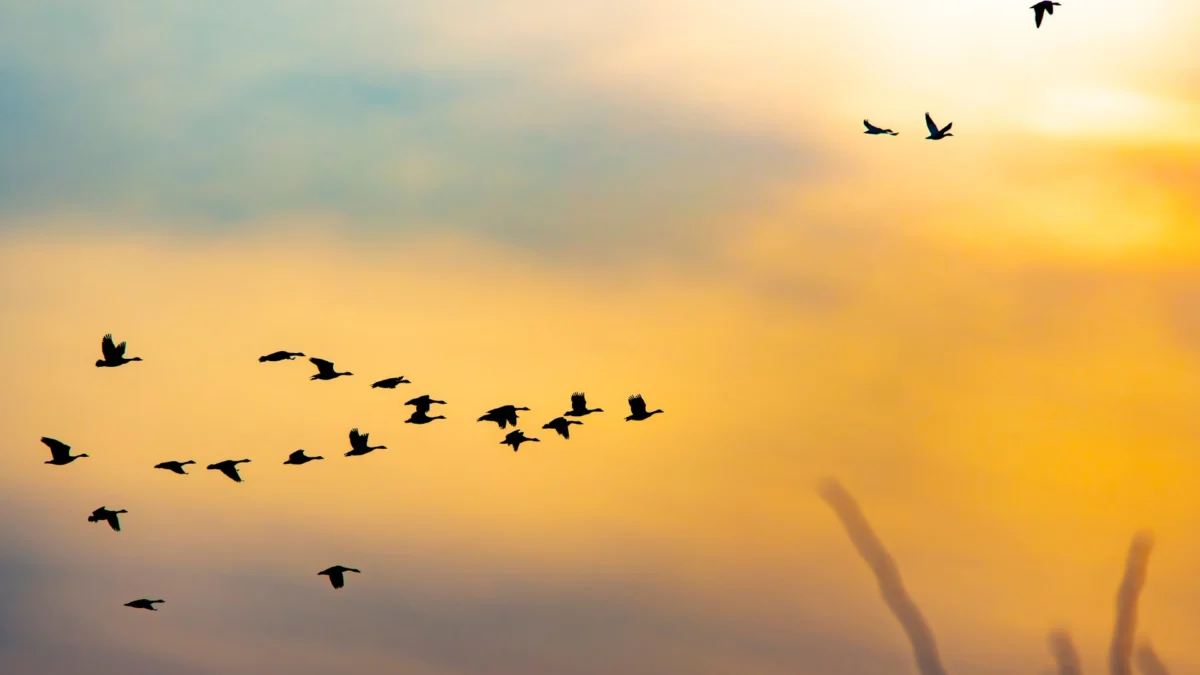
The seasonal pulse of North American avian life has quickened, as the United States enters the early, critical phases of the fall migration cycle. Data synthesized from advanced weather surveillance radar and atmospheric modeling indicates that more than 200 million birds are currently in transit, moving across the central and northern corridors of the country. This massive, nocturnal phenomenon marks the transition from breeding territories in the north to wintering grounds as far south as Central and South America.
According to the latest forecasts from BirdCast, a project managed by the Cornell Lab of Ornithology and partners, the migration intensity is particularly concentrated across the Great Plains and the Midwest. As of August 26, states including Iowa, Missouri, Kansas, Oklahoma, and Texas are experiencing significant influxes of avian travelers. This movement follows a substantial push earlier in the week across Minnesota, North Dakota, and South Dakota, underscoring the dynamic and rapid nature of migratory events that are dictated primarily by meteorological conditions.
The Mechanics of Nocturnal Migration
While the casual observer might perceive migration as a slow, continuous drift of species, the reality is a high-intensity, episodic surge. Migration is not a steady state but a series of pulses triggered by weather patterns. When cold fronts move through or favorable tailwinds develop, millions of birds synchronize their departures. This phenomenon often results in a "bottleneck" effect where local ecosystems—parks, woodlots, and wetlands—are suddenly teeming with species that were entirely absent twenty-four hours prior.
A critical, often misunderstood aspect of this event is its timing. The vast majority of migratory songbirds—including warblers, vireos, and thrushes—travel under the cover of darkness. Nocturnal migration serves several evolutionary purposes: it provides access to cooler, more stable air, which is vital for the physiological demands of long-distance flight; it minimizes the risk of overheating; and it allows birds to avoid many of the daytime raptors and predators that would otherwise pose a threat.
Ornithologists utilize sophisticated weather surveillance radar (WSR-88D) to track these movements. By filtering out rain, insects, and other atmospheric phenomena, researchers can identify the signature of biological targets. These radar systems provide a unique window into a hidden world, confirming that during peak autumn migration periods, more than one billion birds can be airborne over the United States on a single night. The current movement of 200 million birds, while impressive, serves as a harbinger for the much larger pulses expected as the season deepens into September and October.
Chronology of the Fall Movement
The progression of migration follows a distinct geographical and temporal logic. Early-season migrants, such as certain species of flycatchers and shorebirds, begin their journey as early as late July. By late August, the movement broadens to include the bulk of the passerine population.
- Late July to Mid-August: Initial departure of shorebirds and early-migrating songbirds from the high Arctic and boreal forests.
- Late August: The current phase, characterized by large-scale movements of warblers and vireos across the central U.S. corridors.
- September: The peak of migration. During this time, the volume of birds typically increases exponentially, with major "waves" occurring following the passage of cold fronts.
- October to November: Late-season migration, focusing on hardier species, waterfowl, and raptors moving toward their final wintering destinations.
This year, the specific concentration in the central United States is reflective of a standard autumn trajectory, yet it remains subject to minor fluctuations based on shifts in jet stream position and temperature gradients.

The Role of Technology in Modern Ornithology
The ability to forecast these movements with such precision is a relatively recent development in the history of ornithology. Historically, bird migration was studied through localized banding stations and visual observations, which provided vital but fragmented data. The integration of high-resolution radar data, coupled with machine learning models that account for wind direction, cloud cover, and barometric pressure, has transformed the study of avian ecology.
BirdCast serves as a vital tool not only for recreational birdwatchers but for conservationists and city planners. By identifying peak migration nights, organizations can advocate for "Lights Out" programs. Light pollution is a significant driver of avian mortality, as migrating birds are frequently disoriented by the artificial glow of urban centers. When birds are drawn into cities by light, they are more susceptible to building collisions and exhaustion. Data-driven forecasts allow municipalities to dim non-essential lighting during the most critical nights, potentially saving millions of birds annually.
Implications for Ecosystem Health
The mass movement of millions of birds is not merely a spectacle for enthusiasts; it is a fundamental ecosystem service. Migratory birds play an essential role in pest control, pollination, and seed dispersal. As they stop to refuel along their journey, they exert immense pressure on insect populations in the forests and grasslands of the Midwest.
However, the migration cycle is increasingly threatened by habitat fragmentation and climate change. Ornithologists warn that the "phenological mismatch"—a situation where the timing of migration no longer aligns with the peak availability of food sources at stopover sites—is a growing concern. If birds arrive at a stopover site in Kansas or Oklahoma and find that the insect population has already peaked and declined due to warmer-than-average spring or summer temperatures, they may lack the fuel reserves necessary to complete their journey.
Guidance for the Birding Community
For those interested in observing this year’s migration, the current week presents an ideal opportunity. The most productive strategy involves monitoring local weather forecasts in tandem with BirdCast updates.
- Timing is Key: The best time to observe is at dawn, immediately following a night of heavy migration. Birds that have been flying for several hours will be descending to feed.
- Target Habitats: Look for "stopover hotspots." This includes areas with high structural complexity, such as forest edges, brushy thickets, and riparian corridors. Water features are particularly attractive to tired migrants.
- Patience and Observation: Migration is fleeting. A patch of woods that was quiet one morning may be filled with movement the next. Successful birding during this time requires frequent visits to the same locations to track the turnover of species.
Broader Perspectives on Conservation
While the immediate focus is on the 200 million birds currently in flight, the broader conservation implications are clear. Protecting the connectivity of the landscape is paramount. The "Central Flyway," which encompasses the states currently seeing the highest activity, is a critical artery for North American biodiversity. Efforts to restore wetlands in the Great Plains and maintain healthy native prairie ecosystems are directly linked to the success of these migratory pulses.
In summary, the current migration event is a profound reminder of the scale of the natural world. Despite the challenges of urbanization and climate change, the ancient instinct to migrate remains a driving force for avian populations. As these birds traverse the central United States, they do so as a testament to the resilience of their species. For the public, the opportunity to witness even a small fraction of this migration is a chance to engage with one of nature’s most significant events, and to appreciate the complex, invisible highways that span the continent.
As we move through the final days of August, the focus will inevitably shift toward the eastern and western flyways, where similar pulses are expected to materialize. For now, the spotlight remains on the heart of the country, where the sky is filled with the silent, rhythmic movement of millions of travelers heading south, guided by instinct and the shifting winds of a new season.

