


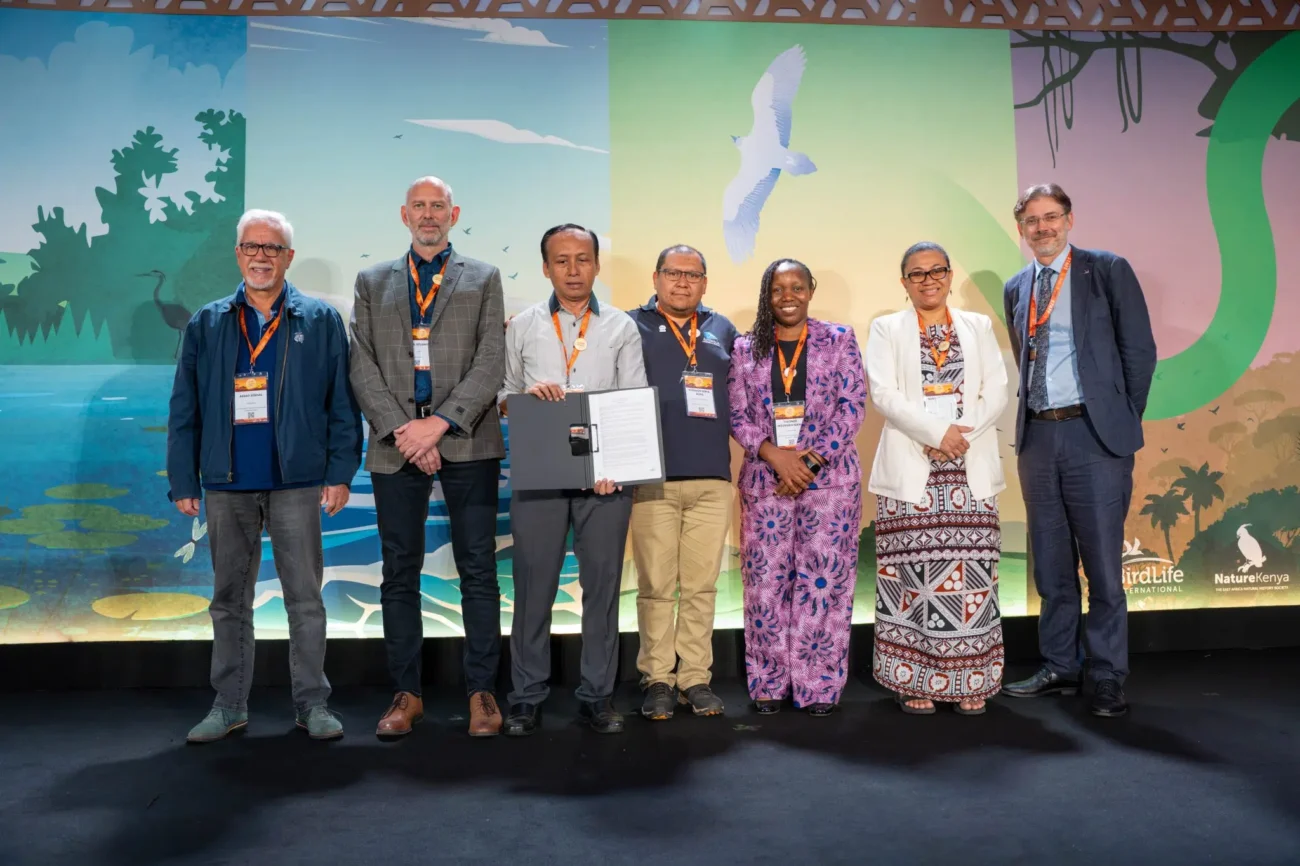
The Safari Park Hotel in Nairobi has officially quieted following the conclusion of the 2026 Global Partnership Meeting and Global Flyways Summit, an intensive six-day gathering that brought together 125 international partners from across the globe. Held from September 7 to September 12, 2026, the event served as a critical nexus for environmental policy, scientific reporting, and the establishment of new financial mechanisms aimed at the protection of migratory bird species. As delegates from 120 countries return home, the consensus among the international conservation community is that this summit has fundamentally shifted the discourse from local site management to a cohesive, hemisphere-spanning strategy.

The summit was characterized by three primary achievements: the release of the sixth edition of the State of the World’s Birds report, the ratification of the Nairobi Flyways Declaration, and the announcement of a groundbreaking Flyways Nature Bond Framework. These initiatives represent a concerted effort to integrate biological science into the core of global development finance.

A Chronology of Collaboration and Governance
The event began with a formal welcome from the Kenyan Government, represented by Cabinet Secretary for Tourism and Wildlife, Hon. Rebecca Miano, alongside BirdLife International CEO Martin Harper. The first two days were dedicated to internal governance, including the adoption of a refreshed global strategy through 2030. This strategic pivot acknowledges the volatility of the current global operating environment, shifting the partnership’s focus toward high-impact interventions on major migratory flyways.

By mid-week, the focus moved toward scientific assessment. The presentation of the State of the World’s Birds report provided a stark, data-driven foundation for the summit’s subsequent policy discussions. On Thursday, the event transitioned into a thematic day, hosting twenty separate sessions covering topics ranging from the application of artificial intelligence in biodiversity monitoring to the implementation of the High Seas Treaty and the management of grasslands in the Year of Rangelands and Pastoralists.

Scientific Findings and the State of Migratory Species
The 2026 State of the World’s Birds report, led by Chief Scientist Dr. Stuart Butchart FRS, focused exclusively on migratory species for the first time in its history. The findings are sobering: of the 1,843 migratory bird species assessed, 45 percent are in decline. Perhaps most alarmingly, one in nine species—totaling 200 birds—is currently threatened with extinction, with 32 classified as Critically Endangered.

The data reveals that shorebirds and seabirds are experiencing the most rapid population losses. The report also confirmed the extinction of the Slender-billed Curlew, marking a significant loss for biodiversity in mainland Eurasia and Africa. Despite these grim statistics, the report highlights the effectiveness of coordinated conservation efforts. For instance, the protection of key sites for migratory birds has surged from 11 percent in 1980 to 49 percent today. Furthermore, species-specific interventions, such as the four-year hunting moratorium on the European Turtle-dove, have resulted in a 47 percent population increase in western Europe, proving that policy-backed conservation can reverse negative trends.

The Nairobi Flyways Declaration: A Commitment to Connectivity
On Friday, September 11, the summit culminated in the launch of the Nairobi Flyways Declaration. Signed by representatives of governments, development banks, scientific institutions, and indigenous communities, the document formalizes a commitment to planetary health through the lens of migratory connectivity.

The Declaration mandates four strategic pillars: the valuation of ecosystem services provided by flyways, the strengthening of cross-border cooperation, the translation of international environmental commitments into national legislation, and the immediate mobilization of funding for habitat conservation. The document emphasizes that because birds do not recognize national borders, conservation strategies must similarly transcend sovereign limits. The signing process, which began with the regional chairs of BirdLife International, continues as a digital global campaign, signaling the growing urgency of the movement.

Financial Innovation: The Flyways Nature Bond Framework
Perhaps the most significant development for long-term conservation finance was the unveiling of the Flyways Nature Bond Framework. Announced in the closing hours of the summit, the framework is a partnership between BirdLife International, the National Audubon Society, and the Development Bank of Latin America and the Caribbean (CAF).

This mechanism represents a shift in how development banks evaluate project viability. By writing bird science into the project selection criteria, the framework ensures that infrastructure development and land-use decisions are scrutinized for their impact on migratory routes. This "science-first" approach aims to guide future financing toward projects that are not only bird-friendly but also contribute to broader climate goals, such as carbon storage and flood mitigation. The framework supports the overarching goal of the Americas Flyways Initiative: to protect 10 percent of the populations of representative migratory bird species by 2050.

Cultural and Institutional Recognition
The summit also served as a venue for honoring legacy and service. A major highlight was the announcement of the Pamela Isdell Endowment Fund for Africa. Following the posthumous presentation of the President’s Award to Pamela Isdell, her husband, Neville Isdell, pledged $10 million to the fund. This endowment is designed to protect critical habitats, bolster grassroots leadership, and ensure rapid response capabilities for emerging threats to African bird populations, particularly for vulture conservation.

Additionally, the inaugural Nairobi Crane Award was presented to Mr. Haruhiko Doi in absentia, honoring his vital role in facilitating the summit. The award, symbolized by the migration of the Red-crowned Crane of Japan and the Grey Crowned Crane of Kenya, underscores the summit’s theme of global interdependence.

Implications for Global Environmental Policy
The prominence of figures such as Elizabeth Mrema, Deputy Executive Director of the UN Environment Programme, at the summit underscored the alignment of BirdLife’s mission with global frameworks, such as the Kunming-Montreal Global Biodiversity Framework. Mrema’s address to the assembly emphasized that global targets for nature are only as robust as the people and organizations on the ground working to achieve them.

The summit’s conclusion, marked by the premiere of the "Global Birdsong" initiative—a rhythmic synthesis of over 100 birdsongs from across the globe—served as a poignant reminder of the cultural and biological heritage at stake. As delegates dispersed, the takeaway was clear: the era of fragmented, localized conservation is insufficient. The future of migratory species, and by extension the health of the planetary systems that sustain human life, depends on the successful implementation of the frameworks established in Nairobi.

The success of the week’s events will now be measured by the translation of these declarations and financial frameworks into tangible outcomes on the ground. With the upcoming release of the "Global Flyways" film series on October 10, the organization hopes to maintain public and political momentum, ensuring that the urgency felt in Nairobi resonates across all 120 countries represented at the summit. The event has effectively set the agenda for the remainder of the decade, shifting the burden of proof onto developers and policymakers to justify any activity that threatens the integrity of these vital global corridors.

