


For much of evolutionary history, the dominant strategy for animal reproduction was remarkably hands-off: organisms would produce vast quantities of offspring, release them into the wild, and leave them entirely to fend for themselves. Yet, across countless branches of the animal kingdom, this solitary paradigm eventually shifted. Complex systems of parental care emerged, ranging from birds building intricate nests and mammals nursing their young with milk, to social insects tending meticulously to developing larvae. How these elaborate caregiving behaviors evolved from ancestors that offered little or no protection has long remained one of evolution’s most compelling puzzles.
Now, a groundbreaking study published in the journal Nature offers a profound explanation for this biological transition. By investigating the neurological underpinnings of clonal raider ants, researchers have discovered that evolution did not forge entirely novel brain systems to elicit parental behavior. Instead, it systematically co-opted and adapted ancient neural pathways that originally governed hunger and feeding, repurposing them to drive social care. This revelation not only refines our understanding of insect biology but also hints at deep evolutionary commonalities shared with mammals, including humans.
Unlocking the Evolutionary Blueprint Through Social Insects
To understand the mechanics of parental care, neuroscientists have historically relied on model organisms, though each comes with distinct limitations. Fruit flies and roundworms, while foundational for genetic research, do not exhibit offspring care. Mice, conversely, display extensive and sophisticated parental behaviors, and scientists have successfully mapped several neuropeptides involved in these actions. However, the mammalian brain is profoundly complex, containing roughly 100 million cells, which makes parsing individual neural circuits a formidable challenge.
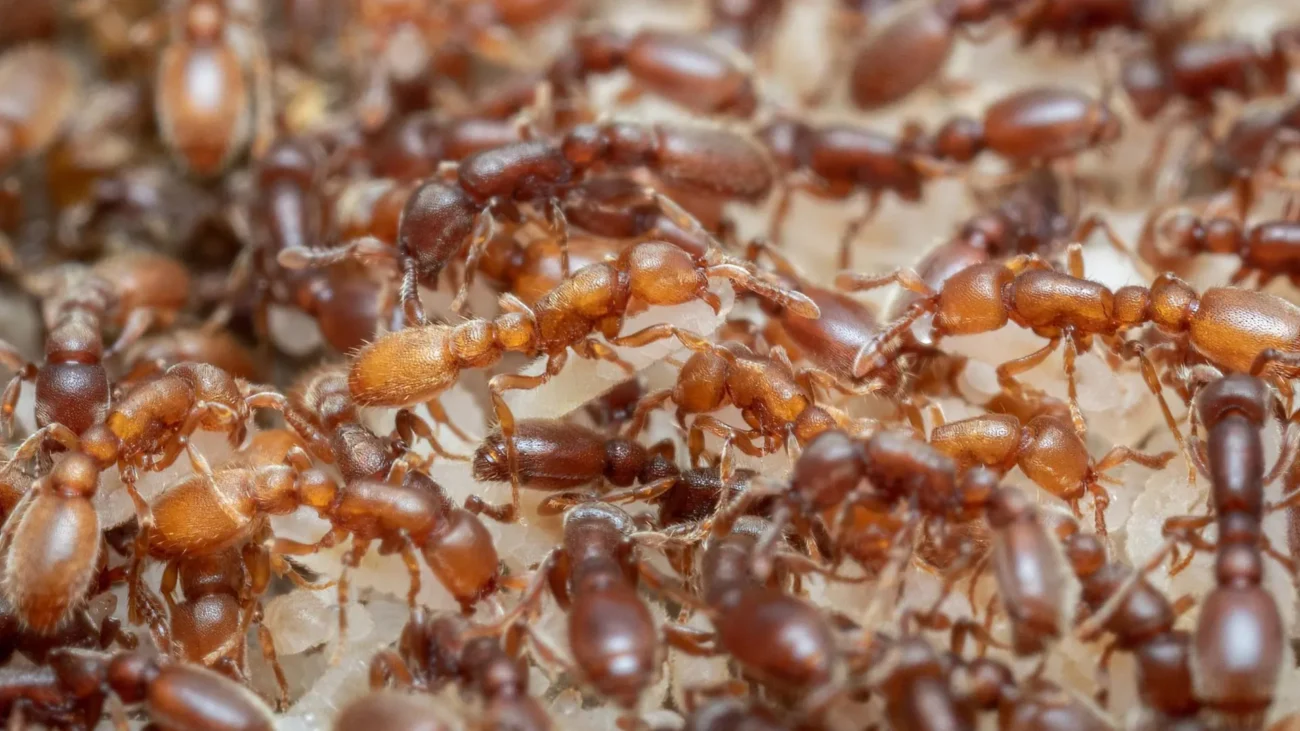
Enter the clonal raider ant (Oerapheidole or clonal variants like Cerapachys biroi), an organism that bridges the gap between simplicity and behavioral complexity. An ant brain comprises a mere 60,000 cells, allowing researchers to examine foundational neural circuits with unprecedented speed and precision. Furthermore, these ants exhibit a strict, age-dependent division of labor that mirrors broader behavioral shifts seen across the animal kingdom. Younger ants routinely remain deep within the nest to nurse vulnerable larvae, whereas older ants transition naturally into the role of foragers, leaving the nest to hunt and gather food.
This predictable chronological progression makes the clonal raider ant an ideal living laboratory for tracking how brain chemistry governs behavioral aging and social adaptation. Led by Daniel Kronauer, head of the Laboratory of Social Evolution and Behavior at Rockefeller University, a team of researchers set out to decode the chemical messengers orchestrating this lifelong transformation.
Chronology of Discovery: Mapping the Ant Neuropeptidome
The research project unfolded through a meticulous, multi-stage methodology designed to bridge molecular biology with behavioral observation. Initially, the team constructed an automated behavioral monitoring system capable of tracking individual ants housed alongside individual larvae. This high-throughput setup allowed the scientists to record and quantify hundreds of distinct caregiving interactions in real time.
Following this behavioral baseline, the team mapped the complete set of neuropeptides—the small chemical molecules utilized by the brain for intercellular communication—present within the ant nervous system. According to postdoctoral researcher and co-author, identifying this complete set, known as the neuropeptidome, was a monumental task. The team successfully cataloged 70 distinct neuropeptides, establishing a comprehensive library of chemical candidates for subsequent testing.
With the library established, the researchers synthesized each of these chemical messengers and administered them to the ants to observe any resultant shifts in behavior. By analyzing where these promising molecules were produced in the brain, tracking how their concentration fluctuated across the ant’s lifespan, and experimentally manipulating their activity levels, the team began to isolate the primary drivers of nursing behavior.
Two Master Molecules: Balancing Nurture and Hunger
The empirical results pointed definitively toward two specific neuropeptidic systems that regulate ant behavior by functioning in direct opposition: Neuropeptide F (NPF) and Allatostatin A (AstA). These molecules were found to push an ant’s behavioral inclinations in opposite directions, depending heavily on the insect’s age and internal physiological state.
Neuropeptide F was shown to strongly encourage caregiving, promoting nursing behaviors toward larvae. In stark contrast, Allatostatin A drove ants away from the brood chamber, increasing their propensity to abandon the larvae and embark on foraging missions.
This chemical balancing act mirrored the natural aging trajectory of the colony. Young ants naturally exhibited elevated concentrations of NPF and diminished levels of AstA in critical brain regions, locking them into their roles as nest-bound nurses. As the ants aged, this biochemical profile inverted, with AstA levels rising and NPF concentrations dropping, perfectly aligning with their transition into outdoor foragers.
Crucially, when the researchers pharmacologically altered the activity of either molecule, the ants’ behaviors shifted accordingly. This proved that NPF and AstA were not merely correlated with caregiving, but actively commanded whether an ant chose to nurture offspring or forage for provisions.
The Hunger Connection: Feeding Self Versus Feeding Others
Perhaps the most startling revelation of the study was the discovery that these caregiving molecules remain fundamentally tethered to the ancient neural circuitry of hunger. When the researchers compared the neurochemistry of well-fed ants with those subjected to food deprivation, they found that starving the insects triggered an immediate biochemical response.
Starved ants developed significantly higher levels of NPF and lower levels of AstA, driving them to behave like dedicated caregivers even if they were older. Once these starved ants were fed, the chemical balance abruptly reversed, suppressing their inclination to tend to larvae and renewing their drive to forage.
"We learned that parental behaviors build on the neural circuitry for feeding, and that makes some sense," explains Kronauer. "Parental behavior is a lot about feeding—not just yourself, but your offspring."
This finding strongly supports the overarching hypothesis that parental care evolved by co-opting biological systems that originally managed the acquisition and consumption of nutrients. Evolution appears to have avoided the immense metabolic and genetic cost of inventing caregiving from scratch. Instead, it co-opted metabolic signaling pathways, expanding an organism’s motivational scope so that the drive to nourish oneself seamlessly extended to nourishing offspring.
Official Responses and Academic Implications
The academic community has received the findings with significant enthusiasm, viewing the study as a paradigm-shifting model for evolutionary biology and neurogenetics. The realization that evolutionary pathways are deeply constrained by pre-existing physiological architecture offers a unifying theme for animal behavior.
"Our work is a prime example of how evolution seldom invents things from scratch," Kronauer emphasizes. "Evolution takes what it has and works with that, sometimes in very surprising ways."
Co-investigators echoed this sentiment, highlighting the broader philosophical and biological implications of the discovery. The recurrence of similar caregiving strategies across vastly disparate species—ranging from insects to mammals—suggests that nature relies on a conserved neurological toolkit.
"It amazes me that similar parenting behaviors have evolved so many times in so many distinct animal lineages," notes the study’s lead researcher. "Our paper suggests that the evolutionary routes to these sorts of behaviors are far more constrained than we may have naively imagined. That’s very exciting, because it may eventually lead to a blueprint of how these complex social behaviors evolve."
Because mammals utilize structurally related neuropeptide signaling systems—such as oxytocin, prolactin, and various feeding-related peptides—to mediate maternal care, the parallels between ant and mammalian neurobiology open new avenues for comparative endocrinology.
Broader Impacts: Unlocking the Mysteries of Brain Aging
Beyond illuminating the evolutionary origins of parenting, this research carries substantial implications for the study of healthy neurological aging. Modern scientific funding and institutional research are heavily skewed toward late-stage neurodegenerative pathologies, such as Alzheimer’s disease and various forms of dementia. Consequently, science possesses a profound knowledge gap regarding the subtle, progressive neurological shifts that occur across a normal, healthy lifespan.
Clonal raider ants provide a natural model to bridge this gap. Because age-dependent behavioral transitions are hardwired into the societal survival of an ant colony, researchers can observe how neurochemistry systematically reshapes behavioral proclivities over time without the confounding variables present in more complex mammalian models.
Kronauer and his team suspect that the neuromodulatory mechanisms governing age-related role changes in ants are conserved across the animal kingdom, potentially operating similarly within human biology as individuals age. Understanding how specific molecules like NPF and AstA safely and predictably alter brain function across a lifespan could ultimately inform future research into human cognitive aging, behavioral flexibility, and mental health.
As the research team moves forward with mapping the downstream neural circuits affected by NPF and AstA, the scientific community inches closer to constructing a universal blueprint of social behavior. By tracing the evolutionary bridge from a simple hunger signal to the profound selflessness of parental care, this study illuminates the remarkable economy of nature, proving that our most complex emotional and social behaviors are built upon the most ancient biological foundations.

