


Published On: Feb 22, 2026
Last updated on: Feb 22, 2026
For countless avian companions living within the confines of human dwellings, the seemingly benign environment of a home can paradoxically pose significant health challenges, particularly concerning their exposure to vital light spectrums. This guide is specifically tailored for bird owners whose feathered friends reside indoors, frequently perch near windows that, despite appearing bright, actively filter out crucial ultraviolet B (UVB) radiation. If you find yourself pondering the necessity and safety of specialized bird lights, this comprehensive analysis is pertinent to your situation. Conversely, if your bird already benefits from a properly installed UVB light, maintaining a strong grip, vibrant plumage, stable temperament, and coordinated flight, your current regimen likely requires only continued diligence.
Understanding the Silent Deficiency: Is Light the Missing Piece in Your Bird’s Health?
The subtle onset of light-related deficiencies often goes unnoticed until symptoms become pronounced. A quick diagnostic assessment can help identify potential underlying issues:
| If your bird… | What It Often Means |
|---|---|
| Sits near a bright window but receives no direct sunlight | Standard window glass effectively blocks nearly all UVB radiation. A bright room, while aesthetically pleasing, does not facilitate usable vitamin D3 production in birds. |
| Appears dull, less active, or irritable, especially during winter months | Reduced natural light exposure, common in shorter daylight seasons, can significantly impact calcium metabolism, disrupt circadian rhythms, and contribute to mood disturbances. |
| Consumes a strong, balanced diet but still exhibits weaker grip strength or declining feather quality | Despite adequate dietary intake, the crucial light-dependent activation of vitamin D3 may be absent, hindering proper calcium absorption and utilization for bone and feather health. |
These indicators suggest that while a bird’s environment might seem adequate to human perception, it could be critically lacking in the specific wavelengths of light essential for avian physiology.
The Indispensable Nature of Bird Lighting: Beyond Human Perception of Brightness
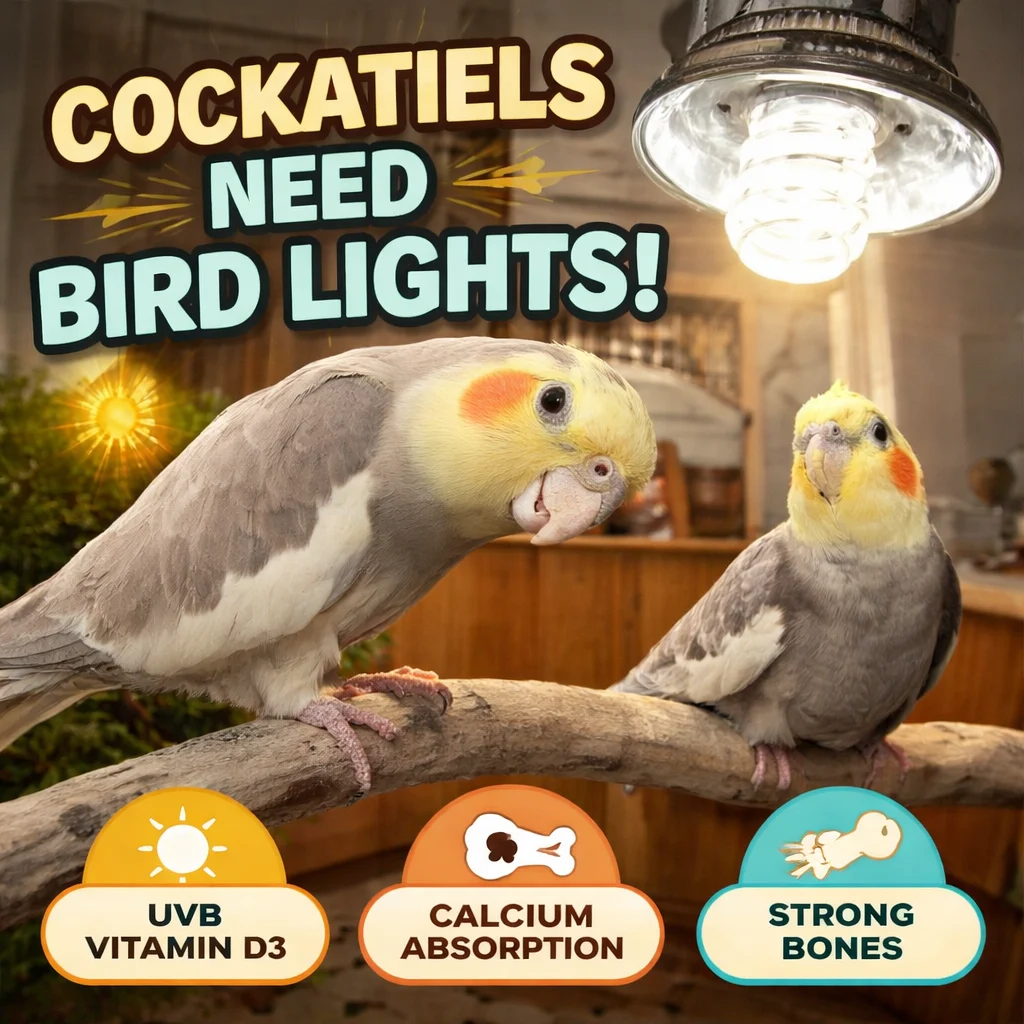
"My house is bright. Isn’t that enough?" This is a common and understandable query among bird owners. The unequivocal answer is no. Indoor brightness, as perceived by the human eye, does not equate to adequate UVB exposure for birds. Standard incandescent, LED, or fluorescent household bulbs, along with light filtered through windows, fail to provide the precise ultraviolet wavelengths necessary for the endogenous production of vitamin D3. Without this critical UVB exposure, even a meticulously balanced, high-quality diet cannot ensure proper calcium absorption and metabolism.
Birds, unlike many mammals, rely on specialized pre-vitamin D precursors in their skin and the preen gland (uropygial gland) that, when exposed to UVB radiation, convert into pre-vitamin D3. This pre-vitamin D3 is then metabolized in the liver and kidneys into its active form, calcitriol, which is indispensable for calcium regulation. Calcium, in turn, is vital for bone density, muscle function, nerve transmission, blood clotting, and eggshell formation in laying hens. The evolutionary biology of birds dictates a physiological need for direct, unfiltered sunlight exposure, a requirement that indoor environments rarely meet naturally.
Addressing Safety Concerns: Are Bird Lights Dangerous?
The question of safety is paramount. Used incorrectly, any source of ultraviolet radiation, including specialized bird lights, carries the potential for harm. However, when utilized according to expert guidelines, bird-safe UVB lights are specifically engineered to accurately mimic the beneficial, short, and controlled natural exposure that birds would receive in the wild. The critical elements for safe and effective use are distance from the bird, duration of exposure, and selecting the proper fixture and bulb type. The misconception that "more is better" can lead to overexposure and adverse effects; moderation and precision are key.
The Risk of Overexposure: Can Too Much UV Cause Cancer?
Excessive exposure to ultraviolet radiation over prolonged periods can indeed damage living tissue, including avian skin and eyes, and potentially contribute to cellular changes that may lead to cancer. This is why strict adherence to recommended exposure times is crucial. Avian veterinarians and manufacturers typically advise limiting daily UVB exposure to short, controlled sessions, generally ranging from approximately 1 to 3 hours. The implementation of a simple timer is a highly effective preventative measure, safeguarding both your bird and yourself from inadvertent overexposure. It ensures consistent, regulated periods of beneficial light without the risks associated with continuous, unregulated use.
The Profound Consequences of Insufficient Light: A Silent Health Crisis
When UVB radiation is absent or insufficient in an indoor bird’s environment, a cascade of physiological and behavioral issues can begin to unfold. This process is rarely dramatic at its outset; rather, it manifests subtly, often progressing unnoticed until the advanced stages where symptoms become undeniable.
- Skeletal System Compromise: Without adequate vitamin D3, calcium cannot be properly absorbed and utilized. This leads to a gradual weakening of bones (osteomalacia), which can manifest as weak grip strength, leg deformities (rickets in younger birds), and susceptibility to fractures. In breeding females, insufficient calcium can result in life-threatening egg-binding and soft-shelled eggs.
- Deterioration of Feather Quality: Vitamin D3 and calcium play a role in keratin formation, which is the primary component of feathers. Deficiency can lead to dull, brittle, discolored feathers, poor feather growth, and an increased incidence of stress bars.
- Behavioral and Psychological Disturbances: The disruption of a bird’s natural circadian rhythm due to a lack of full-spectrum light can lead to irritability, lethargy, anxiety, feather plucking, and even aggression. Birds may become less active, vocalize less, or display signs akin to seasonal affective disorder observed in humans.
- Compromised Immune Function: Vitamin D3 is recognized for its immunomodulatory properties. A deficiency can weaken a bird’s immune system, making it more susceptible to various infections and diseases, potentially prolonging recovery times.
- Reproductive Challenges: Beyond egg-binding, a lack of sufficient UVB can contribute to infertility, poor clutch viability, and overall reproductive stress in breeding birds.
- Eye Health Concerns: While beneficial, incorrect UV exposure can harm eyes. Conversely, the absence of natural light spectrums may also impact ocular health over time, affecting vision and perception of the environment.
Expert Note: It is critical for owners to understand that birds are masters at concealing weakness and illness as a survival mechanism. By the time overt symptoms such as falling, tremors, lameness, or severe egg-binding become apparent, the underlying deficiency may have been developing insidiously for many months or even years. The provision of appropriate UVB light is therefore a proactive, preventive measure, rather than a reactive treatment for an advanced condition.
The Evolution of Avian Photobiology: A Timeline of Understanding
The understanding of avian light requirements has evolved significantly over the past century. Early ornithological studies focused primarily on diet and housing, with light being largely overlooked beyond basic day-night cycles.
- Early 20th Century: Recognition of "rickets" in captive birds, often attributed solely to dietary calcium deficiencies. The role of vitamin D was beginning to be understood in human medicine.
- Mid-20th Century: Discovery of vitamin D and its synthesis in the skin via UV light. Initial research into poultry production started to explore light cycles for egg laying, but the specific wavelength requirements for pet birds remained largely unaddressed.
- Late 20th Century: Advancements in photobiology led to a deeper understanding of the specific wavelengths of UV light (primarily UVB) required for vitamin D3 synthesis in various species, including reptiles. This knowledge began to be extrapolated to avian species, especially psittacines. Studies highlighted the detrimental effects of glass filtration on UVB.
- Early 21st Century: A surge in research specifically focused on avian photobiology. Commercial "bird lights" or "avian full-spectrum lights" began to appear on the market, though not all were scientifically validated for appropriate UVB output. Avian veterinarians and researchers began to advocate strongly for the inclusion of UVB lighting in indoor bird setups.
- Present Day: Widespread consensus among avian experts on the necessity of providing appropriate UVB lighting for indoor birds. Ongoing research continues to refine recommendations for specific species, distances, and durations, emphasizing the nuance required for optimal health benefits without risk.
This chronology underscores that the recommendation for UVB lighting is not a fleeting trend but a scientifically validated necessity rooted in a progressive understanding of avian physiology.
What Do I Do Now? Implementing the 3-Step Light Reset
If your diagnostic assessment indicates a potential deficiency, or if you simply wish to proactively enhance your bird’s environment, follow this structured approach:
-
Assess Your Bird’s Needs and Current Environment:
- Species-Specific Requirements: Different bird species have varying natural light exposures. Research your bird’s natural habitat (e.g., tropical, desert, forest canopy) to understand its evolutionary light needs.
- Cage Location and Size: Note where your bird’s cage is positioned and how much natural light, if any, reaches it. Measure the cage dimensions.
- Current Symptoms: Document any existing health or behavioral issues that might be linked to light deficiency.
-
Select the Appropriate Avian UVB Lighting System:
- Bulb Type: Opt for linear fluorescent tubes or compact fluorescent lamps specifically designed for birds or reptiles, which emit UVB in the beneficial range (typically 290-320 nm). Avoid bulbs marketed simply as "full-spectrum" if they don’t specify UVB output, as many merely replicate visible light.
- UVB Output Strength: Bulbs come in different UVB percentages (e.g., 2.0, 5.0, 10.0). Consult manufacturer guidelines and avian veterinarian recommendations based on your bird’s species and the desired distance.
- Fixture: Ensure you have a fixture that is appropriate for the chosen bulb type and can be securely mounted above the cage without posing a risk to the bird.
-
Implement Correct Placement, Distance, and Schedule:
- Distance is Critical: UVB output diminishes rapidly with distance. Position the light directly above the cage, ensuring the bird can get within the effective UVB range (typically 6-12 inches from a primary perch, but always check bulb-specific recommendations). Ensure there are shaded areas within the cage where the bird can retreat if desired.
- Unobstructed Path: The light should shine directly onto the bird without any glass or plastic barriers, which would filter out the UVB.
- Duration: Start with short daily sessions, typically 1-3 hours. It is often recommended to use a timer to ensure consistency and prevent overexposure. The light should ideally be on during the peak natural daylight hours.
- Bulb Replacement: UVB output degrades over time, even if the bulb still emits visible light. Most manufacturers recommend replacing UVB bulbs every 6-12 months. Mark the installation date on the bulb.
How Do I Know It’s Working? Monitoring Progress and Expected Outcomes
Improvements in a bird’s health and behavior as a result of proper UVB lighting are generally gradual, reflecting the physiological processes being supported rather than an immediate, dramatic change. Patience and consistent observation are key. Look for the following indicators:
- Enhanced Feather Quality: Expect to see new feathers growing in with improved vibrancy, richer color, smoother texture, and fewer stress bars. Existing feathers may appear brighter.
- Increased Activity and Mood Stability: Birds may become more energetic, vocal, and engage more in natural behaviors like foraging and play. Irritability or lethargy may diminish, replaced by a more stable and positive demeanor.
- Improved Physical Strength: A stronger grip on perches, more confident movement, and better coordination during flight are positive signs of improved bone density and muscle function.
- Better Appetite and Digestion: Optimal vitamin D3 levels can indirectly support overall metabolic health, potentially leading to a more consistent appetite and efficient digestion.
- Reproductive Health (for breeding birds): In breeding pairs, signs of improved reproductive health might include better eggshell quality, fewer instances of egg-binding, and higher fertility rates.
- Overall Vigor: A general impression of robust health, alertness, and engagement with its environment.
Expert Responses and Broader Implications
Avian veterinarians consistently emphasize the non-negotiable role of UVB lighting for indoor birds. Dr. Greg J. Harrison, a renowned avian veterinarian, has frequently highlighted that "environmental enrichment, including proper lighting, is as crucial as diet for avian health." Organizations like the Association of Avian Veterinarians (AAV) regularly disseminate information reinforcing these guidelines, stressing that the absence of appropriate UV light is a significant contributor to many common health problems seen in pet birds.
The implications extend beyond individual bird health. This understanding underscores a fundamental principle of responsible pet ownership: creating an environment that closely mimics a species’ natural habitat, insofar as is practically possible. It challenges the anthropocentric view of pet care, where human comfort and convenience often overshadow the specific biological needs of companion animals. By providing appropriate UVB, owners are not just preventing disease; they are actively promoting a bird’s natural physiological processes, mental well-being, and overall quality of life. This holistic approach ensures that birds can thrive, not merely survive, in our homes.
Key Takeaways:
- UVB is Crucial: Unfiltered UVB radiation is absolutely essential for indoor birds to synthesize vitamin D3.
- Windows Block UVB: Standard window glass completely filters out the beneficial UVB spectrum.
- Prevention is Key: Proper UVB light use is a preventative measure against a wide range of debilitating health issues, not a cure for advanced disease.
- Correct Application: Safe and effective use depends on the right bulb type, correct distance, and appropriate daily duration, often managed with a timer.
- Consult Experts: Always consult with an avian veterinarian or reputable avian light manufacturer for species-specific advice and product selection.
- Holistic Care: UVB lighting is a vital component of a comprehensive avian care regimen, alongside nutrition, enrichment, and regular veterinary check-ups.
Other Helpful Resources:
- Why Winter is Hard On Bones: A detailed explanation of how seasonal light loss impacts avian bone health and calcium utilization.
- Complete Calcium + Magnesium + D3 Support: Information on dietary supplements that can complement proper lighting by providing essential co-factors for bone health.
By integrating scientifically validated UVB lighting into your bird’s indoor environment, you are providing a critical, often overlooked, element that significantly contributes to their long-term health, vitality, and overall well-being.

