


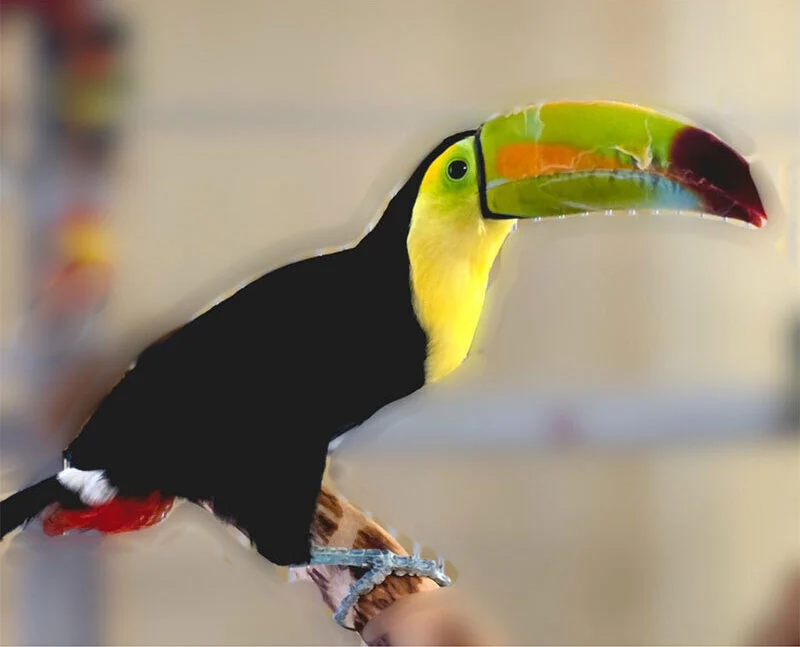
The months-long saga of Toucan Sam, a striking exotic bird that captivated residents and animal welfare organizations across the Las Vegas metropolitan area, reached a hopeful conclusion on February 26, 2026. After evading capture since his escape in November 2025, the vibrant avian adventurer was safely secured by the Southwest Exotic Avian Rescue (SWEAR) team, initiating a critical phase of veterinary care and rehabilitation. His extraordinary journey through the unfamiliar desert landscape has not only highlighted the resilience of exotic species but also underscored the complex challenges associated with their ownership and the dedicated efforts of specialized rescue operations.
Toucans, members of the family Ramphastidae, are renowned for their strikingly large, colorful beaks and vibrant plumage. Native to the tropical and subtropical regions of Central and South America, these birds are highly specialized creatures, adapted to humid forest environments rich with fruits, insects, and small vertebrates. While their exotic beauty often entices individuals to consider them as pets, the reality of their care is profoundly demanding. Their large beaks, though lightweight, necessitate specialized enclosure designs to prevent injury, and their dietary requirements are particularly stringent. A diet high in iron, commonly found in many human foods and even some commercial bird feeds, can lead to iron storage disease (hemochromatosis), a fatal condition for toucans. Furthermore, their high metabolic rate requires frequent feeding of a precise, low-iron fruit-based diet supplemented with specific proteins. Beyond diet, toucans are intelligent, social birds that can exhibit surprising aggression, especially during breeding seasons or when their needs are not adequately met, making them unsuitable for most family environments. Their active nature demands expansive aviaries, not typical household cages, to allow for sufficient flight and exercise. These multifaceted challenges often lead to toucans being surrendered or, as in Sam’s case, escaping when owners are unprepared for the long-term commitment.
The Initial Escape and Months on the Loose
Toucan Sam’s unexpected sojourn began in November 2025 when he managed to escape his enclosure in the Las Vegas area. The exact circumstances of his initial escape remain undisclosed, but the incident immediately triggered concern among local bird enthusiasts and animal welfare groups. Unlike domesticated animals, an exotic bird like a toucan, accustomed to human care, faces immense perils in an unfamiliar wild environment, particularly one as ecologically distinct from its natural habitat as the Mojave Desert. The news of a toucan on the loose quickly spread through community networks and social media, transforming Sam into a local celebrity. Numerous sightings were reported across various neighborhoods, with residents frequently capturing photographs of the distinct bird perched on rooftops, trees, and even power lines. These images, while providing a visual timeline of his movements, also served as a constant reminder of his precarious situation.
Organizations such as SWEAR, a non-profit dedicated to the rescue, rehabilitation, and rehoming of exotic avian species in the Southwest, initiated passive monitoring efforts. Actively attempting to capture an agile, free-flying toucan in an urban landscape without proper planning and resources can be highly dangerous for both the bird and potential rescuers, often leading to the bird being driven further away or injured. Instead, SWEAR focused on tracking his movements, assessing his condition from a distance, and preparing for a strategic intervention should an opportune moment arise. This period of observation also allowed them to educate the public on how to report sightings without alarming the bird, emphasizing the importance of not attempting capture independently.
Survival Against the Odds: The Las Vegas Winter
One of the most pressing concerns for Toucan Sam’s welfare during his extended period of freedom was the harshness of the Las Vegas winter. Toucans, originating from tropical rainforests, thrive in warm, humid climates with consistent temperatures. The Las Vegas desert, while experiencing mild daytime temperatures during winter months, is characterized by significant diurnal temperature shifts, with nighttime lows frequently dropping dramatically. Historical climate data for Las Vegas shows average low temperatures in December and January often dip into the high 30s and low 40s Fahrenheit (3-6 degrees Celsius), with occasional freezes possible. Such conditions pose a severe threat of hypothermia to a tropical bird unaccustomed to prolonged cold exposure.
Fortunately for Toucan Sam, the winter of 2025-2026 in the Las Vegas region proved to be unusually mild. This atypical weather pattern, characterized by fewer extreme cold snaps and generally higher ambient temperatures than average, significantly enhanced his chances of survival. While the mild conditions mitigated the immediate threat of cold, the challenges of finding suitable food and water in an urban desert environment remained substantial. Toucans primarily consume fruit, but their diet in the wild also includes insects, small reptiles, and bird eggs. In a city, Sam likely relied on fruit trees in residential yards, discarded human food, and perhaps opportunistic foraging for insects. However, these food sources are often inconsistent and may lack the specific nutritional balance required for a toucan, potentially leading to malnutrition or exposure to harmful substances. The prolonged stress of constant vigilance against predators, including hawks, owls, and domestic animals, also took a toll on his physical condition.
The Fortuitous Capture: A Community Effort
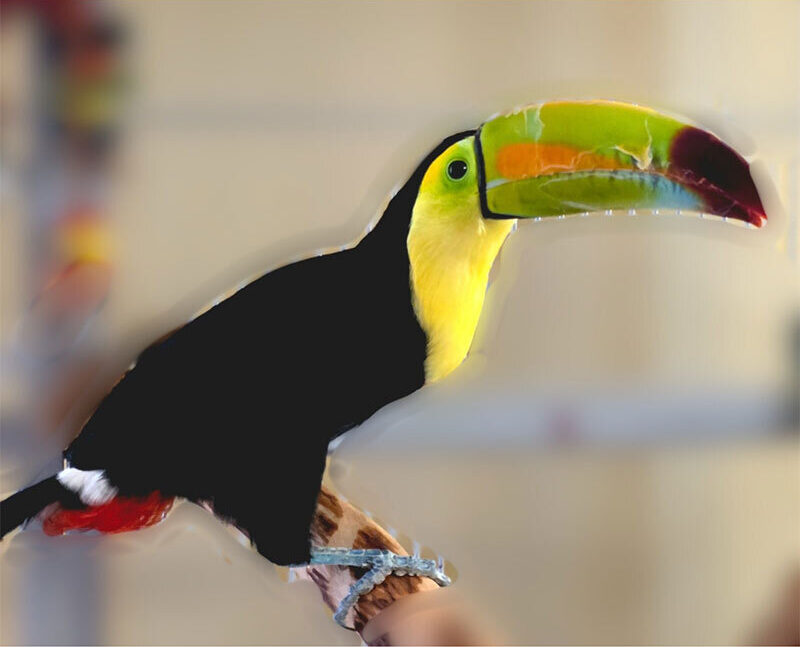
Toucan Sam’s aerial adventures concluded on February 26, 2026, thanks to the astute observation and quick thinking of a Las Vegas homeowner. The bird, likely driven by hunger or seeking shelter, flew into a residential garage. The homeowners, having been aware of the widely publicized toucan sightings, immediately recognized Sam. Demonstrating commendable presence of mind, they swiftly closed the garage door, effectively containing the bird without causing him undue stress or injury.
Following the containment, the homeowners promptly contacted SWEAR. The rescue organization, already well-versed in Sam’s movements and prepared for such an eventuality, dispatched a specialized team to the location. Upon arrival, the SWEAR experts, equipped with appropriate handling gear and extensive experience with exotic birds, were able to safely capture Toucan Sam. The rescue operation was executed with precision, prioritizing the bird’s safety and minimizing stress. This successful capture marked the culmination of months of community vigilance and dedicated efforts by animal welfare professionals, bringing an end to Sam’s dangerous stint in the urban wilderness.
Post-Rescue Care and Veterinary Assessment
Immediately following his capture, Toucan Sam was transported to the SWEAR facility, where he underwent a comprehensive initial veterinary assessment. This critical first step involved a physical examination to identify any immediate injuries or signs of distress, followed by the collection of necessary blood samples. These samples are crucial for a battery of diagnostic tests aimed at evaluating his overall health, nutritional status, and screening for potential diseases that he might have contracted during his time in the wild.
A mandatory quarantine period of 30 to 45 days has been instituted for Toucan Sam. This isolation protocol is a standard practice for all newly admitted exotic birds, particularly those rescued from unknown environments, to prevent the potential spread of infectious diseases to other birds within the facility. During this period, Sam will remain under close observation by veterinary staff and experienced aviculturists. Primary concerns include the possibility of avian influenza (bird flu) or other communicable pathogens, as well as parasitic infections or nutritional deficiencies that could have arisen from his inconsistent diet outdoors. The veterinary team will monitor his appetite, stool consistency, energy levels, and any behavioral changes to ensure he is progressing towards recovery.
Physically, Toucan Sam exhibited visible signs of his arduous journey. Rescuers noted a chip off the tip of his long beak. While toucan beaks are constantly growing and can heal, a significant chip could impact his ability to forage effectively or preen properly. He also presented with a small patch of missing feathers, likely due to stress, nutritional deficiencies, or minor physical trauma. The SWEAR team is diligently providing specialized care tailored to his specific needs, including a carefully formulated low-iron diet, supplemental vitamins, and a stress-reduced environment designed to promote feather regrowth and overall healing. The facility’s specialized aviaries replicate aspects of a natural toucan habitat, offering perches, enrichment toys, and controlled temperature and humidity.
The Role of SWEAR Parrot Rescue and Future Implications
The Southwest Exotic Avian Rescue (SWEAR) played a pivotal role in Toucan Sam’s eventual safe return. As a non-profit organization, SWEAR is dedicated to addressing the growing issue of displaced, neglected, and unwanted exotic birds. Their mission encompasses rescue, rehabilitation, adoption, and education, often dealing with complex cases that require specialized knowledge and resources. The prolonged monitoring and eventual capture of Toucan Sam exemplify the dedication and expertise required in exotic animal rescue. A spokesperson for SWEAR, speaking generally about such rescues, would likely emphasize the significant financial and logistical challenges involved, from veterinary costs and specialized feed to housing and trained personnel. They might also express relief at Sam’s safe recovery and highlight the importance of public cooperation in such situations.
The question of Toucan Sam’s original ownership remains an open one. As of the time of his rescue, the original owners had not come forward to reclaim the bird. This situation is not uncommon in exotic pet cases, where owners may be unaware of the bird’s whereabouts, reluctant to come forward due to legal or financial implications, or simply unable to care for the animal any longer. SWEAR maintains a policy of attempting to reunite lost pets with their rightful owners, provided the owners can be identified and demonstrate the capacity to provide adequate care. However, if the owners do not come forward or are deemed unsuitable, Toucan Sam’s future will lie with SWEAR. Potential outcomes include placement in a new, carefully vetted adoptive home that understands the complex needs of a toucan, or, if his needs are too specialized or he is deemed unadoptable, permanent residency at a sanctuary facility equipped to provide lifelong care.
Toucan Sam’s remarkable journey serves as a poignant reminder of several critical issues. Firstly, it highlights the inherent difficulties and significant responsibilities associated with exotic pet ownership. These animals are not domesticated companions but rather wild species with intricate biological and behavioral needs that are often challenging to meet in a typical home environment. The incident underscores the importance of rigorous research, adequate preparation, and a deep understanding of species-specific requirements before acquiring an exotic animal. Secondly, Sam’s story is a testament to the vital work performed by dedicated animal welfare organizations like SWEAR, which often operate with limited resources to address complex and demanding situations. Their expertise and commitment are indispensable in a world where exotic pet trade and ownership continue to present challenges. Finally, the community’s engagement and vigilance played a crucial role in bringing Sam’s adventure to a safe conclusion, demonstrating the power of collective action in animal rescue efforts. As Toucan Sam navigates his recovery and the next chapter of his life, his story will undoubtedly resonate as a symbol of resilience and the enduring bond between humans and the diverse creatures that share our planet.

