


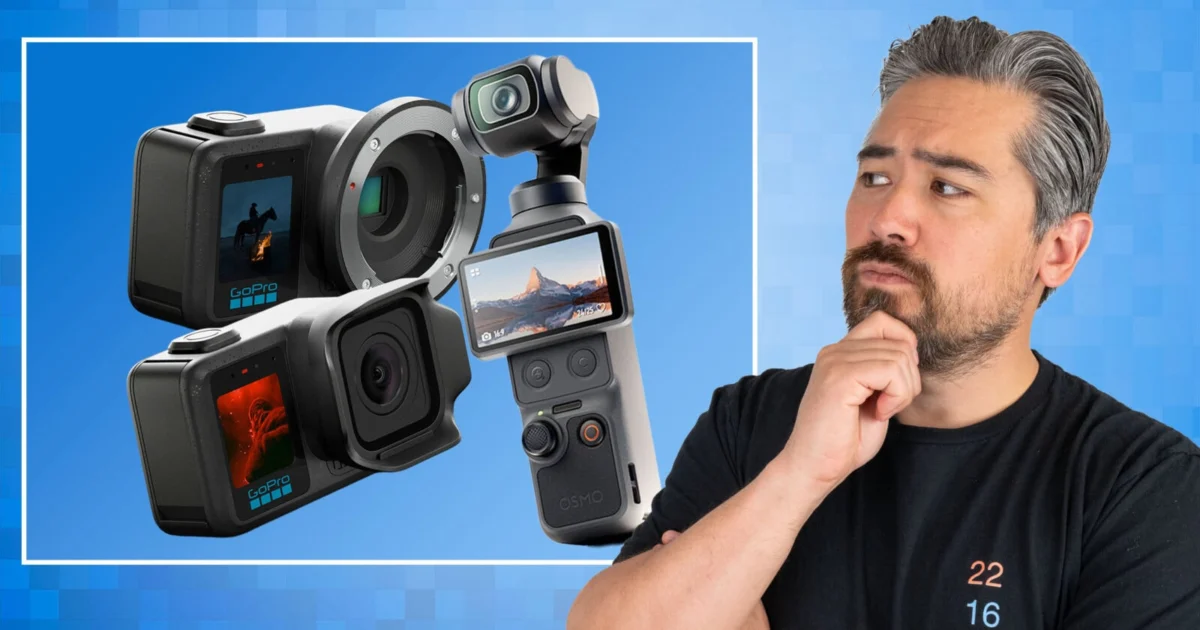
The digital imaging landscape is currently witnessing a significant shift as software giants and hardware manufacturers recalibrate their strategies to capture the burgeoning creator economy. In the latest installment of The PetaPixel Podcast, hosts are joined by content specialist Sarah Teng to dissect three major developments: Blackmagic Design’s DaVinci Resolve encroaching on Adobe Lightroom’s territory, the anticipated release of the DJI Osmo Pocket 4, and the strategic implications of the GoPro Mission 1. These developments represent a broader trend where the lines between professional cinematography and enthusiast-level photography are becoming increasingly blurred, driven by advancements in artificial intelligence and compact sensor technology.
DaVinci Resolve and the Challenge to Adobe’s Hegemony
For over a decade, Adobe Lightroom has served as the industry standard for non-destructive photo editing and digital asset management. However, Blackmagic Design, the company behind the professional video editing and color grading suite DaVinci Resolve, has begun to pivot its tools to accommodate still photography workflows. This move is significant because it challenges the traditional subscription-based model favored by Adobe with Blackmagic’s hybrid model of free and one-time-purchase software.
Industry analysts note that DaVinci Resolve’s color science is often cited as superior to Adobe’s, particularly in how it handles skin tones and high-dynamic-range (HDR) data. By introducing features that allow photographers to apply these cinematic color-grading tools to RAW still images, Blackmagic is positioning Resolve as a viable alternative for creators who find Lightroom’s performance stagnant or its subscription costs prohibitive. The integration of "Magic Mask" and other AI-driven selection tools within Resolve further bridges the gap, offering precision that was previously the exclusive domain of high-end retouching software.
The implications for the market are substantial. If a significant portion of the creator community migrates to Resolve for both video and photo editing, Adobe may be forced to accelerate its feature updates or reconsider its pricing structure. This competition is bolstered by third-party plugins and specialized software like DxO PureRAW 6, which emphasizes the industry’s shift toward high-fidelity, AI-assisted RAW processing. DxO’s latest release highlights a growing demand for "DeepPRIME" technology, which utilizes neural networks to demosaic and denoise images with greater efficiency than traditional algorithms, further diversifying the toolkit available to modern photographers.
The Evolution of Compact Stabilization: DJI Osmo Pocket 4
The discussion surrounding the DJI Osmo Pocket 4 comes at a time when DJI dominates the handheld gimbal market. The predecessor, the Osmo Pocket 3, was a transformative release for the company, featuring a 1-inch CMOS sensor that significantly improved low-light performance and dynamic range. As rumors and expectations for the Pocket 4 begin to circulate, the focus has shifted toward how DJI will maintain its lead over competitors like Insta360.
Expected enhancements for the Osmo Pocket 4 include improved thermal management and potentially higher frame rate capabilities, such as 4K at 120fps or even 8K resolution. However, the more critical evolution lies in software integration. Creators are looking for more robust AI tracking—specifically DJI’s ActiveTrack technology—to become more intuitive in complex environments.
The timeline of DJI’s releases suggests a tightening cycle of innovation. With the Pocket 3 having addressed the major hardware bottleneck (sensor size), the Pocket 4 is projected to focus on the "intelligent" side of the device. This includes better integration with social media platforms for direct streaming and enhanced internal audio processing, reducing the need for external microphones in casual vlogging scenarios.
GoPro’s Strategic Pivot: The Mission 1
While DJI has been expanding its ecosystem, GoPro has faced a more turbulent market environment. The mention of "GoPro Mission 1" suggests a new direction for the action camera pioneer. Historically, GoPro has relied on its flagship Hero line to drive revenue, but as smartphone cameras become more resilient and DJI’s Action series gains market share, GoPro requires a specialized "mission-critical" device to regain its footing.
The GoPro Mission 1 is theorized to be a device designed for specific high-end applications, potentially bridging the gap between standard action cameras and professional cinema drones. This move would align with GoPro’s recent efforts to diversify its hardware portfolio, including the acquisition of companies focused on specialized imaging and helmet technology.
Market data indicates that while GoPro remains the brand leader in the action category, its stock performance and market share have been pressured by the rapid iteration cycles of Chinese competitors. The Mission 1 represents a "back-to-basics" approach combined with premium positioning, aiming to capture professional athletes and cinema-grade production houses that require more than just a consumer-grade rugged camera.
Chronology of Industry Shifts (2022–2024)
To understand the current state of these technologies, one must look at the timeline of the last 24 months:
- Late 2022: Adobe introduces significant AI masking tools to Lightroom, signaling the start of the "AI-first" era in photo editing.
- Early 2023: Blackmagic Design releases DaVinci Resolve for iPad, proving that professional-grade color grading can function on mobile silicon.
- Late 2023: The DJI Osmo Pocket 3 is released, setting a new benchmark for vlogging cameras with its 1-inch sensor and rotating screen.
- Early 2024: Rumors of the GoPro Mission 1 emerge as the company seeks to move beyond the incremental updates of the Hero 12 and 13 series.
- Mid 2024: Professional photographers begin reporting a "cross-pollination" of workflows, using Resolve for high-end color work on still images intended for social media.
Supporting Data and Market Analysis
The shift toward tools like DaVinci Resolve and the Osmo Pocket 4 is supported by a 2023 report on the "Creator Economy," which estimated the industry’s value at $250 billion. The report highlighted that "multi-modal" creators—those who produce both high-quality video and still photography—are the fastest-growing segment. This demographic prioritizes efficiency and cross-platform compatibility, explaining why a video editor like Resolve is gaining traction as a photo editor.
Furthermore, retail data from major outlets like B&H Photo indicates a steady rise in the sale of "hybrid" accessories. Consumers are increasingly investing in credit programs, such as the Payboo system, to finance high-end gear that serves multiple purposes. This financial trend suggests that even as the technology becomes more compact (as with the Osmo Pocket series), the price point for professional-grade results remains high, necessitating specialized retail financial products.
Official Responses and Industry Sentiment
While Adobe has not issued a direct response to the rising popularity of DaVinci Resolve for photo editing, their recent updates have leaned heavily into Firefly AI, their generative artificial intelligence engine. This suggests that Adobe intends to compete on the basis of "content creation" and "generative fill" rather than just pure technical color grading.
On the hardware front, DJI’s official stance remains focused on "democratizing professional cinematography." By iterating on the Pocket series, they are effectively removing the barrier to entry for high-quality stabilization. GoPro, conversely, has remained tight-lipped regarding the "Mission 1," though executive statements during recent earnings calls have emphasized a return to "innovation that defines new categories."
Broader Impact and Future Implications
The convergence of these technologies points toward a future where the distinction between a "photographer" and a "videographer" is largely obsolete. Software like DaVinci Resolve is no longer just a post-production tool for Hollywood; it is becoming a central hub for visual media. Similarly, devices like the Osmo Pocket 4 and GoPro Mission 1 are moving away from being "toys" or "accessories" and are being recognized as primary tools for digital journalism and commercial production.
As AI continues to integrate into the workflow—exemplified by DxO PureRAW’s ability to "save" underexposed or noisy images—the technical limitations of small sensors are being mitigated by software. This allows hardware to remain small and portable without sacrificing the image quality required for professional use. The "Mission 1" and "Pocket 4" are not just new gadgets; they are the physical manifestations of a software-driven revolution in how visual stories are told.
In conclusion, the discussions on the PetaPixel Podcast reflect a pivotal moment in the imaging industry. Whether it is Blackmagic Design challenging Adobe’s software dominance or DJI and GoPro battling for the pockets of creators, the ultimate winner is the user, who now has access to an unprecedented level of power in increasingly smaller and more affordable packages. The next twelve months will likely determine if Adobe can maintain its crown and if GoPro can successfully pivot to meet the specialized needs of a modern, high-demand market.

