


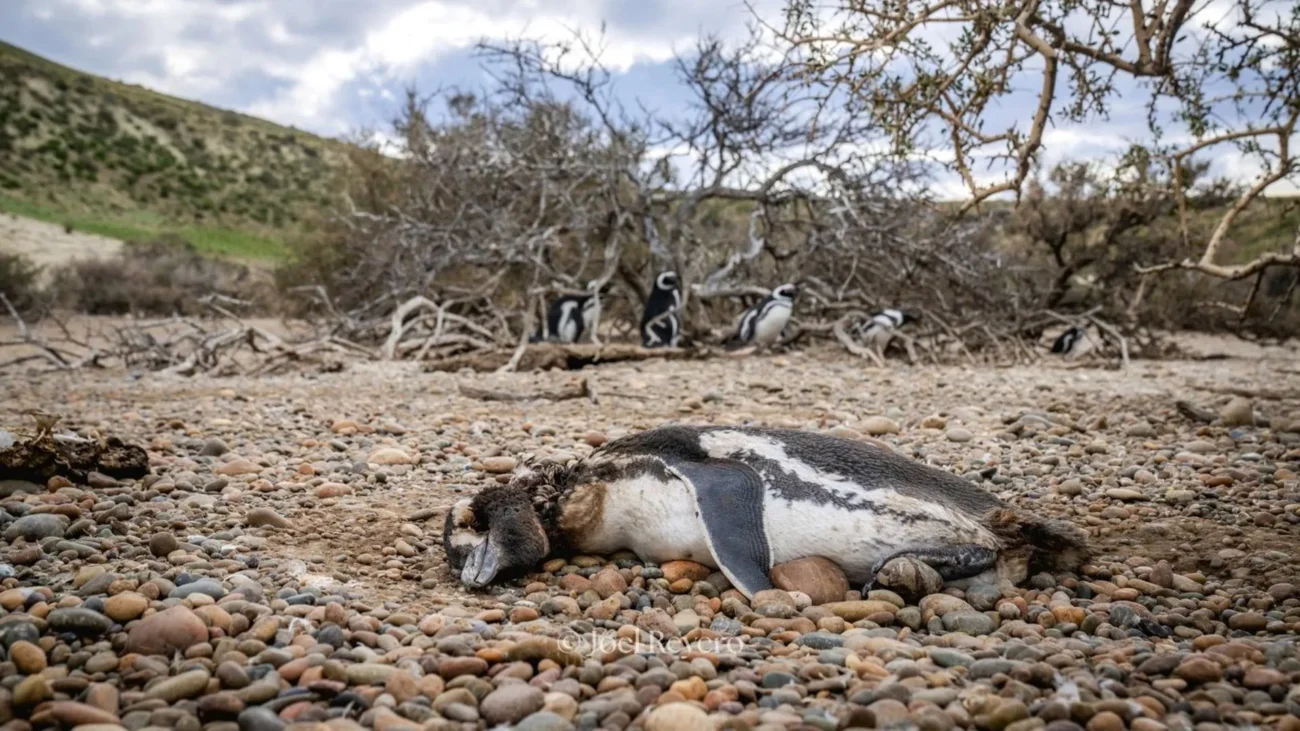
The windswept coast of Argentina’s Patagonian region, a landscape etched by decades of human activity and now undergoing a remarkable ecological resurgence, presents a complex conservation puzzle. At Monte Leon National Park, a stark question hangs in the air: should conservation efforts prioritize the protection of one iconic species if that very protection inadvertently jeopardizes another, particularly in an environment still healing from past alterations? This intricate dilemma is at the heart of a growing conservation challenge, forcing scientists and park authorities to grapple with the unintended consequences of ecosystem restoration.
The situation at Monte Leon underscores the profound complexity of restoring natural systems that have been profoundly altered for extended periods and are now experiencing rapid environmental shifts. The reintroduction and subsequent proliferation of large predators, a positive indicator of ecosystem health, can introduce novel pressures on prey populations that have not evolved alongside them.
Pumas Reclaim Territory, Penguins Face Unforeseen Predation
The story of Monte Leon is one of ecological recovery and its subsequent ripple effects. Following the cessation of widespread cattle ranching in southern Argentina in 1990, a significant shift in the landscape began to unfold. Pumas ( Puma concolor ), the apex predators of South America, gradually started to reoccupy vast swathes of their ancestral territories, areas from which they had been largely absent or significantly suppressed due to human persecution. This territorial reclamation brought the pumas into direct contact with Magellanic penguins ( Spheniscus magellanicus ) for the first time in recorded modern history.
Historically, Magellanic penguins, a species known for its large breeding colonies, had found refuge on offshore islands, a strategy that provided a degree of protection from terrestrial predators. However, in recent decades, driven by a complex interplay of factors including resource availability and possibly changes in marine conditions, significant portions of the penguin population began migrating to the mainland to establish breeding colonies. This terrestrial migration, while offering new opportunities, also exposed them to new threats. In the absence of large mammalian carnivores, the penguins developed limited defenses against predators of the size and agility of pumas. Consequently, they became vulnerable prey. For a considerable period, the extent to which this novel interaction was impacting penguin population dynamics remained largely unknown to scientists.
Decades of Monitoring: Unraveling the Puma-Penguin Dynamic
The establishment of Monte Leon National Park in 2004 marked a pivotal moment for scientific observation in the region. Since its inception, the park has become a crucial hub for long-term ecological monitoring. Researchers from the Centro de Investigaciones de Puerto Deseado, affiliated with the Universidad Nacional de la Patagonia Austral, have been diligently observing the penguin colonies in close collaboration with the park’s rangers. This dedicated team has been meticulously documenting the interactions between the resurgent puma population and the vulnerable penguin colonies.
A significant phase of this research focused on a four-year period, from 2007 to 2010. During this time, researchers meticulously recorded instances of penguin carcasses directly attributable to puma attacks. These findings provided the first concrete evidence of the predation pressure being exerted by the newly arrived predators. The data collected during this initial period laid the groundwork for more extensive and sophisticated analyses.
Recognizing the escalating complexity of the situation and the need for advanced analytical tools, the research team subsequently forged a partnership with renowned experts at the Wildlife Conservation Research Unit (WildCRU) at Oxford University. This collaboration brought together local ecological knowledge with cutting-edge population modeling and analytical techniques. The objective was to rigorously analyze the accumulated data and assess the long-term implications of puma predation on the persistence of the Monte Leon penguin colony.
The Scale of Predation: Thousands of Penguins Lost
The findings from the joint study were stark and illuminated the significant scale of the predation. By systematically counting the carcasses found within the penguin colonies, researchers were able to generate an estimated number of adult penguins killed by pumas over the four-year study period. The results indicated that more than 7,000 adult penguins succumbed to puma attacks.
Crucially, a detailed examination of the carcasses revealed a pattern that suggested the killings were not solely for sustenance. A substantial number of the birds were found to be only partially eaten or, in some cases, not eaten at all. This observation pointed towards a behavior that ecologists term "surplus killing."
Melisa Lera, a postgraduate student at WildCRU and lead author of the study, elaborated on these findings: "The number of carcasses showing signs of predation we found in the colony is overwhelming, and the fact that they were left uneaten means pumas were killing more penguins than they required for food. This is consistent with what ecologists describe as ‘surplus killing.’ It is comparable to what is seen in domestic cats when prey are abundant and/or vulnerable: ease of capture can lead to cats hunting more birds, even when they do not end up actually eating them. We needed to understand if the penguin colony’s persistence could be threatened due to this behavior."
This behavior, while indicative of a new predator-prey dynamic, raised critical questions about the long-term viability of the penguin colonies. The sheer number of individuals killed, even if not fully consumed, presented a potential significant drain on the population. The figure of over 7,000 penguins represented approximately 7.6% of the estimated adult population of around 93,000 individuals during the study period. While this percentage might seem manageable in isolation, its cumulative effect over time, especially when combined with other stressors, warranted thorough investigation.
Population Models Offer a Nuanced Perspective
To understand the true impact of this predation, the research team employed sophisticated population models. These models allowed them to simulate the dynamics of the penguin colony under various scenarios, incorporating the observed predation rates. The results of these simulations offered a more nuanced perspective than initially feared.
The population models revealed that puma predation alone, at the observed levels, was unlikely to be the sole driver of the Monte Leon penguin colony’s extinction. Instead, the models strongly indicated that other factors played a far more influential role in determining the colony’s stability and future trajectory. The most critical variables identified were breeding success and the survival rates of juvenile penguins.
The simulations projected a risk of extinction only under hypothetical, extreme circumstances. These scenarios involved a combination of very low juvenile survival rates – where approximately 20% of young penguins failed to reach adulthood – coupled with exceptionally poor reproductive output, limited to a maximum of one chick per breeding pair. In these dire hypothetical situations, high levels of puma predation exacerbated the already precarious situation, but they were not identified as the primary causal factor for a potential decline to extinction.
Dr. Jorgelina Marino, a co-author of the study also from WildCRU at Oxford University, emphasized the broader significance of their findings: "This study captures an emerging conservation challenge, where recovering carnivores are encountering novel prey. Understanding how these dietary shifts affect both predators and prey is essential to inform conservation." Her statement highlights the paradigm shift occurring in conservation science, moving beyond single-species protection to understanding complex ecosystem interactions.
The Shadow of Climate Change and Broader Environmental Pressures
The research unequivocally points to the critical importance of breeding success and juvenile mortality in maintaining the stability of the penguin population. This finding underscores the urgent need for a deeper understanding of how environmental conditions influence penguin reproduction. Factors such as the availability of essential nutrients, the abundance and accessibility of prey fish, and ambient temperature are all known to be significantly influenced by climate change. These environmental variables, therefore, may exert a profound and potentially decisive influence on the future viability of the penguin colonies.
The challenges observed at Monte Leon are not isolated incidents. Similar ecological predicaments are beginning to emerge in other regions as formerly suppressed land predators expand their ranges and encounter new prey species, particularly in coastal environments. Mainland seabird colonies and other coastal fauna are becoming increasingly vulnerable to these novel predation pressures.
For instance, on the Georgia coast of the USA, non-native feral hogs have become a significant threat to loggerhead sea turtle eggs, preying on them extensively. Similarly, in eastern North America, coyotes are expanding their presence onto coastal barrier islands, disrupting these delicate ecosystems. These examples illustrate a broader trend: as ecosystems recover and species ranges shift, new predator-prey dynamics are inevitably established, often with unforeseen consequences for vulnerable populations. The case of Monte Leon serves as a critical early warning system, highlighting the need for proactive research and adaptive management strategies in an era of rapid environmental change.
The Indispensable Role of Ongoing Monitoring
The authors of the study strongly advocate for the necessity of continuous and robust monitoring programs. They stress that such ongoing efforts are paramount for the early detection of any signs of population decline. This proactive approach is crucial for informing timely and effective management decisions, thereby preventing potentially irreversible ecological damage.
At Monte Leon National Park, the commitment to this principle is evident. Authorities continue to maintain close surveillance of both puma and penguin populations. This sustained observation allows them to navigate the intricate and often unpredictable consequences of ecosystem recovery. The ongoing research and monitoring at Monte Leon provide invaluable insights into the dynamic interplay of species and their environment, offering a vital case study for conservationists grappling with similar challenges worldwide. The lessons learned here will undoubtedly inform strategies for managing ecosystems that are both recovering from past human impacts and adapting to the accelerating pressures of a changing global climate. The future of both the iconic puma and the vulnerable penguin in this Patagonian landscape hinges on a delicate balance, one that scientists and conservationists are working diligently to understand and protect.

