


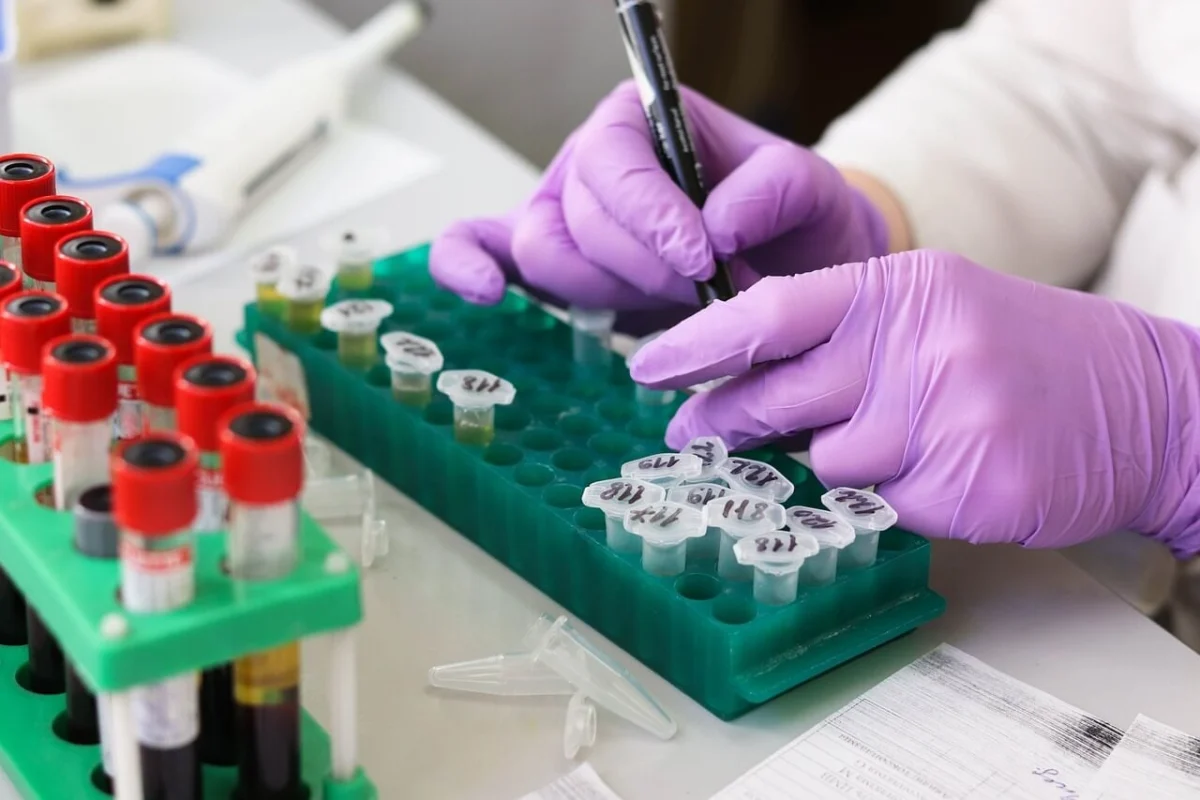
The National Institutes of Health (NIH) has officially recognized a multidisciplinary team of researchers, including prominent scientists from People for the Ethical Treatment of Animals (PETA), with the prestigious NIH Replication Prize. This accolade acknowledges their rigorous efforts to address one of the most persistent hurdles in biomedical research: the inherent unreliability and lack of reproducibility associated with animal-derived antibodies. By championing the transition to recombinant, animal-free antibodies, the award-winning team has provided a roadmap for improving scientific accuracy while simultaneously eliminating the need for millions of animals in laboratory settings.
For decades, the scientific community has grappled with what is often termed the "reproducibility crisis." A significant portion of this crisis is attributed to the use of biological reagents that do not perform consistently across different experiments. Antibodies, which are proteins used to detect and bind to specific molecules such as viruses, bacteria, and proteins, are foundational tools in nearly every facet of biological research. However, when these antibodies are harvested from the bodies of living animals, they often fail to meet the strict standards required for modern precision science. The recognition by the NIH signals a pivotal shift in the federal government’s approach to laboratory standards, prioritizing sequence-defined, synthetic alternatives over traditional animal-based methods.
The Technical Failure of Animal-Derived Antibodies
The fundamental problem with animal-derived antibodies lies in their biological variability. Traditionally, antibodies are produced by injecting an antigen into an animal—such as a mouse, rabbit, goat, or sheep—and then harvesting the resulting antibodies from the animal’s blood or tissue. Because this process relies on the complex and ever-changing immune system of a living organism, no two batches of antibodies are identical. Even when harvested from the same individual animal at different times, the resulting product can vary in its affinity and specificity.
Scientific data underscores the gravity of this issue. A landmark study cited by PETA and other research advocates revealed that approximately one-third of commercially available antibodies do not perform as advertised. These reagents often fail to bind to their intended targets or, conversely, bind to unintended molecules, leading to "false positives" or "false negatives" that can derail years of research and waste billions of dollars in funding. In many cases, researchers find that they cannot replicate their own results when they switch to a new lot of the same antibody from the same supplier, a phenomenon that has stalled progress in cancer research, drug development, and genomic studies.
Ethical Concerns and the Welfare of Laboratory Animals
Beyond the technical limitations, the production of animal-derived antibodies involves significant ethical concerns and animal welfare challenges. Millions of animals are utilized annually for this purpose, often kept in confined laboratory environments. Common species involved in this industry include rabbits, mice, rats, goats, sheep, llamas, cows, and even horses. Reports from animal welfare advocates and regulatory inspections have frequently highlighted instances where these animals are deprived of basic care, living in bleak conditions while suffering from untreated injuries or infections resulting from repeated injections and blood draws.
One of the most controversial methods is the ascites production of monoclonal antibodies. This process involves inducing tumors in the abdominal cavities of mice to generate antibody-rich fluid. As the tumors grow, the mice suffer from extreme abdominal distension, which can severely impair their ability to eat, walk, or breathe. The fluid is then painfully drained via needles, often multiple times, before the animals are eventually euthanized. Despite the availability of in vitro (test-tube) alternatives, the ascites method and other invasive procedures persist due to institutional inertia and the perceived low cost of animal labor.
The Recombinant Revolution: A Scientific Solution
The work for which PETA scientists received the NIH Replication Prize focuses on "recombinant" antibody technology. Unlike animal-derived versions, recombinant antibodies are generated using known DNA sequences. These sequences are inserted into host cells (such as yeast, bacteria, or mammalian cell lines) in a controlled laboratory setting to produce highly specific antibodies.
The advantages of recombinant technology are manifold. First and foremost is "sequence definition." Because the genetic code of the antibody is known, it can be shared and reproduced with 100% accuracy anywhere in the world. This eliminates batch-to-batch variation entirely. Furthermore, recombinant antibodies are "infinitely" reproducible; once the sequence is established, the antibody can be synthesized in perpetuity without ever needing to return to a living host.
Recombinant technology also allows for "antibody engineering." Scientists can fine-tune the properties of the antibody, such as its binding strength or its size, to suit specific experimental needs. This level of customization is impossible with traditional animal-based methods, where researchers are essentially at the mercy of the animal’s natural immune response.
A Chronology of Advocacy and Innovation
The path to the NIH Replication Prize has been paved by years of persistent advocacy and scientific collaboration. The timeline of this transition reflects a growing consensus between animal welfare organizations and the broader scientific establishment.
In the early 2010s, several high-profile papers began highlighting the staggering costs of irreproducible research, with some estimates suggesting that $28 billion is spent annually on non-reproducible preclinical research in the United States alone. Antibodies were identified as a primary culprit.
By 2020, European regulatory bodies, such as the European Union Reference Laboratory for alternatives to animal testing (EURL ECVAM), issued a strong recommendation stating that animals should no longer be used for antibody production and that recombinant alternatives should be the new standard. This set a global precedent that PETA scientists utilized to engage with U.S. agencies.
Over the last several years, PETA’s scientific wing has spearheaded a three-pronged strategy to accelerate this transition:

- Direct Development: Partnering with laboratories to create and validate new, high-quality non-animal antibodies for common research targets.
- Market Accessibility: Working with commercial suppliers to ensure that recombinant antibodies are as easy for scientists to purchase as their animal-derived counterparts.
- Educational Outreach: Hosting webinars, publishing reviews, and developing curricula for students and veteran researchers to demonstrate the superior performance and long-term cost-effectiveness of animal-free science.
This sustained effort culminated in the recent collaboration with a multidisciplinary team that successfully demonstrated the replicability of experiments using recombinant antibodies, ultimately earning the recognition of the NIH.
Official Responses and Broader Implications
The awarding of the Replication Prize by the NIH is seen by many as a validation of PETA’s long-standing argument that ethical science is better science. While the NIH has historically been a major funder of animal research, this prize suggests a growing institutional appetite for modernization.
Spokespersons for the research team emphasized that the goal is not merely to protect animals, but to protect the integrity of human medicine. "When we use unreliable tools, we get unreliable data," a representative noted. "By moving to sequence-defined recombinant antibodies, we are ensuring that the next generation of life-saving drugs is built on a foundation of solid, reproducible facts."
Industry experts suggest that the transition could also have significant economic benefits. While the initial cost of developing a recombinant antibody sequence can be higher than injecting an animal, the long-term costs are lower. Recombinant production can be scaled up more efficiently, and the reduction in failed experiments saves laboratories significant resources in the long run.
The Future of Animal-Free Research
The success of PETA’s scientists in winning the NIH Replication Prize is expected to catalyze further policy changes. Already, there are calls for the NIH and the Food and Drug Administration (FDA) to implement stricter requirements for antibody characterization in grant applications and regulatory filings. If researchers are required to prove the sequence and specificity of their reagents, the market for animal-derived antibodies is likely to shrink rapidly.
Furthermore, this achievement serves as a template for replacing animals in other areas of research. From "organs-on-chips" to sophisticated computer modeling, the move toward non-animal methods is gaining momentum. The PETA scientists involved in the antibody project have indicated that they will continue to work with national agencies and industry leaders to outline a large-scale transition plan, ensuring that the shift toward recombinant production is both rapid and scientifically sound.
As the scientific community moves forward, the consensus is becoming clear: the era of harvesting antibodies from the bodies of animals is reaching its end. With the backing of the NIH and the proven success of recombinant technology, the future of biomedical research looks to be more ethical, more reliable, and more efficient. The award serves as a reminder that when innovation and ethics align, the entire global community—both human and animal—stands to benefit.

