


Migratory birds are nature’s ultimate global citizens, traversing vast distances and connecting ecosystems across continents. Their journeys, guided by ancient instincts along invisible routes known as flyways, are essential for the health of our planet. This article delves into the critical work being done to protect these avian travelers and their habitats, focusing on an ambitious project along the African-Eurasian Flyway, with a particular spotlight on the vital conservation efforts in Iceland.
The African-Eurasian Flyway: A Lifeline for Millions
The African-Eurasian Flyway is one of the most significant migratory bird routes globally, spanning an immense geographical area from the Arctic Circle to the southern tip of Africa. This vast network of landscapes, including wetlands, grasslands, and coastal areas, serves as crucial stopover points, breeding grounds, and wintering sites for an estimated 1.5 billion birds annually, representing over 200 species. These birds, ranging from the smallest waders to large waterfowl, undertake journeys that can span thousands of kilometers, facing myriad challenges from harsh weather to habitat degradation and human disturbance.
The importance of this flyway cannot be overstated. Migratory birds play a pivotal role in ecosystem functions, including seed dispersal, pollination, and insect control. Their presence indicates the health of the environments they inhabit, making them crucial indicators of ecological well-being. However, these incredible journeys are increasingly under threat.

Iceland’s Wetlands: A Critical Nexus for Avian Migration
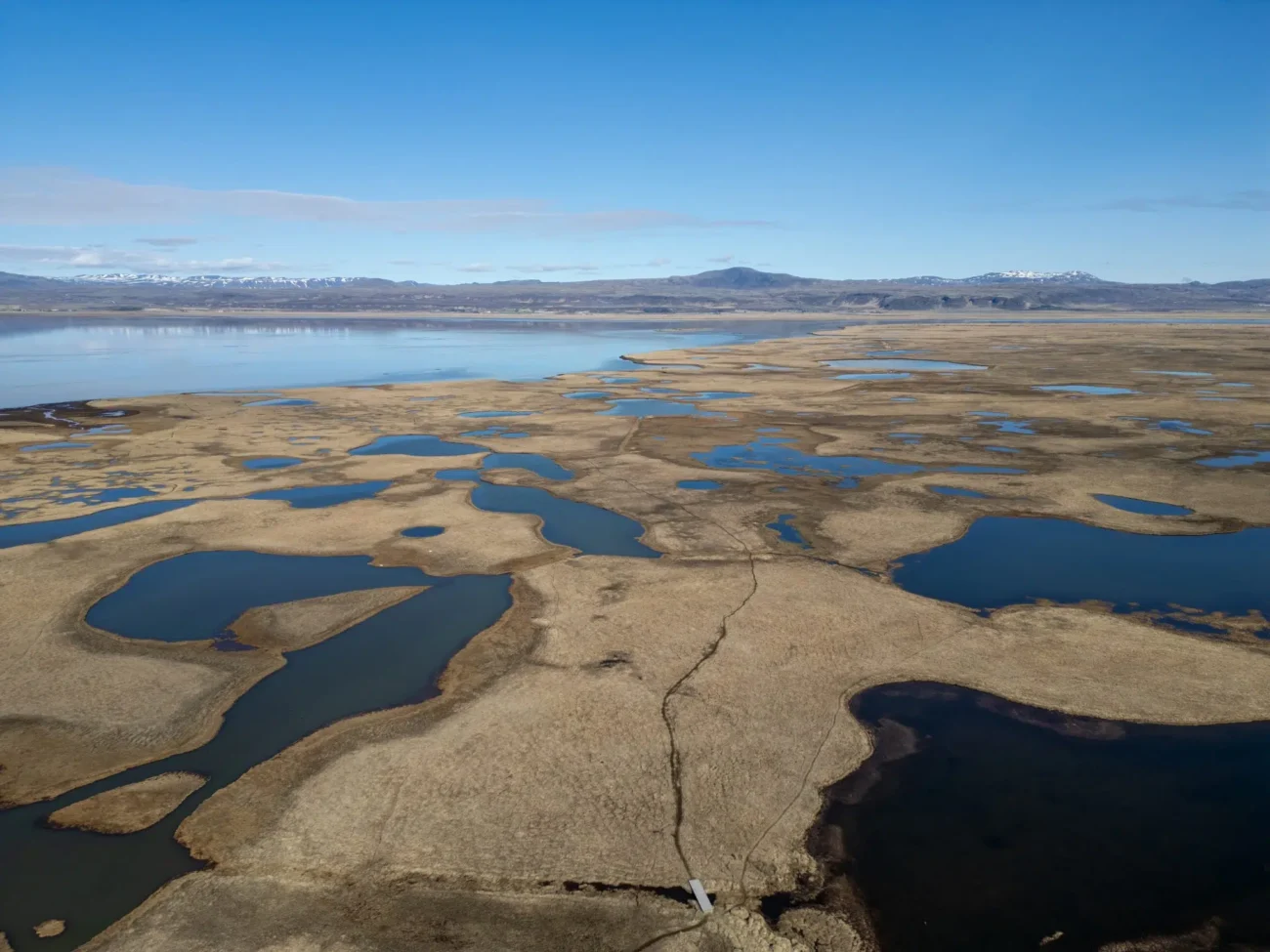
Iceland, situated strategically between Greenland and mainland Europe, occupies a pivotal position along the African-Eurasian Flyway. Its unique geographical location makes it an indispensable stopover and breeding ground for numerous migratory bird species. The island’s extensive lowlands, characterized by shallow lakes, river deltas, and bogs, have historically provided rich feeding and nesting opportunities.
However, these precious wetland habitats have faced significant pressure. Following a period of government-subsidised drainage initiatives between 1940 and 1990, an estimated 90% of Iceland’s lowlands were affected, with vast tracts converted for agricultural use. This dramatic reduction in wetland area has created a critical conservation challenge, threatening the survival of the migratory birds that depend on these landscapes. Today, only a fraction of the original wetland ecosystems in key areas like southwest Iceland remain undisturbed.
Beyond direct drainage, other threats include the introduction of invasive alien tree species, habitat fragmentation due to infrastructure development such as roads, and the increasing presence of wind energy installations. These factors further compound the pressures on already stressed avian populations.
The Ecological Restoration Fund (ERF) Project: A Collaborative Endeavor

Recognizing the urgent need for action, an ambitious project has been launched to safeguard migratory birds along the African-Eurasian Flyway. This initiative is spearheaded by BirdLife International’s partner in the UK, the Royal Society for the Protection of Birds (RSPB), with crucial support from the Ecological Restoration Fund (ERF). The ERF is dedicated to protecting biodiverse hotspots, rejuvenating degraded landscapes, and fostering local environmental activism, with a commitment to re-establishing ecological interconnections and supporting the communities that inhabit these vital landscapes.
This collaborative effort extends to Iceland, where Fuglavernd, the BirdLife Partner in Iceland, is at the forefront of critical conservation work. The project in Iceland specifically targets the restoration and protection of wetland habitats vital for breeding waders and wildfowl that utilize the African-Eurasian Flyway.
Fuglavernd’s Efforts: Revitalizing Iceland’s Wetlands
Hólmfríður Arnardóttir, Executive Director at Fuglavernd, elaborates on the organization’s dedicated work. "Because Iceland lies between Greenland and mainland Europe, it is a natural stopover for many migratory birds travelling along the African-Eurasian Flyway," she explains. "Birds stop here to rest and refuel, and many species also breed in Iceland."
Arnardóttir highlights the historical context of wetland loss: "Historically, a large proportion of Iceland’s lowlands were wetlands. However, following government-subsidised drainage efforts between 1940 and 1990, around 90% of these wetlands were affected as land was converted for agricultural use." This statistic underscores the scale of the challenge Fuglavernd is confronting.

Focus on Flóí and Oddi: Key Restoration Sites
Under the ERF project, Fuglavernd has concentrated its efforts on a significant area in southwest Iceland, an area that has experienced the most profound impact from wetland drainage but remains a critical breeding site for waterfowl and shorebirds. This region is largely agricultural, but many of the drained areas are no longer actively utilized for farming, presenting an opportunity for restoration.
Two particular sites, Flóí and Oddi, have been identified as crucial focus areas. Both are designated as Important Bird Areas (IBAs), a global network of sites recognized for their importance to birds and biodiversity.
-
Flóí Reserve: Fuglavernd manages the Flóí Reserve, where wetland rewetting has been an ongoing process since 1997, continuing under the current project. Within this reserve, 170 hectares are actively being restored through rewetting measures. This restoration is designed to benefit a much larger area of 455 hectares of bird breeding habitat. The initiative aims to support significant populations of key species, including the Dunlin (Calidris alpina), with approximately 1,000 breeding pairs, the Black-tailed Godwit (Limosa limosa), with up to 500 breeding pairs, and the Common Redshank (Tringa totanus). These numbers highlight the international importance of Flóí for these vulnerable species.
-
Oddi Site: Fuglavernd has also secured access to government-owned land at Oddi through the Icelandic Forest and Land Agency. Here, in collaboration with the agency, an educational trail focused on birds and wetland restoration is being developed. The direct restoration area at Oddi covers 82.2 hectares, much of which was previously drained for agriculture, and features 10.8 kilometers of drainage ditches. Restoration activities are projected to improve 219.7 hectares of peatland habitat.

Ambitious Vision: Towards World Heritage Status
Beyond immediate restoration, Fuglavernd is exploring an ambitious long-term vision: linking these restored Icelandic wetlands to potential UNESCO World Heritage status. This initiative aims to connect these sites with similar wetland areas, such as those on England’s east coast that are already pursuing UNESCO designation. The concept is to create a network of "pearls on a string" along the flyway, emphasizing the interconnectedness of these crucial habitats.
"The idea is to highlight these sites as connected ‘pearls on a string’ along the flyway," Arnardóttir explains. "That would be a long process but if no one starts it, it will never happen!" This forward-thinking approach underscores the dedication and strategic planning involved in large-scale conservation.
Raising Awareness and Overcoming Challenges
To foster broader support, Fuglavernd has launched a campaign to raise public interest and awareness about migratory birds and flyways. Simultaneously, they are working to strengthen legal protections for the restored areas and continue wetland rewetting efforts.

However, the path to successful conservation is not without its obstacles. "Although new regulatory standards have slowed progress more than we would like," Arnardóttir notes, "the research they require has proven valuable, especially when engaging with people who are sceptical about wetland restoration." This highlights a common challenge in conservation: navigating regulatory frameworks while demonstrating the tangible benefits of ecological restoration.
The Global Significance of Flyway Conservation
Arnardóttir passionately articulates the broader significance of their work, emphasizing the extraordinary nature of avian migration and the fragility of the routes these birds follow. "Birds make some of the most extraordinary journeys on Earth," she states. "For those that come to Iceland, that journey means flying over the Atlantic Ocean. And unless you’ve been out on the open sea, it’s hard to understand just how brutal it can be – relentless winds, towering storms, and freezing rain that cuts to the bone."
This vivid description underscores the immense challenges faced by migratory birds and the critical importance of intact stopover sites. "This really highlights how fragile flyways are," Arnardóttir continues. "These birds rely on specific habitats at exactly the right moments to survive, and when we protect or restore those places, we’re not just helping wildlife, we’re protecting ecosystems that people depend on too."
She further emphasizes the ethical imperative: "And then there is the responsibility we need to take on. These birds do not belong to one place or one nation. While they are here, they are in our care. We must welcome them to their breeding grounds, protect the sites they rely on, and make sure that these places – which they have defied such incredible odds to reach – are not destroyed."

Navigating the Complexities: Challenges and Resilience
Arnardóttir identifies several significant challenges in her work. "One of the biggest challenges is time," she admits. "Nature doesn’t change overnight, and meaningful restoration takes years, sometimes decades. Another challenge is perception. Many people have misconceptions or suspicions about conservation work, so a lot of effort goes into helping others understand why restoring wetlands and protecting habitats is important."
Working with governmental agencies also presents its own set of hurdles. "While bureaucracy in Iceland isn’t overwhelming, there are often internal restrictions or delays that slow down projects," she explains. "Finally, we sometimes encounter a lack of urgency or motivation. Conservation requires persistence and energy, and moving things forward often depends on consistent effort and advocacy."
Despite these considerable challenges, a profound sense of resilience and optimism pervades Fuglavernd’s mission. "Sometimes I do not feel optimistic at all, especially when you get stuck on the big picture, when you feel powerless against what seems like a stronger opponent, and when what you are doing feels more like a battle than a journey, more like a never-ending story," Arnardóttir confesses.
However, she finds solace and strength in collaboration. "What helps me keep going is working with others in the same field. Having a shared purpose is extremely meaningful; you can borrow optimism from others, or lend it to them in return." This collective spirit is a powerful driver in the often-arduous field of conservation.

She also draws strength from acknowledging incremental progress. "I also find strength in looking back at small victories. In conservation, progress rarely comes all at once; it happens step by step. Change does not depend on a single action, it requires many. So perhaps resilience is the key word in nature conservation."
The Black-tailed Godwit: An Emblem of the Flyway
When asked to choose a single species to represent the African-Eurasian Flyway, Arnardóttir selects the Black-tailed Godwit (Limosa limosa). "Of course, there are many other important species," she acknowledges, "and if we look at the Icelandic or European Red Lists, birds such as the Common Snipe (Gallinago gallinago) and Dunlin (Calidris alpina) certainly deserve attention as well."
However, she elaborates on the godwit’s suitability: "The Black-tailed Godwit has it all. It truly embodies what characterises a waterbird: a long neck and a long bill perfectly adapted for probing for food in marshes, mudflats, and shallow ponds. On top of that, it is a strikingly beautiful bird, with its rich red neck and distinctive black tail. It is both iconic and emblematic of the flyway it depends on." The Black-tailed Godwit’s impressive migratory range, breeding in Iceland and wintering in areas like the UK, Ireland, and Western Europe, perfectly encapsulates the interconnectedness of the flyway.
Memorable Field Encounters: The Lighter Side of Conservation

Arnardóttir also shares a lighter perspective, recounting memorable experiences in the field. "One memorable experience was ringing European Storm Petrels (Hydrobates pelagicus) and Leach’s Petrels (Oceanodroma leucorhoa) as a volunteer on the island of Bjarnarey, part of the Westman Islands," she recalls. "We caught them in nets in the middle of an August night. They are incredibly small and delicate birds – and they relentlessly spew on you when handled. Not a good smell." She vividly describes the eerie calls of Manx Shearwaters (Puffinus puffinus) in the darkness, adding a touch of the mystical to her fieldwork.
Another amusing anecdote involves ringing Puffins (Fratercula arctica). "I was so afraid they would bite me that I nearly choked them from holding on too tightly," she laughs. "After that, the researcher wisely decided to give me another role rather than having me hold the birds!" These personal anecdotes offer a glimpse into the dedication and sometimes humorous challenges faced by those working on the front lines of conservation.
Broader Implications and a Call to Action
The work undertaken by Fuglavernd, supported by the RSPB and ERF, on the African-Eurasian Flyway, particularly in Iceland, has far-reaching implications. It directly contributes to the conservation of globally significant bird populations, many of which are facing decline due to habitat loss and degradation. By restoring wetlands, these efforts not only benefit birds but also contribute to broader ecosystem health, including water purification and carbon sequestration.
The initiative also serves as a powerful model for international collaboration in conservation. The recognition of interconnectedness across national borders is crucial for addressing transboundary environmental challenges. The potential for UNESCO World Heritage designation further elevates the profile of these sites and reinforces their global importance.

The story of Iceland’s wetlands and the dedicated individuals working to protect them serves as a compelling reminder of our shared responsibility towards the natural world. As Arnardóttir eloquently states, "These birds do not belong to one place or one nation. While they are here, they are in our care." This sentiment is a powerful call to action for individuals, organizations, and governments worldwide to recognize the vital importance of migratory bird flyways and to invest in their long-term protection. The health of these avian highways is inextricably linked to the health of our planet, and their conservation is a testament to our commitment to a sustainable future for all life.

