


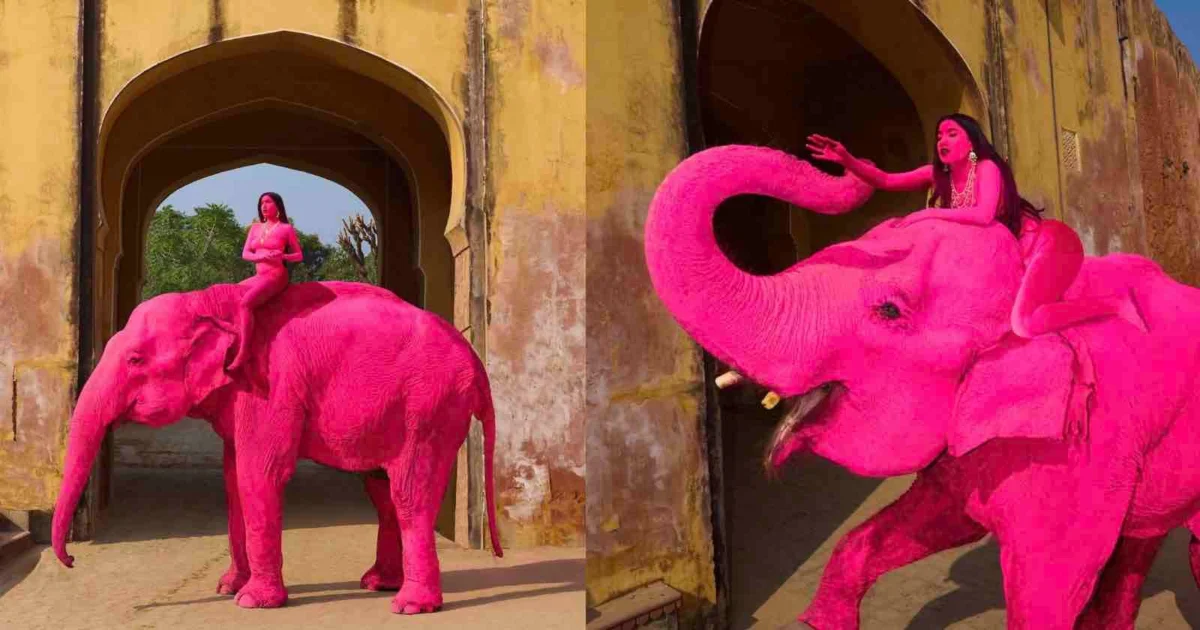
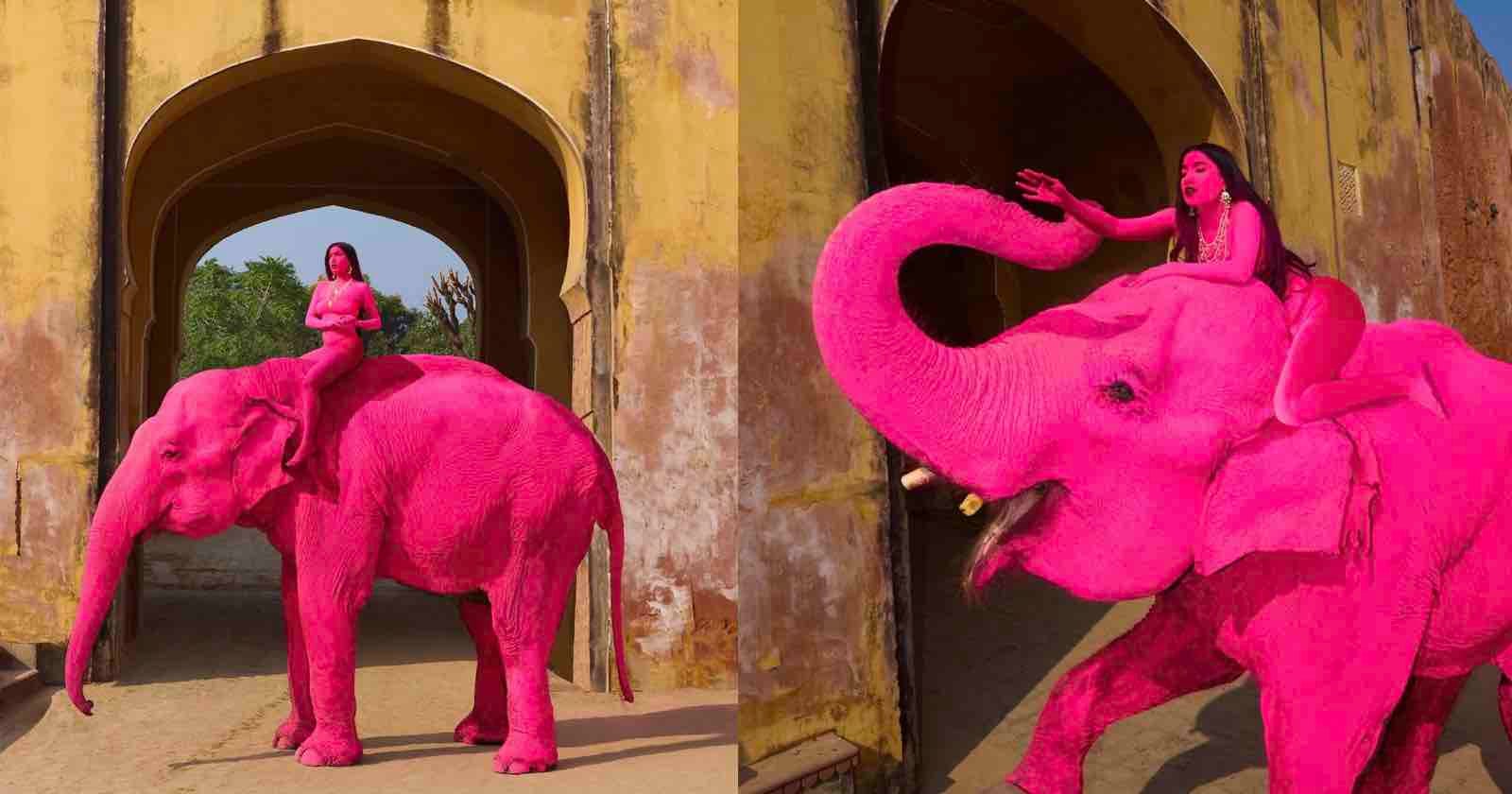
The intersection of artistic expression and animal welfare has once again become a flashpoint for international debate following a controversial photo shoot in the Indian city of Jaipur. Julia Buruleva, a Russian photographer known for her high-concept visual storytelling, has drawn widespread condemnation from animal rights activists, local residents, and the global digital community after she painted a live elephant bright pink for a series of stylized photographs. The images, which depict a model dressed in matching pink attire seated atop the vibrant pachyderm against the backdrop of traditional Rajasthani architecture, have ignited a fierce conversation regarding the ethical boundaries of using sentient beings as props in contemporary photography.
The controversy began to unfold when Buruleva shared the results of her "art expedition" on social media, documenting a process that she described as an attempt to capture the essence of Rajasthan’s visual culture. Jaipur, famously known as the "Pink City," served as the primary inspiration for the project. However, what the photographer viewed as a tribute to the region’s aesthetics, many critics have labeled as a blatant display of animal exploitation. The incident has not only sparked a social media firestorm but has also caught the attention of major Indian news outlets, including India Today and the Hindustan Times, highlighting the growing sensitivity toward animal treatment in the age of viral content.
The Vision and Preparation: A Chronology of the Project
The project was not a spontaneous decision but the result of weeks of immersion in the local culture. According to Buruleva’s social media accounts, she arrived in Jaipur with the intention of conducting an artistic exploration of the city’s famous colors and heritage. After spending several weeks observing the daily rhythms and visual motifs of the Rajasthani capital, she conceptualized a scene that would combine the city’s signature pink hue with its most iconic animal symbol: the elephant.
The preparation for the shoot was, by the photographer’s own account, an arduous and logistically complex undertaking. Buruleva detailed a timeline that involved extensive scouting and negotiation. She reportedly spent significant time visiting various elephant farms on the outskirts of Jaipur to find a mahout (elephant handler) and a manager willing to participate in the vision. The photographer noted that she visited one specific farm four times to demonstrate the seriousness of her intent and to build a rapport with the animal’s keepers.
Finding a location proved equally challenging. Jaipur is home to numerous UNESCO World Heritage sites and protected monuments, where commercial photography is strictly regulated. Buruleva described a "nightmare" of bureaucracy and permits, eventually leading her to scout for locations at dawn via tuk-tuk to find a site that was not listed as protected heritage but still offered the "classic Rajasthani gates" she desired. Ultimately, the shoot was conducted at an abandoned temple dedicated to Lord Ganesha—a choice that some critics found particularly ironic given that Ganesha is the elephant-headed deity of wisdom and new beginnings in Hinduism.
The Execution and the Use of "Organic" Paint
Central to the controversy is the physical treatment of the elephant during the production. To achieve the monochromatic pink look, the animal’s entire body was coated in a bright pink substance. Buruleva has defended this choice by stating that the materials used were "organic, locally-made paint," similar to the powders used during the Hindu festival of Holi. She maintained that the paint was non-toxic, safe for the animal’s skin, and easily washable.
In her defense, Buruleva emphasized that the photo session was brief and that the welfare of the animal was considered throughout the process. She argued that the use of traditional pigments linked the project to local customs where animals are often decorated for festivals and ceremonies. However, animal behaviorists and conservationists often point out that what is acceptable in a traditional, community-based cultural context may not translate ethically to a commercial or individual artistic project, especially when the scale of the "decoration" involves covering the animal’s entire hide.
Public Outcry and the Charge of Animal Abuse
As soon as the images were uploaded to Instagram, the reaction was swift and overwhelmingly negative. Indian social media users led the charge, accusing the photographer of prioritizing "Instagram likes" over the dignity and health of the animal. The primary criticism centered on the physical sensitivity of elephants. Despite their massive size and thick appearance, elephant skin is highly porous and sensitive; it is prone to irritation and can absorb chemicals present in dyes.
"This is not art; this is pure animal abuse," wrote one commentator, reflecting a sentiment shared by thousands. Critics argued that subjecting an animal to the stress of being painted and posed in an unfamiliar environment for the sake of a "visual concept" is an outdated and colonialist approach to photography. The backlash also touched upon the broader issue of "voluntourism" and "influencer culture" in India, where foreign creators are often accused of using the country’s wildlife and poverty as exotic backdrops for their portfolios without regard for local ethical standards or the well-being of the subjects involved.
The "AI vs. Authenticity" Debate
A significant portion of the criticism suggested that in the modern era, there is no longer a justification for using live animals in such a manner. Many users pointed out that the "pink elephant" effect could have been easily achieved through post-production software or Generative Artificial Intelligence (AI). This has opened a secondary debate within the photography community regarding the role of technology in ethical art.
Buruleva, however, has explicitly rejected the use of AI as a substitute for her methods. In an interview with the Hindustan Times, she argued that her artistic practice is rooted in "real-life connection" and interacting with the environment. "While AI and digital tools can replicate images, they cannot replace the authenticity of real-life connection, which is the heart of my work," she stated. She further argued that her work seeks a "healthy balance" that allows humans to connect with nature in a mindful way.
This stance has been met with skepticism. Opponents argue that "authenticity" should not come at the expense of an animal’s comfort. The suggestion that a digital alternative was available but rejected in favor of physical manipulation of a living creature has, for many, made the incident more egregious. It highlights a growing rift in the creative industry: the tension between the "purist" desire for practical effects and the ethical imperative to use digital tools to prevent harm.
Contextual Background: Elephant Tourism in Jaipur
The controversy does not exist in a vacuum. Jaipur has long been a focal point for the global debate on elephant welfare. The city is famous for the elephant rides at Amer Fort, a practice that has been the target of intense campaigning by organizations like PETA (People for the Ethical Treatment of Animals) and Wildlife SOS for decades. Reports of exhaustion, physical abuse, and poor living conditions for the city’s captive elephants have led to increased government scrutiny and a gradual shift toward more ethical tourism models.
In this heightened atmosphere of animal rights awareness, a high-profile photo shoot involving a painted elephant was almost certain to trigger a backlash. The Indian government has implemented stricter regulations under the Wildlife Protection Act of 1972, and while the use of elephants for festivals is a complex cultural issue, the use of elephants for private commercial photography often falls into a legal and ethical gray area.
Broader Implications for the Photography Industry
The case of Julia Buruleva serves as a cautionary tale for the global creative community. It underscores the fact that "artistic vision" is no longer a sufficient defense for practices that are perceived as exploitative. As social media continues to democratize criticism, photographers and content creators are being held to higher standards of accountability, particularly when working in foreign countries or with animal subjects.
Furthermore, the incident highlights a shift in the definition of "professionalism" in photography. In the past, the lengths a photographer went to "get the shot"—whether it involved dangerous stunts or the manipulation of nature—were often celebrated as a sign of dedication. Today, that same dedication is frequently viewed through the lens of ethics and sustainability. The "real-life connection" Buruleva cited as the heart of her work is being redefined by a public that increasingly views the non-consensual use of animals in art as a violation of that very connection.
Conclusion and Current Status
As of the latest reports, Julia Buruleva has not removed the images from her platform, though she has engaged with some of the criticism by providing her perspective on the safety of the materials used. The incident remains a trending topic in India, serving as a catalyst for deeper discussions on how the country’s cultural symbols and wildlife are portrayed by international visitors.
The fallout from the pink elephant shoot suggests that the future of travel and wildlife photography will be increasingly digital or strictly observational. As the public’s tolerance for animal performance and manipulation reaches an all-time low, the industry may find that the "authenticity" of a photograph is increasingly measured not by the physical reality of what was in front of the lens, but by the ethical integrity of the process behind it. For now, the image of the pink elephant stands as a stark reminder of the clashing values between traditional artistic methods and the modern movement for animal rights.

