


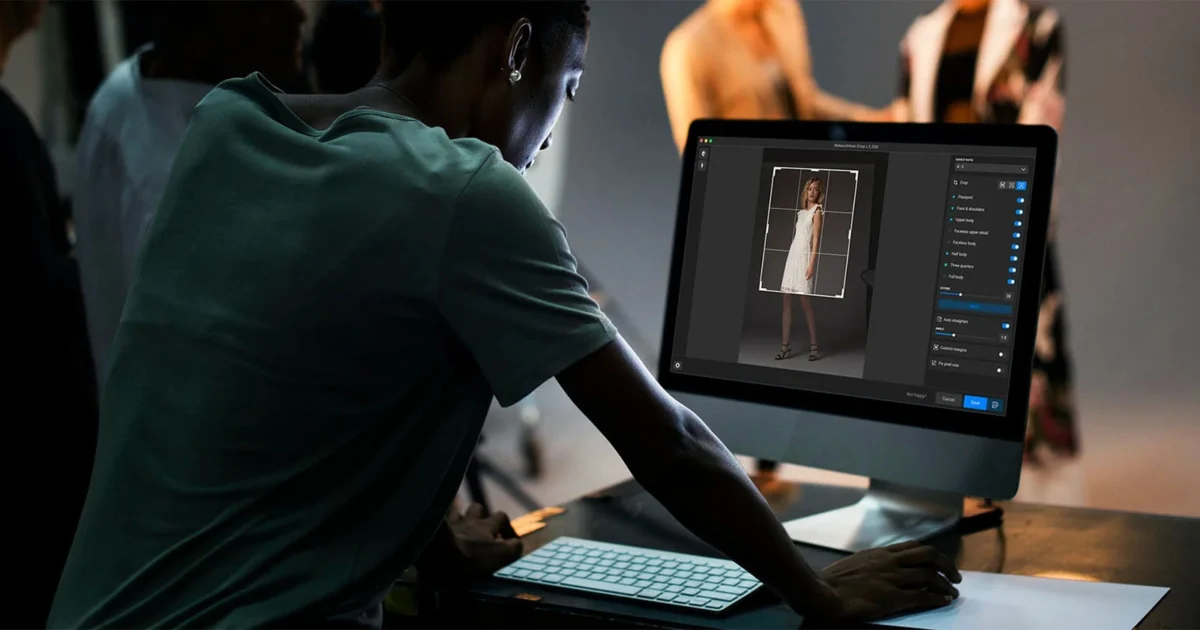
The rapid integration of artificial intelligence within the photography industry has sparked a profound debate regarding the boundaries between technological efficiency and creative integrity. A comprehensive survey of 363 professional photographers across Europe and the United States, conducted by Retouch4me, has illuminated a clear consensus: while AI is welcomed as a powerful tool for streamlining workflows, the vast majority of practitioners believe it should remain a subordinate assistant rather than a primary creator. The findings suggest that the modern photographer views AI as a solution to the "repetitive and mechanical" aspects of the craft, yet they remain fiercely protective of the final artistic output and the preservation of human authenticity.
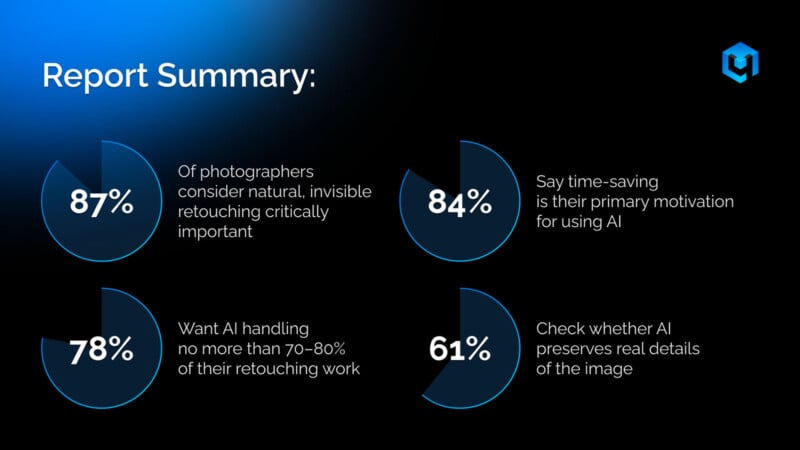
As AI tools evolve from simple noise reduction algorithms to sophisticated generative systems capable of altering entire compositions, the professional community is drawing a definitive line in the sand. According to the Retouch4me report, 78 percent of respondents indicated that they want AI to handle no more than 70 to 80 percent of the retouching process. Only a small minority—roughly 24 percent—expressed a willingness to cede full creative control to automated systems. This data points to a broader industry trend where professionals are seeking a "hybrid" model of production that balances the speed of machine learning with the nuanced eye of a human artist.
The Evolution of Post-Processing: A Chronological Context
To understand the current sentiment among photographers, it is essential to view the timeline of digital post-processing. For decades, retouching was a manual, labor-intensive process involving tools like the clone stamp, healing brush, and frequency separation in Adobe Photoshop. The mid-2010s saw the introduction of basic automation, such as preset filters and batch processing actions, which allowed for faster turnarounds but often resulted in a "cookie-cutter" aesthetic.
The pivot toward true artificial intelligence began in earnest around 2021 and 2022, with the introduction of "Neural Filters" and AI-driven masking. By 2024, the market was flooded with specialized AI tools capable of skin smoothing, teeth whitening, and background replacement with a single click. However, this surge in capability brought about a corresponding anxiety regarding the "uncanny valley"—the point at which a photo looks so perfect that it becomes unsettlingly artificial.
By 2025 and 2026, as evidenced by the Retouch4me survey, the novelty of "perfect" AI retouching has begun to wear off, replaced by a demand for "invisible" retouching. Photographers are now reacting against the plastic, over-processed look that characterized early AI efforts, moving instead toward tools that can distinguish between a temporary blemish and a permanent, character-defining feature like a mole or a wrinkle.
Analyzing the Data: Efficiency Over Innovation
The survey results highlight that the primary driver for AI adoption is not a desire for new creative possibilities, but rather a desperate need for time management. Eighty-four percent of the photographers surveyed stated that their main reason for using AI in their post-processing workflow is to save time and eliminate tedious tasks.
For a high-volume professional, such as a wedding or commercial portrait photographer, the "heavy lifting" of retouching can take hours or even days for a single session. By delegating 70 to 80 percent of this work to AI, photographers can refocus their energy on the aspects of the business that require a human touch: client interaction, creative direction, and the actual act of capturing images.
Furthermore, the data reveals a significant technical concern: 61 percent of respondents stated they actively check if AI tools preserve original image details. This high percentage suggests that professionals do not fully trust automated systems to maintain the integrity of high-resolution files. There is a persistent fear that AI might "hallucinate" textures or smooth over essential skin pores, leading to a loss of the organic quality that differentiates professional photography from AI-generated imagery.
The Physical and Mental Toll of High-Volume Editing
One of the more striking revelations from the Retouch4me survey is the physical impact of traditional editing. Approximately one in five photographers reported experiencing physical strain from high-volume post-processing. This includes issues such as carpal tunnel syndrome, repetitive strain injuries (RSI), and chronic back and neck pain resulting from long hours spent at a desk.
Mike Glatzer, a portrait photographer based in Atlanta, emphasized that the value of AI is directly tied to its ability to improve his quality of life. "The amount of money I’ve invested in office items to make editing sessions more comfortable is laughable," Glatzer noted in the report. He argued that if AI does not facilitate business growth or provide more time for family and personal well-being, its utility is questionable. "Time saved retouching equals time spent taking more photos and working with clients," he added, framing AI as a tool for economic and physical sustainability.
This sentiment reflects a growing awareness of "editor burnout" within the industry. As clients expect faster delivery times in a social-media-driven economy, the pressure on photographers to produce polished results quickly has reached a breaking point. In this context, AI is seen as a vital health-and-safety intervention, reducing the "taxing" nature of editing on both the brain and the body.
The Philosophical Divide: Photography vs. "Promptography"
Beyond the practicalities of workflow, the survey touched upon a deeper philosophical concern regarding the identity of the photographer. Polish photographer Lukasz Spychala captured this sentiment by stating that people are becoming "tired of artificial perfection." He argued that there is a growing movement to distance traditional photography from what some have dubbed "promptography"—images generated primarily through text-to-image prompts rather than light captured through a lens.
"Photographers don’t want their photos to look like they were created by AI," Spychala said. "They still want to be recognized as people who practice photography." This distinction is crucial for the branding and marketability of professional photographers. If a client perceives that an image was created entirely by a machine, the perceived value of the photographer’s skill and vision diminishes. Therefore, maintaining a "natural" look is not just an aesthetic choice; it is a defensive maneuver to preserve the professional status of the craft.
Industry Reactions and the Competitive Landscape
The photography software industry is currently navigating a volatile period as companies attempt to find the "sweet spot" of AI integration. The Retouch4me survey comes at a time when other major players have faced significant backlash for overreaching.
Earlier in 2026, the company Evoto experienced a public relations crisis after showcasing an early version of a tool that appeared to replace the creative decision-making of the photographer entirely. The community’s reaction was swift and negative, with many professionals accusing the company of devaluing human labor. In contrast, companies like Aftershoot have recently made public pledges to involve working photographers in their product development cycles to ensure that AI remains a "work-with" rather than a "work-against" technology.
Retouch4me appears to be positioning itself within this more cautious, photographer-centric camp. By focusing on "assistive" AI that handles the mechanical side of retouching—such as removing stray hairs, evening out skin tones without destroying texture, or cleaning up sensor dust—the company aims to provide utility without infringing on the artist’s "soul." Joseph Correa, another photographer featured in the report, summarized this balanced approach: "AI has become a tool to assist with the heavy lifting—but it doesn’t do all of the work."
Broader Implications for the Future of the Visual Arts
The results of this survey have implications that extend beyond the photography studio. They signal a broader societal shift in how we value human-made content in an increasingly automated world. As AI becomes more ubiquitous, "human imperfection" may ironically become a premium commodity.
From a business perspective, the "70-80 percent" rule identified in the survey suggests that the future of professional photography software will not be "all-in-one" automated solutions, but rather modular tools that allow for granular control. Photographers are likely to continue adopting AI for "invisible" tasks while spending their saved time on high-level color grading, composition, and emotional storytelling—areas where AI currently lacks the cultural and emotional context to compete with human intuition.
Furthermore, the emphasis on authenticity may lead to new industry standards or "human-made" certifications for digital content. As the line between reality and synthesis blurs, the ability to prove that a photograph maintains its "uniquely human" features could become a requirement for journalists, commercial artists, and portraitists alike.
In conclusion, the Retouch4me survey serves as a vital temperature check for an industry in transition. While photographers are eager to shed the physical and mental burdens of repetitive manual labor, they remain steadfast in their role as the ultimate arbiters of taste and authenticity. The message to software developers is clear: build tools that give photographers their time back, but do not attempt to take their vision. The future of photography lies in a partnership where the machine handles the pixels, but the human handles the heart.

