


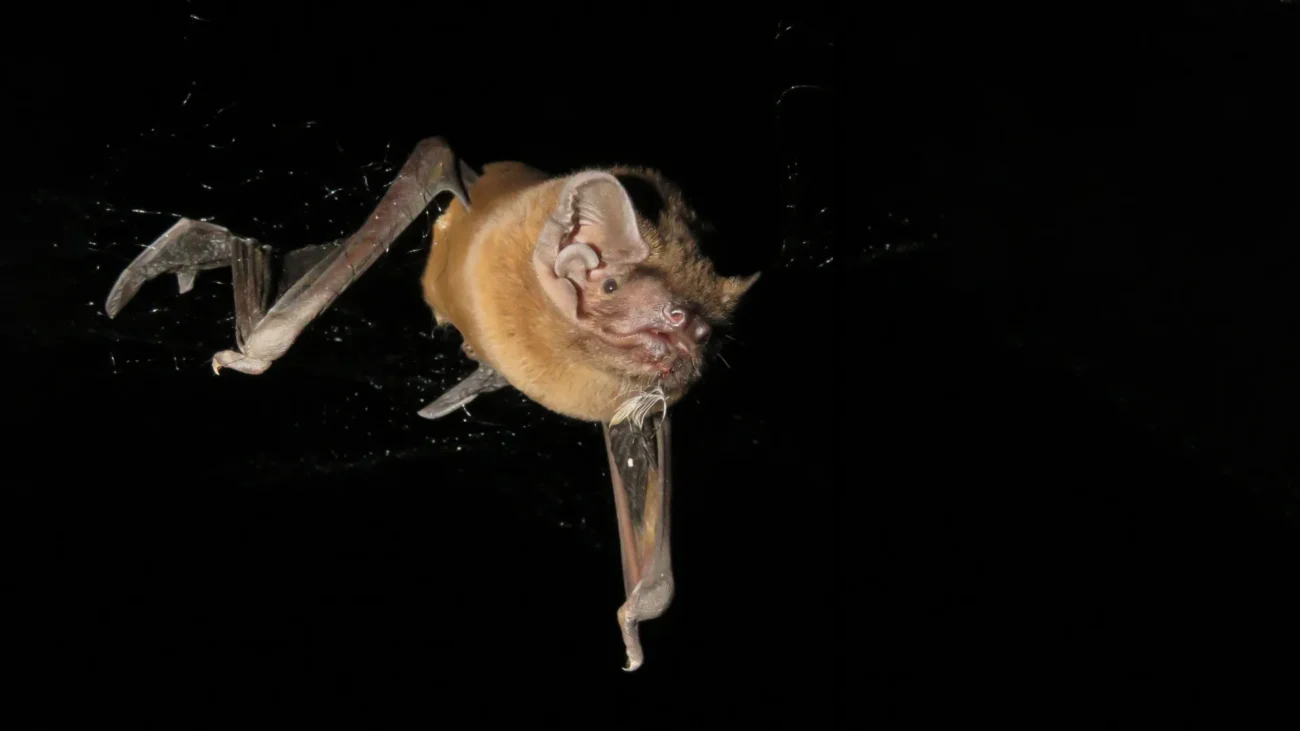
For nearly a quarter of a century, scientists have grappled with a profound mystery of the night skies: the predatory habits of Europe’s largest bat. Now, groundbreaking research has definitively revealed that the greater noctule (Nyctalus lasiopterus) is not merely an opportunistic insectivore with a penchant for occasional avian snacks. Instead, these formidable flyers engage in high-altitude aerial hunts, capturing and consuming small birds more than a kilometer above the ground, all while remaining airborne. This astonishing revelation, published in the esteemed journal Science, marks the culmination of persistent investigation and technological innovation, offering an unprecedented glimpse into a sophisticated nocturnal hunting strategy previously confined to hypothesis and conjecture.
The Elusive Avian Predator of the Night Skies
The annual migration of billions of songbirds across continents is a marvel of natural engineering. Many of these feathered travelers undertake their arduous journeys under the cloak of darkness, ascending to considerable altitudes to evade diurnal predators and capitalize on cooler air currents. However, this nocturnal migration strategy, while offering a degree of safety, introduces them to a different realm of danger: the dominion of bats. For decades, researchers have suspected that certain bat species, particularly the larger ones, might exploit this phenomenon. The greater noctule, with its impressive wingspan and powerful flight, has long been a prime candidate for such behavior.
The primary challenge in substantiating these suspicions lay in the sheer difficulty of observing and documenting such events. The vastness of the night sky, the bats’ ultrasonic echolocation which is imperceptible to humans, and the swift, unpredictable nature of aerial pursuits rendered traditional observation methods largely ineffective. This scientific impasse persisted for years, fueling a debate within the ornithological and chiropterological communities.
Pioneering Technology Unlocks the Bats’ Aerial Secrets
The breakthrough in unraveling this avian predation mystery came with the development and deployment of sophisticated miniaturized biologgers. Developed at Aarhus University, these lightweight devices, effectively functioning as "backpacks" for the bats, provided an unparalleled window into their nocturnal activities. Fitted onto greater noctule bats, these biologgers meticulously recorded a wealth of data, including altitude, acceleration, intricate movement patterns, and the bats’ own echolocation calls. This technological leap allowed scientists to effectively "ride along" with these elusive hunters, gathering direct evidence of their hunting strategies at extreme altitudes.
The data meticulously collected by these biologgers painted a vivid picture. The greater noctules were observed soaring to altitudes exceeding one kilometer, a strategy that allows them to intercept migrating birds as they navigate the night sky. Unlike insects, which are highly susceptible to bats’ ultrasonic echolocation, birds possess a much less developed ability to detect these calls at long distances. This disparity in sensory perception grants the bats a significant advantage, enabling them to approach their prey with a degree of stealth that would be impossible against smaller, more agile insect targets.
The researchers discovered that the bats employ a multi-stage hunting approach. Initially, they utilize powerful, low-frequency echolocation calls to scan vast expanses of the night sky, identifying potential prey from considerable distances. As a bat closes in on a bird, its echolocation strategy shifts dramatically. It unleashes rapid bursts of short, high-frequency calls. This signaling sequence is indicative of the final, critical phase of the attack, a rapid maneuver to intercept its target.
A Symphony of Speed, Precision, and Predation
The biologger data revealed the breathtaking precision and speed of the greater noctule’s attacks. The bats were observed executing steep, high-speed dives, a maneuver described by researchers as being reminiscent of fighter jets engaging in combat. These dives are not mere uncontrolled plunges but are characterized by intense wing flapping and a dramatic increase in acceleration, sometimes tripling their normal speed.
In two particularly well-documented instances, the bats initiated prolonged chases. One chase lasted for 30 seconds, while another, more extended pursuit spanned an astonishing 176 seconds. During these aerial duels, the bats continuously emitted their specialized attack calls, signaling their intent and focusing their efforts on the target. While the first bat ultimately abandoned its pursuit – a testament to the birds’ own remarkable agility and evasive maneuvers – the second bat achieved its objective after a nearly three-minute chase. It successfully captured a robin, a small but tenacious songbird, at an altitude close to the ground.
The auditory data captured by the biologgers provided further chilling details. Microphones recorded 21 distinct distress calls from the captured robin. Following this, the recordings documented 23 minutes of chewing sounds as the bat continued its flight at a lower altitude, consuming its prey while still in the air. This mid-air feeding behavior is a remarkable adaptation, allowing the bat to secure its meal without needing to land.
The Mechanics of Mid-Air Consumption
The confirmation of mid-air consumption was further bolstered by complementary analyses. X-ray imaging of bat digestive systems and DNA analysis of bird wings found beneath known bat hunting grounds provided crucial corroborating evidence. These analyses revealed that upon capturing a bird, the greater noctule delivers a fatal bite. In a surprising maneuver, the bat then meticulously removes the bird’s wings. This action is likely undertaken to reduce aerodynamic drag, making it easier for the bat to maneuver and consume its prey. The bat then utilizes the membrane between its hind legs, known as the uropatagium, as a makeshift pouch to hold and process the bird while continuing its flight.
Assistant Professor Laura Stidsholt from the Department of Biology at Aarhus University, a lead author of the study, eloquently described the complexity of this predatory act. "We know that songbirds perform wild evasive maneuvers such as loops and spirals to escape predators like hawks during the day — and they seem to use the same tactics against bats at night. It’s fascinating that bats are not only able to catch them, but also to kill and eat them while flying. A bird like that weighs about half as much as the bat itself — it would be like me catching and eating a 35-kilo animal while jogging."
Stidsholt’s dedication to advancing bat research through the refinement of biologger technology has been instrumental in numerous discoveries. Her work on this project, from data collection to analysis, was completed during her tenure as a Postdoc at the Leibniz Institute for Zoo and Wildlife Research (Leibniz-IZW) in Berlin.
A Twenty-Five-Year Quest for Validation
The confirmation of the greater noctule’s avian predation habits represents the culmination of a scientific quest that began nearly 25 years ago. The pioneering work of Spanish bat expert Carlos Ibáñez and his colleagues at the Doñana Biological Station (CSIC) in Seville laid the foundational hypothesis. Through meticulous examination of greater noctule droppings, Ibáñez discovered the presence of bird feathers, providing the first tangible evidence that these large bats might be preying on birds.
For years, Ibáñez and his team employed innovative methods to study these elusive creatures. They developed "smart" roosts equipped with antennas capable of detecting microchips implanted in the bats. This system allowed for real-time tracking of bat movements, data storage, and immediate alerts to researchers, offering a continuous stream of information about their activity patterns.
Despite the growing body of evidence, the notion that bats could successfully capture birds in mid-air was met with considerable skepticism within the scientific community. The significant weight difference between the prey and the predator – birds can weigh nearly half as much as the bats themselves – presented a formidable challenge to this hypothesis. The practical difficulties of observing these nocturnal hunts in the dark proved to be an insurmountable hurdle for many years. Researchers experimented with a wide array of technologies, including roost-mounted cameras, military-grade radar systems, hot-air balloons equipped with ultrasound recorders, and GPS trackers. However, the primary obstacle remained the development of tracking devices light enough for the bats to carry without impeding their flight capabilities.
It was only with the advent of the new, ultra-lightweight biologgers from Aarhus University, and as Carlos Ibáñez approached his retirement, that the persistent efforts of the international research team finally yielded the definitive proof they had sought for so long. The recording of a greater noctule successfully hunting and consuming a bird in flight marked a watershed moment in bat and avian research.
Conservation Implications and Future Directions
The emotional impact of the recorded hunt was profound for co-author Elena Tena. "While it evokes empathy for the prey, it is part of nature," she stated. "We knew we had documented something extraordinary. For the team, it confirmed what we had been seeking for so long. I had to listen to it several times to fully grasp what we had recorded."
Despite the formidable predatory prowess of the greater noctule, the study offers reassurance regarding songbird populations. The greater noctule is a rare and endangered species in many parts of its range, primarily due to habitat loss, particularly the destruction of mature forest ecosystems. Understanding its ecological role, including its dietary habits, is now paramount for developing effective conservation and management strategies.
The findings underscore the vital importance of preserving these ancient forest habitats, which provide not only roosting sites for the bats but also the rich biodiversity that sustains their complex food web. The greater noctule, as a top aerial predator, plays a unique role in its ecosystem, and its continued existence is intrinsically linked to the health of its environment.
This research not only solves a long-standing scientific enigma but also highlights the power of technological innovation in advancing our understanding of the natural world. It serves as a compelling reminder of the intricate and often surprising relationships that exist within ecosystems, and the urgent need to protect the planet’s most extraordinary, and often unseen, inhabitants. The greater noctule, once a subject of speculation, is now firmly established as one of Europe’s most remarkable nocturnal predators, a testament to nature’s enduring capacity for adaptation and survival.

