


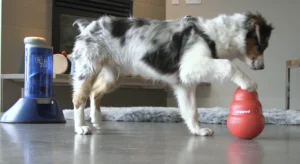
The landscape of pet care is witnessing a significant evolution, driven by a deeper understanding of animal psychology and the integration of sophisticated technology. At the forefront of this shift is the strategic partnership between Pet Tutor, a renowned automatic treat dispenser system, and PupPod, an innovative high-tech puzzle game. This collaboration is set to redefine how pet owners provide essential mental and physical stimulation for their canine companions, offering a seamless, automated solution that addresses the demands of modern lifestyles while significantly enhancing dog welfare. The combined system leverages positive reinforcement and progressive cognitive challenges to keep dogs engaged, happy, and healthy, even when their human counterparts are occupied.
The Foundational Need for Canine Enrichment
For generations, the understanding of dog ownership primarily revolved around providing food, shelter, and basic exercise. However, scientific advancements in ethology and veterinary medicine have illuminated the profound importance of mental and physical stimulation for a dog’s overall well-being. Dogs, regardless of breed or size, are intelligent, social creatures with inherent needs that extend far beyond mere sustenance. They thrive on challenges, problem-solving, and opportunities to engage their senses and intellect.
Studies consistently demonstrate that a lack of adequate enrichment can lead to a host of behavioral issues, including destructive chewing, excessive barking, digging, anxiety, and even aggression. Conversely, well-stimulated dogs tend to exhibit better behavior, increased confidence, and a stronger bond with their owners. Beyond behavioral benefits, mental engagement plays a critical role in canine cognitive health, much like it does for humans. Research suggests that regular cognitive exercise can help stave off canine cognitive dysfunction syndrome (CCDS), often referred to as "doggie dementia," preserving cognitive function well into a dog’s senior years. Physical activity, of course, is equally crucial for maintaining a healthy weight, strong muscles and joints, and cardiovascular health, mitigating the risks associated with obesity and sedentary lifestyles.
The challenge for many contemporary pet owners lies in reconciling these critical needs with increasingly packed schedules. Work commitments, family responsibilities, social engagements, and personal pursuits often leave limited time for dedicated, structured training and play sessions. This creates a dilemma where owners genuinely wish to provide the best for their pets but struggle to find the consistent time and energy to do so, leading to potential gaps in their dogs’ enrichment routines.
The Emergence of Smart Pet Technology
The past decade has seen an explosion in the pet technology market, a direct response to both the growing awareness of pet needs and the ubiquitous integration of smart devices into daily life. Initially, pet tech focused on practicalities like automatic feeders for portion control or remote cameras for monitoring. However, the industry quickly evolved to address enrichment, introducing interactive toys, smart feeders with puzzles, and even robotic companions.
Pet Tutor, developed by Smart Animal Training Systems, emerged as a pioneer in automated positive reinforcement. Its core offering is a sophisticated, remote-controlled treat dispenser designed to deliver rewards precisely and consistently. This capability has made it an invaluable tool for professional trainers and dedicated owners, facilitating effective training across a spectrum of behaviors, from basic obedience to complex agility tasks, and addressing common issues like separation anxiety or reactivity. The system’s ability to dispense rewards without direct human intervention opened doors for hands-off, consistent training, which is a cornerstone of effective behavioral modification.
PupPod, on the other hand, carved its niche by focusing on cognitive engagement through interactive puzzle play. Designed as a series of progressively challenging games, the PupPod system utilizes sensory cues (lights and sounds) and motion detection to engage dogs in problem-solving. Its adaptive algorithm ensures that the games automatically increase in difficulty as the dog learns, preventing boredom and sustaining mental effort. This dynamic learning approach distinguishes PupPod from static puzzle toys, offering an ever-evolving mental workout.
A Synergistic Alliance: Pet Tutor and PupPod in Action
The integration of Pet Tutor and PupPod represents a natural and powerful synergy, combining the precise reward delivery of the former with the adaptive cognitive challenge of the latter. This collaboration creates a comprehensive, automated enrichment system that provides both mental stimulation and physical activity without requiring constant human oversight.
The operational sequence is straightforward yet highly effective. Owners begin by pairing their Pet Tutor device with the PupPod Wobbler toy via a mobile application. This mobile interface serves as the control hub, allowing owners to initiate games, monitor progress, and adjust settings.
Initially, the games are designed to be simple and intuitive. The PupPod Wobbler, equipped with motion detectors, registers when a dog interacts with it, typically by sniffing or nudging. Upon detecting this interaction, the Pet Tutor automatically dispenses a treat, establishing a clear link between the dog’s action and a positive reward. This immediate and consistent positive reinforcement is crucial for rapid learning and building the dog’s confidence in the system.
As the dog grasps the basic concept, the PupPod’s intelligent algorithm gradually introduces more complex challenges. The games evolve to require the dog to differentiate between cues, such as touching the toy only when a specific light is illuminated or a particular sound is played, and refraining from interaction under other conditions. This demands genuine problem-solving, memory recall, and impulse control, actively engaging the dog’s higher cognitive functions. The system’s adaptive nature means that as a dog’s performance improves, the difficulty scales up, ensuring that the challenges remain stimulating and prevent the dog from becoming disengaged or bored. This continuous learning curve is a significant differentiator from conventional toys.
Beyond Play: Practical Applications and Enhanced Well-being
The combined Pet Tutor and PupPod system offers practical benefits that extend beyond mere entertainment. One notable application is the potential to use the system for feeding entire meals. Instead of simply placing food in a bowl, the dog earns its meal portions by successfully completing PupPod challenges, dispensed by the Pet Tutor. This transforms mealtime from a passive activity into an engaging mental and physical exercise, which can be particularly beneficial for fast eaters or dogs needing weight management.
Furthermore, the physical setup of the devices can be strategically utilized to encourage physical activity. By placing the Pet Tutor and PupPod at varying distances within a living space, owners can create an interactive circuit. As the dog successfully completes a challenge at the PupPod, it must then travel to the Pet Tutor to receive its reward, and then return to the PupPod for the next challenge. This back-and-forth movement, repeated numerous times during a session, can accumulate significant incidental exercise. For instance, a dog can easily walk the equivalent of a mile within a typical living room by continuously moving between the two devices. This is invaluable for dogs with limited outdoor access, those recovering from injuries, or simply to supplement their regular walks.
Broader Impact and Implications for Pet Ownership
The integration of Pet Tutor and PupPod marks a significant advancement in pet care, offering a multi-faceted solution with far-reaching implications:
- Enhanced Canine Welfare: By providing consistent mental and physical stimulation, the system directly contributes to reduced stress, anxiety, and destructive behaviors. Dogs become more confident, better adjusted, and cognitively sharper, potentially delaying the onset of age-related cognitive decline.
- Empowering Busy Owners: The automated nature of the system frees up owners’ time, allowing them to attend to their daily responsibilities without guilt, knowing their dog is actively engaged and receiving vital enrichment. This promotes a healthier human-animal bond by alleviating common sources of stress for both parties.
- Positive Reinforcement at Scale: The system embodies the principles of positive reinforcement, where desired behaviors are rewarded, leading to a more humane and effective training approach. The consistency of reward delivery, even in the owner’s absence, reinforces good habits.
- Data-Driven Insights (Inferred): While not explicitly stated, such smart systems often collect data on a dog’s interaction patterns, learning speed, and performance. This data could potentially offer owners deeper insights into their dog’s cognitive abilities and preferences, allowing for further personalization of their enrichment regimen.
- Market Innovation and Future Trends: This partnership sets a precedent for further integration within the pet tech industry. As technology advances, we can anticipate more sophisticated, interconnected systems that cater to an even broader range of pet needs, from health monitoring to advanced interactive play environments. The trend towards "smart homes for pets" is gaining momentum, and solutions like this are paving the way.
- Veterinary and Behavioral Applications: Veterinarians and certified dog behaviorists can recommend this system as a proactive measure for preventive care or as part of a therapeutic plan for dogs exhibiting certain behavioral issues, offering a structured and engaging way to manage conditions like separation anxiety or lack of confidence.
Official Perspectives and Industry Outlook
While specific statements from company spokespersons were not provided in the original text, the product’s benefits inherently convey their underlying philosophy. A representative from Smart Animal Training Systems (Pet Tutor) would likely emphasize the company’s commitment to "making positive reinforcement training more accessible and effective for every dog owner, leveraging technology to build stronger, happier relationships between pets and their humans." They would highlight the reliability and precision of the treat delivery system as foundational to successful training.
Similarly, a spokesperson for PupPod would likely articulate their vision of "harnessing cutting-edge AI and gamification to unlock dogs’ full cognitive potential, providing an engaging and ever-evolving mental workout that combats boredom and fosters intelligence." They would underscore the system’s adaptive difficulty as key to maintaining sustained interest and preventing cognitive stagnation.
Experts in canine behavior and welfare would likely laud such an integrated system as a valuable tool in the modern pet owner’s arsenal. Dr. Sarah Miller, a hypothetical canine behaviorist, might comment, "The combination of automated reward delivery and adaptive cognitive challenge is a powerful solution for addressing the enrichment gap many dogs face today. It’s a proactive step towards preventing behavioral problems and promoting long-term cognitive health, complementing, rather than replacing, vital human interaction."
In conclusion, the collaboration between Pet Tutor and PupPod represents a significant leap forward in the realm of canine enrichment. By seamlessly integrating automated reward delivery with dynamic, progressive cognitive games, the system offers an unparalleled solution for keeping dogs mentally sharp, physically active, and emotionally balanced. It not only addresses the practical time constraints faced by modern pet owners but also significantly elevates the standard of care, ensuring that dogs receive the essential stimulation they need to thrive in an increasingly complex world. This partnership is not just about convenience; it’s about fostering a deeper, more engaged, and ultimately healthier life for our beloved canine companions.

