


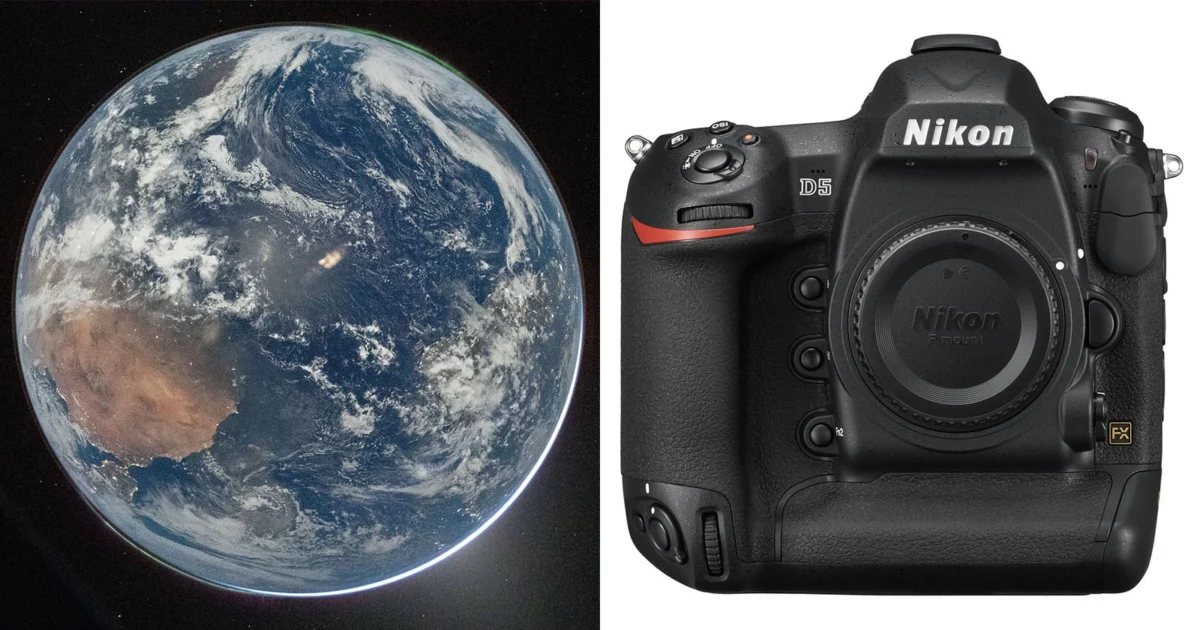
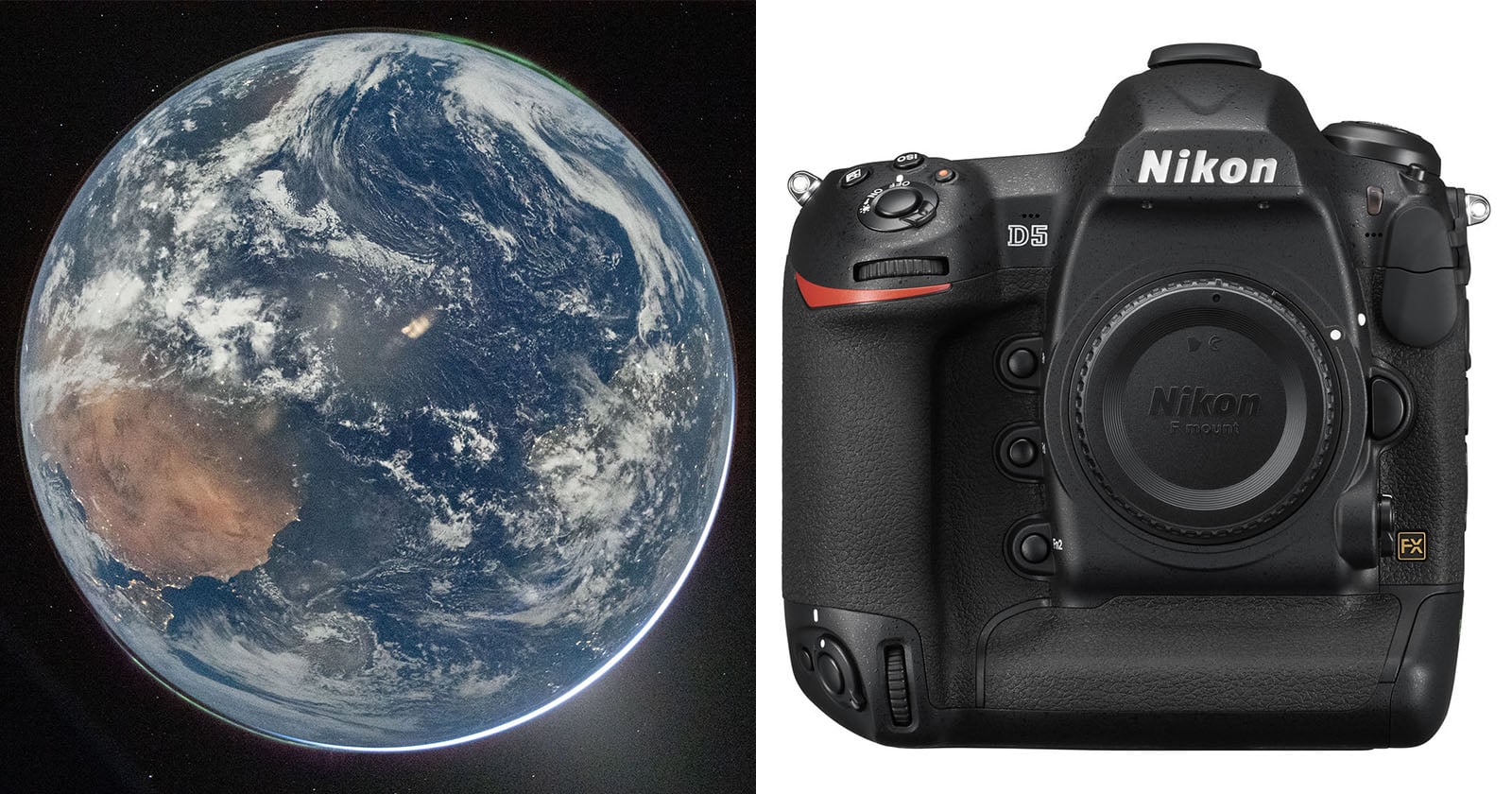
The Artemis II mission represents a historic milestone in human spaceflight, marking the first time in more than half a century that a crewed spacecraft has ventured to the vicinity of the Moon. As the Orion spacecraft carries its four-member crew—Commander Reid Wiseman, Pilot Victor Glover, and Mission Specialists Christina Koch and Jeremy Hansen—to a record-breaking distance of 252,760 miles (406,778 kilometers) from Earth, the world has been treated to breathtaking high-resolution imagery of our home planet. However, beneath the aesthetic brilliance of these photographs lies a technical detail that has sparked intense debate among imaging professionals and enthusiasts: the primary tool for these historic captures is the Nikon D5, a digital single-lens reflex (DSLR) camera first released in 2016.
In an era dominated by high-resolution mirrorless systems and rapid technological cycles, the selection of a decade-old camera for a multi-billion dollar lunar mission may appear counterintuitive. Yet, the presence of the Nikon D5 aboard Artemis II is not an oversight or a budgetary compromise; rather, it is a calculated decision based on flight-proven reliability, specific sensor physics, and the unique, unforgiving environment of deep space. While the crew successfully campaigned to include the modern mirrorless Nikon Z9 as a secondary system, the D5 remains the mission’s workhorse, serving as a testament to the "best tool for the job" philosophy that governs NASA’s procurement and safety protocols.
The Technical Imperative: Why High ISO Performance Trumps Resolution
The primary challenge of space photography is not just the distance, but the extreme lighting conditions. In the vacuum of space, there is no atmosphere to scatter light, resulting in a binary environment of blindingly bright sunlight and absolute, ink-black darkness. When the Artemis II crew photographs the Earth from the lunar transition orbit, they are often dealing with the "night side" of the planet or the dimly lit lunar surface.
During the release of the Nikon D5 in January 2016, the manufacturer marketed the device under the slogan "conquer the dark." The camera featured a native ISO range up to 102,400, expandable to an unprecedented ISO 3,280,000. While the extreme end of that range produces images too noisy for commercial use, the D5’s performance at moderately high ISO levels—such as 12,800 to 51,200—remains legendary.
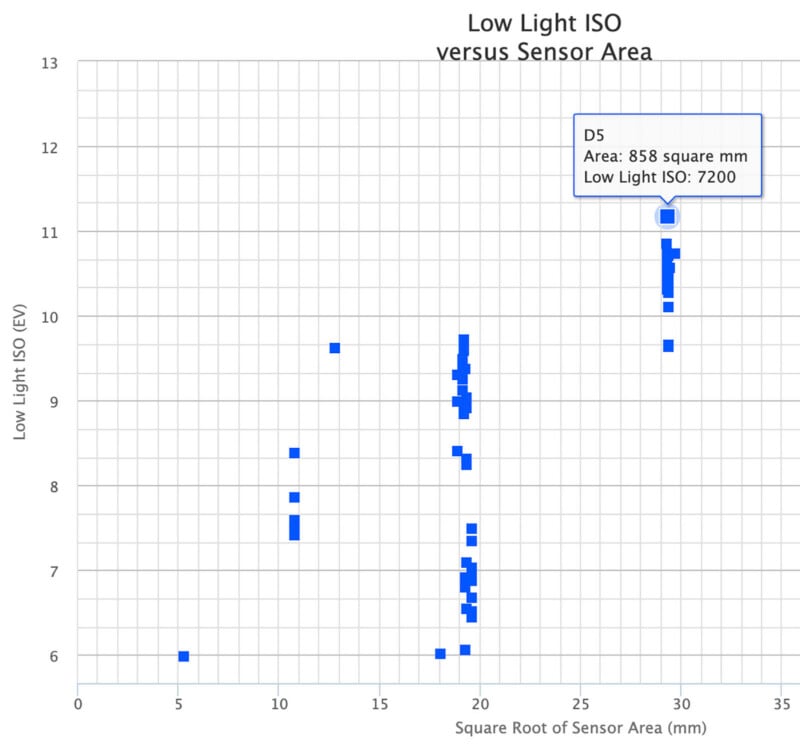
Technical benchmarks from independent testing sites like Photons to Photos confirm that the Nikon D5 remains the company’s peak performer for low-light ISO efficiency. Even when compared to the modern Z9, the D5’s 20.8-megapixel sensor features larger individual pixels (photosites). Larger pixels generally have a higher signal-to-noise ratio, allowing them to capture more light information with less electronic interference in dark environments. For an astronaut like Reid Wiseman, who recently captured a portrait of Earth at ISO 51,200 with a shutter speed of 1/4 second, this sensitivity is the difference between a usable scientific record and a blurred, noisy failure.
The NASA Certification Cycle: Reliability Over Recency
The journey of a piece of hardware from a retail shelf to a spacecraft cabin is an arduous process that often takes years. NASA’s flight certification involves rigorous testing for radiation hardening, thermal vacuum resilience, and vibration endurance. A camera must prove it can survive the violent forces of a Space Launch System (SLS) liftoff and the constant bombardment of cosmic rays outside Earth’s protective magnetosphere.
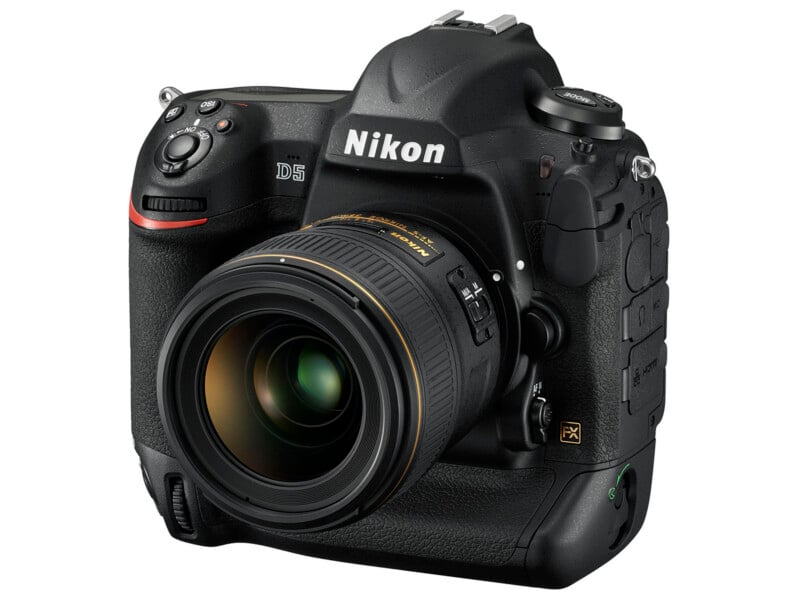
The Nikon D5 has already undergone these trials. It has been a staple of the International Space Station (ISS) inventory since 2017, when NASA ordered 53 unmodified D5 bodies for use in orbit. Because the D5 is a known quantity with a documented track record of surviving the space environment, it was the "safe" choice for the critical Artemis II mission.
In contrast, the Nikon D6—the final professional DSLR released by the company before it pivoted entirely to mirrorless—had a relatively short market life and was discontinued in 2025. By the time the D6 would have cleared all NASA safety and integration hurdles, the industry had already moved toward mirrorless architecture. NASA’s decision to stick with the D5 for Artemis II reflects a commitment to hardware that has already survived the "infant mortality" phase of technological deployment, ensuring that no software bugs or mechanical surprises jeopardize the mission’s visual documentation.
A Chronology of Nikon and NASA’s Partnership
The use of the D5 is the latest chapter in a partnership between Nikon and NASA that spans over five decades. This relationship began during the Apollo era and has evolved alongside camera technology:
- 1971 (Apollo 15): NASA utilized the Nikon Photomic FTN, a modified Nikon F, marking the first time a 35mm SLR was used in lunar orbit.
- 1980s (Space Shuttle Era): The Nikon F3 was modified for shuttle missions, featuring specialized motor drives and film backs.
- 1999 (Digital Transition): The Nikon D1 became the first digital SLR to be used extensively by NASA, ushering in the era of instant image transmission from space.
- 2000s-2010s: NASA cycled through the D2Xs, D3s, and D4, consistently choosing Nikon’s flagship professional bodies for their durability and ergonomics.
- 2017: NASA purchased 53 Nikon D5 cameras for the ISS, solidifying the platform as the standard for orbital photography.
- 2024-2026: Development of the Handheld Universal Lunar Camera (HULC) begins, based on the Nikon Z9 platform, intended for the Artemis III moon landing.
This timeline illustrates that while Artemis II uses "older" tech, it is doing so as the final evolution of the DSLR era before the Artemis program fully transitions to mirrorless systems for actual lunar surface operations.
The Artemis II Gear Bag: Lenses and Last-Minute Additions
While the D5 body is the star of the show, the optics used by the crew are equally noteworthy. Data from the first batch of images reveals the use of the Nikon AF-S 14-24mm f/2.8G ED lens. This wide-angle zoom is a favorite for its edge-to-edge sharpness, which is vital for capturing the curvature of the Earth through the Orion’s thick, multi-pane windows.

Interestingly, the crew also has access to the Nikkor 35mm f/2 AF-D, a lens design that is roughly 30 years old. The choice of this "vintage" prime lens likely stems from its compact size and simple mechanical construction. In the cramped quarters of the Orion capsule, where every gram of weight and cubic centimeter of space is calculated, a small, reliable prime lens can be more practical than a bulky modern f/1.4 equivalent.
The inclusion of the Nikon Z9 on Artemis II was a result of the crew’s advocacy for more modern video capabilities and higher resolution for specific lunar targets. The Z9 brings 8K video and 45.7-megapixel stills to the mission, providing a high-fidelity complement to the D5’s low-light prowess. This dual-system approach allows the crew to select the best sensor for the specific lighting conditions of the moment.
Broader Impact and the Future of Space Imaging
The Artemis II mission is more than a flight; it is a live testbed for the future of lunar exploration. The data gathered by the D5 and Z9 will directly influence the final design of the Handheld Universal Lunar Camera (HULC). Unlike the cameras used inside the Orion, the HULC will be used by astronauts walking on the Moon during Artemis III. It will require a specialized thermal blanket to protect it from temperatures ranging from -200 to over 200 degrees Fahrenheit, as well as modified buttons and grips that can be operated while wearing pressurized EVA gloves.
The reliance on the Nikon D5 for Artemis II highlights a fundamental truth in aerospace engineering: performance is measured by reliability and specific utility, not by the date of manufacture. While consumer markets demand the newest features every year, space agencies prioritize hardware that can withstand the most extreme conditions imaginable.
As Artemis II continues its journey, the Nikon D5 is performing its "swan song" in the most spectacular fashion possible. By capturing the deepest images of Earth ever taken by a human-operated camera, the D5 is proving that its 2016-era engineering is still more than capable of meeting the challenges of 2026 and beyond. When the mission concludes and the crew splashes down in the Pacific, the thousands of images stored on their XQD cards will form the definitive visual record of humanity’s return to the deep frontier, vindicating NASA’s choice to trust a proven legend over a new arrival.

