


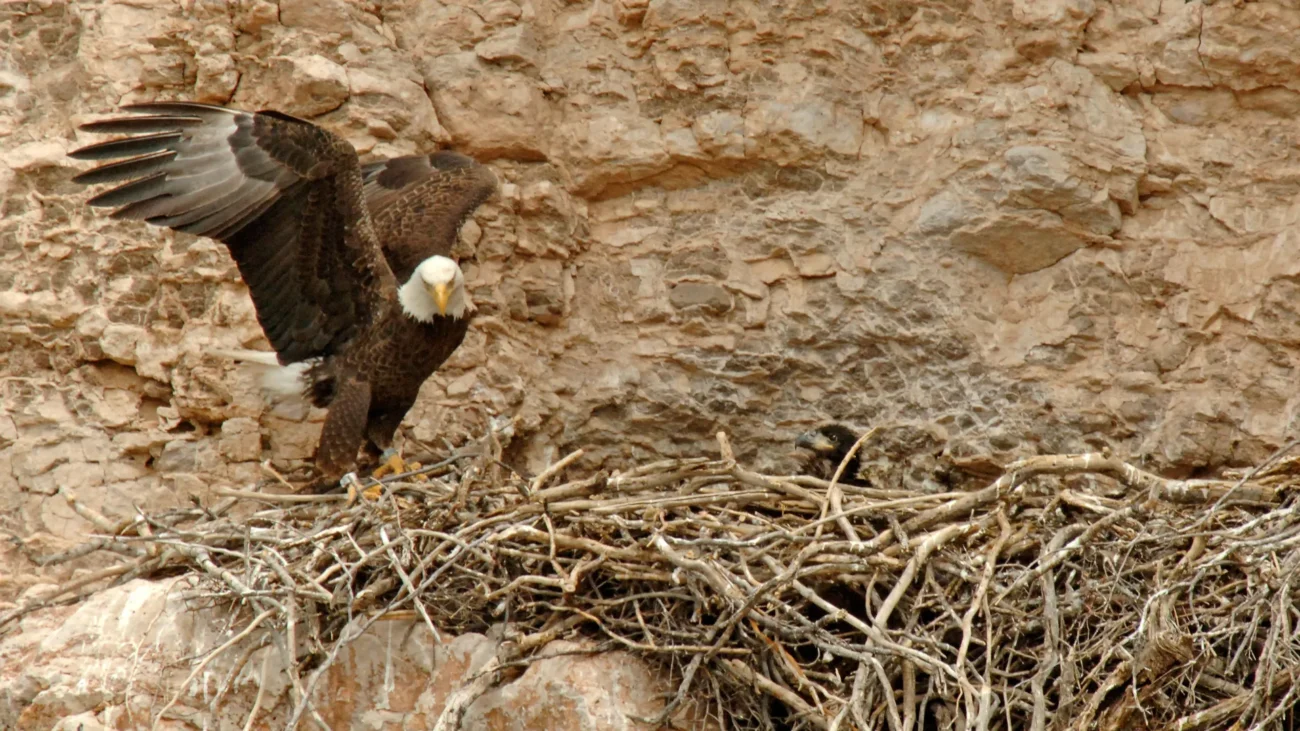
Contrary to the age-old adage, birds of a feather do not always flock together, particularly when it comes to migratory patterns. A groundbreaking new study published in the Journal of Raptor Research reveals that Bald Eagles (Haliaeetus leucocephalus) originating from Arizona are exhibiting unexpected migratory behaviors, venturing northward rather than southward, a trend that defies typical avian movement in temperate regions. The research, titled "Northward Migrations of Nonbreeding Bald Eagles from Arizona, USA," also documents the remarkable case of a single eagle that journeyed from Arizona and ultimately established residence in California. This finding challenges long-held assumptions about the frequency of emigration among these magnificent raptors from their native populations. The researchers posit that Bald Eagles in the southwestern United States are highly exploratory, likely driven by the imperative to locate ephemeral food sources. As the global climate and landscapes undergo continuous transformation, studies that meticulously document how wildlife adapts its movements are of paramount importance for the development of effective conservation strategies and the preservation of critical travel corridors for species facing vulnerability.
Unraveling the Mysteries of Eagle Migration
The study, conducted between 2017 and 2023, involved an Arizona-based research team that utilized sophisticated satellite transmitters to monitor the movements of 24 newly fledged Bald Eagles and two adult, nonbreeding individuals. This innovative approach allowed researchers to map their dispersal patterns both within and beyond the state’s borders. While breeding Bald Eagles in Arizona are generally understood to remain in close proximity to their nesting territories for the majority of the year, considerably less information has been available regarding the behavior of nonbreeding birds. Given that survival rates can fluctuate significantly across different life stages, comparing the movement patterns and survival rates of nonbreeding eagles with those of their breeding counterparts offers scientists a more comprehensive understanding of the species’ overall health across its range and how population-level processes are shaped.
The research team meticulously followed individual eagles for extended periods, as long as their tracking devices remained operational, in some instances for up to four years within the seven-year study timeframe. Many individuals, including scientists, have grown accustomed to the prevailing notion of North American migratory birds journeying southward during the nonbreeding season—typically considered the "winter" months in the Northern Hemisphere—in pursuit of milder weather and more predictable food availability. However, Bald Eagles in Arizona commence their nesting activities during the winter. Consequently, their nonbreeding season actually occurs during the summer and autumn. Lead author Dr. Caroline D. Cappello expressed particular intrigue regarding this atypical timing of seasonal movement, noting that "northward migratory behavior raises interesting questions about the recent and historical pressures that shape these movement strategies." This observation underscores a significant departure from conventional migratory paradigms.
Historic Haunts and Enduring Habitats
A compelling finding of the study is the observation that the tracked eagles frequently paused at many of the same lakes and rivers that had been identified as crucial stopover sites for Bald Eagles in a study conducted in the 1980s. This remarkable overlap lends strong support to the enduring hypothesis that these specific aquatic habitats have remained vital gathering points for multiple generations of eagles. This continuity suggests a deep-seated ecological memory within the species, guiding them to resource-rich areas that have proven reliable over decades.
Beyond reinforcing the significant utilization of the Intermountain Flyway and a reliance on lakes and rivers along their migratory routes, the study revealed that eagles of varying ages were migrating to the northern United States and southern Canada. Coauthor Dr. Javan M. Bauder, a USGS researcher, Assistant Unit Leader at the Arizona Cooperative Fish and Wildlife Research Unit, and Assistant Professor at the University of Arizona, emphasized the profound significance of this discovery. He stated, "managing and conserving wildlife populations requires that we understand the movement of patterns of individuals of all age classes within those populations." The research team also noted a discernible trend: as eagles matured, their migratory pathways appeared to become more precise and refined. A majority of the birds tracked for at least two years returned to Arizona in the fall of their hatch year, having spent the preceding summer exploring farther north. The researchers hypothesize that these young eagles might be capitalizing on seasonal food bonanzas, such as the spawning runs of salmon, the nesting aggregations of waterfowl, or the carcasses of large mammals. Further research is undoubtedly necessary to definitively confirm this intriguing possibility.
Journeys of Risk and the Perils Faced by Young Raptors
Bald Eagles, much like a multitude of other raptor species, must contend with a formidable array of hazards in a world increasingly shaped by human activity. One notable individual in the study traversed ten U.S. states and four Canadian provinces during her early life before seemingly settling in northern California, where she appeared poised to establish a breeding territory. Tragically, at the age of four, her life was cut short by electrocution, an all too frequent cause of mortality for large birds of prey. Her demise was particularly disheartening, as Dr. Cappello explained, because it "underscored the ongoing risks these birds face," and because emigration, a crucial aspect of population dynamics, is inherently difficult to quantify. Her apparent decision to reside and breed in California would have offered invaluable insights into the frequency with which Bald Eagles hatched in Arizona disperse to other regions.
The threats confronting young raptors are multifaceted and include poisoning from lead and rodenticides, collisions with wind turbines, habitat loss, and the pervasive uncertainty associated with a rapidly changing climate. By undertaking comprehensive studies of raptors at every stage of their life cycle, including the exploratory journeys undertaken by young birds, scientists can formulate evidence-based recommendations. These recommendations can then guide efforts to protect the most critical stopover sites and identify infrastructure, such as electrical systems, that could be modified to enhance the survival rates of eagles and other large raptors. The interconnectedness of these threats highlights the urgent need for holistic conservation approaches.
Future Frontiers in Research and Conservation Priorities
The research team has put forth several recommendations for future investigative endeavors, with a particular emphasis on understanding "route fidelity." As Dr. Cappello eloquently put it, "if consistent patterns exist it could help focus conservation efforts on specific, high-use areas along their migratory route." This focus on predictable patterns could revolutionize how conservation resources are allocated, directing them to the most impactful locations. Furthermore, the researchers underscore the importance of comparative analyses, contrasting the migratory behaviors of these Arizona Bald Eagles with those of other wildlife populations that exhibit northward migration from the southern fringes of their ranges. Such comparisons are crucial for a more nuanced understanding of the trade-offs, costs, and benefits inherent in this distinctive northward migration strategy.
The implications of this research extend far beyond the immediate understanding of Bald Eagle behavior. It serves as a crucial reminder that ecological patterns, even those deeply ingrained and seemingly immutable, can shift in response to environmental pressures. The adaptability demonstrated by these eagles suggests a resilience that can inform conservation efforts for other species facing similar challenges. The identification of critical stopover sites, the understanding of age-specific migratory refinements, and the recognition of novel migratory pathways all contribute to a more dynamic and effective approach to wildlife management. As climate change continues to alter landscapes and resource availability, studies like this are not merely academic exercises; they are vital blueprints for ensuring the long-term survival of species in an ever-evolving world. The findings also highlight the importance of continued investment in wildlife tracking technologies and long-term monitoring programs, which are indispensable for capturing the subtle yet significant shifts in animal behavior that can signal broader ecological trends. The success of conservation hinges on our ability to anticipate and adapt to these changes, and the northward journeys of Arizona’s Bald Eagles offer a compelling case study in the ongoing evolution of the natural world.

