


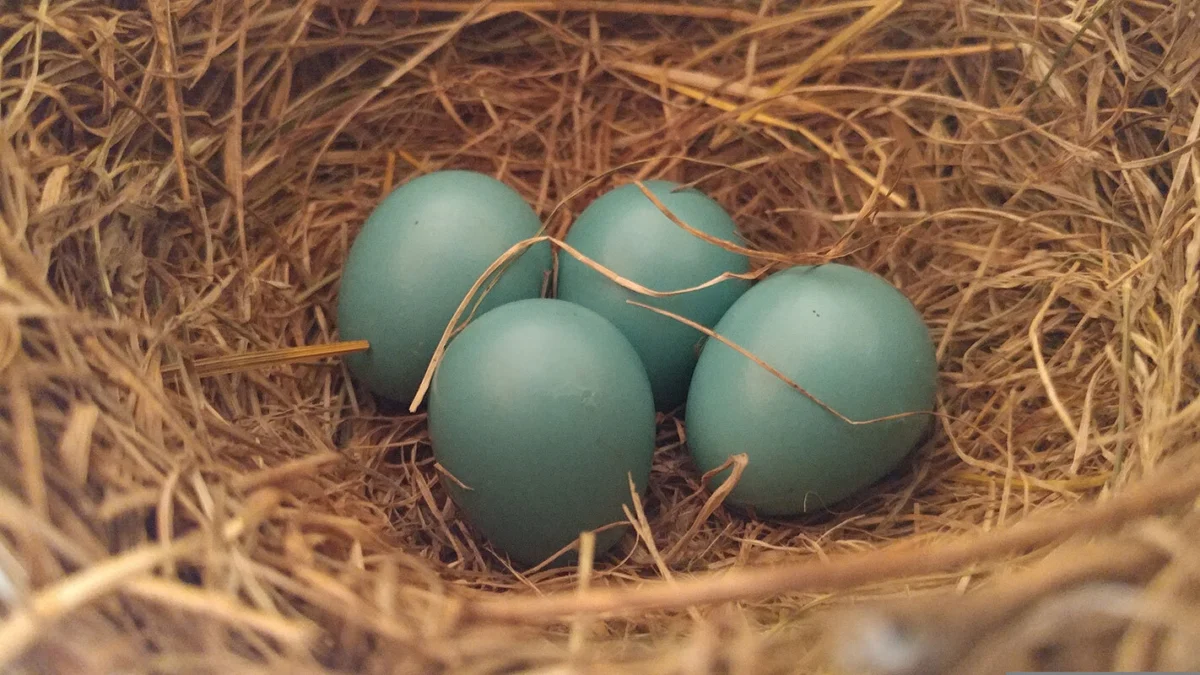
This pervasive springtime myth, deeply embedded in modern holiday traditions, stands in stark contrast to the biological reality of the natural world. While the whimsical notion of an egg-laying hare captures imaginations, the true marvel of oviparous reproduction resides squarely with avian species. Birds, the undisputed masters of egg-laying, have been naturally producing eggs of breathtaking beauty and intricate design for millions of years, arguably deserving far more of the spotlight than their furry, non-egg-laying counterparts.
The Biological Brilliance of Bird Eggs
Bird eggs are not merely vessels for new life; they are functional masterpieces of evolutionary engineering. Their diverse array of colors, shapes, and patterns serves multiple critical purposes, each refined over millennia to ensure the survival and propagation of species. Unlike the artificially dyed eggs of our holiday celebrations, avian creations are biologically brilliant, meticulously crafted for protection, camouflage, and the optimal development of the embryo within.
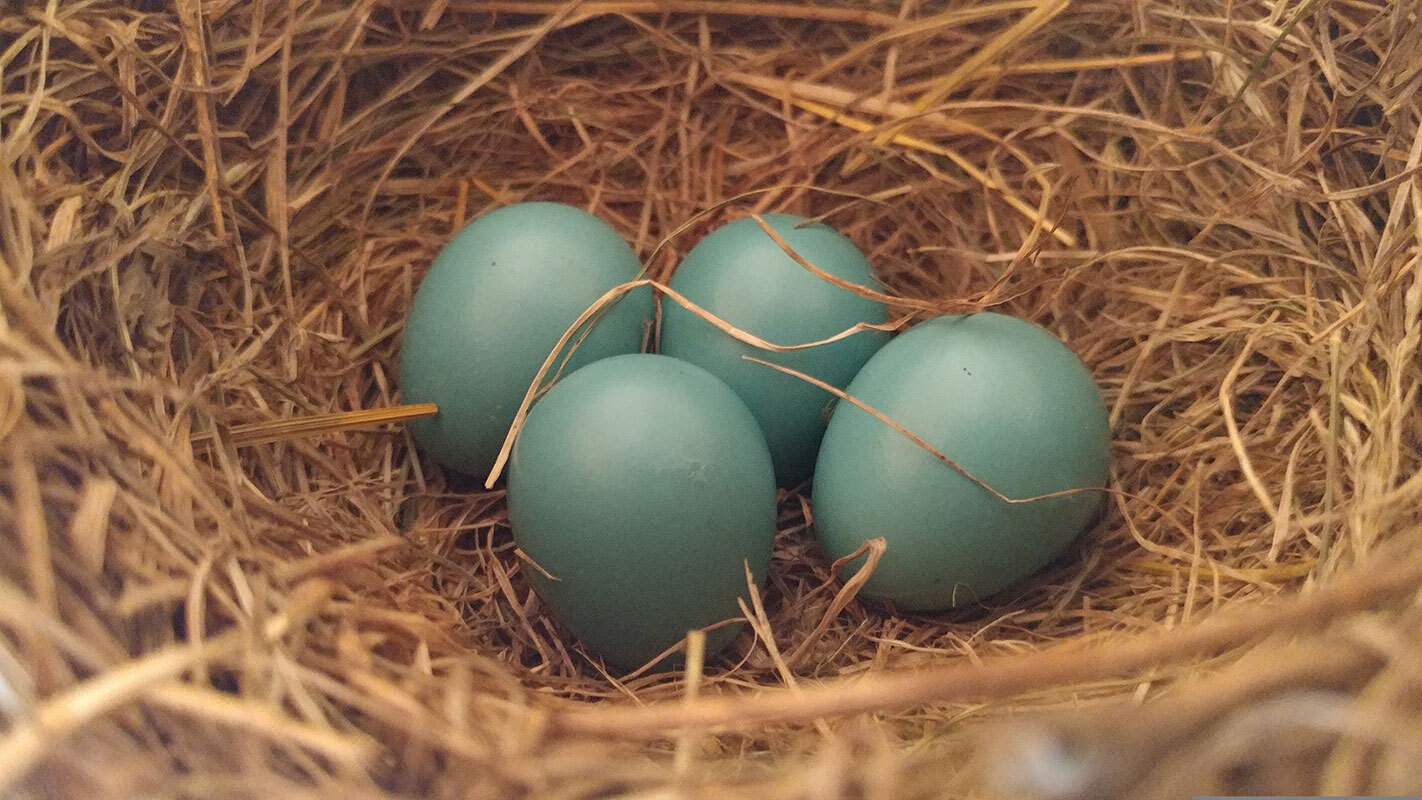
One of the most striking features of bird eggs is their vibrant coloration. From the iconic robin’s-egg blue to speckled browns, olive greens, and even nearly black hues, the palette is astonishingly rich. This coloration is not random; it is determined by pigments deposited during the egg’s formation in the female bird’s oviduct. The primary pigments responsible are biliverdin, which produces blue and green shades, and protoporphyrins, responsible for reds, browns, and yellows. The concentration and distribution of these pigments result in the vast spectrum of colors and patterns observed.
The functions of these colors are multifaceted. For many ground-nesting birds, such as plovers and killdeer, mottled brown or olive eggs provide crucial camouflage, blending seamlessly with surrounding soil, rocks, or vegetation to evade predators. Conversely, birds nesting in dark cavities, like owls and woodpeckers, often lay pure white eggs, which are more visible to the parent in low light conditions and less susceptible to predation due to their hidden location.
Beyond camouflage, egg color can signal maternal health and genetic fitness. Studies suggest that in some species, particularly those where males contribute significantly to parental care, the vibrancy of egg coloration (often linked to biliverdin levels) can indicate the female’s physiological condition. A female in prime health might lay more brightly colored eggs, potentially signaling her robust health and ability to provide good care, thereby influencing the male’s investment in the nest. Egg pigmentation also offers protection from harmful ultraviolet (UV) radiation, particularly for eggs exposed to direct sunlight, and darker eggs in colder climates can absorb more solar radiation, providing warmth to the developing embryo, as highlighted by research in Science News.
Diversity in Shape and Pattern
The variety in bird egg shapes is equally impressive and equally functional. While the classic "ovoid" or "egg shape" is common, many species exhibit distinct variations. Strong fliers, such as shorebirds and seabirds like the Common Murre, often lay more elongated, pyriform (pear-shaped) eggs. This shape, as a study covered by Harvard Magazine suggests, may be influenced by flight efficiency and the mechanics of the oviduct. Pyriform eggs are less likely to roll out of precarious cliffside nests, instead rolling in a tight circle. Weaker fliers, by contrast, tend to lay rounder eggs. Spherical eggs, like those of owls, are more common in cavity nesters where rolling is not a concern, while more elliptical eggs are seen in species with open nests. The shape also optimizes packing efficiency within the nest and heat distribution during incubation.
Egg patterns—speckles, spots, streaks, and blotches—add another layer of complexity and purpose. These markings can further enhance camouflage, breaking up the egg’s outline and making it harder for predators to detect. In colonial nesters, subtle variations in patterns might even allow parents to recognize their own eggs amidst a crowded nest site. The density and distribution of these patterns can vary within a clutch, potentially reflecting the female’s energy reserves or age.
Consider the sheer breadth of avian egg diversity:
- American Robin: Famous for its vibrant blue eggs, a hue attributed to the biliverdin pigment. A typical clutch is 3-5 eggs, incubated for about 12-14 days.
- Emu: Lays large, dark greenish-black eggs, which are robust and well-camouflaged on the ground.
- Tinamou: Known for their extraordinarily glossy, monochromatic eggs that come in a range of vivid colors including turquoise, purple, and green, often resembling polished gemstones.
- Common Murre: Lays highly variable pyriform eggs, often heavily patterned with streaks and blotches, believed to aid individual recognition in dense colonies and prevent rolling off ledges.
- Parrots: Almost exclusively lay matte white eggs, a common trait among cavity-nesting birds where camouflage is not a primary concern for the eggs themselves.
This biological reality underscores that birds are the true artists and engineers of the egg world, their creations honed by millions of years of natural selection for survival and reproduction.
The Enigmatic Origins of the Egg-Laying Rabbit
Given the scientific marvels of avian reproduction, how then did the decidedly non-egg-laying rabbit steal the spotlight, becoming synonymous with colorful eggs during spring celebrations? The answer lies in a fascinating blend of ancient pagan traditions, European folklore, and cultural diffusion.
The notion of an egg-laying rabbit traces its roots back to old pagan springtime festivals, particularly in Germanic cultures. These celebrations marked the vernal equinox, a time of rebirth, fertility, and the awakening of nature after winter. Hares and rabbits, renowned for their prodigious reproductive capabilities and emergence in early spring, became potent symbols of fertility and new life. They were often associated with Eostre (or Ostara), the Germanic goddess of spring and fertility, whose festival was celebrated around the same time as Christian Easter. The word "Easter" itself is believed by some etymologists to derive from her name.
Within this rich tapestry of ancient beliefs, stories began to emerge, particularly in 17th-century Germany, about a mythical creature known as the "Osterhase" or Easter Hare. This folkloric figure was not just a symbol of fertility but evolved into a bringer of gifts, specifically colored eggs, to well-behaved children. The earliest written mention of the Osterhase distributing eggs dates to a German text from 1682 by Georg Franck von Franckenau, describing a tradition in Alsace where children searched for eggs hidden by the "Easter Hare."
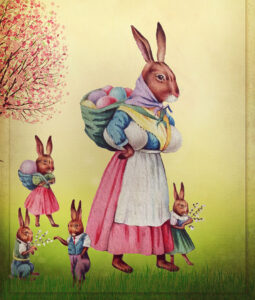
This tradition was not initially widespread across all of Germany or Europe. It was primarily a custom among German Lutherans, where the hare served as a kind of benevolent judge, rewarding good children with eggs, much like Santa Claus with presents.
Transatlantic Journey and Modern Evolution
The Osterhase made its way to America in the 18th century, brought by German immigrants who settled in the Pennsylvania Dutch country. These immigrants carried their traditions with them, including the belief in the "Oschter Haws" (Pennsylvania German for Easter Hare). Children would build nests for the hare, hoping it would lay colored eggs in them. Over time, as German communities integrated into the broader American cultural landscape, the tradition spread and evolved.
The concept of the Easter Bunny gradually shed its regional and religious specificity, transforming into a more generalized symbol of Easter for children across various Christian denominations and even secular households. The 19th century saw the widespread popularization of the Easter Bunny in America, often depicted in illustrations with baskets of eggs and candy. The commercialization of Easter further cemented the bunny’s role, with chocolate bunnies, marshmallow Peeps, and elaborate Easter egg hunts becoming integral parts of the holiday.
The egg, too, has ancient symbolic connections to spring and rebirth, predating Christianity. Many cultures, including ancient Egyptians, Persians, and Romans, viewed eggs as symbols of new life and fertility, decorating and exchanging them during spring festivals. Early Christians adopted the egg as a symbol of the resurrection of Jesus Christ, with the hard shell representing the tomb and the emerging chick symbolizing new life. The practice of coloring eggs, particularly red to symbolize Christ’s blood, became deeply ingrained in Christian Easter traditions.
Thus, the Easter Bunny legend is a fascinating confluence of pagan fertility symbols, specific German folklore, and Christian observances of rebirth and resurrection. It’s a testament to how cultural narratives can intertwine and transform over centuries, creating cherished traditions that, while biologically inaccurate, are rich in historical and symbolic meaning.
Rabbit Nests: A Different Kind of Home
While the Easter Bunny may not lay eggs, rabbits are indeed skilled nest builders, albeit for a very different purpose and in a very different manner than birds. There is one thing rabbits and birds do have in common: they both construct nests to house their young. However, the similarities largely end there.
Unlike avian nests, which are often intricately woven structures tucked into trees, shrubs, or on cliff ledges, rabbit nests are typically simple, shallow depressions dug into the ground. These are commonly found in open fields, under bushes, or even in suburban lawns, making them surprisingly vulnerable to discovery.
A mother rabbit, known as a doe, prepares her nest with remarkable efficiency and discretion. She lines the excavated hollow with soft fur pulled from her own belly, a process that serves the dual purpose of creating a warm, insulated bed for her kits (baby rabbits) and exposing her teats for easier nursing. This fur is then covered with dried grass, leaves, and other vegetation, meticulously camouflaging the nest from predators. The design is practical, prioritizing warmth, concealment, and quick access for feeding.
Crucially, a mother rabbit does not "sit" on her nest in the way a bird incubates eggs. After giving birth, she will typically visit her kits only once or twice a day, usually at dawn and dusk, for brief feeding sessions lasting mere minutes. This seemingly detached behavior is a vital survival strategy. By minimizing her presence at the nest, the mother avoids attracting predators, such as foxes, coyotes, and birds of prey, to the vulnerable kits. Rabbit milk is exceptionally rich, allowing the young to grow rapidly and sustain themselves for long periods between feedings. The kits remain hidden and largely unattended for several weeks until they are old enough to venture out on their own.
Appreciating Nature’s True Wonders
In conclusion, while the charming story of the Easter Bunny endures as a beloved cultural tradition, it serves as a wonderful springboard to appreciate the genuine biological marvels of the natural world. The elaborate diversity of bird eggs—their colors, shapes, and patterns—are not merely aesthetic but are the result of millions of years of evolutionary refinement, each feature contributing to the survival of the species. From the strategic camouflage of speckled eggs to the anti-roll design of a murre’s pyriform egg, avian reproduction showcases an unparalleled elegance in design and function.
The juxtaposition of the mythical egg-laying rabbit with the scientific reality of avian biology offers a unique lens through which to view the interplay between human culture and the natural world. It reminds us that while folklore enriches our holidays and imaginations, the true wonder often lies in the intricate, functional beauty of nature itself. Perhaps, then, as we enjoy our springtime celebrations, we can also spare a moment to marvel at the real egg-laying experts and the extraordinary biological brilliance they represent.

