


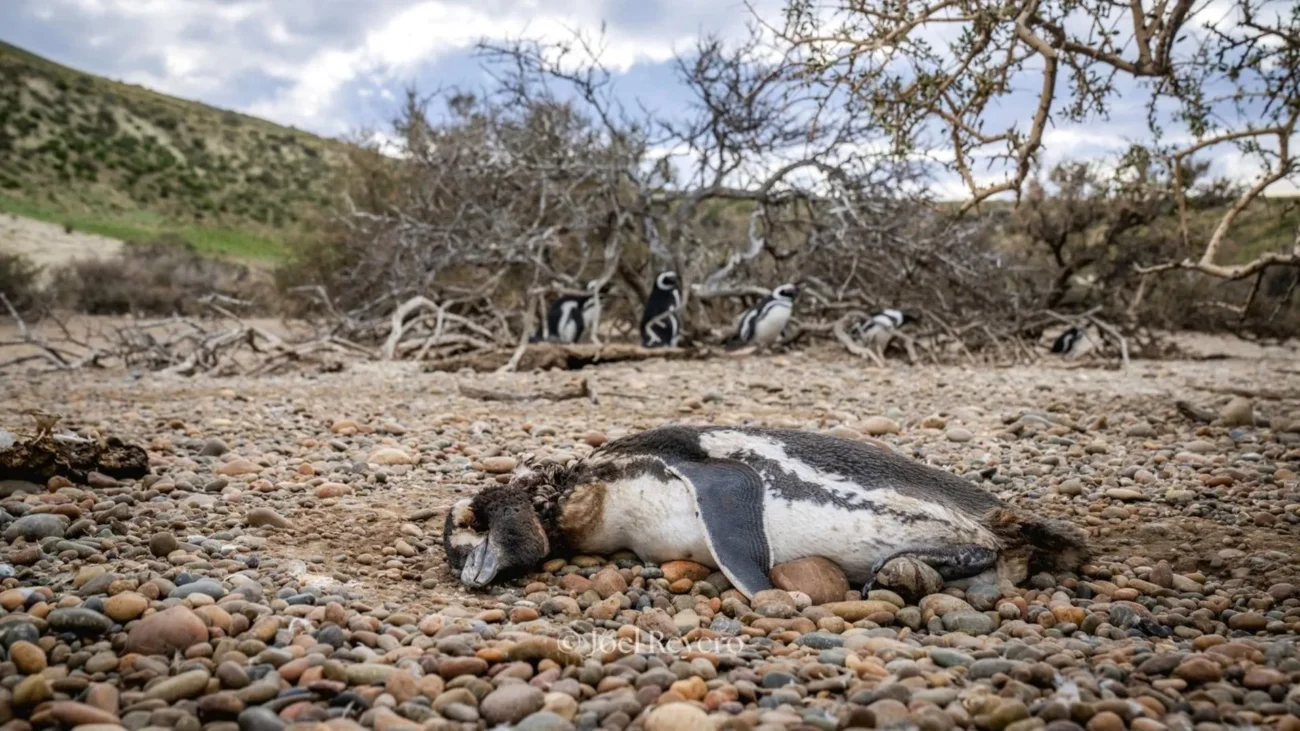
The windswept coast of Patagonia, a region long synonymous with vast, untamed landscapes, is now the stage for a complex conservation drama. At Monte Leon National Park, a delicate balance is being tested as the return of a top predator, the puma, introduces a novel threat to a burgeoning penguin population. This unfolding ecological narrative forces conservationists to confront a fundamental question: when protecting one species potentially jeopardizes another, especially in landscapes scarred by decades of human activity, where should conservation efforts be directed?
The situation at Monte Leon is a stark illustration of the intricate challenges inherent in restoring ecosystems that have been dramatically altered and are now undergoing rapid, sometimes unforeseen, ecological shifts. For decades, the Patagonian steppes were dominated by cattle ranching, a practice that significantly impacted native wildlife and their habitats. The cessation of these activities in the early 1990s, a pivotal moment in the region’s conservation history, allowed nature to begin its slow, arduous process of recovery.
Pumas Reclaim Their Territory, Penguins Face a New Reality
The end of widespread cattle ranching in southern Argentina in 1990 marked a significant turning point. As the vast ranches were gradually transformed into protected areas and national parks, the natural landscape began to heal. Crucially, this ecological regeneration allowed the apex predator of the region, the puma ( Puma concolor ), to slowly expand its range back into areas it had been largely excluded from for generations.
Historically, pumas roamed these territories, their presence shaping the behavior and distribution of prey species. However, the era of intensive ranching led to widespread persecution of pumas, driven by fears for livestock. This human-driven decline pushed them to the fringes of their former domain.
With the return of the pumas came an unexpected consequence: their re-establishment in areas now inhabited by significant populations of Magellanic penguins ( Spheniscus magellanicus ). These charismatic seabirds had, in the interim, adapted to the absence of large terrestrial predators. They had shifted their nesting habits, moving from vulnerable offshore islands to the relative safety of the mainland coast. This relocation was largely facilitated by the lack of significant land-based threats. However, their new mainland colonies presented an unforeseen vulnerability once the pumas returned.
Magellanic penguins, having evolved in environments largely devoid of large carnivores, possess limited natural defenses against agile and powerful predators like pumas. This imbalance has led to a new dynamic: penguins have become a readily available food source for the re-emerging puma population. While the presence of predators and prey in an ecosystem is a natural phenomenon, the scale and impact of this interaction were not immediately understood. For years, scientists observed the pumas and penguins sharing the same landscape, but the true extent to which this new predation was affecting the penguin colony remained an open question.
A Four-Year Study Unravels a Complex Predation Dynamic
The establishment of Monte Leon National Park in 2004 provided a critical opportunity for systematic ecological monitoring. Researchers from the Centro de Investigaciones de Puerto Deseado, affiliated with the Universidad Nacional de la Patagonia Austral, in collaboration with park rangers, began a long-term observational study of the penguin colonies within the park. Their efforts focused on understanding the ecological processes at play in this recovering landscape.
A significant phase of this research involved a four-year period from 2007 to 2010. During this time, the research team meticulously documented instances of puma predation on Magellanic penguins. They systematically recorded the number of penguin carcasses found within or near the colonies that bore the unmistakable signs of puma attacks. This data collection was crucial for quantifying the impact of this novel predator-prey relationship.
To further analyze this extensive dataset and assess the long-term implications for the penguin population, the research team sought expertise from a renowned international institution. They partnered with researchers from the Wildlife Conservation Research Unit (WildCRU) at Oxford University, a globally recognized center for wildlife conservation research. This collaboration brought together local ecological knowledge with advanced analytical capabilities, aiming to provide a comprehensive understanding of the situation.
Over 7,000 Penguins Fall Victim to Puma Predation
The findings from the detailed carcass counts were sobering. The analysis revealed that during the four-year study period (2007-2010), an estimated more than 7,000 adult Magellanic penguins were killed as a result of puma predation. This figure represents a significant proportion of the adult population, estimated at approximately 93,000 individuals, translating to roughly 7.6% of the adult population being killed by pumas over this specific timeframe.
A particularly striking observation from the study was the condition of many of the carcasses. A substantial number of the birds were found to be only partially eaten, or in some cases, not eaten at all. This behavior suggests that the pumas were not always hunting the penguins solely for sustenance.
Melisa Lera, the lead author of the study and a postgraduate student at WildCRU, Oxford University, provided critical insight into this phenomenon. "The number of carcasses showing signs of predation we found in the colony is overwhelming," Lera stated. "And the fact that they were left uneaten means pumas were killing more penguins than they required for food. This is consistent with what ecologists describe as ‘surplus killing’."
Lera drew a parallel to well-observed behavior in domestic cats: "It is comparable to what is seen in domestic cats when prey are abundant and/or vulnerable: ease of capture can lead to cats hunting more birds, even when they do not end up actually eating them. We needed to understand if the penguin colony’s persistence could be threatened due to this behavior." This "surplus killing" or "killing for sport" behavior, while unsettling from a human perspective, is a documented ecological phenomenon driven by predator instinct and prey availability.
Population Models Offer a Nuanced Perspective
While the sheer number of penguins killed by pumas was alarming, the research team’s application of sophisticated population models provided a more nuanced understanding of the long-term viability of the penguin colony. These models are crucial tools in conservation biology, allowing scientists to project future population trends based on various influencing factors.
The population models indicated that puma predation alone was unlikely to drive the Monte Leon penguin colony to extinction. This was a critical finding, suggesting that the direct impact of pumas, while substantial, was not the sole or primary driver of population decline.
Instead, the models highlighted that other factors played a far more significant role in the overall stability and future of the penguin population. These influential elements included breeding success rates and the survival of juvenile penguins. The ability of the colony to successfully reproduce and for young penguins to reach adulthood emerged as the key determinants of its long-term persistence.
The models projected extinction scenarios only under highly hypothetical and extreme conditions. These scenarios involved a combination of very low juvenile survival rates, where approximately 20% of young penguins failed to reach adulthood, coupled with exceptionally poor reproductive output, limited to a maximum of one chick per breeding pair. In such dire circumstances, high levels of puma predation would indeed exacerbate the situation, pushing the colony closer to the brink. However, even in these worst-case hypothetical scenarios, the models identified poor breeding success and juvenile survival as the root causes, with puma predation acting as a significant contributing factor rather than the primary instigator of decline.
Dr. Jorgelina Marino, a co-author of the study also from WildCRU, emphasized the broader significance of these findings: "This study captures an emerging conservation challenge, where recovering carnivores are encountering novel prey. Understanding how these dietary shifts affect both predators and prey is essential to inform conservation." This underscores the dynamic nature of ecosystems and the need for adaptive management strategies.
Climate Change and Broader Environmental Pressures Loom Large
The research team’s emphasis on breeding success and juvenile mortality points towards a critical interconnectedness with environmental factors. The future of the Monte Leon penguin colony is likely to be heavily influenced by conditions that affect their reproductive cycles and the survival of their young.
Factors such as the availability of essential nutrients, the abundance and accessibility of food sources (primarily fish), and ambient temperature are all known to be significantly impacted by climate change. These environmental variables can directly influence the success of penguin breeding seasons, the health of chicks, and their ability to survive their critical first year. Therefore, the indirect impacts of climate change could prove to be a more potent threat to the penguin colony than direct predation.
This challenge at Monte Leon is not an isolated incident; it is part of a growing global trend. As conservation efforts successfully restore natural predator populations and as climate change alters habitats, similar ecological interactions are emerging in various environments.
For instance, land predators are increasingly encroaching on coastal and island ecosystems, which have historically served as refuges for ground-nesting birds and other vulnerable species. In the United States, non-native feral hogs have become a significant threat to loggerhead sea turtle eggs along the Georgia coast, disrupting nesting grounds. Similarly, coyotes in eastern North America are expanding their territories onto coastal barrier islands, where they are altering the dynamics of native seabird colonies and other island fauna. These examples highlight the widespread nature of these emerging conservation challenges, driven by both ecosystem recovery and environmental change.
The Imperative of Continuous Monitoring and Adaptive Management
The authors of the study unequivocally stress the paramount importance of ongoing monitoring. Continuous observation is not merely an academic pursuit; it is a critical tool for proactive conservation. Detecting early signs of population decline allows for timely intervention and guides management decisions before irreversible ecological damage occurs.
At Monte Leon National Park, the commitment to understanding and managing this complex ecological interplay remains a priority. Park authorities, in collaboration with researchers, continue to diligently track both puma and penguin populations. This sustained effort is essential for navigating the intricate consequences of ecosystem recovery and for developing adaptive management strategies that aim to foster a balanced coexistence between these iconic species and their environment.
The situation in Monte Leon serves as a potent reminder that conservation is rarely a simple matter of protecting a single species. It is a dynamic and often challenging process of managing complex, interconnected ecosystems, where the success of one conservation goal can inadvertently create new challenges for another. The future of both the pumas and the penguins in this Patagonian paradise hinges on a continued commitment to scientific understanding, adaptive management, and a holistic approach to ecosystem restoration. The lessons learned here will undoubtedly inform conservation efforts worldwide as landscapes continue to recover and adapt in a changing world.

