


The perception of photography as an inherently expensive pursuit creates a significant barrier to entry for millions of aspiring artists worldwide. While flagship camera bodies and professional-grade lenses often command prices equivalent to a used vehicle, the fundamental mechanics of capturing light remain accessible to those who understand how to navigate the secondary market, utilize legacy technology, and leverage open-source software. In an era defined by a global cost-of-living crisis and widening economic disparities, the democratization of photographic tools is not merely a matter of convenience but a necessity for the survival of the medium’s diversity.
The Economic Landscape of Creative Pursuits
According to data from the Legal Services Corporation and the U.S. Census Bureau, approximately 11.4% of the American population lives below the federal poverty line—representing nearly 38 million individuals. When the threshold is adjusted to 125% of the poverty level, that figure climbs to 50 million people living in low-income households. For these families, discretionary spending on "non-essential" items like dedicated camera equipment is often impossible. Furthermore, a recent survey indicated that nearly 70% of Americans find the current cost of living unaffordable, leading to a contraction in the hobbyist market for electronics.
The concern among industry analysts is the potential "elitization" of photography. If the tools required to produce high-quality visual art are only available to the wealthy, the perspectives captured through the lens become monolithic, reflecting only a specific segment of society. However, a historical analysis of the digital camera market suggests that the hardware necessary for professional-level work is already in circulation; it is simply a matter of redistribution and resourceful acquisition.
A Chronology of the Digital Revolution: 2006 to Present
To understand why high-quality cameras are more accessible than ever, one must examine the production cycles of the last two decades. Between 2006 and 2012, the Digital Single-Lens Reflex (DSLR) market experienced an unprecedented boom. According to the Camera & Imaging Products Association (CIPA), Japanese manufacturers shipped over 20 million interchangeable lens cameras in 2012 alone, 16.2 million of which were DSLRs.
The timeline of the industry’s shift reveals a surplus of equipment:

- 2012: Peak digital camera production, with nearly 100 million total units shipped globally.
- 2013–2017: The rise of smartphone computational photography decimated the compact "point-and-shoot" market, forcing manufacturers to focus on high-end mirrorless systems.
- 2018: Industry giants Nikon and Canon officially entered the full-frame mirrorless market, signaling the beginning of the end for the DSLR era.
- 2020: Mirrorless camera shipments officially overtook DSLR shipments in total volume.
This rapid technological pivot has left hundreds of millions of perfectly functional DSLRs sitting unused in closets and storage units. While these cameras may lack the latest artificial intelligence-driven autofocus or 8K video capabilities, they possess sensors and internal mirrors that are still capable of producing gallery-quality images.
The Gift Economy and Photographic Legacy
History shows that many of the most influential photographers did not start with the latest equipment, but rather with "hand-me-downs" from family and friends. Ansel Adams, the pioneer of American landscape photography, began his journey with a Kodak Brownie gifted by his father. Annie Leibovitz and Margaret Bourke-White similarly received their first cameras from family members. Robert Capa, arguably the most famous war photographer in history, relied on a Leica lent to him by a friend.
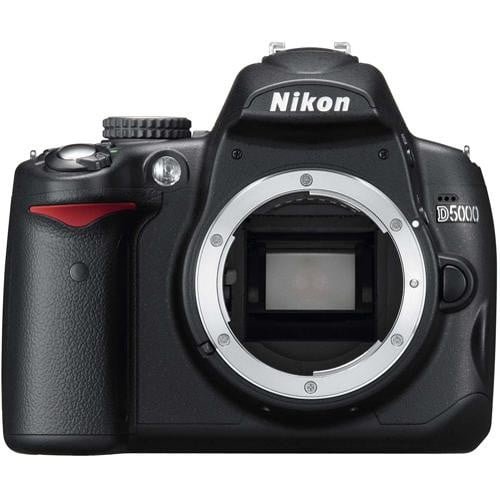
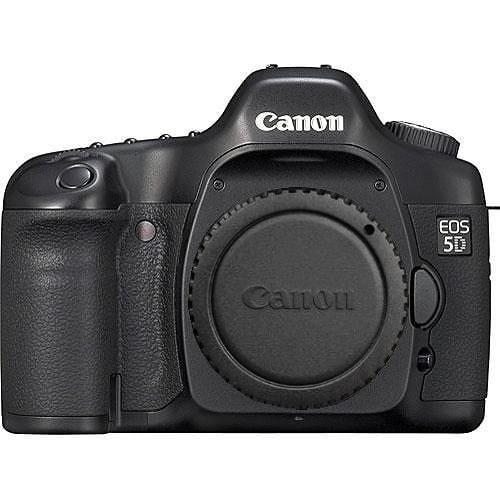
This "pass-it-on" culture is vital for the next generation of photographers. For those currently owning older models like a Nikon D90 or a Canon EOS 5D Mark II, these devices have negligible trade-in value but immense educational value. By donating or gifting unused equipment to students or low-income neighbors, veteran photographers can effectively dismantle the financial barriers that stifle new talent.
Navigating the Secondary Market and Avoiding Risks
For those who must purchase equipment but have a limited budget, the used market offers significant discounts. Reputable retailers such as B&H Photo, KEH Camera, and Adorama provide "inspected" gear with limited warranties, which mitigates the risk of receiving faulty equipment. However, when dealing with private sellers on platforms like Facebook Marketplace or Craigslist, caution is paramount.
The rise in equipment theft has led to the development of several digital safeguards. Online databases such as Stolen Camera Finder and Lens Tag allow users to search for serial numbers embedded in image metadata. Law enforcement agencies and insurance companies frequently use these tools to track stolen property. Prospective buyers should always request the serial number of a camera or lens before a transaction to verify its history.
The Power of Legacy Glass and Adapters
In photography, the quality of the lens (the "glass") is often more critical than the camera body. While modern lenses are engineered for extreme sharpness and corner-to-corner clarity, they are often prohibitively expensive. A viable alternative is the use of "legacy" or "vintage" lenses from the film era.
Lenses produced for 35mm film cameras from the 1960s through the 1980s—such as those from the Olympus OM, Pentax K, or Canon FD systems—can often be found for under $30 at estate sales or thrift shops. Because these lenses are manual focus, they require more skill to operate, but they offer a unique "character" and "rendering" that modern, clinical lenses often lack. With the use of inexpensive mechanical adapters (often costing $15–$25), these vintage lenses can be mounted onto modern digital bodies, providing a professional aesthetic at a fraction of the cost.
Software Solutions: Breaking the Subscription Model
The shift toward Software-as-a-Service (SaaS) models, exemplified by Adobe’s Creative Cloud, has added a recurring financial burden to photography. However, the open-source community has developed powerful alternatives that cost nothing.

- Darktable and Lightzone: These are professional-grade RAW developers and workflow managers. Darktable, in particular, offers a non-destructive editing environment similar to Adobe Lightroom, with advanced masking and color correction tools.
- GIMP (GNU Image Manipulation Program): As a free alternative to Photoshop, GIMP has been a staple for students for decades. While its interface has a learning curve, it supports layers, paths, and advanced filters.
- Affinity Photo (Trial and Value): While not always free, Affinity often offers extended free trials and a one-time purchase model that is significantly more affordable than monthly subscriptions.
- Paint.NET: For those needing a simpler, more intuitive interface for basic edits, Paint.NET provides a robust set of tools that outperform standard built-in OS editors.
Technical Revitalization of Hardware
A significant hurdle for low-income photographers is the requirement of a powerful computer to process high-resolution images. Many older laptops struggle with modern versions of Windows or macOS. To solve this, photographers can turn to Linux-based operating systems like Ubuntu or Linux Mint.
Linux distributions are significantly less resource-intensive than Windows, allowing a ten-year-old laptop to run photo editing software with surprising speed. For those determined to stay on Windows, tools like "Flyby11" or "Rufus" allow for the installation of Windows 11 on older hardware that does not meet official TPM 2.0 requirements, though performance may vary.

Creative Lighting on a Budget
Professional strobe kits can cost thousands of dollars, but the physics of light allows for cheaper workarounds. Old film-era flashes can be purchased for less than $10. While these should not be mounted directly onto a digital camera’s "hot shoe" due to high trigger voltages that could damage modern electronics, they can be used safely via cheap wireless triggers or optical slaves.
Additionally, the rise of high-CRI (Color Rendering Index) household LED bulbs and powerful handheld torches has revolutionized budget lighting. Using "light painting" techniques or domestic LED panels with diffusion material (like a white bedsheet) can produce results indistinguishable from professional studio setups.

Conclusion: The Primacy of the Eye Over the Gear
The history of photography is a testament to the fact that the most compelling images are a product of the photographer’s vision, not their equipment’s specifications. The technical limitations of older or budget gear often serve as a better teacher than modern automated systems. Mastering manual focus on a $20 vintage lens or learning to manage the noise levels of a 15-year-old sensor forces a photographer to understand the core principles of exposure, composition, and light.
As the industry continues to push toward more expensive, AI-driven technology, the preservation of the "low-budget" entry point is essential. By utilizing the surplus of the digital boom, embracing open-source software, and sharing knowledge through free platforms like PetaPixel and YouTube, the photographic community can ensure that the art form remains an inclusive medium for all, regardless of economic status.

