


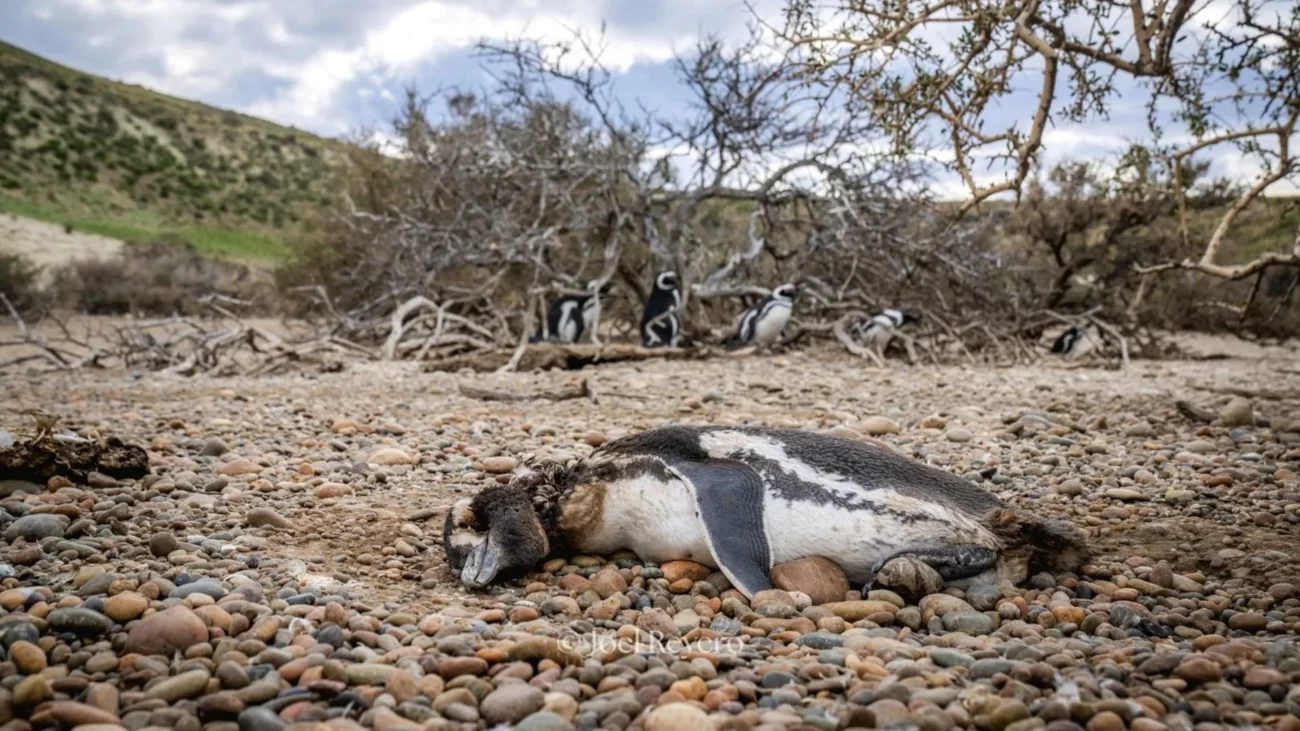
The delicate dance of ecological restoration has introduced a complex conservation conundrum to Argentina’s Monte Leon National Park, forcing scientists and park authorities to grapple with a fundamental question: when conservation efforts to protect one iconic species potentially jeopardize another, particularly in landscapes still healing from human intervention, what is the most responsible path forward? This intricate challenge is currently unfolding on the windswept Patagonian coast, a region undergoing a dramatic transformation as it recovers from decades of human activity. The situation starkly illustrates the multifaceted nature of restoring ecosystems that have been significantly altered and are now experiencing rapid, often unforeseen, ecological shifts.
The Return of the Apex Predator and a New Threat to Penguin Colonies
The narrative of Monte Leon National Park is one of hopeful recovery. Following the cessation of cattle ranching across southern Argentina in 1990, a significant period of land transformation, pumas ( Puma concolor ), the region’s apex predators, began to re-establish their presence, gradually reclaiming territories that had been largely inaccessible to them for generations. This resurgence of a keystone species, a celebrated success for conservationists, has inadvertently brought them into novel ecological interactions. For the first time in recorded modern history, pumas have encountered significant populations of Magellanic penguins ( Spheniscus magellanicus ).
Historically, Magellanic penguins relied on offshore islands for nesting, a strategy that provided a degree of protection from terrestrial predators. However, in recent decades, driven by a complex interplay of factors that may include shifts in marine food availability and increased disturbance on traditional island rookeries, these penguins began to colonize mainland coastal areas. This migration to the mainland provided them with new nesting grounds, but critically, it also exposed them to land-based carnivores they had not encountered for a considerable time. Lacking the evolved defenses against large predators that their island-bound ancestors possessed, the mainland colonies became particularly vulnerable. The impact of this new predation dynamic on the penguin population remained largely unknown until recent scientific investigations.
Decades of Data Collection: Monitoring Monte Leon’s Wildlife
The establishment of Monte Leon National Park in 2004 marked a pivotal moment for conservation in the region, providing a protected sanctuary for its diverse wildlife. Since its inception, researchers from the Centro de Investigaciones de Puerto Deseado, affiliated with the Universidad Nacional de la Patagonia Austral, have been engaged in intensive, long-term monitoring of the park’s penguin colonies. Working in close collaboration with park rangers, these dedicated scientists have meticulously documented the lives and deaths within these bustling rookeries.
A significant phase of this research focused on the period between 2007 and 2010. During these four years, the research team systematically recorded instances of puma predation on penguins. This painstaking data collection involved regular surveys of the penguin colonies to identify and count penguin carcasses that showed evidence of puma attacks. The aim was to quantify the extent of this new predatory pressure and understand its potential implications for the long-term viability of the penguin population.
Global Collaboration for Deeper Insights
To further analyze the extensive dataset gathered over those four years and to assess the broader, long-term implications of puma predation on the Monte Leon penguin colony, the research team expanded its collaborative efforts. They partnered with the renowned Wildlife Conservation Research Unit (WildCRU) at the University of Oxford, a globally recognized center for ecological research and conservation. This collaboration brought together local expertise with international analytical power, utilizing advanced ecological modeling techniques to interpret the findings and project future trends.
Quantifying the Predation: A Stark Reality Emerges
The results of the initial analysis were sobering. Using the carcass counts as a proxy, researchers estimated that during the four-year study period (2007-2010), an alarming number of adult penguins – exceeding 7,000 individuals – were killed by pumas. A particularly striking observation was that a substantial portion of these predated birds were found partially eaten or, in many cases, entirely uneaten. This behavior, inconsistent with typical predation solely for sustenance, pointed towards a more complex interaction than simple hunger-driven hunting.
Melisa Lera, a postgraduate student at WildCRU and lead author of the subsequent study, elaborated on this phenomenon. "The number of carcasses showing signs of predation we found in the colony is overwhelming," she stated. "The fact that they were left uneaten means pumas were killing more penguins than they required for food. This is consistent with what ecologists describe as ‘surplus killing.’ It is comparable to what is seen in domestic cats when prey are abundant and/or vulnerable: ease of capture can lead to cats hunting more birds, even when they do not end up actually eating them. We needed to understand if the penguin colony’s persistence could be threatened due to this behavior." This surplus killing suggests that the pumas, encountering an abundant and relatively defenseless food source, were engaging in a form of hunting behavior that went beyond immediate nutritional needs, potentially driven by opportunity and the ease of access.
The estimated 7,000 penguin deaths represented approximately 7.6% of the adult penguin population at Monte Leon, which was estimated to be around 93,000 individuals at the time. While this figure might seem significant, the critical question remained: was this level of predation a genuine threat to the colony’s survival?
Population Models: Unraveling the True Drivers of Decline
To address this crucial question, the research team employed sophisticated population models. These models are designed to simulate the dynamics of a population over time, taking into account various factors that influence birth rates, death rates, and overall growth. When applied to the data from Monte Leon, the results of these models offered a nuanced perspective.
Crucially, the population models indicated that puma predation alone, at the observed levels, was unlikely to drive the Monte Leon penguin colony to extinction. This finding was a significant departure from initial concerns that the apex predator’s return posed an immediate existential threat to the penguins. Instead, the models highlighted that other factors played a far more dominant role in determining the colony’s stability and long-term persistence.
The simulations revealed that the penguin population’s fate was more heavily influenced by two key demographic parameters: breeding success and the survival rate of juvenile penguins. Extinction scenarios were only projected under highly improbable circumstances, specifically where juvenile survival rates plummeted to extremely low levels (around 20% failing to reach adulthood) in conjunction with severely impaired reproductive output (a maximum of one chick successfully fledged per breeding pair). In these hypothetical, worst-case scenarios, high levels of puma predation exacerbated the precarious situation but were not identified as the primary causal agent of potential decline.
Dr. Jorgelina Marino, a co-author of the study and a researcher at WildCRU, emphasized the broader implications of these findings. "This study captures an emerging conservation challenge, where recovering carnivores are encountering novel prey," she stated. "Understanding how these dietary shifts affect both predators and prey is essential to inform conservation." This statement underscores the evolving nature of conservation science, which must adapt to dynamic ecological landscapes where previously separated species are now interacting.
The Shadow of Climate Change and Broader Environmental Pressures
The research team’s emphasis on breeding success and juvenile mortality brings a critical external factor into sharp focus: the profound influence of environmental conditions on penguin reproduction. The success of penguin colonies is intrinsically linked to the availability of food resources, the stability of nesting sites, and prevailing climatic conditions. Factors such as oceanographic changes affecting prey fish populations, variations in nutrient availability, and temperature fluctuations, all known to be significantly impacted by global climate change, are likely to exert a substantial influence on the future trajectory of the Monte Leon penguin colony.
The challenges observed at Monte Leon are not isolated incidents. Similar ecological reconfigurations are being witnessed globally as formerly extirpated or range-restricted land predators re-establish themselves and expand into new environments, including sensitive coastal and island ecosystems. Mainland seabird colonies, which have historically benefited from their isolation from terrestrial predators, are becoming increasingly vulnerable. For instance, in the United States, invasive feral hogs on the Georgia coast have become significant predators of loggerhead sea turtle eggs. Similarly, coyotes in eastern North America are expanding their range onto coastal barrier islands, leading to disruptions in those delicate ecosystems and posing new threats to ground-nesting birds and other wildlife. These parallels highlight a growing trend of predator-prey reassembly in a changing world.
The Imperative of Continued Monitoring and Adaptive Management
The findings from Monte Leon National Park serve as a powerful reminder of the critical importance of sustained, long-term ecological monitoring. The authors of the study strongly advocate for the continuation of these monitoring efforts. Early detection of population declines, whether in penguins, pumas, or other species, is paramount for enabling timely and effective management interventions. This proactive approach allows conservationists to adapt their strategies before irreversible ecological damage occurs.
At Monte Leon National Park, the ongoing work of park authorities and researchers represents a commitment to navigating the complexities of ecosystem recovery. By diligently tracking both puma and penguin populations, and by broadening their understanding of the environmental factors influencing these species, they are striving to implement management decisions that foster a balanced and resilient Patagonian ecosystem. The future of Monte Leon hinges on this adaptive approach, a delicate balancing act between celebrating the return of iconic predators and ensuring the long-term health of their newly encountered prey, all within the context of a rapidly changing global environment. The lessons learned here will undoubtedly inform conservation strategies for similar emerging challenges worldwide.

