


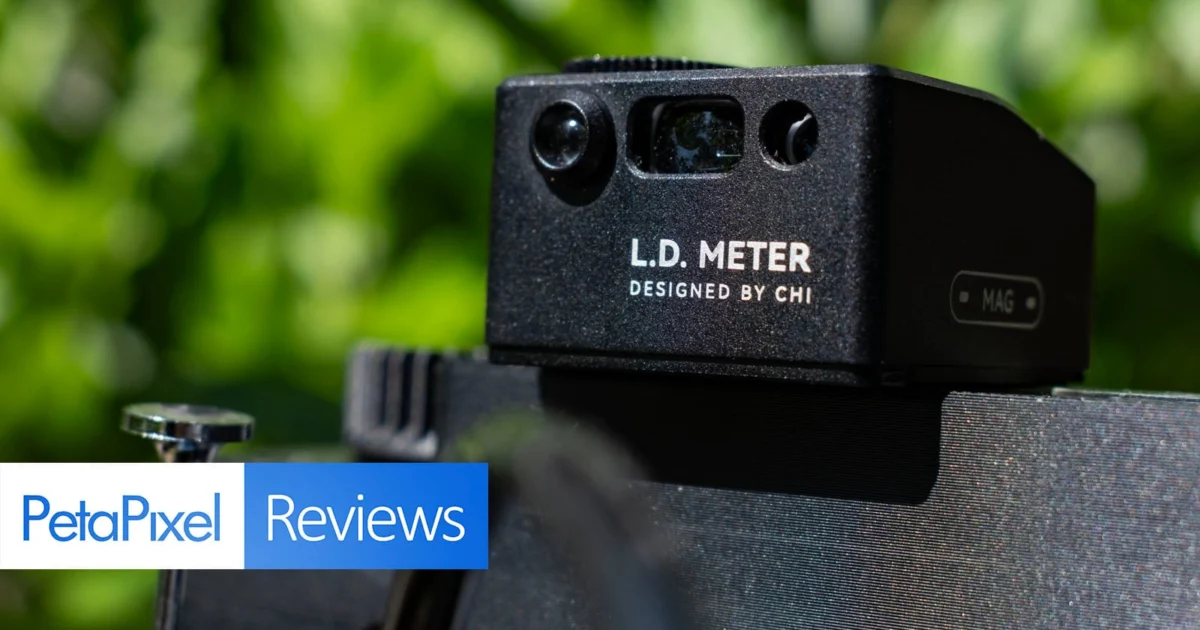
The analog photography market has witnessed a significant resurgence in recent years, driven by a growing interest in niche formats such as medium format panoramic photography and 3D-printed camera systems. However, many of these specialized tools, while providing unique creative outputs, often lack essential internal components like light meters and integrated rangefinders. The Chinotechs L.D. Meter has emerged as a specialized solution designed to address these specific technical gaps, combining laser rangefinding technology with high-precision light metering in a compact, shoe-mounted form factor. As film photographers increasingly adopt cameras with no internal electronics—such as the Sasquatch 617 or the Infidex 176V—the demand for reliable, external multi-functional tools has reached a critical point in the industry.
The Evolution of External Metering in the Digital Age
Historically, film photographers relied on handheld incident light meters or separate mechanical rangefinders to ensure accurate exposure and focus. While brands like Sekonic and Gossen have long dominated the professional market, their devices are often bulky and designed for handheld use rather than being integrated directly onto the camera body. In the last decade, a new category of "shoe-mount" meters has gained popularity, led by brands such as Keks and Voigtländer. These devices prioritize portability and aesthetic synergy with vintage camera bodies.
The Chinotechs L.D. Meter represents a technological leap within this category. By integrating a laser rangefinder alongside a reflective light meter, it solves the "two-device problem" for photographers using scale-focus or view cameras. For cameras that lack a coupled rangefinder, determining the exact distance to a subject is often a matter of estimation, which can lead to significant focus errors when shooting with wide apertures or at close distances. The L.D. Meter’s ability to provide digital distance readouts alongside exposure data streamlines the workflow for field photographers, particularly those working in the demanding realm of panoramic landscapes.
Technical Specifications and Build Quality
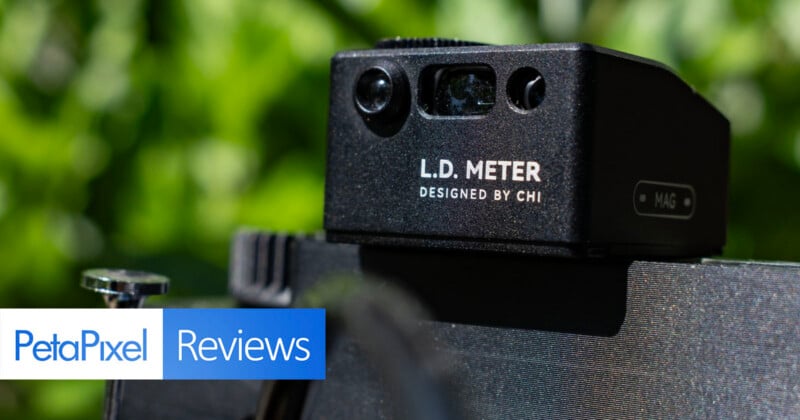
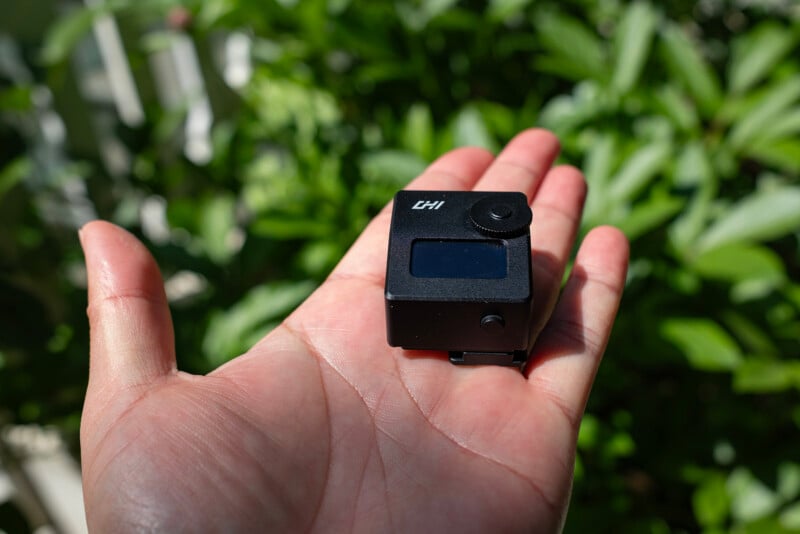
The L.D. Meter is characterized by a robust, all-metal construction, emphasizing durability for outdoor and travel photography. Despite its rugged exterior, the device remains remarkably compact, measuring approximately 36mm x 32mm x 20mm. This small footprint allows it to sit unobtrusively on the accessory shoe of various camera types, from 35mm rangefinders to large-format field cameras.
Hardware Features
- Display: A 0.96-inch OLED screen located on the top of the device provides high-contrast visibility even in bright daylight.
- Power: The unit is powered by an internal 370mAh rechargeable battery, utilizing a standard USB-C port for charging. According to manufacturer data, the device boasts a standby lifespan of approximately 90 days, though real-world testing suggests that for many users, a single charge can last several months depending on the frequency of use.
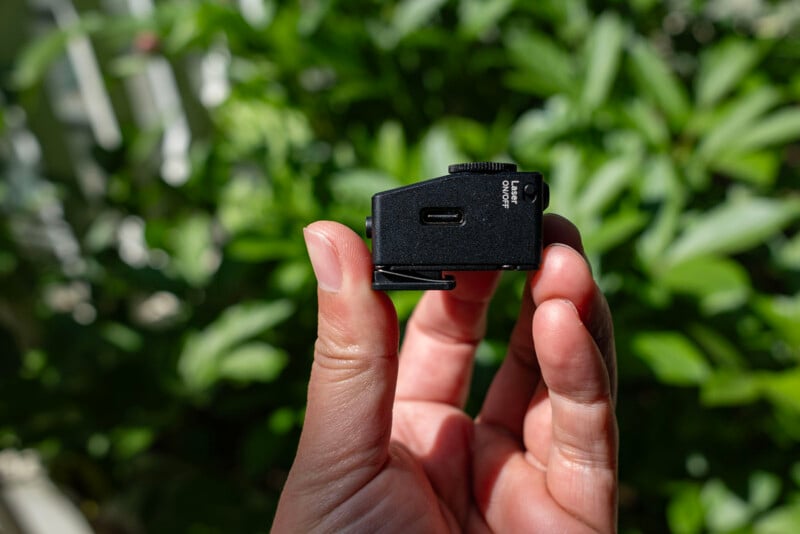
- Sensors: The front of the unit houses both the light-receiving sensor and the laser rangefinder emitter/receiver.
- Mounting: The device features a standard cold-shoe mount, with an additional magnetic mounting point on the left side intended for an optional proprietary sight.
Metering and Rangefinding Capabilities
The L.D. Meter offers an ISO range from 3 to 8,000, catering to everything from ultra-slow technical films to high-speed surveillance stocks. It supports both aperture-priority and shutter-priority modes, allowing the photographer to lock in one variable while the device calculates the other. The exposure value (EV) range spans from 1 to 22, ensuring functionality in low-light interior settings as well as brilliant, snow-covered landscapes.

The laser rangefinder is capable of measuring distances from 0.1 meters to 50 meters. Users have the option to toggle the display between metric and imperial units (meters and feet), providing flexibility for photographers accustomed to different lens markings.
Product Tiering: Lite, Pro, and NYX Models
Chinotechs has segmented the L.D. Meter into three distinct versions to accommodate different photographic styles and budgets. The primary difference between these models lies in the sensitivity and the angle of light reception.

- The Lite Version ($119): This entry-level model features a 30-degree light-receiving angle. This wider angle provides an averaged reading of the scene, similar to the center-weighted meters found in many vintage SLR cameras. It is ideal for general-purpose photography where the light is relatively uniform.
- The Pro Version ($139): The Pro model narrows the light-receiving angle to just seven degrees. This creates a "spot meter" effect, allowing the photographer to isolate specific highlights or shadows within a scene to calculate a more precise exposure. This is particularly valuable for practitioners of the Zone System or those shooting high-contrast scenes.
- The NYX Version ($179): The premium NYX model utilizes an ultra-sensitive light meter sensor. This version expands the device’s sensitivity at both the extreme low and high ends of the light spectrum, targeting professional photographers who work in challenging lighting conditions where standard sensors might fail to provide a reading.
User Interface and Operational Workflow
While the physical build of the L.D. Meter is highly praised, the user interface reflects the inherent challenges of miniaturized technology. With only one primary button and a single dial, navigating the device’s various menus requires a series of timed presses and sequences.
For example, adjusting the ISO requires a full three-second press of the button before the dial becomes active for that setting. Switching between metric and imperial units for the rangefinder involves an eight-second hold. Toggling between aperture and shutter priority is achieved through a double-click, while switching from single-point to continuous metering requires a "half-press" for several seconds.
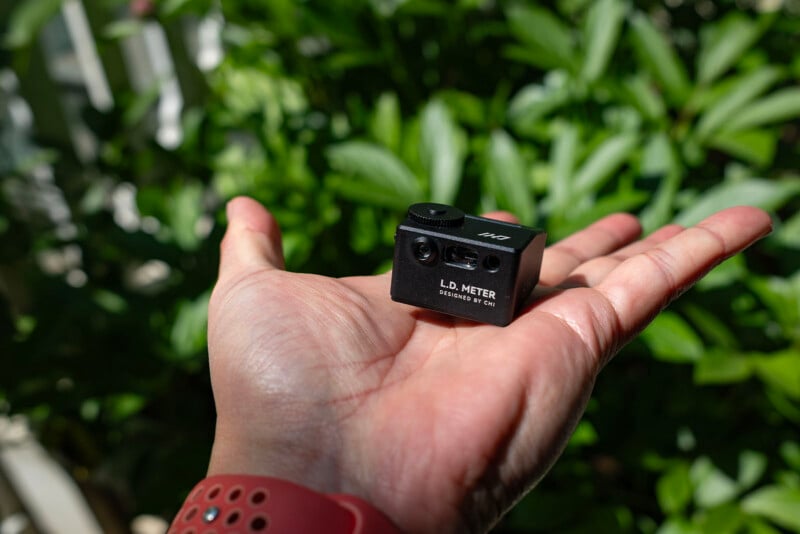
Industry analysts note that this "fiddliness" is a common trade-off in the ultra-compact accessory market. However, once a photographer becomes familiar with the sequences, the device operates rapidly. The L.D. Meter includes an auto-off feature to preserve battery life, but it wakes instantly with a single button press, ensuring that it is ready for spontaneous shots.
Chronology of Market Entry and Availability
The L.D. Meter first gained traction within the niche analog community through social media demonstrations by prominent film photographers. A notable moment in its rise to prominence occurred when photographer Jace LeRoy showcased the device mounted on a 3D-printed Infidex 176V panoramic camera. The visual of a modern laser-guided meter on a custom-built film camera resonated with the "maker" community within the photography world.
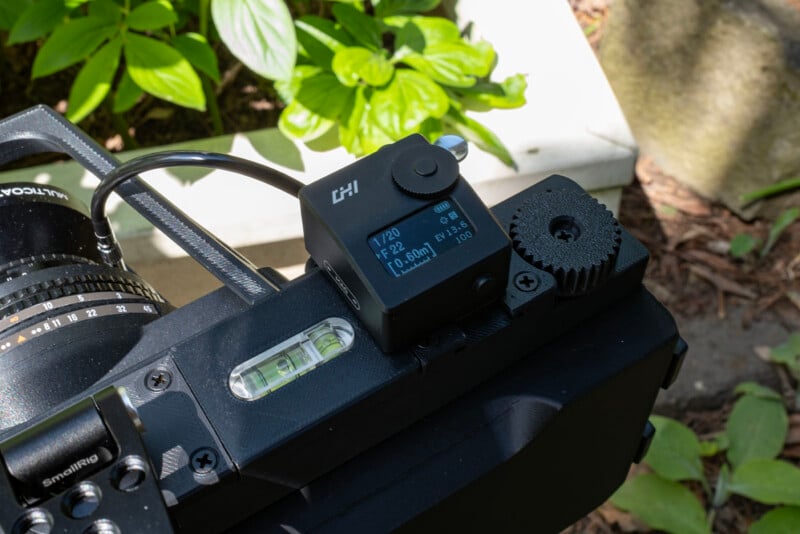
During its initial release phase, the L.D. Meter was primarily available through direct shipping from China. Its visibility increased significantly during major industry events, such as the Xiaomi 14 Ultra launch in Chongqing, where international photography journalists were introduced to the device. Recognizing the growing demand in the Western market, Chinotechs secured distribution through major retailers like B&H Photo, transitioning the product from a niche import to a globally accessible tool for the analog community.
Comparative Analysis: Rangefinding and Calibration
One of the unique applications of the L.D. Meter is its use as a calibration tool for vintage rangefinder cameras. Chinotechs provides specific instructions for users of older Leica or Contax bodies to verify the accuracy of their internal rangefinders. By placing the L.D. Meter in "Continuous Mode," the laser remains active, projecting a red dot onto a target. If a photographer focuses their camera’s internal rangefinder on that same target and the distances match, it confirms the camera is in proper alignment.
When compared to traditional handheld rangefinders from Nikon or Canon, the L.D. Meter’s laser technology offers superior speed and precision, particularly in low-light environments where optical coincidence rangefinders can be difficult to see. While traditionalists may prefer the tactile feel of an optical rangefinder, the digital accuracy of the L.D. Meter provides a "safety net" for photographers using expensive film stocks where every frame counts.
Broader Impact on the Analog Renaissance
The introduction of the L.D. Meter arrives at a time when the "new analog" movement is moving away from mass-produced vintage SLRs toward more experimental and high-end niche formats. The recent announcements of three new affordable large-format and panoramic cameras within a six-month window—including the Sasquatch 617—underscore a shift toward a more deliberate, slow-paced style of photography.
Tools like the L.D. Meter lower the barrier to entry for these formats. By providing a reliable way to measure both light and distance in a single, pocketable device, Chinotechs has addressed the primary technical hurdles that often discourage newcomers from trying meterless or scale-focus cameras.
In conclusion, the Chinotechs L.D. Meter stands as a specialized but essential accessory in the modern film photographer’s kit. By combining rugged build quality with a unique dual-sensor array, it offers a level of utility that few other shoe-mounted accessories can match. While its interface requires a learning curve, its performance in the field—evidenced by successful captures in environments ranging from the misty parks of the Pacific Northwest to the high-altitude plateaus of Tibet—positions it as a definitive tool for the next generation of analog enthusiasts. As the industry continues to innovate within the film space, the L.D. Meter serves as a prime example of how digital technology can be leveraged not to replace, but to enhance and preserve the traditional photographic process.

