


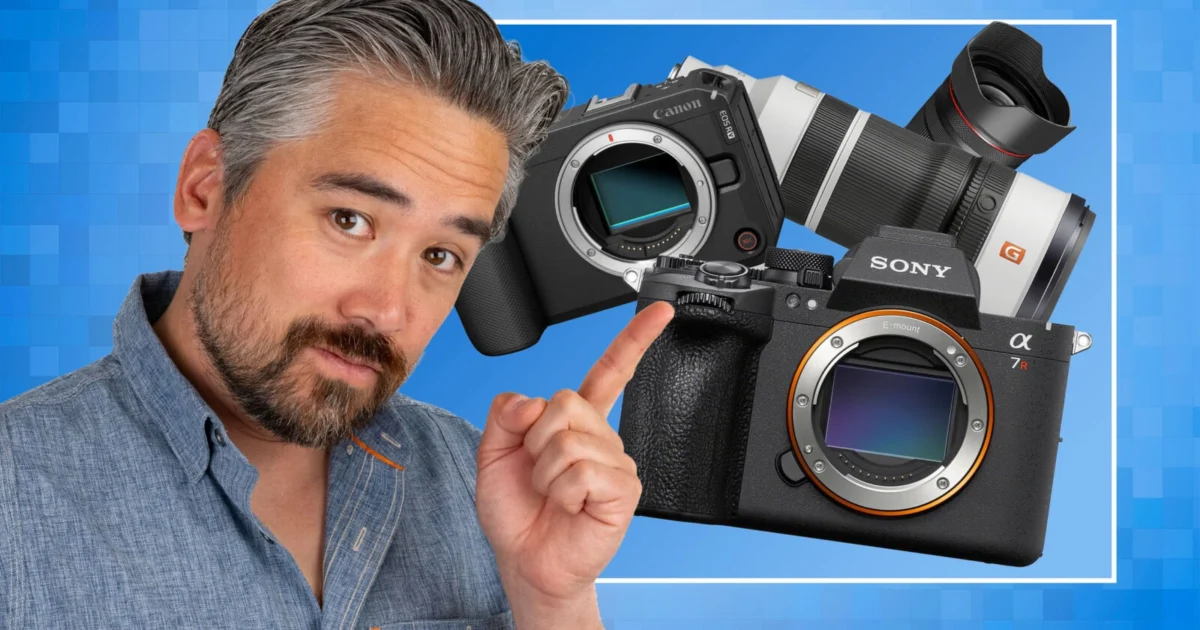
The digital imaging landscape has undergone a significant shift this week as two of the industry’s primary titans, Sony and Canon, unveiled their latest high-performance camera bodies. In a special bonus installment of The PetaPixel Podcast, hosts Chris Niccolls and Jordan Drake provided an in-depth, hands-on assessment of the Sony a7R VI and the Canon EOS R6 Mark V. This episode, recorded shortly before the team departed for various international assignments, serves as a comprehensive breakdown of the hardware that is expected to define professional photography and videography for the coming fiscal year. While the episode focused heavily on these two flagship-tier releases, it also touched upon the accompanying lens announcements that bolster the respective mirrorless ecosystems of both manufacturers.
The Sony a7R VI: Redefining High-Resolution Standards
The Sony a7R series has long been the benchmark for high-resolution full-frame photography, and the a7R VI appears to continue this legacy by pushing the boundaries of sensor technology and artificial intelligence. During the hands-on session, the hosts noted that Sony has focused not just on raw megapixel counts, but on the efficiency of the data throughput and the precision of the autofocus system.
The predecessor, the a7R V, introduced a dedicated AI processing unit that revolutionized subject recognition. The a7R VI builds upon this foundation with a refined chipset capable of identifying a broader range of subjects with greater accuracy, including more nuanced human movements and a wider variety of wildlife. For professional studio, landscape, and architectural photographers, the a7R VI offers a refined sensor that balances high dynamic range with a sophisticated noise-reduction algorithm, ensuring that the massive file sizes do not compromise image quality in challenging lighting conditions.
Furthermore, the integration of improved video capabilities suggests that Sony is narrowing the gap between its resolution-focused "R" line and its video-centric "S" line. The a7R VI features enhanced thermal management, allowing for longer recording times in high-bitrate 8K and 4K modes. This makes the camera a more versatile tool for hybrid creators who require extreme detail for print alongside professional-grade cinema features.
The Canon EOS R6 Mark V: The New Professional Workhorse
While Sony targets the high-resolution market, Canon’s EOS R6 Mark V is positioned as the ultimate versatile workhorse. The R6 lineage has traditionally prioritized speed, low-light performance, and reliability, making it the preferred choice for photojournalists, sports photographers, and wedding professionals. The Mark V iteration introduces several key hardware upgrades that address the evolving needs of the "pro-sumer" market.
In their hands-on review, Niccolls and Drake highlighted the R6 Mark V’s burst rate capabilities and the seamless integration of the RF mount’s communication protocols. The camera features a newly developed sensor that enhances readout speeds, significantly reducing rolling shutter effects during electronic shutter operation. This is a critical advancement for photographers capturing fast-moving action where mechanical shutters might be too slow or too loud.
Canon has also made strides in ergonomics and user interface. The R6 Mark V retains the familiar handling that Canon users praise while introducing a more robust weather-sealing system and a higher-resolution electronic viewfinder (EVF). These incremental but vital improvements ensure that the camera can withstand the rigors of field use while providing a more immersive shooting experience.
Innovations in Optical Engineering: The New Lens Releases
A camera body is only as capable as the glass in front of it, and both Sony and Canon accompanied their body announcements with new lens releases. While the specific focal lengths and apertures were a primary focus of the podcast, the broader implication is the continued expansion of the mirrorless-native lens catalogs.
Sony’s new lens offerings continue the trend of "G Master" excellence, focusing on reducing weight and size without sacrificing sharpness or bokeh quality. The use of Extreme Aspherical (XA) elements and linear motors ensures that these lenses can keep pace with the high-speed autofocus systems found in the a7R VI.
On the Canon side, the new RF-mount lenses emphasize the unique advantages of the short flange back distance. By placing the rear element closer to the sensor, Canon engineers have been able to create optics that exhibit minimal chromatic aberration and exceptional edge-to-edge clarity. These lenses are designed to resolve the high-detail sensors found in the latest R-series bodies, ensuring that professionals can extract every bit of performance from their equipment.
Chronology and Industry Context
The timing of these announcements is significant within the broader context of the 2024-2025 product cycle. Traditionally, major manufacturers synchronize their flagship releases with global sporting events or major trade shows. The simultaneous emergence of the Sony a7R VI and Canon R6 Mark V indicates a heated "arms race" in the mirrorless segment.
Historically, Sony gained an early lead in the mirrorless market by being first-to-market with a full-frame system. However, Canon’s rapid development of the RF mount and its aggressive lens roadmap have closed the gap. This "bonus episode" of the podcast captures a moment where both companies are operating at the peak of their engineering capabilities.
The hosts also noted a logistical curiosity: the lack of information regarding Panasonic Lumix’s recent activities. Due to the pre-recorded nature of the episode, the team was unable to account for Panasonic’s latest announcements. This highlights the rapid pace of the industry, where even a week-long gap in reporting can result in missing a major market shift. Panasonic has recently made waves with its adoption of Phase Hybrid Autofocus, a move that brings it into direct competition with Sony and Canon’s established AF systems.
Market Implications and Professional Impact
The introduction of the a7R VI and R6 Mark V has immediate implications for the professional market. For rental houses and studios, these releases represent a necessary capital investment to stay current with client demands. For individual creators, the decision between these two systems often comes down to ecosystem loyalty and specific workflow requirements.
- Workflow Efficiency: The increased processing power in these cameras allows for faster in-camera RAW processing and better wireless connectivity. This is essential for modern workflows that require immediate delivery of images to social media or news desks.
- The AI Integration: The reliance on AI for autofocus and image processing is no longer a gimmick but a core component of professional gear. This shift reduces the "miss rate" for photographers, allowing them to focus more on composition and storytelling rather than technical execution.
- Resale Value: The launch of these new models will inevitably impact the used market. As professionals upgrade to the a7R VI and R6 Mark V, older models like the a7R IV or the original R6 will become more accessible to enthusiasts, potentially expanding the user base of both ecosystems.
Technical Data and Comparative Analysis
While full laboratory testing is still pending, preliminary data suggests that the Sony a7R VI maintains its lead in pure resolution, likely hovering in the 60+ megapixel range, while the Canon R6 Mark V focuses on the 24-30 megapixel "sweet spot" for speed and low-light sensitivity.
The video specifications are equally competitive. Both systems now offer 10-bit internal recording and various Log profiles to maximize dynamic range for color grading. The inclusion of high-frame-rate options (such as 4K at 120fps) has become a standard expectation for cameras in this price bracket, and both manufacturers have delivered on this front.
Official Responses and Industry Reception
Early reactions from the professional community have been largely positive, though some critics point to the increasing cost of entry for these high-end systems. Sony and Canon have both emphasized that these cameras are designed for "working professionals," justifying the premium price points with improved durability and "future-proof" technology.
Spokespeople from Sony have highlighted the "seamless integration" of their ecosystem, while Canon representatives have focused on the "optical superiority" of the RF mount. These marketing narratives reflect the different philosophies of the two companies: Sony as a technology and sensor innovator, and Canon as an optics-first heritage brand.
Conclusion: The Road Ahead for Digital Imaging
The PetaPixel Podcast’s deep dive into the Sony a7R VI and Canon R6 Mark V underscores a pivotal moment in digital photography. As hardware matures, the differences between brands are becoming more subtle, often coming down to ergonomics, specific lens preferences, and software ecosystems rather than massive gaps in image quality.
The absence of Panasonic’s news in this specific episode serves as a reminder of how crowded the professional market has become. With Nikon also making significant strides with its Z8 and Z9 models, the competition has never been fiercer. For the consumer, this competition is a net positive, driving innovation and ensuring that the tools available for visual storytelling are more capable, reliable, and intelligent than ever before. As the PetaPixel team returns from their global travels, further real-world testing will likely reveal how these cameras perform in the demanding environments they were built to conquer.

