


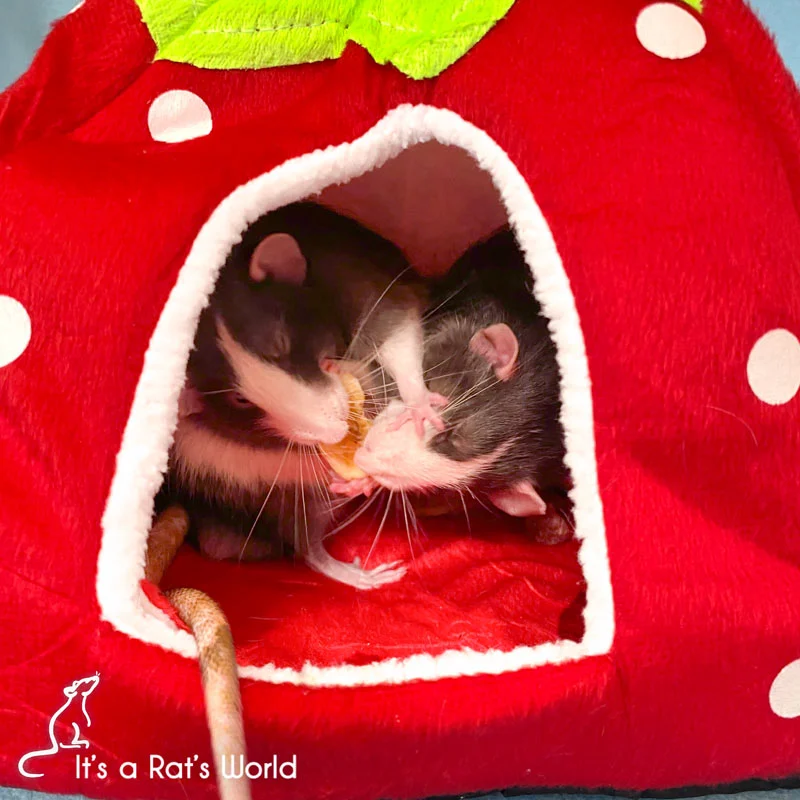
When newcomers learn about the profound affection many individuals hold for domestic rats, it often elicits surprise and a cascade of questions. This common reaction stems from a societal perception of rats as mere pests, a stereotype that overlooks the complex and often endearing behavioral repertoire of these intelligent rodents. For those who share their lives with these animals, the reality is far more nuanced, revealing a fascinating array of quirks that consistently entertain and intrigue. This exploration delves into some of the most captivating habits of domestic rats, highlighting the depth of their personalities and the unique bond they forge with their human companions.
Bruxing and Boggling: A Symphony of Contentment
Among the most well-known and cherished idiosyncrasies of domestic rats is the phenomenon of "bruxing" and "eye boggling." While these behaviors might appear alarming to the uninitiated, they are, in fact, indicators of profound contentment and well-being. Bruxing, the act of teeth grinding, serves a dual purpose. Primarily, it is a biological necessity for rats to maintain the health and appropriate length of their incisors, which grow continuously throughout their lives. However, on a more emotional level, bruxing is a significant form of communication. Rats will brux when they are upset or frightened, but more commonly, it signifies happiness and relaxation. This gentle grinding sound is often likened to a cat’s purr, a comforting auditory signal of a rat’s inner peace.

Complementing the auditory cue of bruxing is the visual spectacle of eye boggling. This remarkable behavior involves rapid, involuntary movements of the rat’s eyes, causing them to bulge outwards from their sockets repeatedly. The effect is so pronounced that it can resemble the exaggerated animation of classic cartoon characters. This seemingly startling physical manifestation is intrinsically linked to bruxing. The powerful, rapid movements of the jaw muscles, situated just behind the eyes, are what trigger the boggling. When a rat is experiencing a high degree of happiness and is bruxing vigorously, these muscular vibrations translate to the ocular region, resulting in the characteristic eye bulge. Witnessing this synchronized display of bruxing and boggling is a clear indication that the rat is in a state of blissful contentment, a testament to their positive emotional experience.
The initial encounters with these behaviors can be disorienting, particularly for novice rat owners. Anecdotal evidence suggests that early rat enthusiasts, lacking readily available information in veterinary texts or popular literature, often mistook these normal physiological responses for signs of distress or illness. One owner recounts a harrowing experience in the pre-internet era, where a visit to the veterinarian for an episode of eye boggling was met with skepticism. The vet, unfamiliar with the behavior, attributed the owner’s description to an overactive imagination, underscoring the historical lack of widespread knowledge regarding these unique rat traits. The advent of the internet and the growth of dedicated rat owner communities have since demystified these behaviors, confirming their benign and positive nature.
Fastidious Groomers: Debunking the Myth of Filth
A persistent misconception about rats is their association with filth and disease. This stereotype, largely rooted in the behavior of wild rat populations in unsanitary environments, fails to acknowledge the meticulous grooming habits of domestic rats. In reality, both wild and domesticated rats are remarkably fastidious creatures, dedicating significant portions of their day to personal hygiene.

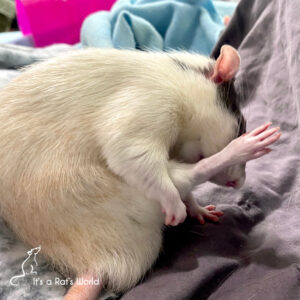
Owners of pet rats are privy to the extraordinary lengths to which their companions go to maintain their cleanliness. Rats engage in extensive self-grooming sessions, often appearing to be in a state of intense concentration as they meticulously attend to every inch of their bodies. Using their dexterous paws to wipe down their fur and their teeth to nibble away any impurities, these rodents can adopt surprisingly acrobatic poses to reach difficult areas. This dedication to cleanliness extends to even the most unusual places, such as their ears. A common sight is a rat using a hind leg to meticulously clean its ear canal, followed by a diligent inspection of its toes, as if to remove any residual earwax. This thoroughness highlights their commitment to personal hygiene.
Owners often find particular amusement in observing the detailed foot-bathing rituals. Rats will meticulously spread out each toe, dedicating considerable time to cleaning every digit individually. This fastidious attention to detail is a hallmark of their grooming behavior.
However, there is one area that, surprisingly, often escapes their rigorous cleaning regimen: their tails. In decades of observation, many experienced rat owners report witnessing tail grooming on very few occasions. When it does occur, it is often a notable event, prompting a double-take and a pause in whatever activity the owner was engaged in. A rat that consistently grooms its tail might indeed be considered an anomaly within the rat community, further emphasizing the peculiar nature of this oversight in their otherwise impeccable hygiene routines.
Allogrooming: The Social Ritual of Mutual Care
The innate drive for cleanliness in rats extends beyond self-care to a social practice known as allogrooming, or grooming other individuals. Rats are highly social animals and frequently engage in mutual grooming with their cagemates, reinforcing social bonds and maintaining group harmony. This behavior is not exclusive to rats; many social animals engage in such practices. However, rats often exhibit a particularly enthusiastic and sometimes persistent approach to allogrooming, which can extend to their human caretakers.
This tendency to groom humans can sometimes be misconstrued. When a rat immediately begins grooming itself after being touched by a human, it might appear to be a subtle critique of the human’s cleanliness. However, it is more likely a manifestation of their ingrained grooming instincts, coupled with their desire to maintain their own impeccable standards.
The intensity and focus of rat allogrooming can be quite striking. They often show a predilection for grooming specific areas on their human companions. Many rats are fascinated by their owner’s hair, engaging in gentle licking or nibbling. Others prefer to focus on the face, with some rats regularly demanding to groom their owner’s cheeks and eyelids. While the intention is undoubtedly affectionate, the delicate nature of these areas means that even gentle nibbles can feel surprisingly firm.
A particularly common target for rat allogrooming is the owner’s fingers and nails. Some rats develop a habit of meticulously cleaning, and in some cases, gently nibbling at their owner’s fingernails. This behavior is often interpreted as the rat performing a "rat-icure," an unsolicited but perhaps appreciated nail-trimming service. The underlying motivation is likely an extension of their grooming instincts, a desire to "clean" their human in a manner that mirrors their interactions with their cagemates.
Rodentistry: The Dental Enthusiasts
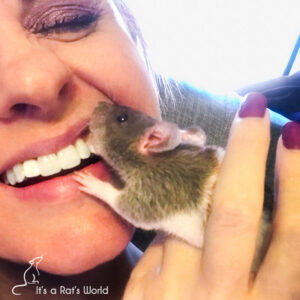
Among the most peculiar and widely recognized forms of allogrooming is the behavior dubbed "rodentistry." This refers to rats that exhibit an intense fascination with their human’s teeth and oral cavity. The term itself, a playful portmanteau, highlights the specialized nature of this behavior within the rat community. A rat exhibiting this quirk is known as a "rodentist."
These dedicated rodentists will fearlessly insert their heads into their human’s mouth, seemingly on a mission to clean any perceived imperfections. While the exact nature of what they are attempting to remove remains unknown, their determination is unwavering. They will persistently try to pry open their human’s mouth, often using their tiny paws, which can be equipped with surprisingly sharp nails, to facilitate access. Even when met with protests, such as muffled laughter or gentle resistance, the rodentist remains committed to its task. This can lead to minor scratches around the mouth, but for many owners, the amusement derived from this persistent behavior outweighs any minor discomfort. The dedication of a rodentist, like the aforementioned Rory, who relentlessly pursued his dental cleaning duties despite vocal protests, exemplifies the endearing, albeit unusual, commitment these animals can display.
Taste Testers: A Bold Approach to Food
Rats are not known for their subtlety when it comes to food. Their presence during mealtimes, especially when they are allowed out of their cages, is often characterized by an immediate and enthusiastic interest in whatever their human is eating. They do not employ polite requests or beg with pleading eyes. Instead, the mere scent of food triggers a rapid response, with rats converging to brazenly snatch morsels directly from plates or fingers. Their determination is such that even food already in a human’s mouth is not an insurmountable barrier; they are willing to dive in or, at the very least, ensure any lingering traces are licked away.
This food-driven behavior is not reserved for humans; rats exhibit similar tendencies towards their cagemates. It is a common observation to see rats snatching food from each other, or even directly from a cagemate’s mouth. This lack of inhibition underscores their pragmatic approach to resource acquisition.
The implications for owners are straightforward: any food consumed outside of a secure environment is likely to be shared, whether by invitation or by force. Even beverages are not safe from their inquisitive palates. Rats are known to perch on the edge of glasses or mugs, partaking in whatever liquids are available, demonstrating a remarkable adaptability and opportunism in their pursuit of sustenance.

Sleeping Styles: From Vulnerable to Veritable Stars
The sight of a sleeping rat can be incredibly endearing, but some rats elevate this cuteness to an extraordinary level by adopting the "back-sleeper" posture. Generally, rats tend to avoid sleeping on their backs due to the inherent vulnerability this position entails, leaving them exposed and potentially defenseless. However, a subset of rats embraces this seemingly risky sleeping arrangement, opting to sprawl out belly-up, often in a state of deep relaxation.
In some cases, this behavior can become a shared experience. The anecdote of twin rats, Moffett and Brinley, who not only engaged in synchronized back-sleeping but also influenced their unrelated cagemate, Kelton, to adopt the same habit, highlights the potential for social learning and shared behavioral patterns within rat groups. This communal approach to such an unusual sleeping position adds another layer of fascination to their social dynamics.
Drinking in Tandem: A Codependent Quirk
Adding to the spectrum of unusual sleeping behaviors is the phenomenon of "drinking in tandem." One particularly memorable rat, Potter, was known for his back-sleeping habit, which he strategically employed directly beneath the water bottle. This created an inconvenient obstacle for his cagemates, preventing them from accessing water without disturbing his slumber. This behavior suggested a desire for shared drinking experiences, as Potter disliked drinking alone and actively sought out company for this basic necessity.

When another rat approached the water bottle while Potter was awake and away from his perch, he would immediately cease his current activity and race to join them. This behavior proved contagious, leading to a situation where all four rats in his group would regularly drink simultaneously from the single water bottle nozzle. The added peculiarity was that Potter would often perform his drinking ritual while lying on his back, even as his upright companions drank.
While Potter was particularly codependent and dramatic in his approach to drinking, the tendency for multiple rats to drink together from a single source has been observed in other groups. This highlights a social aspect to even the most fundamental behaviors, demonstrating that for some rats, shared experiences extend to the simple act of quenching their thirst.
The Ever-Expanding Universe of Rat Quirks
The behaviors discussed herein represent merely a glimpse into the vast and often surprising repertoire of domestic rat idiosyncrasies. These intelligent and adaptable creatures continuously find new and inventive ways to entertain and endear themselves to their human companions. Each rat possesses the potential to develop unique quirks, making every individual a source of ongoing discovery. The moment an owner believes they have witnessed the full spectrum of a rat’s unusual habits, the animal is likely to present a new, unexpected behavior, reaffirming the dynamic and delightful nature of these often-misunderstood animals. The richness of their personalities ensures that the journey of understanding and appreciating them is an ever-evolving and rewarding experience.

