


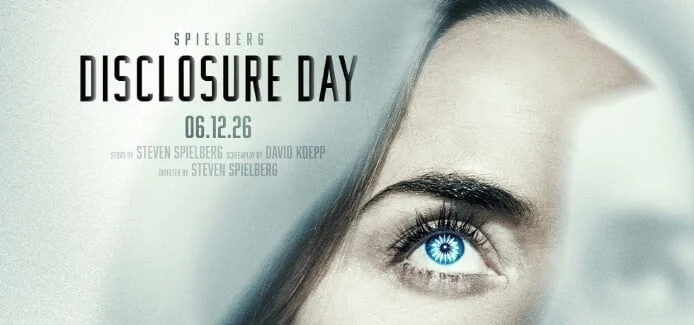
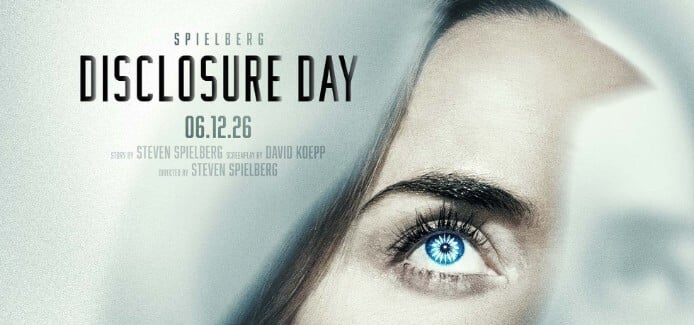
Released on June 23, 2026, Steven Spielberg’s latest cinematic endeavor, Disclosure Day, has rapidly transcended its status as a summer blockbuster to become a focal point for intense ethical debate regarding the treatment of non-human entities. Starring Emily Blunt as meteorologist Margaret Fairchild and Josh O’Connor as cybersecurity expert Daniel Kellner, the film explores the harrowing discovery of extraterrestrial contact that has been suppressed by a clandestine government operation. While the narrative utilizes the framework of a high-stakes conspiracy thriller, its primary impact lies in its visceral depiction of the exploitation of sentient beings, drawing direct and uncomfortable parallels to the real-world practice of animal experimentation.
The film follows Fairchild and Kellner as they peel back the layers of a decades-long cover-up. Unlike Spielberg’s previous explorations of extraterrestrial life, such as E.T. the Extra-Terrestrial or Close Encounters of the Third Kind, which often emphasized wonder and the possibility of cosmic friendship, Disclosure Day presents a darker, more cynical vision of human-alien interaction. The "disclosure" of the title refers not just to the revelation that humans are not alone in the universe, but to the unveiling of "The Operation," a government-funded program dedicated to the capture and biological analysis of extraterrestrial visitors.
A Narrative Built on Ethical Confrontation
The turning point of the film occurs when Kellner shares classified footage with a journalist, played by Eve Hewson. The footage, described within the film as "hard to watch," depicts a laboratory setting where an extraterrestrial being is subjected to invasive procedures without its consent. In a scene that has sparked significant discussion among audiences and critics alike, the being is shown visibly distressed, attempting to physically resist its captors. This moment serves as the emotional anchor of the film, shifting the focus from a hunt for the truth to a plea for fundamental empathy.
Critics have noted that the film’s power stems from its ability to strip away the justifications often used to rationalize violence against "the other." By presenting a victim that is neither human nor from Earth, Spielberg challenges the audience to recognize suffering as a universal constant, independent of species, language, or origin. The distress of the extraterrestrial character is portrayed with a realism that suggests the filmmakers intended to mirror the plight of animals currently held in terrestrial laboratories.
Chronology of the Disclosure Day Phenomenon
The journey of Disclosure Day from a confidential script to a cultural phenomenon began in early 2024, when rumors first surfaced of Spielberg’s interest in a "hard sci-fi" project centered on government transparency. Production took place throughout 2025 under heavy security to prevent plot leaks. The marketing campaign initially focused on the thriller aspects of the plot, emphasizing the chemistry between Blunt and O’Connor and the mystery of the titular "Disclosure Day."
However, following the world premiere in mid-June 2026, the conversation shifted almost immediately to the film’s ethical undertones. On June 18, 2026, the advocacy group PETA (People for the Ethical Treatment of Animals) publicly acknowledged the film’s message by delivering a vegan cake to the cast and crew, thanking them for highlighting the horrors of experimentation on non-consenting beings. This gesture signaled the beginning of a broader movement where the film’s fictional narrative began to influence real-world political and scientific discourse.
Supporting Data: The Reality of Animal Experimentation
The discomfort felt by audiences during the laboratory scenes in Disclosure Day is rooted in a reality that many modern scientific organizations are now beginning to question. According to data cited by animal welfare advocates and some members of the scientific community, approximately 110 million animals—including mice, rats, frogs, dogs, rabbits, monkeys, and fish—are killed in U.S. laboratories every year for biology lessons, medical training, curiosity-driven experiments, and chemical, drug, food, and cosmetics testing.
A critical point of contention highlighted by the film’s release is the efficacy of these experiments. Recent studies have indicated that a staggering 90% of basic research, most of which involves animal testing, fails to lead to human treatments. Furthermore, the failure rate for new drugs that pass animal tests is approximately 92% when they enter human clinical trials, often because the drugs are either unsafe or ineffective in humans. This data suggests a significant disconnect between animal models and human biology, a theme that Disclosure Day explores through the lens of a "superior" but misunderstood alien biology.
Official Responses and Advocacy
The release of Disclosure Day has provided a platform for advocacy groups to renew their calls for legislative change. PETA, in particular, has utilized the film’s momentum to promote the "Research Modernization Deal." This proposed legislative framework urges the U.S. government to redirect funding away from animal-based research and toward more sophisticated, human-relevant methods. These methods include organ-on-a-chip technology, sophisticated computer modeling, and 3D-printed human tissues, which advocates argue provide more accurate data for human medicine while eliminating the ethical burden of animal suffering.
In the United States, several members of Congress have reportedly been moved by the public response to the film. There are currently discussions regarding the introduction of legislation that would require the National Institutes of Health (NIH) to provide a clear timeline for the phasing out of animal testing in favor of non-animal alternatives. While some in the pharmaceutical industry express concern over the speed of such a transition, the public sentiment following Disclosure Day appears to favor a shift toward more humane scientific practices.
Broader Impact and Scientific Implications
The broader impact of Spielberg’s film lies in its potential to change the cultural zeitgeist regarding the "right to exist" for non-human entities. By showing an extraterrestrial being resisting experimentation, the film forces a re-evaluation of the "might makes right" philosophy that has historically dominated human interactions with other species. This "accidental mirror," as some analysts have called it, suggests that the way a civilization treats those who are vulnerable and different is the ultimate measure of its progress.
In the scientific community, the film has reignited debates about "speciesism"—the assumption of human superiority leading to the exploitation of other animals. While some researchers maintain that animal testing remains a "necessary evil" for certain types of medical breakthroughs, an increasing number of scientists are speaking out in favor of modernization. The argument is that if society finds the torture of an alien being for "scientific discovery" abhorrent, it must logically apply that same standard to the sentient beings already present on Earth.
Fact-Based Analysis of the Film’s Legacy
As Disclosure Day continues its theatrical run, its legacy is likely to be defined by more than just box office numbers. It stands as a rare example of a blockbuster film that successfully integrates a profound ethical critique into a mainstream entertainment format. The film’s success suggests that audiences in 2026 are increasingly receptive to stories that challenge the status quo and demand a more compassionate approach to science and governance.
The narrative arc of Fairchild and Kellner—who risk their lives not to kill an enemy, but to expose the truth about a victim—represents a shift in the "hero" archetype. In this film, heroism is defined by the act of witnessing and the courage to stop the cycle of violence. This shift mirrors the real-world work of undercover investigators and whistleblowers who expose conditions in laboratories and industrial facilities.
In conclusion, Disclosure Day is more than a sci-fi thriller; it is a catalyst for a global re-examination of empathy. By asking whether we would greet an alien visitor with "cages, scalpels, and secrecy," Steven Spielberg has forced a mirror onto our current treatment of animals. The film’s ultimate message—that a being does not need to look or sound like us to deserve the right to live on their own terms—is a challenge that will likely resonate in legislative halls and scientific laboratories long after the credits have rolled. The push for Research Modernization in the U.S. and abroad has gained a powerful new cultural ally, marking 2026 as a potential turning point in the history of biomedical ethics.

