


Migratory birds, marvels of natural navigation, forge vital connections across continents, their journeys linking diverse landscapes and cultures. These incredible long-distance travelers rely on established routes, known as flyways, to navigate between their breeding and non-breeding grounds. In a significant initiative to safeguard these avian highways, conservationists are focusing their efforts along the vast African-Eurasian Flyway, a critical corridor that spans from the Arctic to the southern reaches of Africa. This ambitious project, spearheaded by the Royal Society for the Protection of Birds (RSPB) in the UK, with crucial support from the Ecological Restoration Fund (ERF), highlights the intricate work involved in protecting these feathered migrants and their essential habitats.
The African-Eurasian Flyway: A Global Lifeline for Birds
The African-Eurasian Flyway is one of the world’s most extensive and complex migratory routes, hosting a staggering diversity of bird species. Each year, millions of birds undertake arduous journeys across continents, deserts, and oceans, facing numerous challenges along the way. The conservation efforts along this flyway are not merely about protecting individual species; they are about preserving entire ecosystems and the vital ecological services birds provide, such as seed dispersal and pest control. The ERF, dedicated to restoring biodiverse hotspots, rejuvenating degraded landscapes, and fostering local environmental activism, plays a pivotal role in enabling this multifaceted conservation approach. Their commitment extends to re-establishing nature’s interconnections while simultaneously nurturing cultural, social, and economic opportunities for the communities residing within these critical landscapes.
Ghana’s Wooded Savannahs: A Crucial Haven for Migratory Landbirds
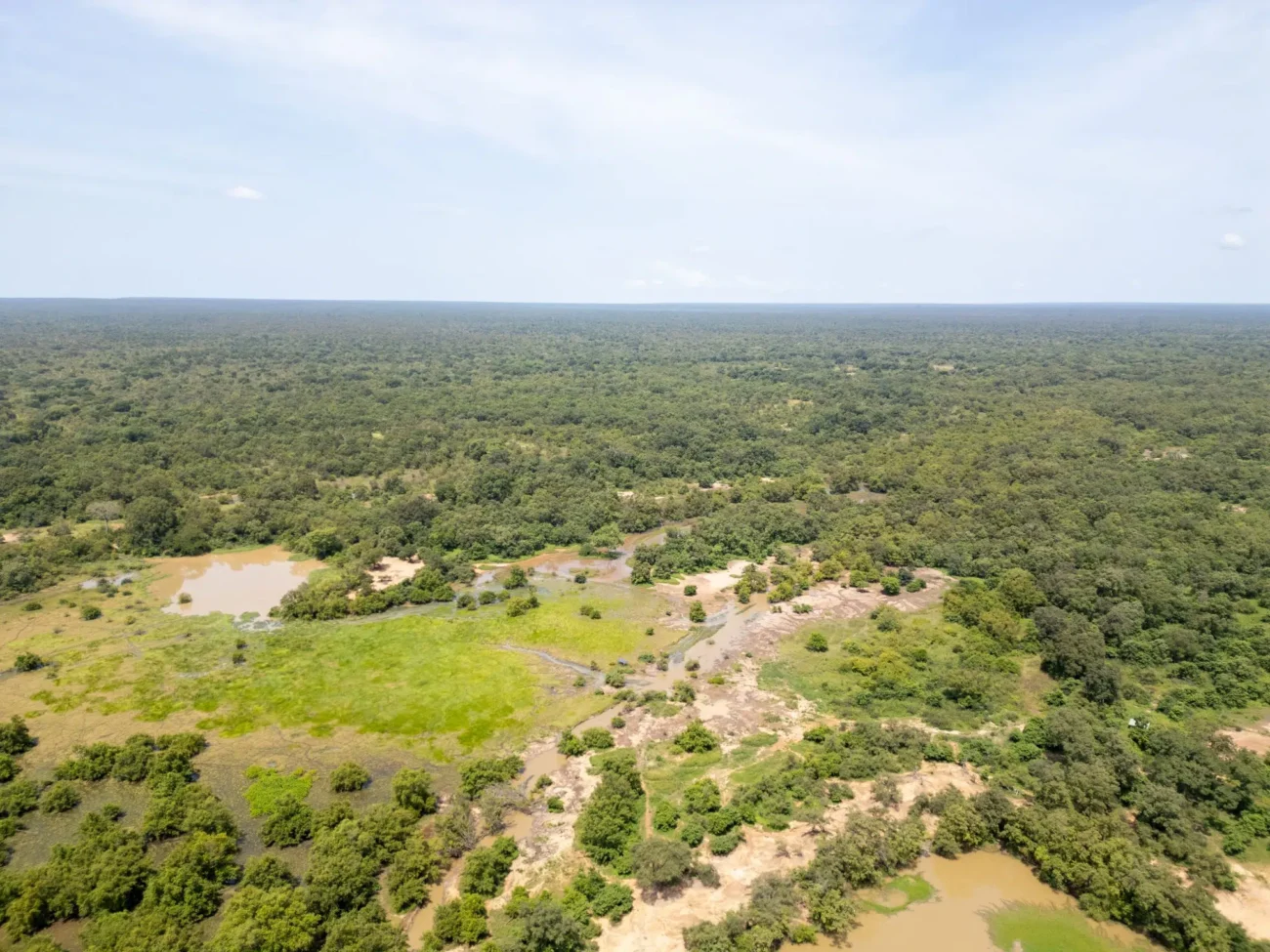
Within the vast expanse of the African-Eurasian Flyway, the wooded savannahs of northern Ghana emerge as a sanctuary of paramount importance. These landscapes serve as a vital stopover and overwintering site for thousands of migratory landbirds that have braved the formidable Sahara Desert. Here, they find much-needed respite to rest and refuel before embarking on their arduous return journey north to their breeding grounds.
Kwame Boafo, the Programme Manager for the Research & Conservation Unit at the Ghana Wildlife Society, the BirdLife Partner in Ghana, is at the forefront of conservation efforts in this region. His work is integral to ensuring the continued survival of these migratory species and the preservation of their precious habitat. Boafo’s insights offer a compelling glimpse into the realities and rewards of flyway conservation on the ground.
The Mole Ecological Landscape: A Tapestry of Life and Resilience
"The Mole Ecological Landscape is situated in north-western Ghana," explains Boafo. "Within this landscape, you encounter a diverse array of habitats, including savannah woodland and grassland, as well as riverine and close-canopy forest."

At the heart of this ecological mosaic lies Mole National Park, a protected area that annually becomes a magnet for a wide spectrum of migratory birds. Species such as the European Pied Flycatcher, Willow Warblers, and Tree Pipits grace its territories. Furthermore, the park is a critical refuge for migratory raptors, including Ospreys, European Honey-buzzards, and Montagu’s Harriers. It also serves as a stronghold for some of Ghana’s Critically Endangered vulture populations.
"Mole National Park is vital both as a stopover and an overwintering site for migratory landbirds," Boafo emphasizes. "It provides an essential lifeline for birds arriving after crossing the Sahara. Mole truly acts as a place of refreshment during these strenuous annual journeys."
A striking characteristic of this landscape is its annual transformation. The dry season is often followed by extensive burning, a practice that can be both accidental and deliberate, initiated by livestock grazers or as a measure to mitigate wider fire damage. "It is a landscape that tells a story of resilience and transformation," Boafo observes. "Resilience on the part of the biodiversity, and also on the part of the people who must navigate these extreme changes. We are working collaboratively with these communities to help manage the land sustainably for the benefit of both people and wildlife."
Bridging the Gap: Community Engagement and Conservation Successes
The challenges faced in conserving the Mole Ecological Landscape are multifaceted. The area is home to approximately 40,000 people living within a 5-kilometer radius of the national park. Many of these communities have established buffer zones known as Community Resource Management Areas, or CREMAs.
"In the south of the landscape, we identified a gap around the communities of Kananto and Kabampe," Boafo notes. "Due to the strategic location of these communities, situated between two protected areas, we have been working with them to establish a CREMA. This initiative aims to assist them in sustainably participating in the management of the landscape and its resources, while also reducing human-wildlife conflict."
The establishment of this new CREMA represents a significant achievement for the project. CREMAs empower communities by granting them greater control over their natural resources and fostering their active participation in decision-making processes and benefit-sharing mechanisms.

Restoring Degraded Lands and Empowering Livelihoods
A cornerstone of the project’s strategy is the restoration of degraded areas through the planting of native tree species. This initiative serves a dual purpose: it provides essential cover for wildlife and revitalizes ecosystem services, while simultaneously supporting the livelihoods of local communities.
"For example, 90% of the women in the Kananto-Kabampe CREMA collect shea nuts, which is a major source of income for them," Boafo explains. "We collect seeds of shea, dawadawa, and other ecologically and economically important species. These seeds are then nurtured into seedlings in a nursery established by the ERF project. We have already planted 5,000 seedlings with the help of local communities, and we are now monitoring germination, preparing to plant more during the upcoming rainy season. Our goal is to plant at least 10,000 young trees by the project’s end."
The commitment to restoration extends beyond mere planting. "Planting is easy; keeping them alive is harder," Boafo candidly admits. "Therefore, planting at the right time and diligently tending to the seedlings are crucial for their survival. We are also diligently replacing any seedlings that do not survive."
Diversifying Initiatives for Sustainable Futures
Beyond habitat restoration, the project encompasses a range of complementary initiatives designed to foster sustainable development and reduce pressure on protected areas. Training in agroforestry techniques and methods to increase farm yields are provided to local communities. Additionally, efforts are underway to connect these communities with external markets, thereby enhancing their economic opportunities.
A bee-keeping initiative has also been launched, recognizing the vital role bees play as pollinators for many of the trees that communities rely upon, and for the landscape as a whole. "Our hope is that these initiatives will reduce encroachment into the reserves, especially during the dry season," Boafo states. "When communities have more financial resources, there will be less pressure to venture into the park or to cut down trees."
Harnessing Citizen Science for Ecological Monitoring
In parallel with these community-focused efforts, the project is actively engaged in citizen science initiatives. "We have worked together to deploy acoustic monitoring devices to carry out passive acoustic monitoring of birds," Boafo elaborates. "We are particularly interested in comparing bird activity across degraded, restored, and non-degraded areas. This data will be invaluable for understanding the impact of our restoration efforts and for adaptive management strategies."

Overcoming Challenges: Fire, Climate, and Community Trust
The conservation work in the Mole Ecological Landscape is not without its challenges. Slash-and-burn agriculture remains a significant concern. While farmers often aim to contain fires to cleared areas, they can frequently spread to neighboring farms or into protected reserves.
"Beyond fire, we face the challenge of a harsh environment characterized by dryness and a relatively limited rainfall season," Boafo points out. "This necessitates a highly strategic approach to planting, requiring a deep understanding of the science, ecology, and phenology of the trees."
Another significant hurdle has been building community trust and ensuring buy-in for conservation initiatives. "There is often concern for their livelihoods," Boafo acknowledges. "We are striving to find a balance that accommodates both their livelihoods and the conservation of migratory birds and other wildlife, while recognizing that they face issues of crop-raiding, human-wildlife conflict, and limited resources for compensation and management. It is challenging, but not impossible."
Seeds of Optimism: Building Trust and Appreciating Nature
Despite the formidable obstacles, Boafo expresses a profound sense of optimism. "We have witnessed how these communities, despite the challenges they face and sometimes varying appreciation for wildlife, are willing to come together and work with us," he says. "Trust has been building, and it has been a gradual process. When we initially spoke with them about the CREMA, they initially perceived it as an attempt to seize their land. However, as time progressed and they observed researchers in the forest diligently studying birds, they began to understand: ‘No, these people are just here for the birds.’"
This growing understanding is leading to a greater appreciation for wildlife, moving beyond the perception of it solely as a food source or a nuisance on farms. "Conservation is about both people and nature," Boafo reiterates. "We have successfully established the link between people and nature, and we are hopeful that this connection will continue to strengthen."
Anecdotes from the Field: Resilience in the Face of Adversity
The field work often yields unexpected and sometimes humorous moments. "Recently, some of our acoustic monitoring devices were burned – and this occurred at a time when we were not anticipating any fire," Boafo recounts with a smile. "The amusing part was that, even after being burned, the devices were still recording! That was quite remarkable, and we were very pleased to retrieve the data from those recorders." This anecdote underscores the resilience of both technology and the dedication of the conservationists in the face of adversity.

The Ecological Restoration Fund: A Catalyst for Change
The Ecological Restoration Fund’s support is instrumental in driving these conservation efforts. The ERF is dedicated to initiatives that protect biodiverse hotspots, rejuvenate degraded landscapes, and promote local environmental activism. Their commitment to re-establishing nature’s essential interconnections, coupled with their focus on fostering cultural, social, and economic opportunities for local communities, makes them a crucial partner in the long-term sustainability of these vital ecosystems.
The work in Ghana’s wooded savannahs is a testament to the complex and interconnected nature of global conservation. By empowering local communities, restoring degraded habitats, and fostering a deeper understanding of the vital role migratory birds play, these initiatives are creating a ripple effect, safeguarding not only the avian travelers of the African-Eurasian Flyway but also the ecological health and human well-being of the regions they traverse.

