


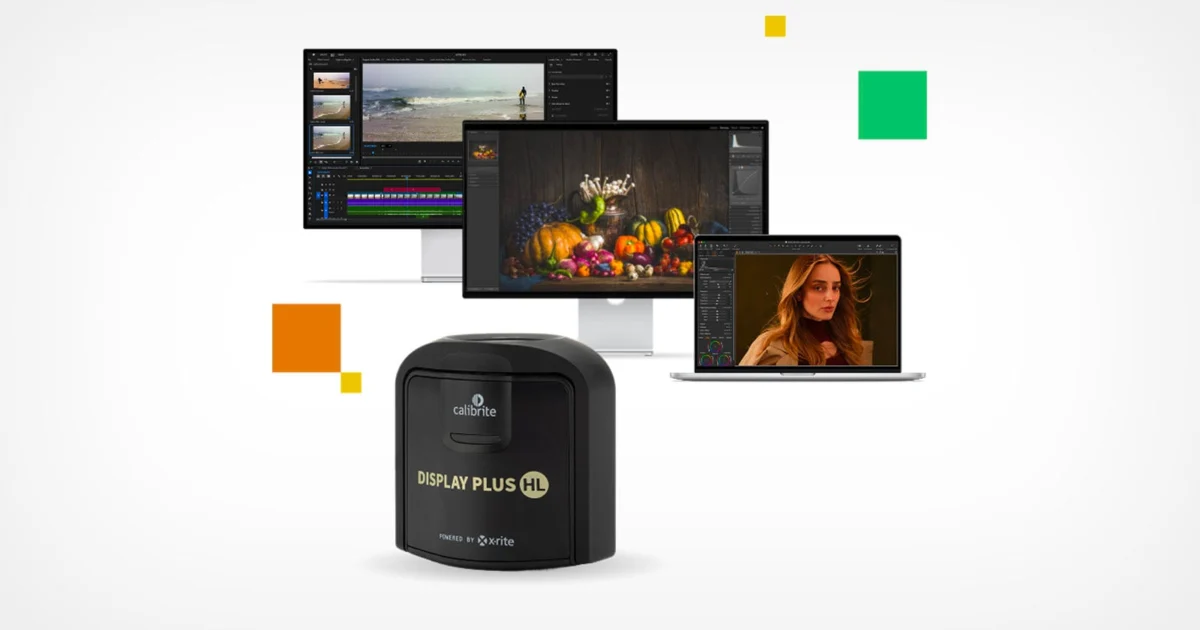
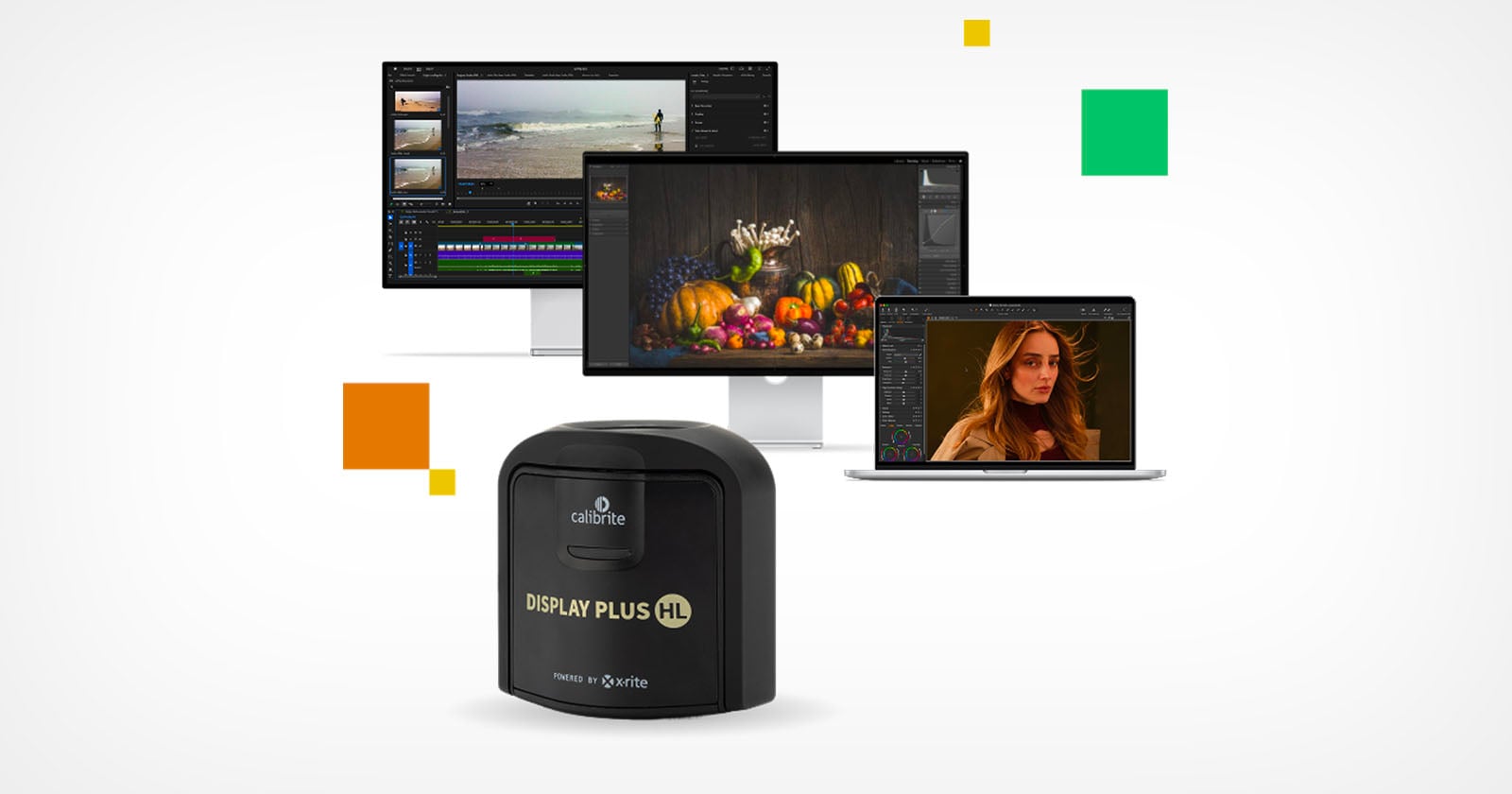
The landscape of professional digital imaging has reached a significant milestone with the official announcement that the Calibrite Display Plus HL is now approved for use with Apple’s native display calibration workflow. This development marks a pivotal shift in the industry, as the Calibrite Display Plus HL becomes the first consumer-accessible colorimeter to interface directly with Apple’s hardware-based monitor calibration system. Historically, achieving this level of precision on Apple’s high-end displays required the use of industrial-grade spectroradiometers—sophisticated instruments typically reserved for dedicated color grading facilities and high-budget production houses, often carrying price tags in the thousands of dollars. By contrast, the Calibrite Display Plus HL offers this same hardware-level integration for a retail price of $339, with an introductory promotional price of $259 available through June.
This integration represents a fundamental change in how photographers, cinematographers, and graphic designers maintain color accuracy on Apple hardware. While users have long utilized colorimeters to create software-based ICC profiles for the Apple Studio Display, Pro Display XDR, and MacBook Pro screens, these profiles functioned as a secondary layer over the operating system’s output. The new approval allows the Calibrite Display Plus HL to write adjustments directly to the display’s internal hardware. This ensures that parameters such as white point, luminance, and color coordinates are corrected at the source, providing a more stable and accurate visual representation that remains consistent regardless of the software application being used.
Technical Advancement in Hardware Calibration
The distinction between software-level profiling and hardware-level calibration is critical for professional workflows. Software profiling relies on the computer’s graphics card to alter the output signal sent to the monitor to compensate for inaccuracies. This process can sometimes lead to "banding" or a reduction in the available color palette (bit-depth) because it essentially "crushes" certain values to achieve the desired look. Hardware calibration, however, adjusts the internal Look-Up Tables (LUTs) and the physical behavior of the display panel itself.
With the Calibrite Display Plus HL, a single calibration cycle now updates every reference mode on a supported Apple display simultaneously. This means that whether a creator is working in Standard Dynamic Range (SDR) for web content or High Dynamic Range (HDR) for cinema, the calibration remains synchronized and accurate across all presets. The device is specifically engineered to handle the extreme brightness levels of modern displays, supporting up to 2,000 nits of peak brightness. This capability is essential for the latest Apple Studio Display XDR, which requires high-luminance (HL) sensors to accurately measure the peak highlights of HDR content without sensor saturation.
Chronology and Ecosystem Integration
The path toward this integration has been years in the making, following Apple’s transition to its own silicon and the release of increasingly sophisticated display technologies.
- 2019: Apple introduces the Pro Display XDR, setting a new benchmark for "Extreme Dynamic Range" and offering a dedicated "Pro Display Calibrator" utility that initially required high-end spectroradiometers like the Photo Research PR-740 or the Colorimetry Research CR-300.
- 2021: The introduction of the M1 Pro and M1 Max MacBook Pros brings Liquid Retina XDR displays to mobile workstations, increasing the demand for portable, high-precision calibration tools.
- 2022: The Apple Studio Display is launched, bringing a 5K reference-quality monitor to a broader professional audience.
- Early 2026: Apple releases the Studio Display XDR and introduces "Apple CMF 2026," a next-generation Color Matching Function. This new standard moves beyond the traditional CIE 1931 2-degree observer model to better account for the way human eyes perceive color on modern Narrow-Band LED and Quantum Dot displays.
- Current Milestone: Apple updates its calibration API within macOS Tahoe 26.4, allowing third-party hardware like the Calibrite Display Plus HL to communicate directly with the display’s internal scaler and backlight controller.
To utilize this new hardware calibration capability, users must be operating on macOS Tahoe 26.4 or a newer version of the operating system. Supported hardware includes the Apple Studio Display (2022 and 2026 models), the Pro Display XDR, and any MacBook Pro equipped with M1 Pro, M1 Max, or newer chips.
The Science of Color Matching Functions
One of the most notable aspects of this announcement is the support for Apple CMF 2026. For decades, the imaging industry has relied on the CIE 1931 standard to define how light frequencies are translated into numerical color values. However, as display technology has evolved from CRT and CCFL-backlit LCDs to modern LEDs with very narrow spectral peaks, the old standards have shown limitations. These limitations often result in "metameric failure," where two colors look identical under one light source but different under another, or where a display measures as "accurate" by a probe but looks slightly off to the human eye (often appearing too green or too pink).
Apple’s CMF 2026 is designed to address these discrepancies by utilizing more modern physiological data. The Calibrite Display Plus HL is uniquely positioned to leverage this new function, ensuring that the calibration not only meets the mathematical requirements of the software but also aligns with human visual perception on Apple’s specific panel architectures.
Industry Implications and Professional Necessity
Calibrite’s entry into Apple’s closed calibration ecosystem addresses a long-standing grievance among professional editors. While Apple displays are renowned for their factory calibration, the physical reality of hardware is that it is subject to "drift." Over hundreds of hours of use, the chemicals in the LEDs and the liquid crystals themselves can age, causing subtle shifts in color temperature and peak brightness.
"Apple Pro Displays ship with incredible built-in color presets," Calibrite noted in their official release. "But like any professional tool, they drift over time, and factory settings aren’t always optimized for your room, your lighting, or your creative work."
By providing a $339 solution that matches the performance of "reference-grade" instruments, Calibrite is essentially democratizing high-end color management. For an independent filmmaker or a freelance photographer, the ability to ensure their monitor matches the standards of a high-end color suite—without spending the equivalent of a mid-sized car on a spectroradiometer—is a significant economic and creative advantage.
Market Analysis: The Shift from X-Rite to Calibrite
The success of the Display Plus HL is also a testament to the brand’s evolution. Calibrite took over the retail photo and video business from X-Rite several years ago, inheriting the legacy of the industry-standard i1Display Pro. Since then, they have focused on updating sensor technology to keep pace with the HDR revolution. The "HL" in the product name stands for High Luminance, a necessary upgrade as display manufacturers push past 1,000 nits into 1,600 and 2,000-nit territories.
This approval from Apple serves as a major endorsement of Calibrite’s sensor accuracy. Apple’s "walled garden" approach to hardware usually means they only allow third-party integration when the third party can meet or exceed rigorous internal standards. This partnership suggests that the Display Plus HL’s sensor is capable of the high-precision measurements required to maintain the integrity of the XDR and Studio Display lines.
Broader Impact on Content Creation
The broader implications for the creative industry are substantial. As streaming platforms like Netflix, Disney+, and Apple TV+ require increasingly strict HDR delivery standards, the need for affordable, accurate monitoring has never been higher. When a colorist makes a decision on a MacBook Pro or a Studio Display, they need to know that those decisions will translate accurately to a consumer’s OLED TV or a cinema projector.
With hardware-level calibration, the "trust gap" between the computer screen and the final output is narrowed. It eliminates the variables introduced by the operating system’s color management engine, providing a "pure" view of the data. This level of consistency is what allows a photographer to send a file to a professional print house and receive a result that matches their screen perfectly, or for a video editor to ensure their skin tones remain natural across different viewing devices.
The Calibrite Display Plus HL is currently available for purchase through major imaging retailers. As the industry moves further into the 2026 production cycle, this tool is expected to become a standard fixture in the kits of Mac-based creative professionals, bridging the gap between consumer-level accessibility and laboratory-grade precision.

