


The charming, almost comical waddle of a penguin is one of the most recognizable gaits in the animal kingdom. Their seemingly legless appearance, with feet emerging directly from their plump bodies, has long sparked curiosity. While their distinctive movement is a constant source of amusement and fascination, a deeper question often arises: do these endearing birds possess knees, and if so, how do they contribute to their unique locomotion? This article delves into the anatomy of penguins, revealing the hidden mechanics behind their iconic waddle and exploring the evolutionary adaptations that make them such remarkable survivors in some of the planet’s harshest environments.
The Hidden Anatomy: Unveiling the Penguin’s Knee
Contrary to the visual impression of stumpy legs, penguins do indeed have knees. These crucial joints, along with kneecaps (patellae), are integral to their skeletal structure. However, they are not externally visible due to the dense layer of waterproof feathers that encase their bodies. This anatomical feature is a testament to the intricate adaptations penguins have developed to thrive in both aquatic and terrestrial realms.
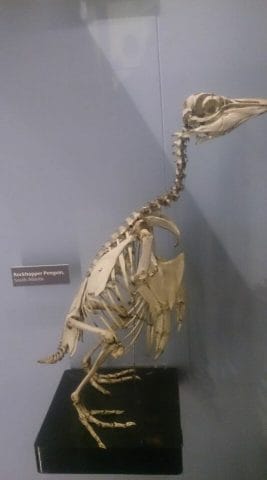
A closer examination of a penguin’s skeleton reveals a surprising truth: their legs are considerably longer than what is apparent from their outward appearance. The upper leg bones, including the femur, are positioned at a 90-degree angle to the lower leg bones, which consist of the tibiotarsus. This arrangement means that a significant portion of the penguin’s leg, including the knee and upper thigh, is tucked close to its body, hidden beneath its dense plumage.
Skeletal Adaptations for Aquatic Prowess and Terrestrial Stability
The skeletal structure of penguins is a marvel of evolutionary engineering, designed to optimize their dual lifestyle. Unlike their flying counterparts, which possess lightweight, hollow bones to aid in flight, penguins have evolved heavier, denser bones. This adaptation is critical for their aquatic life, providing ballast that reduces buoyancy and allows them to dive with greater ease and efficiency. The increased bone mass also contributes to their powerful swimming strokes, transforming their wings into highly effective flippers.
The positioning of their legs and knees plays a pivotal role in their terrestrial locomotion. The short, upright posture that results from their high-set knees and long lower legs is essential for maintaining balance on slippery surfaces like ice and snow. This stance also contributes to their characteristic waddle, a gait that, while appearing clumsy, is an efficient method of propulsion given their unique physiology.
The Functionality of the Penguin’s Knee
The penguin’s knee, despite being hidden from view, is a vital component of its anatomy, serving several critical functions:
- Locomotion: The bent knee allows penguins to maintain an upright posture on land, providing stability on uneven and icy terrain. This constant flexion is key to their ability to walk, slide, and navigate their environment. When swimming, the knees are instrumental in propelling their bodies forward, enabling powerful strokes that drive them through the water.
- Balance and Stability: The high placement of the knees, combined with their flexibility, contributes significantly to a penguin’s balance. This is particularly important when they are on land, especially on slippery surfaces, allowing them to avoid falls and maintain control.
- Incubation and Nesting: In a fascinating display of anatomical utility, penguin knees play a role in their reproductive cycle. During the incubation period, parent penguins carefully balance their single egg on their feet, tucking it securely between their knees and under a brood patch of feathered skin. This protects the egg from the harsh, icy ground and keeps it warm, ensuring the survival of the next generation.
- Rest and Sleep: The ability to flex their knees allows penguins to stand or even sit down comfortably when resting or sleeping, a crucial behavior for conserving energy in their challenging habitats.
Understanding the Waddling Gait
The distinctive waddle of a penguin is a direct consequence of several interconnected anatomical and environmental factors:
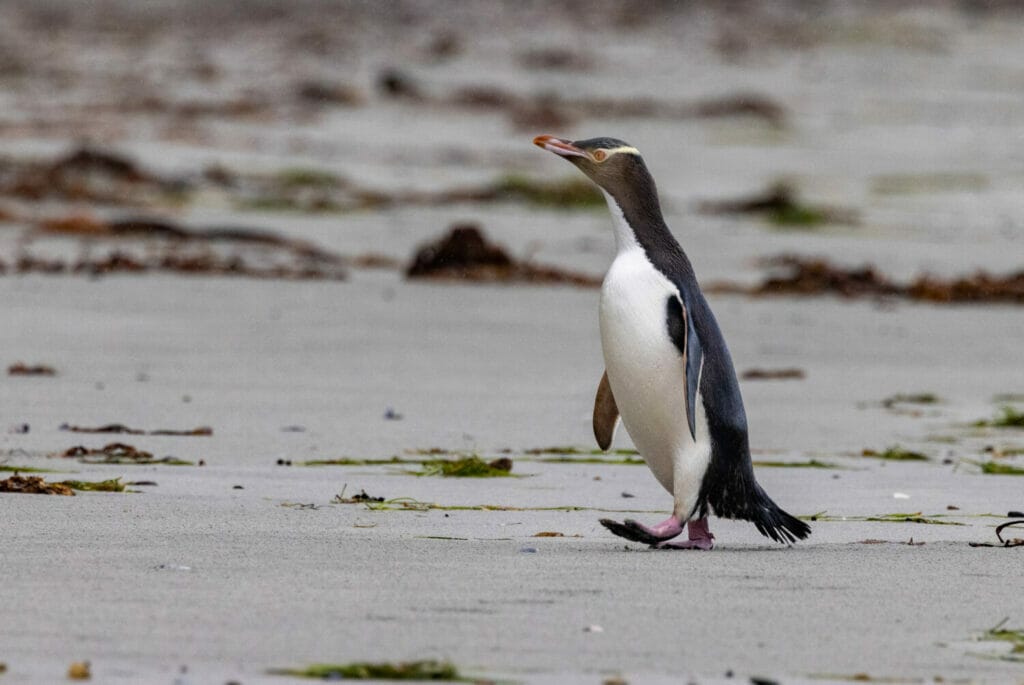
- High Knees and Long Lower Legs: As explained, the knees are positioned high on the body, with long lower legs extending downwards. This arrangement creates a shorter visible leg length, but the significant length of the lower leg requires a wider stance and a side-to-side motion of the hips to move the feet forward effectively.
- Large Feet: Penguins possess large, webbed feet that are essential for both swimming and providing traction on land. However, these substantial appendages can be cumbersome to move quickly and gracefully. The waddle allows them to efficiently swing their legs and feet forward.
- Body Shape and Weight Distribution: Penguins have a torpedo-shaped body, optimized for hydrodynamics. This compact, dense form, coupled with their heavy bones, means that their center of gravity is relatively low. Waddling helps them to shift their weight from side to side, maintaining balance as they move.
- Energy Conservation: In cold environments where food can be scarce, energy conservation is paramount. Waddling is an energy-efficient form of locomotion for penguins. By minimizing unnecessary movement and optimizing their gait, they can conserve vital energy reserves needed for survival, foraging, and breeding. Studies have shown that the metabolic cost of waddling is lower for penguins than a more human-like stride would be, given their body structure.
A Deeper Look at Penguin Anatomy: From Femur to Feet
The penguin’s leg structure is a complex system of adaptations:
- Femur: The thighbone, or femur, is relatively short and connects to the pelvis via a hip joint. This positioning contributes to the upright stance.
- Kneecap (Patella): Penguins possess kneecaps, or patellae, which are crucial for protecting the knee joint and facilitating its movement. Unlike the rounded human kneecap, a penguin’s patella is often described as cube-shaped, fitting snugly into the tendon surrounding the knee to allow for flexion.
- Tibiotarsus: This fused bone in the lower leg is analogous to the tibia and fibula in humans. Its length, combined with the high placement of the knee, dictates the penguin’s gait.
- Ankles: The powerful ankle joints are highly visible and often mistaken for knees due to their prominence. These strong structures are essential for stability and propulsion.
- Feet: The large, webbed feet are critical for maneuvering in water and providing grip on land. They typically feature three forward-facing toes and a smaller hind toe, equipped with sharp claws that aid in catching prey and navigating icy surfaces.
The Evolutionary Journey: From Flight to the Sea
The ancestors of modern penguins were likely flying birds. Over millions of years, however, selective pressures led to a dramatic transformation. As these birds spent increasing amounts of time in the water, hunting for food, their wings evolved into powerful flippers, perfectly adapted for propulsion through the ocean. Simultaneously, their skeletal structure adapted to a life in and out of the water, leading to the unique anatomy we observe today. The loss of flight was compensated by unparalleled swimming and diving abilities, making penguins apex predators in their marine environments.
Distribution and Diversity: A Global Southern Presence
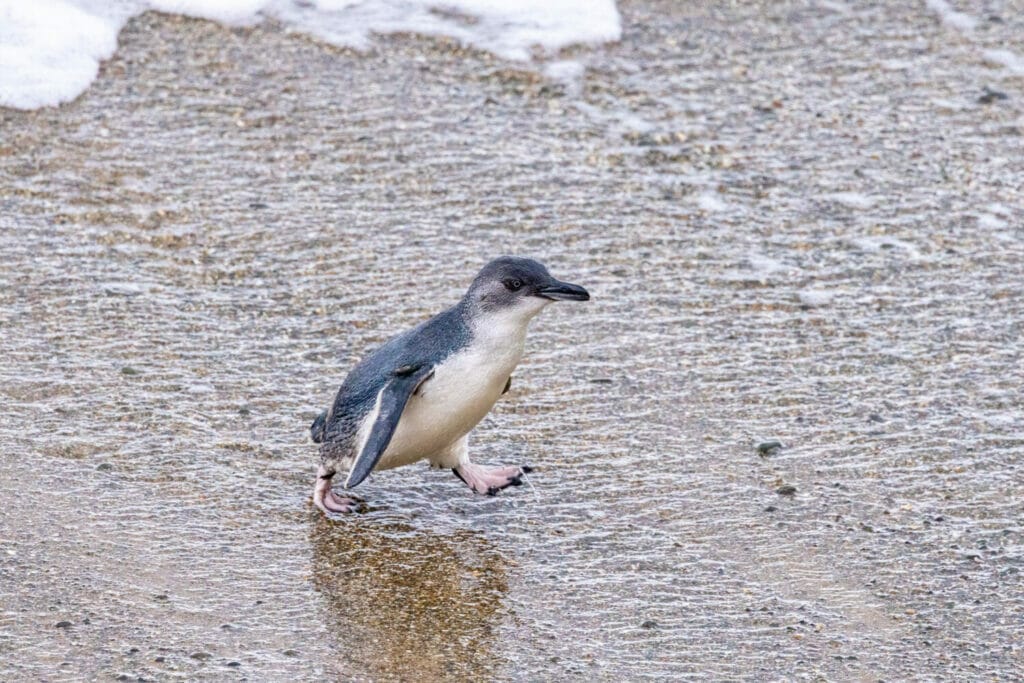
Penguins are found exclusively in the Southern Hemisphere, a testament to their evolutionary history and adaptation to cooler climates. While Antarctica is synonymous with penguins, with several species calling the icy continent home, they inhabit a diverse range of environments. Colonies can be found as far north as the Galápagos Islands, straddling the equator, and along the coastlines of South America, South Africa, Australia, and New Zealand. There are currently 18 recognized species of penguins, each with its own unique characteristics and adaptations to its specific habitat.
Conservation Concerns and Future Implications
Despite their resilience, many penguin populations face significant threats from climate change, overfishing, and pollution. Rising ocean temperatures impact prey availability, while melting sea ice disrupts breeding grounds. Plastic pollution poses a direct threat through ingestion and entanglement. Conservation efforts are underway globally to protect these iconic species, involving habitat restoration, sustainable fishing practices, and research into the impacts of climate change. The future of penguins hinges on our collective ability to address these environmental challenges. Understanding their intricate biology, including the hidden mechanics of their movement, deepens our appreciation for these remarkable birds and underscores the urgency of their conservation.
Conclusion: A Symphony of Adaptation
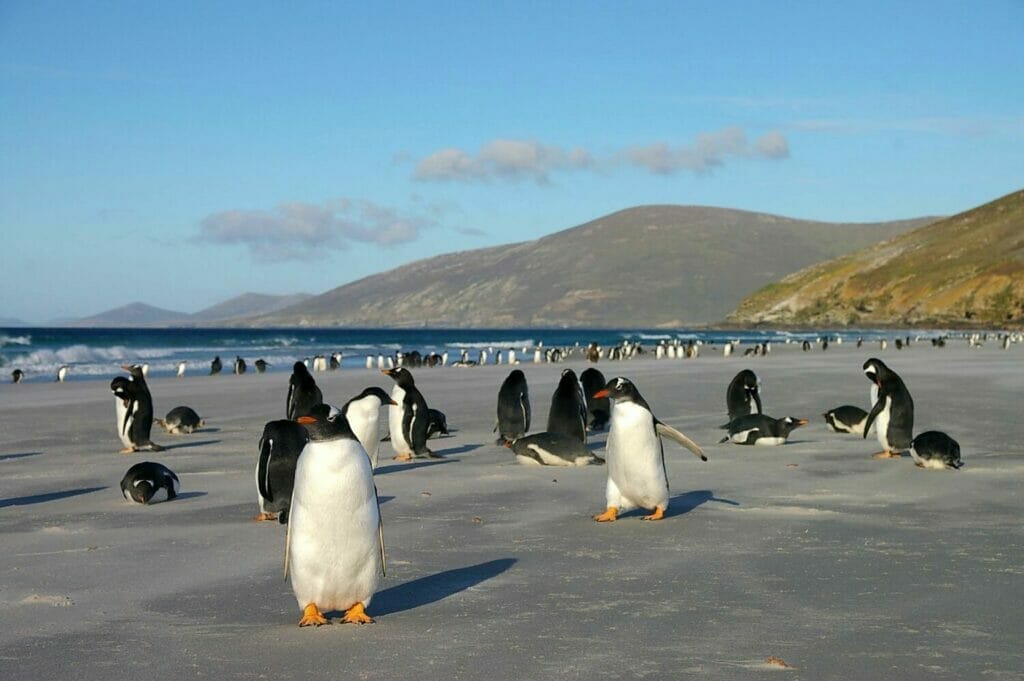
The penguin’s waddle, once perceived as a simple quirk of nature, is in fact a sophisticated outcome of evolutionary adaptation. Their hidden knees, dense bones, and specialized limb structure are all finely tuned to their dual existence as powerful swimmers and resilient terrestrial inhabitants. From the subtle flex of a knee to the broad sweep of a flipper, every aspect of a penguin’s anatomy is a testament to its remarkable journey from the skies to the sea, a journey that continues to captivate and inspire. The seemingly simple act of a penguin walking is, in reality, a complex ballet of biological engineering, perfectly suited to its demanding and beautiful world.

