


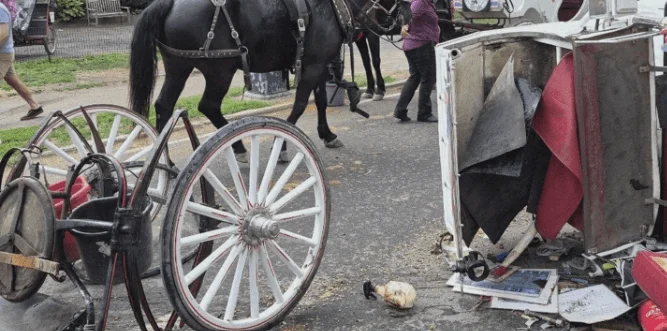
The death of 18-year-old Romanch Mahajan on Wednesday has sent shockwaves through New York City, reigniting a fierce and long-standing debate over the safety and ethics of the horse-drawn carriage industry. The incident occurred in Central Park when a horse, reportedly startled by an unknown stimulus, bolted while pulling a carriage occupied by a family. The resulting loss of control led to the carriage overturning, causing fatal injuries to Mahajan, who witnesses say was attempting to shield his mother from the impact as the vehicle capsized. This tragedy, described by advocates as a predictable consequence of operating a high-risk industry in a dense urban environment, has prompted the victim’s family and animal rights organizations to demand an immediate and permanent cessation of all carriage operations within the city.
The Chronology of a Developing Crisis
The fatal accident involving Romanch Mahajan is the latest in a series of incidents that have plagued the carriage industry in recent weeks. To understand the gravity of the current situation, one must look at the timeline of events leading up to the Wednesday tragedy.
Exactly one week prior to Mahajan’s death, a horse named Deniz, which was being used for carriage rides, collapsed and died while in service in Central Park. The death of Deniz sparked immediate protests, as animal welfare organizations pointed to the incident as evidence of the physical toll the industry takes on the animals. On the day following Deniz’s collapse, People for the Ethical Treatment of Animals (PETA) joined NYCLASS and several members of the New York City Council, including bill sponsor Christopher Marte, for a rally on the steps of City Hall. The demonstration was intended to accelerate the passage of legislation that would phase out horse-drawn carriages in favor of electric-powered alternatives.
The momentum from the protest was tragically overshadowed by the events of the following Wednesday. According to eyewitness accounts and video footage recovered from the scene, the horse pulling the Mahajan family suddenly accelerated into a gallop, rendering the driver unable to maintain control. The carriage swayed violently before flipping over near a high-traffic pedestrian area. Emergency responders arrived shortly after, but Mahajan succumbed to his injuries.
On Monday morning, a memorial vigil was held at the Cherry Hill Fountain in Central Park, situated near the site of the fatal crash. The event was attended by city and state elected officials, as well as representatives from PETA. During the vigil, a formal statement from the Mahajan family was read, calling on Mayor Zohran Mamdani and the City Council to take decisive action. The family’s plea was clear: an immediate and permanent end to the industry to prevent further loss of life.
Analyzing the Risks of Urban Horse-Drawn Carriages
The presence of horse-drawn carriages in New York City has been a subject of controversy for decades. Proponents of the industry argue that the carriages are a vital part of the city’s tourism infrastructure and provide a historical connection to Old New York. However, urban safety experts and animal behaviorists have frequently raised concerns about the inherent dangers of mixing large, easily startled animals with the chaotic environment of a modern metropolis.
Central Park, while often perceived as a tranquil oasis, is surrounded by heavy traffic, construction noise, sirens, and thousands of pedestrians. For a horse, which is a prey animal with a highly developed "fight or flight" instinct, these stimuli can be overwhelming. When a horse "spooks" or bolts, it can exert thousands of pounds of force, making it nearly impossible for a human driver to restrain it once it has reached a certain momentum.
Data from the New York City Department of Health and Mental Hygiene, which oversees the welfare of the horses, and the Department of Consumer and Worker Protection, which licenses the drivers, show a recurring pattern of accidents involving collisions with motor vehicles and pedestrians. Between 2010 and 2024, dozens of incidents were recorded involving horses tripping, collapsing from heat exhaustion, or bolting into traffic. The death of Romanch Mahajan represents the most severe outcome of these systemic risks—a fatality involving a passenger.
The Legislative Battle and Political Landscape
The push to ban horse-drawn carriages has historically faced significant political hurdles. The industry is represented by powerful labor interests, including the Transport Workers Union (TWU) Local 100, which argues that a ban would eliminate the livelihoods of dozens of drivers and stable hands. Previous administrations have attempted to limit the industry’s footprint, such as restricting carriages to Central Park and prohibiting them from operating on city streets during rush hours or extreme weather conditions, but these measures have often been viewed as insufficient by activists.
The current legislative focus centers on a bill sponsored by Council Member Christopher Marte. This proposed legislation seeks to replace horse-drawn carriages with electric "e-carriages." These vehicles are designed to mimic the aesthetic of vintage carriages while providing a safer, more humane alternative that does not rely on animal labor. Proponents of the bill argue that this transition would preserve the tourism jobs associated with the industry while eliminating the public safety risks and animal welfare concerns.
The administration of Mayor Zohran Mamdani is now under intense pressure to support this transition. While the Mayor has expressed sympathy for the Mahajan family, the executive branch must navigate the competing interests of labor unions, animal rights groups, and the tourism board. However, the death of a teenager may prove to be the tipping point for a City Council that has become increasingly receptive to the "e-carriage" proposal.
Animal Welfare and Physical Toll
Beyond the immediate danger to human life, the welfare of the horses themselves remains a primary driver of the opposition. Horses used in the carriage industry often spend long hours standing on asphalt, which can lead to chronic hoof and joint problems. Furthermore, the air quality in Midtown Manhattan, characterized by high levels of vehicle exhaust, is detrimental to the respiratory health of equines.
The death of Deniz, the horse that collapsed just a week before the Mahajan accident, highlighted the lack of transparency regarding the health and retirement of these animals. Activists have long called for more rigorous independent veterinary inspections and a public registry of all horses in service. The industry currently operates under a system where the stables often employ their own veterinarians, leading to what critics describe as a conflict of interest.
Global Context and Comparative Policy
New York City is not alone in grappling with this issue. Globally, several major cities have already moved to ban or heavily restrict horse-drawn carriages in favor of safer alternatives. Montreal, Canada, implemented a full ban in 2020 following a series of accidents and public outcry. Similarly, cities like Chicago, Salt Lake City, and Rome have enacted bans or phased out the practice in high-traffic urban centers.
In these cities, the transition was often met with initial resistance from operators, but subsequent data suggested that the move did not negatively impact tourism. In some cases, the introduction of electric carriages or other heritage-focused tours provided a more consistent and weather-resistant revenue stream for the city. New York’s advocates point to these cities as successful case studies for how a modern metropolis can evolve past the use of animal labor in its transportation and tourism sectors.
Implications for Public Safety and City Liability
The death of Romanch Mahajan also raises significant questions regarding the city’s liability and the adequacy of current safety regulations. If it is determined that the city was aware of the escalating dangers—as evidenced by the death of Deniz and numerous prior accidents—and failed to take corrective action, it could face substantial legal challenges.
Insurance requirements for carriage operators have also come under scrutiny. Given the potential for catastrophic injury, the current insurance mandates may be insufficient to cover the damages resulting from a fatal accident. This financial risk, combined with the moral imperative to protect citizens and tourists, is forcing a re-evaluation of the industry’s place in the city’s future.
Conclusion: A Turning Point for Central Park
The memorial for Romanch Mahajan served as a somber reminder that the debate over horse-drawn carriages is no longer just about animal rights or tradition; it is a matter of public safety. The family’s demand for an immediate shutdown reflects a growing consensus that the risks inherent in the industry can no longer be mitigated through minor regulatory changes.
As the City Council deliberates on the future of the industry, the eyes of the public remain on City Hall. The decision to either maintain the status quo or move toward a permanent ban will define the Mamdani administration’s approach to balancing historical tradition with modern safety standards. For the Mahajan family, and for the advocates who have spent years sounding the alarm, the only acceptable outcome is a city where such a tragedy can never happen again. The death of a young man and the collapse of a horse within a single week have created a mandate for change that New York City may finally be unable to ignore.

