


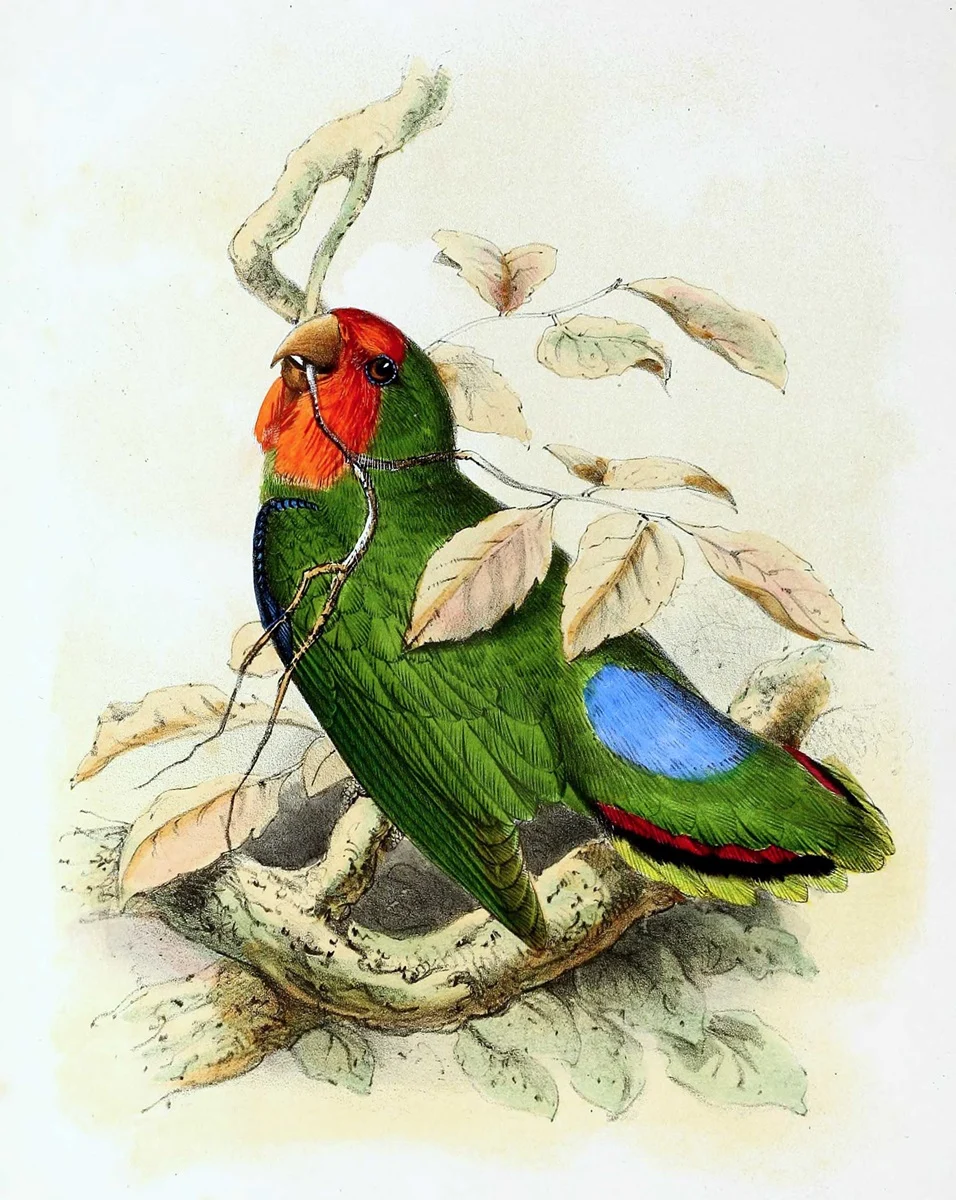
The Red-headed Lovebird, Agapornis pullarius, stands as a striking yet often overlooked member of the parrot family. Unlike its more commonly encountered relatives within the lovebird genus, which frequently grace homes as popular companion birds, this particular species maintains a discreet presence in aviculture, primarily due to its pronounced stress-prone nature. This inherent sensitivity makes it a rare sight in captivity, appealing almost exclusively to highly specialized and dedicated parrot enthusiasts.
This article delves into the intricate details of the Red-headed Lovebird, exploring its natural origins, ecological habits, distinctive physical characteristics, and the complex challenges associated with its conservation and maintenance in controlled environments.
Geographic Distribution and Ecological Niche
All species within the Agapornis genus are indigenous to the African continent, and the Red-headed Lovebird is no exception. Its natural range spans a somewhat patchy, yet distinct, band across West to Central Africa. This distribution extends westward as far as Guinea and eastward into Ethiopia, covering a diverse array of sub-Saharan landscapes. Within this expansive territory, Agapornis pullarius is largely sedentary, exhibiting limited nomadic tendencies unless driven by significant environmental changes or food scarcity.
The species thrives predominantly in tropical lowland savannahs, an ecosystem characterized by a mix of grasses and scattered trees. While it appreciates the presence of trees for shelter, foraging, and nesting, it actively avoids dense primary forests, suggesting a preference for more open canopy environments. These birds typically move in pairs or small flocks, occasionally congregating in groups of up to a few dozen individuals. They can be found at altitudes reaching up to 2,000 meters (approximately 6,550 feet), though their prevalence is generally observed at lower elevations. The savannah ecosystem, with its unique flora and fauna, plays a crucial role in supporting the Red-headed Lovebird, providing both sustenance and protection. However, these habitats are increasingly under threat from human activities, directly impacting the species’ long-term viability.
Conservation Status and Mounting Threats
Despite its limited presence in aviculture, the Red-headed Lovebird’s conservation status, as assessed by the IUCN Red List, is currently categorized as "Least Concern." This designation, however, belies a more complex reality. The IUCN notes that the species is locally uncommon throughout much of its natural range, indicating a fragmented and potentially fragile population structure. Furthermore, alarming trends suggest that the overall population size is likely experiencing a steady decline.
The primary drivers of this decline are multifaceted, stemming largely from anthropogenic pressures. Habitat destruction stands as a paramount threat, with vast tracts of savannah being converted for agricultural expansion, logging, and infrastructure development. As human populations grow, the demand for land and resources intensifies, leading to the fragmentation and degradation of critical lovebird habitats. Another significant factor is the perception of Agapornis pullarius as a crop pest by local farmers. The lovebirds’ dietary preference for grass seeds often extends to agricultural crops like millet, leading to retaliatory killings by farmers seeking to protect their livelihoods.
Perhaps one of the most insidious threats, given the species’ "Least Concern" status, is the capture of birds for the international pet trade. A sobering 2018 study highlighted that nearly 40,000 Red-headed Lovebirds were exported from their natural range since 1975. This substantial number, even if spread over several decades, represents a significant drain on wild populations, especially for a species already described as locally uncommon. The Convention on International Trade in Endangered Species of Wild Fauna and Flora (CITES) currently does not list Agapornis pullarius in its appendices, meaning that trade in the species remains largely unregulated at an international level, despite the evident impact on wild numbers. This lack of CITES listing allows for continued commercial exploitation without the stringent oversight applied to more critically endangered species.

Experts like Parr & Juniper (2010) have underscored these concerns, stating, "Abundance also varies owing to nomadic habits, but a genuine overall decline appears to have occurred in many areas this century. Trapped for live bird trade with large numbers in captivity outside range." This statement underscores the dual challenge of assessing population dynamics in a species with some nomadic tendencies and the undeniable pressure exerted by the pet trade. Conservationists warn that the "Least Concern" designation might mask significant regional declines and the cumulative impact of ongoing threats. They advocate for stricter monitoring of wild populations, robust habitat protection initiatives, and a reevaluation of its trade status to ensure the long-term survival of Agapornis pullarius.
Distinctive Appearance and Subspecies
The Red-headed Lovebird is celebrated for its striking plumage, a vibrant palette that immediately distinguishes it. The body is adorned in a brilliant green, providing excellent camouflage amidst the foliage of its savannah habitat. This verdant backdrop is dramatically contrasted by a vivid scarlet face and beak, which gives the species its common name. Further enhancing its beauty are subtle dashes of blue on its back and a small band of red on its tail, adding intricate detail to its overall appearance.
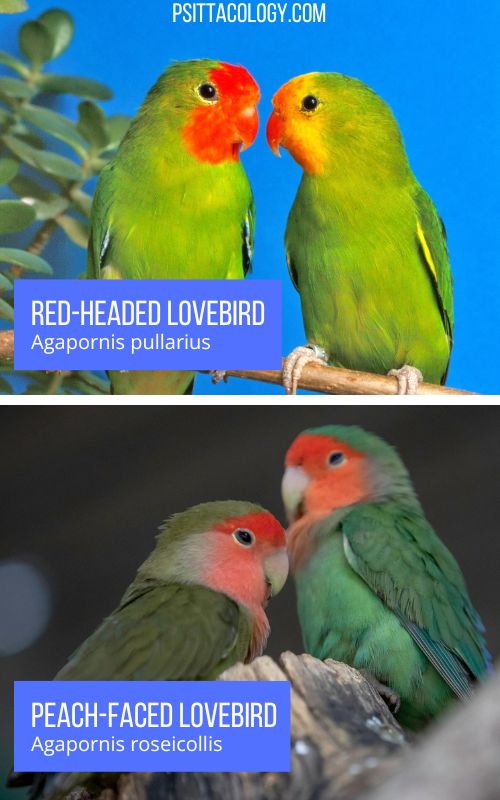
Superficially, the Red-headed Lovebird bears a resemblance to the Peach-faced Lovebird (Agapornis roseicollis), a species far more prevalent and popular in aviculture. However, discerning the two is relatively straightforward upon closer inspection. The most telling difference lies in the beak coloration: Agapornis pullarius possesses a distinctly red beak, whereas A. roseicollis features a beige or horn-colored beak. Additionally, while both have colorful faces, the specific hues and patterns differ.
The species is further divided into two recognized subspecies: Agapornis pullarius pullarius and Agapornis pullarius ugandae. While both subspecies share the core characteristics of the Red-headed Lovebird, subtle variations in plumage intensity or size may exist across their respective geographical ranges, though detailed visual differences are often nuanced and best appreciated by experts.
A notable feature of Agapornis pullarius is its sexual dimorphism, allowing for visual differentiation between males and females. The male typically exhibits a brighter, more intensely scarlet face and beak. In contrast, the female’s facial coloration tends to be less vibrant, leaning more towards an orange hue, and her beak also displays a duller, more orange-red tone compared to the male’s striking scarlet. This distinction is particularly helpful for breeders and researchers studying the species.
Dietary Habits in the Wild
Like many parrot species, Red-headed Lovebirds are primarily granivores, with their diet consisting predominantly of seeds. They show a strong preference for grass seeds, which are abundant in their tropical savannah habitat. This dietary inclination, however, places them in direct conflict with human agricultural practices. Their foraging often extends to cultivated crops such as millet, leading to their classification as a "crop pest" in certain regions. This designation, as previously noted, contributes to their persecution by farmers.
Beyond grass seeds, these lovebirds also supplement their diet with various wild fruits. Figs and guava are among the preferred choices when available, providing essential vitamins, minerals, and moisture. In their ecosystem, Agapornis pullarius plays a role in seed dispersal, albeit secondary to their granivorous consumption. By consuming fruits and passing seeds, they contribute to the propagation of certain plant species, thereby participating in the broader ecological balance of their habitat. Understanding their natural diet is crucial for conservation efforts, especially when considering strategies to mitigate conflict with agricultural communities.
Challenges and Considerations in Aviculture

The Red-headed Lovebird occupies a unique and somewhat challenging position within aviculture. Unlike its more amenable lovebird cousins, such as the widely popular Fischer’s Lovebird (Agapornis fischeri), Agapornis pullarius is a rare sight in private collections and zoological exhibits. Its presence is largely confined to the aviaries of highly experienced and dedicated parrot enthusiasts who possess a deep understanding of its specific, often demanding, requirements.
The primary obstacle to its widespread adoption as a pet lies in its inherently nervous, easily stressed, and remarkably picky nature. Wild-caught birds, in particular, exhibit extreme sensitivity. They are known to succumb to stress from seemingly minor disturbances, such as a sudden loud noise, or may refuse to eat if housed in a shared aviary with more boisterous or aggressive species. This fragility necessitates a highly controlled and calm environment, making them unsuitable for typical pet ownership.
Avian veterinarians and behaviorists consistently caution against the casual acquisition of Agapornis pullarius. They emphasize that these are not "tame pets" in the conventional sense. The "look, but don’t touch" philosophy is paramount for this species; direct interaction and handling are generally detrimental to their well-being. The historical timeline of its presence in aviculture likely dates back to the early 20th century when many African parrot species were first imported. However, unlike many others, the Red-headed Lovebird never achieved widespread popularity precisely due to the significant difficulties in acclimatizing and breeding them in captivity. This history underscores the long-standing challenges associated with this particular species.
Specialized Housing and Care Requirements
For the rare, experienced parrot enthusiast fortunate enough to acquire captive-bred Red-headed Lovebirds, meticulous attention to housing and care is essential. The ideal setup is a heated aviary, which provides ample space and protection from environmental fluctuations. Crucially, these parrots fare best when housed solo or in a compatible breeding pair, as cohabitation with other species or even multiple pairs of their own kind can induce significant stress.
If indoor housing is the only option, a spacious cage is imperative. A minimum width of 30 inches (80 cm) is recommended, with a bar spacing of approximately 0.5 inches (1.25 cm) to prevent escapes and injuries. The cage must be furnished with a variety of natural wood perches of varying diameters, promoting foot health and providing opportunities for chewing.
The captive diet for Red-headed Lovebirds requires careful consideration. While many traditional keepers have historically relied on dry or sprouted seeds, veterinary consensus now strongly advocates for a high-quality pelleted diet as the nutritional cornerstone for most parrots. Pellets offer a balanced nutritional profile, reducing the risk of dietary deficiencies common with seed-only diets. This should be supplemented with a high-quality seed mix, offered in moderation.
Furthermore, a diverse array of fresh produce is vital. This includes plenty of fresh vegetables such as leafy greens (kale, spinach, romaine lettuce), bell peppers, carrots, and broccoli. A limited selection of fresh fruits, including berries, apples, mango, and papaya, can also be offered. Other beneficial additions to their diet include cooked grains like quinoa or brown rice, and select foraged weeds such as dandelion and chickweed (ensuring they are pesticide-free). During breeding seasons or periods of increased activity, additional protein sources like boiled egg or mealworms are highly beneficial.
Enrichment and Behavioral Considerations
Like all parrots, Agapornis pullarius is an intelligent creature that requires mental stimulation to prevent boredom and stress-related behaviors. However, given their extreme sensitivity, enrichment must be introduced gradually and thoughtfully. Abrupt changes or novel, intimidating items can trigger anxiety rather than provide stimulation.
Essential enrichment items for Red-headed Lovebirds include:
- Natural branches: Providing varying diameters of natural wood branches (e.g., from fruit trees, willow, eucalyptus) for perching and chewing helps maintain foot health and satisfies their natural urge to chew.
- Chew toys: A continuous supply of safe, destructible chew toys made from natural materials like wood, paper, or natural fibers is crucial for mental engagement and beak conditioning.
- Foraging toys: Toys that encourage natural foraging behaviors, such as those that require problem-solving to extract treats, can provide significant mental stimulation without direct interaction.
- Shreddable toys: Items that can be torn apart, like paper rolls or cardboard, satisfy their instinct to shred and nest-build.
Avian behaviorists advocate for a quiet, predictable environment, enriching it with familiar, safe items rather than frequent, novel changes that could trigger anxiety. Consistency in routine and environment is key to their well-being.
Vocalization and Communication
Compared to many other parrot species, the Red-headed Lovebird is considered relatively quiet. However, like all psittacines, it possesses the capacity for loud vocalizations when agitated, excited, or communicating. Its calls are typically described as shrill, serving various functions such as alarm calls, contact calls, and territorial declarations. For those interested in hearing their unique vocalizations, resources like Xeno-Canto provide recordings of Agapornis pullarius in its natural habitat, offering valuable insight into its auditory communication.
Reproduction Challenges and Breakthroughs
Reproduction in the wild for Red-headed Lovebirds is closely tied to the rainy season, when food resources are abundant. A fascinating aspect of their natural history is their nesting preference. The species typically nests in arboreal (tree-dwelling) termite or ant nests, exhibiting a remarkable ability to excavate burrows within these structures. Occasionally, they may also utilize ground-level nests or natural tree hollows created by woodpeckers. The female takes on the primary role of nest construction, meticulously burrowing into the termitarium and reinforcing the interior with plant materials like grass leaves. Once the nest is prepared, she lays a clutch of up to six eggs.
In captivity, the Red-headed Lovebird’s specific nesting requirements and nervous disposition have historically made it notoriously difficult to breed successfully. The precise environmental cues and nesting materials needed to mimic their natural termitarium nests were long a mystery to aviculturists. However, dedicated enthusiasts have made significant strides in understanding and replicating these conditions. A notable breakthrough came with the discovery that nest boxes constructed from cork could effectively simulate the texture and insulating properties of termite nests, encouraging successful breeding. Renowned breeders such as Dominique Veeckmans have championed the use of cork nest boxes, a method now considered crucial for successful propagation of A. pullarius in controlled environments.
These captive breeding successes are vital. They not only contribute to the species’ presence in aviculture but also play a critical role in reducing the demand for wild-caught birds. Sustainable captive breeding programs are essential for mitigating pressure on wild populations, thereby offering a glimmer of hope for the long-term future of this unique African parrot.
The Red-headed Lovebird represents a fascinating paradox: a beautiful, relatively small parrot that, despite its "Least Concern" status, faces significant threats in the wild and presents considerable challenges in captivity. Its story underscores the intricate balance between conservation, ethical aviculture, and the broader implications of human impact on biodiversity. Continued research, stringent conservation efforts, and highly specialized care are paramount to ensuring Agapornis pullarius thrives for generations to come.

