


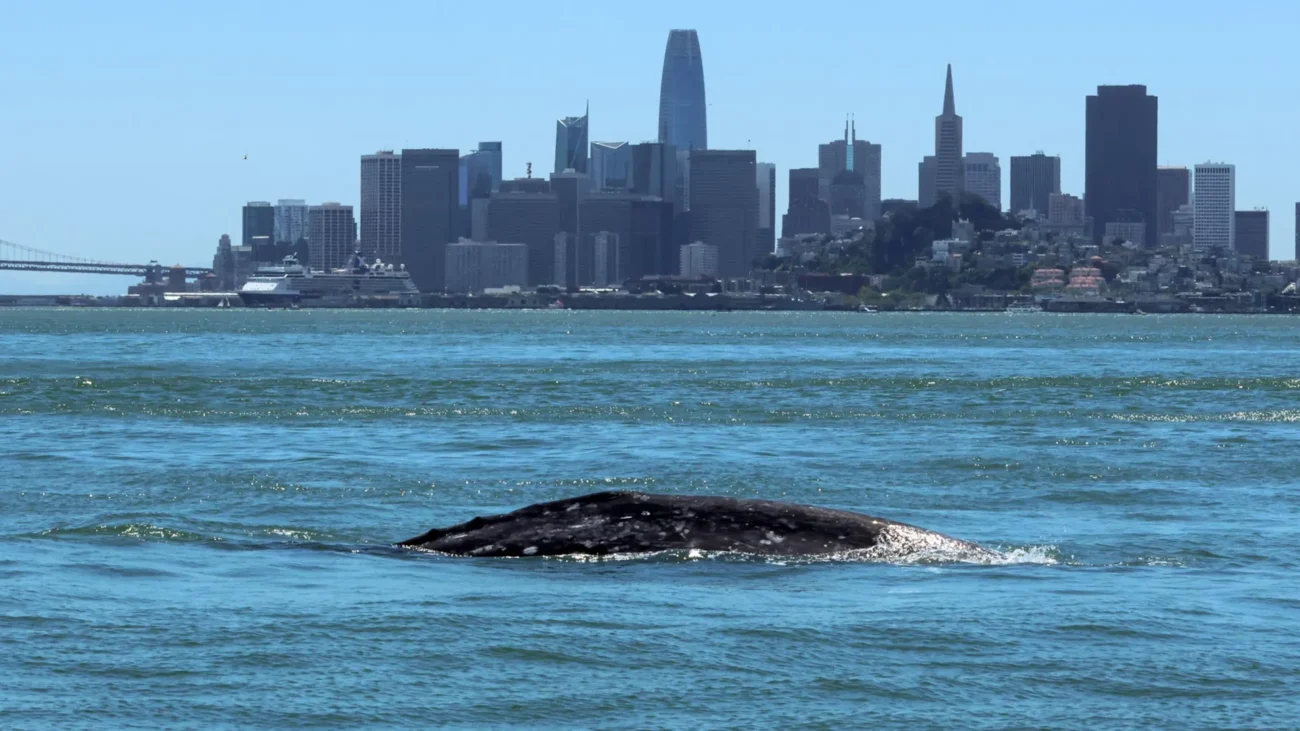
Gray whales, iconic navigators of the Pacific, are exhibiting a concerning shift in their centuries-old migratory patterns, increasingly venturing into the bustling waters of San Francisco Bay. This deviation, driven by the cascading impacts of climate change on their Arctic feeding grounds, has led to a significant increase in whale mortality, with vessel strikes emerging as a primary threat. Researchers are urgently calling for enhanced protective measures to safeguard these vulnerable marine mammals as they navigate a rapidly changing ocean environment.
A Familiar Journey Altered
For millennia, the gray whale ( Eschrichtius robustus) has undertaken one of the longest migrations of any mammal on Earth. These journeys, spanning thousands of miles, connect the nutrient-rich Arctic waters where they gorge on benthic invertebrates to the warm, shallow lagoons of Baja California, Mexico, for breeding and calving. This biannual migration is a testament to their resilience and deep-seated biological programming. However, the delicate balance of this ancient cycle is being disrupted by anthropogenic climate change, forcing these magnificent creatures into unfamiliar and perilous territories.
In recent years, a growing number of gray whales have been observed feeding in atypical locations, far from their traditional Arctic buffet. San Francisco Bay, a densely populated urban estuary characterized by intense maritime traffic, has become one such unexpected feeding ground. This phenomenon, first noted with increasing frequency around 2018, has coincided with a troubling surge in gray whale deaths in the region. A comprehensive study, published in Frontiers in Marine Science, has shed critical light on the grim reality faced by these "Bay Grays," revealing that a staggering proportion of whales entering the Bay do not survive their sojourn.
The Perils of a Busy Waterway
Josephine Slaathaug, lead author of the study and a researcher at Sonoma State University, highlighted the inherent dangers of San Francisco Bay for surfacing whales. "Gray whales have a low profile to the water when they surface, and this makes them difficult to see in conditions like fog which are common to San Francisco Bay," Slaathaug explained. This reduced visibility, compounded by the sheer volume of maritime activity, creates a hazardous environment. San Francisco Bay is a vital commercial and recreational artery, with the Golden Gate Strait serving as a critical bottleneck for all incoming and outgoing traffic, including the whales themselves. The confluence of these factors significantly elevates the risk of collisions between vessels and whales.
Climate Change: The Underlying Driver
The primary impetus behind this behavioral shift is the escalating impact of climate change on the Arctic ecosystem. Warming ocean temperatures are altering the distribution and abundance of the benthic invertebrates, such as amphipods and polychaete worms, that form the staple diet of gray whales. These disruptions in their traditional feeding grounds are forcing whales to expend more energy searching for sustenance, often leading them to seek alternative food sources in less ideal environments.
The consequences of this nutritional stress are stark. According to the National Oceanic and Atmospheric Administration (NOAA), the Pacific gray whale population has experienced a significant decline, with numbers reportedly falling by more than half since 2016. Sightings of healthy calves, crucial indicators of population health, have become increasingly rare, underscoring the profound challenges facing the species. This decline suggests that the whales are not only struggling to find adequate food but are also experiencing reduced reproductive success.
Tracing the "Bay Grays": A Citizen Science Endeavor
To unravel the mystery of these "Bay Grays," scientists initiated a multi-year effort to track and identify individual whales frequenting San Francisco Bay. The study, which spanned from 2018 to 2025, relied on a combination of opportunistic public sightings, photographic documentation, and more structured surveys. The public’s contribution of photographs, captured during everyday encounters, proved invaluable in building a catalog of individual whales. Researchers meticulously analyzed unique markings on each whale’s skin, such as nicks, scars, and pigmentation patterns, to establish individual identities. However, the study acknowledges that these markings can fade after death, potentially leading to missed matches and an underestimation of the true number of individual whales.
The findings revealed that between 2018 and 2023, a total of 114 individual gray whales were documented within San Francisco Bay. A key observation was the low rate of return: only four of these individuals were observed in more than one year. This suggests that the majority of whales entering the Bay are likely one-time visitors, perhaps driven by desperation rather than a planned foraging strategy. Scientists hypothesize that the Bay may be serving as an "emergency feeding stop" for whales in poor physical condition, as unusually thin individuals have also been observed foraging in other non-traditional habitats.
A High Price for Desperate Measures
Despite the potential for some nutritional gain, the high mortality rate within San Francisco Bay paints a grim picture. Between 2018 and 2025, a staggering 70 gray whales were found dead in the broader San Francisco Bay-Delta region. Of these, a significant number, 30, were definitively identified as having been struck by vessels. For the remaining deceased whales where a cause of death could be determined, malnutrition emerged as a prevalent factor.
Bekah Lane, a co-author of the study from the Center for Coastal Studies, emphasized the severity of the situation. "At least 18% of the individuals identified in San Francisco Bay later died in the area," Lane stated. "Our broader analysis of local strandings both inside and outside San Francisco Bay found that over 40% of these whales died of trauma from vessels." This statistic highlights the pervasive threat posed by vessel traffic, not just within the Bay but along the wider coastal areas where these whales are attempting to forage. The possibility that weakened whales, already struggling with starvation, are less able to detect and evade oncoming ships adds a tragic layer to this complex problem.
The Urgent Need for Proactive Protection
The study’s findings underscore the urgent necessity for immediate and effective protective measures. Researchers are advocating for further research to deepen our understanding of how and why whales are utilizing San Francisco Bay. The observed increase in whale activity is significant; in 2025 alone, 36 whales entered the area, with groups sometimes numbering over ten individuals. More detailed tracking, including the deployment of acoustic monitoring devices and advanced satellite tagging, could provide invaluable real-time data on whale distribution and behavior within the Bay. Enhanced necropsy efforts would also be crucial in accurately determining the primary causes of death and assessing the interplay between starvation, vessel strikes, and other potential factors.
Several preventive strategies are being considered and advocated for by marine mammal experts and conservation organizations. These include comprehensive educational campaigns aimed at commercial vessel operators, informing them about the increased presence of whales and best practices for avoidance. Adjusting ferry routes to steer clear of known whale hotspots, particularly during peak migration periods or when whales are actively observed feeding, could also significantly reduce the risk of collisions. Furthermore, implementing speed restrictions in high-risk areas has been proven effective in other regions for reducing large whale mortality from vessel strikes. An in-depth risk assessment could help identify the most critical zones and times for implementing such measures.
"In San Francisco Bay, the biggest threat to these whales is vessel traffic," Lane reiterated. "Continued monitoring will help illuminate their distribution patterns and behaviors while within the Bay, which can impact risk. Route changes and speed restrictions have been found to significantly reduce vessel strike mortality to large whales, and an assessment of risk can help identify the most effective strategies to protect these animals." The proactive implementation of such measures could offer a lifeline to a species grappling with unprecedented environmental pressures.
A Population Under Pressure: Adapting in Real Time
While the current study provides a crucial snapshot of the challenges gray whales face in San Francisco Bay, researchers acknowledge that there are still gaps in our understanding of their day-to-day movements and the full extent of their adaptive strategies. The dynamic nature of climate change means that whale behavior and environmental conditions are constantly evolving.
"This study is our best analysis of the data we collected, but it’s important to consider that we do not have the full picture of each whale’s movements on a daily timescale," Slaathaug concluded. "These results are an important piece of the larger puzzle of what is going on in the overall population as they attempt to adapt to climate change in real time."
The plight of the gray whales in San Francisco Bay serves as a potent indicator of the broader ecological crisis unfolding in our oceans. As global temperatures continue to rise and marine ecosystems face unprecedented disruption, species like the gray whale are on the front lines, forced to make life-altering decisions in a bid for survival. Their journey into urban waterways, fraught with peril, is a stark reminder of our interconnectedness with the natural world and the urgent need for collective action to mitigate climate change and protect vulnerable wildlife. The fate of these magnificent migrators hinges on our ability to adapt our own behaviors and implement meaningful conservation strategies before it is too late.

