


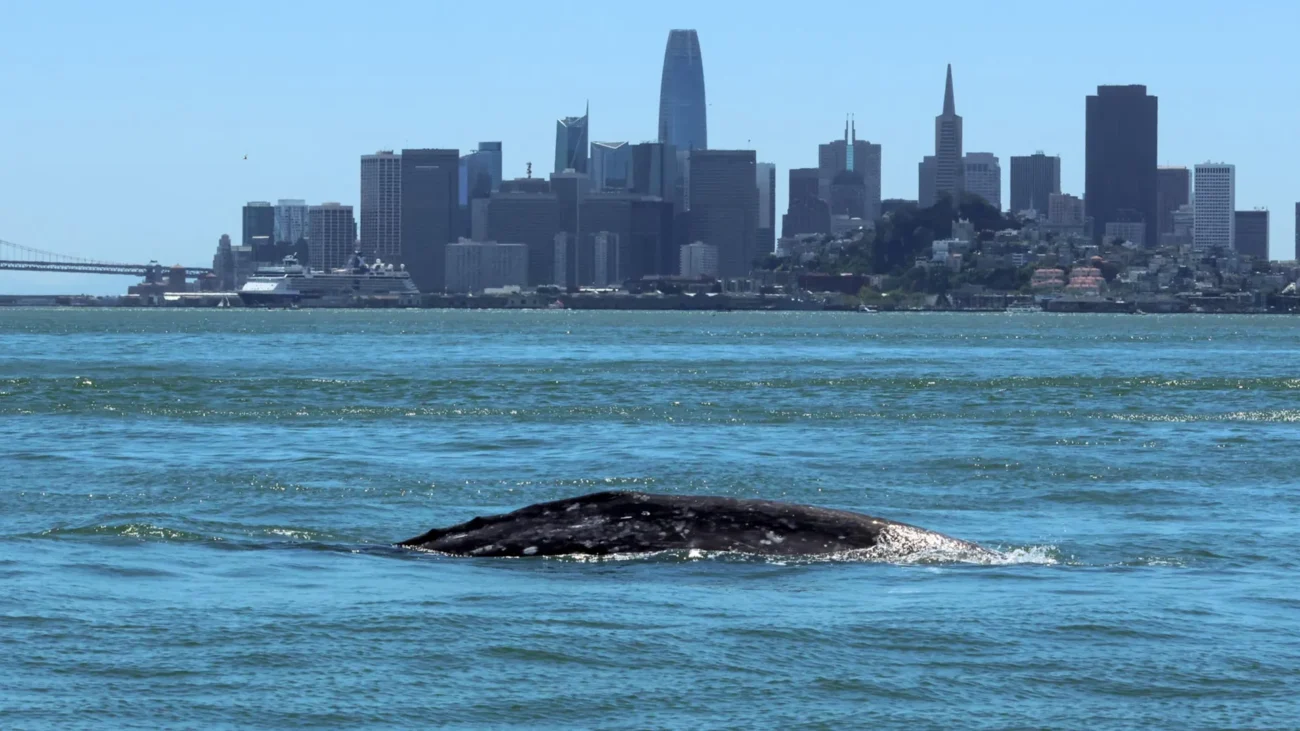
The epic, 10,000-mile round-trip migration of the gray whale, a journey between the nutrient-rich Arctic feeding grounds and the tranquil breeding lagoons of Baja California, Mexico, is a cornerstone of marine biology. This ancient cycle, honed over millennia, is now under unprecedented strain. As the Earth’s climate continues its rapid alteration, ocean conditions are shifting dramatically, forcing these magnificent marine mammals to exhibit behaviors that are as concerning as they are unexpected. In recent years, an alarming trend has emerged: gray whales are being sighted with increasing frequency in unfamiliar, and often perilous, waters, most notably within the heavily trafficked expanse of San Francisco Bay. This deviation from their traditional migratory paths has coincided with a disturbing spike in gray whale mortality, with researchers identifying a significant portion of whales entering the Bay succumbing to fatal injuries, predominantly from collisions with vessels.
A Convergence of Risks: San Francisco Bay’s Hazardous Embrace
San Francisco Bay, a vibrant hub of maritime activity, presents a unique and dangerous environment for these ocean giants. Josephine Slaathaug, lead author of a groundbreaking study published in Frontiers in Marine Science and affiliated with Sonoma State University, elucidates the inherent challenges. "Gray whales have a low profile to the water when they surface, and this makes them difficult to see in conditions like fog, which are common to San Francisco Bay," she explained. This reduced visibility, a natural hazard amplified by the Bay’s often-inclement weather, is compounded by the sheer volume of human activity. "Additionally, San Francisco Bay is a highly trafficked waterway, and the Golden Gate Strait serves as a bottleneck through which all traffic and whales must enter and exit." This narrow strait acts as a critical chokepoint, increasing the likelihood of dangerous encounters between whales and the constant stream of commercial ships, ferries, and recreational boats.
Climate Change: The Undisclosed Driver of Desperate Measures
The fundamental impetus behind these altered migratory patterns is the undeniable impact of climate change on the Arctic ecosystems that sustain the gray whale population. Typically, gray whales do not engage in significant feeding during their long migratory journey to and from their warmer breeding grounds. Instead, they rely almost exclusively on the caloric reserves built up during their months in the Arctic. However, rising ocean temperatures are profoundly disrupting these vital food sources. The delicate balance of Arctic marine life is being upset, leading to a depletion of the plankton, small invertebrates, and amphipods that form the base of the gray whale’s diet.
This nutritional deficit has had a catastrophic effect on the gray whale population. According to data from the National Oceanic and Atmospheric Administration (NOAA), the gray whale population has experienced a dramatic decline, plummeting by more than half since 2016. Compounding this crisis, sightings of newborn calves, a crucial indicator of population health and reproductive success, have become exceedingly rare. This precipitous drop in numbers suggests that the whales are not only struggling to find sufficient food but are also facing increased mortality rates, particularly among the most vulnerable.
The Emergence of the "Bay Grays": A New and Troubling Phenomenon
San Francisco Bay was historically not a recognized stop on the gray whale’s migratory circuit. Their established routes kept them in the open ocean, far from the urbanized and industrialized shores of the Bay. This began to shift conspicuously in 2018, a year that marked a turning point. Whales started appearing in the Bay with a regularity that alarmed researchers and local authorities. This influx coincided with a discernible uptick in local whale deaths, prompting an urgent scientific investigation. Researchers initiated dedicated efforts to understand these newly appearing "Bay Grays," seeking to determine whether these were returning individuals drawn by some new environmental imperative or one-time, perhaps desperate, visitors.
Unraveling the Mysteries: Tracking Whales in a Confined Space
To shed light on this perplexing phenomenon, a comprehensive research initiative was launched, spanning from 2018 to 2025. The methodology employed a multi-pronged approach, combining opportunistic sightings and photographic data contributed by the public with more structured, systematic surveys conducted from vessels. The identification of individual whales relied on the unique patterns of scars, callosities, and pigmentation on their skin – a kind of natural fingerprint. While these markings are distinctive, researchers acknowledge a potential limitation: these markings can fade or be obscured after a whale’s death, meaning some matches between live sightings and necropsy data may have been missed.
The study cataloged a significant number of individual whales within the Bay during the designated period, documenting a total of 114 distinct individuals. However, the analysis revealed a disheartening reality: only a small fraction, just four of these whales, were observed in the Bay for more than a single year. This strongly suggests that the majority of whales entering San Francisco Bay are not returning visitors seeking familiar feeding grounds. Instead, scientists hypothesize that the Bay may be serving as an emergency feeding stop, a last resort for whales that are already in poor physical condition, possibly weakened by starvation or other environmental stressors. This theory is further supported by observations of unusually thin individuals foraging in other non-traditional habitats outside the Bay.
A Grim Reckoning: Mortality from Vessel Strikes and Starvation
Despite the potential for the Bay to offer a temporary refuge for foraging, the harsh reality is that many of these vulnerable whales do not survive their sojourn. Between 2018 and 2025, a stark tally of 70 gray whales were found deceased in the region surrounding San Francisco Bay. A critical finding from the necropsies performed on these stranded animals revealed that 30 of these whales had sustained fatal injuries from direct vessel strikes. For the remaining whales, where a definitive cause of death could be ascertained, a significant number exhibited clear signs of malnutrition and emaciation, pointing to starvation as a primary contributing factor.
Further analysis connected 21 of the 45 identifiable deceased whales to individuals documented in the researchers’ catalog of live sightings. Bekah Lane of the Center for Coastal Studies, a co-author of the study, highlighted the severity of the situation: "At least 18% of the individuals identified in San Francisco Bay later died in the area." The broader analysis of local strandings, encompassing whales found both inside and outside the Bay, painted an even more dire picture, revealing that "over 40% of these whales died of trauma from vessels." This statistic underscores the pervasive threat posed by maritime traffic to a species already struggling to survive.
An Urgent Call to Action: Implementing Protective Measures
The findings from this extensive research unequivocally point to an urgent need for enhanced protective measures for gray whales, particularly in the context of San Francisco Bay. Scientists are emphasizing the critical importance of continued and more detailed research to gain a deeper understanding of precisely how and why these whales are choosing to utilize the Bay. In 2025 alone, a substantial 36 whales entered the area, with some groups numbering over ten individuals, highlighting the escalating nature of this phenomenon.
More sophisticated tracking technologies and a greater number of necropsies are essential to definitively determine whether the low rate of returning whales is a direct consequence of the high mortality rates observed. This research will also help to clarify whether deaths are primarily attributable to starvation, vessel strikes, or a complex interplay of both factors. It is plausible that weakened whales, already compromised by malnutrition, possess reduced agility and awareness, making them even less capable of evading oncoming ships.
In response to these findings, researchers and conservationists are advocating for a suite of preventive strategies. These could include comprehensive educational campaigns aimed at commercial vessel operators, advising them on best practices for whale detection and avoidance. Adjustments to established ferry routes, potentially rerouting traffic away from known whale aggregation areas, could also offer significant protection. Furthermore, the implementation of speed restrictions in high-risk zones, particularly during peak migration periods or when whale sightings are frequent, has been shown in other regions to substantially reduce the incidence of fatal vessel strikes.
"In San Francisco Bay, the biggest threat to these whales is vessel traffic," stated Lane. "Continued monitoring will help illuminate their distribution patterns and behaviors while within the Bay, which can impact risk. Route changes and speed restrictions have been found to significantly reduce vessel strike mortality to large whales, and an assessment of risk can help identify the most effective strategies to protect these animals." An assessment of the specific risk factors within the Bay, taking into account traffic patterns, whale sighting data, and navigational channels, could help identify the most effective and targeted strategies for safeguarding these vulnerable marine mammals.
A Population Under Unprecedented Pressure: Adapting in Real-Time
The researchers involved in this study are candid about the limitations of their findings. They acknowledge that there are still significant gaps in our understanding of the day-to-day movements and nuanced behaviors of gray whales. However, they firmly assert that the results provide an invaluable and critical snapshot of how this iconic species is responding to the relentless and rapid environmental changes occurring across the globe.
"This study is our best analysis of the data we collected, but it’s important to consider that we do not have the full picture of each whale’s movements on a daily timescale," Slaathaug cautioned. "These results are an important piece of the larger puzzle of what is going on in the overall population as they attempt to adapt to climate change in real time." The plight of the gray whale in San Francisco Bay serves as a poignant and urgent reminder of the far-reaching consequences of climate change, not only on ecosystems but also on the individual lives of the creatures that inhabit them. Their struggle to adapt to a changing world underscores the critical need for immediate and decisive action to mitigate climate impacts and protect vulnerable species from the myriad threats they now face. The future of the gray whale, and indeed many other marine species, hinges on our collective ability to understand and respond to these escalating environmental pressures.

