


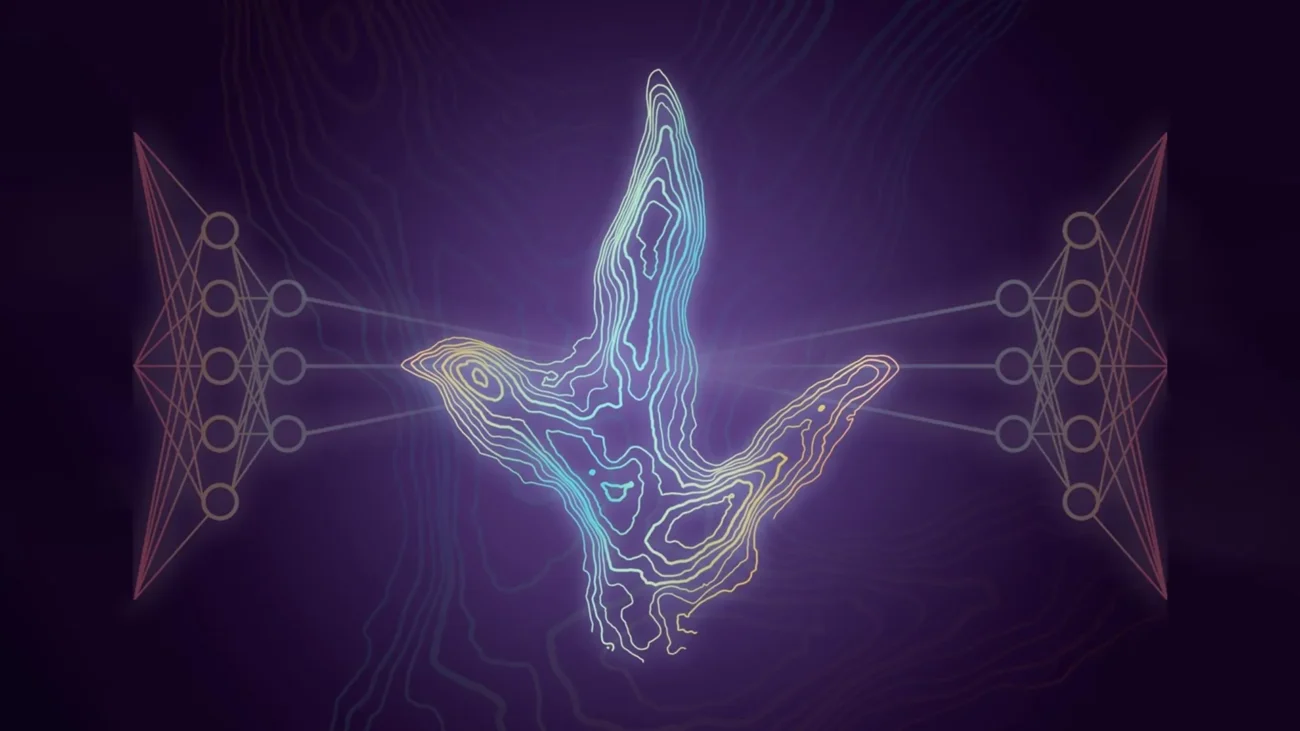
A groundbreaking artificial intelligence (AI) application, dubbed DinoTracker, is poised to transform our understanding of prehistoric life by offering a novel and accessible method for identifying dinosaur footprints. Developed by a collaborative team of international researchers, this innovative technology promises to demystify fossil tracks that have long presented significant challenges to paleontologists and enthusiasts alike. The app, which analyzes images of fossilized impressions, has already yielded surprising insights, potentially pushing back the evolutionary timeline of birds and shedding new light on ancient dinosaur migrations.
The Enduring Mystery of Fossilized Tracks
For centuries, the study of dinosaur footprints has been a cornerstone of paleontology, offering direct evidence of these magnificent creatures’ locomotion, behavior, and even social interactions. However, the interpretation of these ancient impressions has been a subject of ongoing debate and scientific scrutiny. Paleontologists have grappled with classifying tracks, attempting to discern whether they were made by formidable carnivores, placid herbivores, or even the earliest avian ancestors. The very nature of fossilization, a complex geological process, often alters the pristine form of a track, introducing ambiguities that have historically limited precise identification.
The traditional approach to classifying dinosaur footprints involved meticulous manual comparisons. Researchers would compile extensive databases of known track types and their associated dinosaur species, relying on expert knowledge and visual analysis. While this method has yielded considerable progress, it is not without its limitations. Subjectivity can creep into the classification process, particularly when dealing with incomplete or unusually shaped tracks. Disagreements among experts are not uncommon, leading to prolonged debates about the identity of the track-maker. Furthermore, the sheer volume of fossil evidence necessitates a more efficient and objective method for analysis.
DinoTracker: From Photograph to Paleontological Insight
The advent of the DinoTracker app represents a paradigm shift in how these ancient puzzles are approached. The application empowers both seasoned researchers and amateur dinosaur enthusiasts to contribute to scientific understanding. By simply uploading a photograph or even a detailed drawing of a dinosaur footprint via a mobile device, users can receive an immediate, AI-driven analysis. The app’s sophisticated algorithms process the visual data, evaluating key morphological features of the track, such as its overall shape, the spacing and depth of toe impressions, and the presence of any claw marks. Based on these parameters, DinoTracker provides an estimated classification of the dinosaur species or group most likely responsible for leaving the impression.
This democratization of paleontological analysis is a significant development. It allows for the rapid processing of vast quantities of data, potentially uncovering patterns and connections that might have been missed through manual methods. The insights gleaned from fossilized footprints are invaluable. They provide crucial clues about how dinosaurs moved across the landscape – whether they walked on two legs or four, their gait, and their speed. This behavioral data enriches our understanding of dinosaur ecosystems and their interactions within them. However, as noted in previous studies, the preservation process itself can distort these tracks, making interpretation a formidable task. Compression from overlying sediments, erosion, and weathering can all subtly or dramatically alter the original shape, presenting a significant hurdle for consistent classification.
Advancing Beyond Manual Classification: The AI Approach
To overcome the inherent limitations of traditional methods and the inherent biases that can accompany subjective analysis, a dedicated research team spearheaded by the Helmholtz-Zentrum research centre in Berlin, in collaboration with the University of Edinburgh, embarked on the development of advanced AI algorithms. These algorithms are designed to learn autonomously, identifying and categorizing the myriad variations in dinosaur footprint morphology without explicit human programming for each specific trait.
The AI model underwent rigorous training, assimilating data from nearly 2,000 confirmed fossilized dinosaur footprints. Crucially, this real-world data was augmented by millions of simulated footprint examples. These simulated tracks were not merely abstract representations; they were meticulously crafted to mimic the realistic deformations and alterations that occur during the fossilization process. This included incorporating variations caused by sediment compression, the displacement of material at the edges of the track, and other environmental factors that can subtly change an impression over geological timescales. This extensive and diverse training dataset equipped the AI with an unparalleled ability to recognize subtle nuances in footprint structure.
Deciphering the Digital Clues: What the AI Detects
The sophisticated AI model was engineered to identify and analyze eight critical features that differentiate one footprint from another. These key indicators include:
- Toe Spreading and Elongation: The degree to which the toes splayed outwards and their relative lengths provide clues about the dinosaur’s foot structure and how it distributed its weight.
- Heel Positioning and Depth: The position of the heel (or the absence of a distinct heel impression in some theropods) and its depth within the substrate offer insights into the dinosaur’s stance and locomotion.
- Surface Area Contact: The total area of the foot that made contact with the ground can indicate whether the dinosaur was digitigrade (walking on its toes), plantigrade (walking on its entire foot), or unguligrade (walking on its hooves, though less common in dinosaurs).
- Weight Distribution: How the dinosaur’s body weight was distributed across the various parts of its foot is inferred from the depth and clarity of different impressions.
- Claw Marks: The presence, size, and shape of claw marks can distinguish between different groups of dinosaurs, particularly theropods.
- Symmetry and Asymmetry: The degree of symmetry or asymmetry in a footprint can reveal information about the dinosaur’s gait and any potential injuries or peculiarities.
- Overall Track Shape: The general outline of the footprint, whether tridactyl (three-toed), tetradactyl (four-toed), or pentadactyl (five-toed), is a primary classification criterion.
- Textural Details: The AI also considers subtle textural variations within the footprint, which can provide information about the sediment type and the force with which the foot was pressed.
Once these variations are identified and quantified, the AI system compares the newly analyzed footprint against its vast database of known fossil examples. This comparative analysis allows for a probabilistic prediction of the dinosaur species or group that most likely created the track. Initial evaluations of the DinoTracker algorithm have yielded impressive results, with the AI accurately matching the classifications made by human experts in approximately 90% of cases. This high degree of accuracy is particularly noteworthy when dealing with species that are historically considered controversial or notoriously difficult to identify from their fossilized tracks.
Unveiling Unexpected Evolutionary Links: The Avian Connection
One of the most profound and surprising revelations emerging from the DinoTracker project stems from the analysis of footprints exceeding 200 million years in age. The AI system detected striking morphological similarities between certain ancient dinosaur tracks and the feet of both extinct and extant avian species. This finding carries significant implications for our understanding of bird evolution.
According to the research team, this AI-identified overlap could suggest that the lineage leading to modern birds emerged tens of millions of years earlier than previously established scientific consensus. The current widely accepted timeline places the origins of birds in the Jurassic period, approximately 150 million years ago, with the iconic Archaeopteryx often cited as an early transitional form. If the DinoTracker’s analysis holds, it implies that bird-like features, or at least the foundational foot structures that would eventually evolve into bird feet, were present in some dinosaur groups much earlier in the Triassic period.
Alternatively, the researchers acknowledge another plausible explanation: that some early dinosaurs, by sheer coincidence, evolved foot structures that bore a remarkable resemblance to those of early birds. This would represent a fascinating example of convergent evolution, where unrelated organisms independently develop similar traits due to similar environmental pressures or ecological niches. Further research, incorporating genetic and skeletal evidence, will be crucial in disambiguating these possibilities.
New Interpretations from the Scottish Isles: The Isle of Skye Enigma
The DinoTracker’s analytical power has also been applied to long-standing paleontological enigmas, such as the mysterious footprints discovered on the Isle of Skye in Scotland. These tracks, imprinted on the muddy margins of a lagoon approximately 170 million years ago during the Middle Jurassic period, have puzzled scientists for decades. Their unique morphology has defied easy categorization, leading to various speculative interpretations.
The AI-driven analysis conducted by the research team suggests that these enigmatic footprints may have been left by some of the earliest known relatives of the ornithopod group, commonly known as duck-billed dinosaurs. This identification, if confirmed, would position these Skye tracks among the oldest definitive examples of this prominent dinosaur lineage discovered anywhere in the world. The discovery would significantly extend the known geographical range and temporal presence of early ornithopods, providing crucial data points for reconstructing their evolutionary history and dispersal patterns across the ancient supercontinent of Pangaea.
Democratizing Paleontology: Empowering Citizen Scientists
Beyond its scientific utility, the DinoTracker technology is heralded for its potential to broaden public engagement with paleontology. Researchers envision a future where the app serves as a gateway for amateur enthusiasts to actively participate in fossil research. By enabling individuals to analyze and report their own footprint discoveries, DinoTracker could catalyze a new era of citizen science in the field. This collaborative approach could significantly accelerate the pace of discovery and enrich the dataset available for scientific analysis.
The implications of this technology extend beyond mere identification. It opens up exciting new avenues for understanding the intricate behaviors and ecological roles of dinosaurs. By analyzing large collections of footprints, scientists can begin to map migration routes, identify feeding grounds, and even infer social structures. The ability to objectively classify footprints, even those considered ambiguous, allows for more robust testing of hypotheses about dinosaur evolution and dispersal.
Funding and Endorsements: A Collaborative Endeavor
The development of the DinoTracker app and its underlying AI algorithms was a multi-faceted effort supported by significant funding from various esteemed institutions. The study was published in the prestigious journal PNAS (Proceedings of the National Academy of Sciences), underscoring its scientific rigor and importance. Funding for the project was provided by the innovations pool of the BMBF-Project: Data-X, the Helmholtz project ROCK-IT, the Helmholtz-AI project NorMImag, the National Geographic Society, and the Leverhulme Trust. This broad base of financial support highlights the widespread recognition of the project’s potential impact.
Dr. Gregor Hartmann of the Helmholtz-Zentrum research centre articulated the significance of their methodology, stating, "Our method provides an unbiased way to recognize variation in footprints and test hypotheses about their makers. It’s an excellent tool for research, education, and even fieldwork." His sentiment was echoed by Professor Steve Brusatte, Personal Chair of Palaeontology and Evolution at the University of Edinburgh, who described the study as "an exciting contribution for paleontology and an objective, data-driven way to classify dinosaur footprints – something that has stumped experts for over a century."
Professor Brusatte further emphasized the profound implications of the AI’s findings, particularly regarding the origins of birds: "It opens up exciting new possibilities for understanding how these incredible animals lived and moved, and when major groups like birds first evolved. This computer network might have identified the world’s oldest birds, which I think is a fantastic and fruitful use for AI." The enthusiastic endorsement from leading figures in paleontology underscores the transformative potential of DinoTracker in shaping future paleontological research and public engagement. The app represents a powerful fusion of cutting-edge artificial intelligence and ancient history, promising to unlock deeper secrets of Earth’s distant past.

