


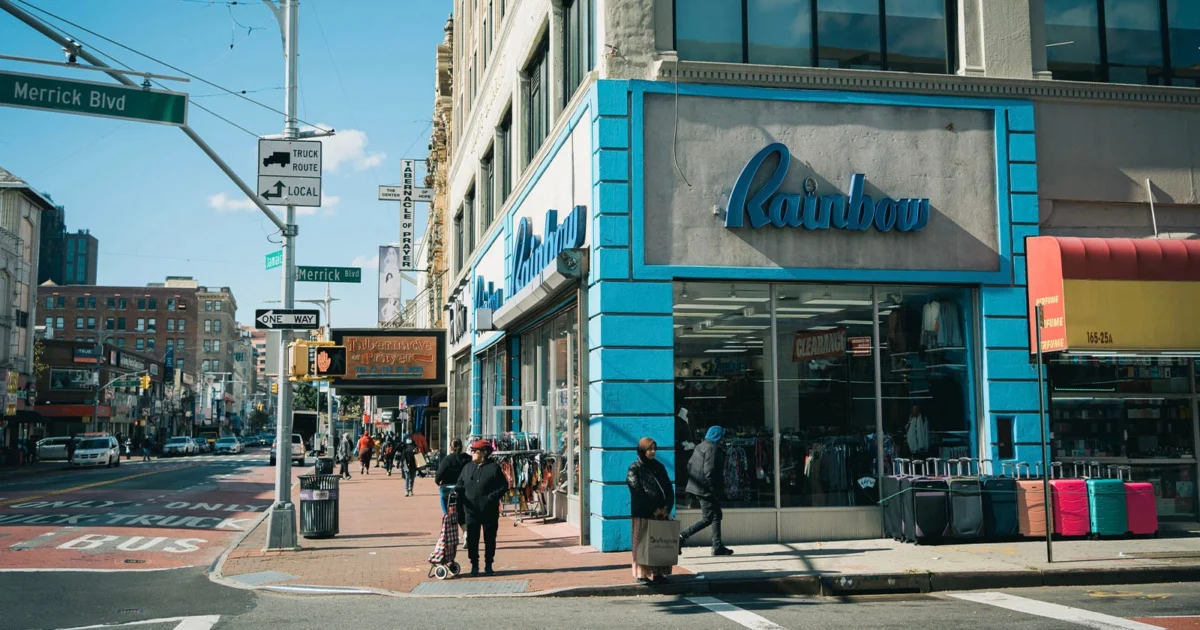
The intersection of generative artificial intelligence and the fashion industry has reached a critical legal juncture as traditional modeling contracts collide with the rapid adoption of synthetic media. A high-profile lawsuit filed in the New York Supreme Court has brought these tensions to the forefront, signaling a potential sea change in how brands utilize human likenesses in the digital age. Fashion model Francheska Pujols, a prominent figure in the New York modeling scene, has initiated legal proceedings against the budget clothing retailer Rainbow Shops, alleging that the company utilized AI to "clone" her likeness without authorization, creating images that she claims are detrimental to her professional reputation.
The litigation, filed on May 22, 2026, serves as a landmark case in an industry increasingly defined by cost-cutting automation. Pujols’ complaint asserts that while she participated in legitimate photoshoots for the brand, the company subsequently moved beyond the scope of their agreement by using AI to transpose her face and body into entirely new, synthetic contexts. This case highlights the burgeoning "Wild West" of AI in fashion, where the boundaries of creative editing end and the unauthorized creation of digital twins begin.
The Allegations and the "Crude" AI Outputs
According to court documents, Francheska Pujols was originally hired by Rainbow Shops to model various apparel items. These sessions typically involved standard industry practices: posing against a neutral white or gray background to highlight the clothing for catalog and e-commerce use. However, Pujols alleges that Rainbow Shops took the data from these sessions—the high-resolution images of her face and physique—and fed them into generative AI software to produce a series of unauthorized advertisements.
The resulting images, described in the lawsuit as "crude" and "hyper-realistic," allegedly placed Pujols in suggestive and unprofessional scenarios. One specific image cited in the complaint depicts a digital likeness of Pujols seated on a barstool with her legs spread, while another shows her head resting on another model’s lap while holding a cocktail. Pujols contends that these images are not only unauthorized but also "tarnish" the high-end image she has cultivated through her work in prestigious publications like Vigour magazine and her appearances in Amazon Prime productions.
The core of the dispute rests on the distinction between "post-production editing" and "generative recreation." While standard modeling contracts often allow for basic retouching—such as color correction, blemish removal, or cropping—Pujols argues that the creation of entirely new scenes and poses via AI constitutes a separate work for which she never provided consent or received compensation.
Chronology of the Dispute
The legal friction between Pujols and Rainbow Shops developed over several months, escalating from a contractual disagreement to a full-scale lawsuit.
- Contractual Agreement: Pujols entered into a professional agreement with Rainbow Shops to provide modeling services for their budget-friendly apparel lines. The contract reportedly granted the brand the right to use her images for specific promotional purposes and allowed for "minor edits."
- Contract Expiration (March 2026): The formal agreement between the model and the retailer reached its expiration date in March. At this point, the legal right for the brand to utilize Pujols’ likeness for new promotional materials ostensibly ended.
- Discovery of AI Likenesses: Following the expiration of her contract, Pujols discovered a series of advertisements on social media and the Rainbow Shops website that featured her likeness in environments where she had never physically been photographed.
- Cease and Desist Letter: In late March 2026, Pujols’ legal team issued a formal cease and desist letter to Rainbow Shops. The letter demanded the immediate removal of all AI-generated images featuring her likeness and an accounting of the revenue generated from those advertisements.
- Non-Response and Litigation: According to the plaintiff, Rainbow Shops ignored the cease and desist notice and continued to circulate the images. This led to the filing of the lawsuit in the New York Supreme Court on May 22.
- Withdrawal for Private Resolution: Shortly after demanding a jury trial, the lawsuit was pulled on the following Friday. Representatives for Pujols indicated that both parties have entered into discussions to resolve the matter privately, a common outcome in high-stakes intellectual property disputes where brands seek to avoid public discovery and precedent-setting rulings.
The Defense: "Proper" Use of Proprietary Images
In response to the allegations, Rainbow Shops has maintained a stance of no wrongdoing. When questioned by media outlets, the company asserted that they used their images "properly" and that there was no violation of the model’s rights. The brand’s defense likely hinges on the interpretation of the original contract’s language regarding "image ownership" and "derivative works."
In many retail contracts, the brand retains the copyright to the photographs taken during a shoot. Rainbow Shops may argue that as the copyright holder of the original source images, they possess the right to manipulate those images using any technology available, including generative AI. However, legal experts point out that "copyright" of a photo is distinct from "right of publicity"—the right of an individual to control the commercial use of their name, image, and likeness.
Industry Context: The Rise of the Virtual Model
The Pujols case is not an isolated incident but rather a symptom of a systemic shift within the $1.7 trillion global fashion industry. Major retailers are increasingly turning to AI to solve the logistical and financial burdens of traditional photography.
Last year, the Swedish retail giant H&M began implementing AI-generated clones of its existing models. While H&M claimed these virtual models were intended to supplement rather than replace human talent, the trend toward "synthetic commerce" is unmistakable. Companies like Lalaland.ai and Levi’s have also experimented with AI-generated models to increase "diversity" without hiring diverse human models—a move that sparked significant backlash from advocates who argued it erased opportunities for human talent.
The economic incentive for brands is profound. A traditional catalog shoot requires a studio, a photographer, lighting technicians, makeup artists, stylists, and the models themselves. By using AI to "reskin" a single set of images into hundreds of different poses and backgrounds, a brand can reduce its production costs by an estimated 70% to 90%.
Supporting Data and Economic Impact
Data suggests that the role of the "catalog model" is the most vulnerable to AI displacement. According to industry analysis by fashion law experts, approximately 85% of modeling work is "utilitarian"—basic e-commerce shots where the primary goal is to show how a garment hangs on a body. The remaining 15% belongs to the realm of "supermodels" and high-fashion runway shows, where the personality and "brand" of the model are as important as the clothes.
Anthony Lupo, a prominent attorney specializing in fashion law, notes that for the vast majority of daily retail operations, customers "don’t care" whether a model is real or synthetic. "You’re always going to have runway shows and major campaigns where you’re spending major money," Lupo stated in a recent analysis. "But for the other 85%, the less established models are going to have real problems making a living."
This shift has broader implications for the creative workforce:
- Photographers: Demand for high-volume catalog photography is declining as brands move toward "one-and-done" sessions where a model is photographed once to create a digital foundation for AI.
- Support Staff: Stylists and makeup artists find fewer bookings as "digital styling" becomes a software-based task.
- Legal Frameworks: Existing laws, such as New York Civil Rights Law Sections 50 and 51, were written long before the advent of deepfakes and generative AI. These statutes are currently being tested as courts struggle to define whether a "digital twin" constitutes a person’s "portrait or picture" under the law.
Broader Implications and Analysis
The Francheska Pujols case highlights a burgeoning crisis of "identity theft by contract." If brands can successfully argue that a standard modeling contract gives them the right to create a perpetual digital version of a model, the very concept of a "modeling career" could be fundamentally altered. A model might find themselves "competing" against their own digital likeness for decades after their physical contract has ended.
Furthermore, the "suggestive" nature of the AI images in the Rainbow Shops case introduces an ethical layer to the debate. Generative AI is prone to "hallucinations" and can inadvertently produce imagery that is sexualized or culturally insensitive. When a human model is physically present at a shoot, they have the agency to refuse a pose or a concept. In the world of AI generation, that agency is stripped away, leaving the model’s reputation at the mercy of a prompt engineer or an algorithm.
Strategic business attorney Joshua R. Bressler emphasizes that these issues are "coming fast and furious." The legal system is currently in a state of "sorting out" how to apply traditional property and personality rights to a medium that can replicate human features with 100% accuracy.
As the fashion industry continues its digital transformation, the resolution of cases like Pujols v. Rainbow Shops—even if settled privately—will set the tone for future negotiations. Models and their agencies are already beginning to include "No-AI" clauses in their contracts, specifically prohibiting the use of human likenesses to train AI models or create synthetic advertisements. However, for budget retailers looking to maximize margins, the allure of the "free" virtual model may prove too strong to resist without robust legislative intervention.
The future of fashion photography appears to be bifurcating: a high-end tier where human authenticity remains a premium luxury, and a mass-market tier where the "human" element is merely a data point in a generative workflow. For models like Francheska Pujols, the fight is no longer just about getting the job—it is about owning the right to their own face in a world where reality is becoming optional.

